|
||||||||||||||||
Click on Blue Links in the left column to jump to that section within this issue. Most blue links are hyperlinked to other sections or URLs. |
||||||||||||||||
|
||||||||||||||||||||
|
Fifty Years Later ... Back to Europe This year, the oldest existing Assyrian political party which in the early 1960's and again in the 1970s set the political agenda for the next few decades throughout Europe is celebrating its 50th anniversary. I was introduced to this powerful Assyrian organization by a fellow Assyrian computer engineer from Germnay who was temporarily living in California on a work-related project. Until then, for me the world of Assyrian politics was divided mainly into AUA and BNDP. Abdulmesih "Chris" BarAbraham slowly removed my ignorance of our powerful political forces in Europe and helped open my eyes to a new "European" perspective on our internal issues. Soon, the topics of 1915 Seyfo, the conditions of the Assyrians around the Khabour river in Syria and the Tur-Abdin region in Turkey, the struggle for autonomy in Iraq, and an entirely new perspective on relations with the Turkish and Kurdish groups were on the top of my agenda. Mr. BarAbraham has an uncanny ability to see through the muddy waters of the distractions all around us and quickly separate the big stones of "priorities" from the little rocks that divert our attention in so many directions. Assyrians in Europe are ever so blessed to have such "malfonos" living among them. It is no wonder that as you will witness in this week's reports from various meetings in Europe, the center of the Assyrian political movement has now shifted to Europe - where the Assyrian Democratic Organization has for seveal decades dominated our political agenda. To honor the 50th anniversary of the Assyrian Democratic Organization (Takasta) I present my friend, Mr. Abdulmesih BarAbraham's guest opinion for this week's Zinda Says. I also extend my personal congratulations to my brother in Assyrianism, Mr. Bashir Saadi in Damascus, who bravely guides the Assyrian Democratic Organization. I also embrace every member of this formidable and influencial Assyrian political organization in the Middle East and in the Diaspora for their selfless dedication to the Assyrian cause. We shall look forward to 50 more years of progress and success in the direction of Takasta's guidance. Seyfo Denial - From Within? Guest Opinion Abdulmesih BarAbraham Unlike the Armenians, Assyrians have been late in lobbying for recognition of the Genocide (Seyfo) perpetrated by the Ottoman Turks with the broad support of Kurdish Agas and their militia in 1915. Assyrians (because of confessional labeling in Genocide documents also often referred to as Chaldeans and Syriacs) lost more than half their population. Turkey’s continued denial and its refusal to acknowledge its involvement in crimes against humanity is the kernel of the ongoing heated debates in Genocide research as well as in the political arena some 90 years after the fact. Turkey’s current effort to gain admission into the European Community has returned this issue front and center. The recent Istanbul assassination of Hrant Dink, as the editor of the Armenian-Turkish weekly newspaper Agos and most prominent advocate of Turkey's remaining Armenian population, highlights the deep hostility of ultra-nationalist Turks towards Armenians (and consequently Assyrians) who address the slaughter during the World War I. Assyrians and their organizations worldwide have gained some visibility in their effort to make their voices heard about the Genocide as well. The peak achievement to date is mention of the Assyrian Genocide in the 2006 European Report on Turkey’s progress towards accession. A review regarding the achievements of the Assyrians on this matter worldwide is given in my introduction for the 2nd Edition of “Forgotten Holocaust” by Gabriele Yonan, re-published in Göttingen early 2006: “A Bleeding Wound – even after 90 years” (in German). In Europe it was in fact the publication of this same book in 1989 that ignited efforts towards the recognition. It took a couple of years from there to a major milestone, the recognition of the Assyrian Genocide by the Australian State Government of South Wales in 2002. As a major step forward the trial of Rev. Yusuf Akbulut in 2000-2001 in Diyarbakir/Turkey needs to be referenced as well. In Europe, the presentation of a Genocide Dossier to the International Court of Justice at Den Haag by the ADO in 2002 -- supported by the Society of Threatened People -- , and numerous debates in the parliaments of European countries, like Sweden and United Kingdom are equally noteworthy. Meanwhile numerous conferences are being held worldwide on the Genocide of the Assyrians, with some of them aimed at political audiences and parliament members – the most recent was held at the European Parliament site in Brussels (see Zinda Magazine ’s March 4th issue :“Seyfo: Genocide, Denial and The Right of Recognition”). Assyrian Genocide activities certainly did not remain unnoticed by the Turkish Government and its nationalist media. Ultimately everyone involved in these activities became or is becoming an obvious target of Turkish anti-Genocide assaults including attacks of its media. As victims of one of the biggest crime against humanity in recent centuries, for Assyrians it sounds almost unbelievable that some from within the community question the Seyfo or the involvement of Turkish authorities as the mastermind of this crime. Of course, there is always discussion around the questions who is most guilty, Turks or Kurds. The involvement of both has been never questioned, except in some tea-house level discussions! Hence it is astonishing that a leader of the community like a bishop should put a question mark behind the Turkish role in the Genocide. It naturally raises doubts about his loyalties The incident According to the Eastern News Agency (ESNA), on March 4th the orthodox Bishop Hazail Soumi of Brussels arranged a lecture about Seyfo and invited Sabri Atman to give his perspectives on the topic. Over the last few years Atman has earned much credibility for lecturing and lobbying for the recognition of Seyfo. After the lectures and according to an ESNA report (dated March 13, 2007), the bishop questioned Atman’s stand and belittled his lecture as “fairytale and falsification”, lacking any base in research. What is more striking is that the Bishop apparently defended the Turkish state as innocent of any kind of crime! He is quoted to have put forth the argument that, “if Seyfo was a Genocide, then nobody would have survived”, hence, “Turkey has not committed any Genocide”. Indeed this is not far from a wholesale denial of Seyfo and it is scandalous!. The bishop is either naïve or ignorant. He would be naive, if he has not realized that France is penalizing Genocide denial by law. He would be ignorant demonstrating lack of knowledge of the history of his people. No matter what may be his rationale, the bishop’s statements are regarded by the Assyrians, who are still suffering from the aftermath of the Genocide as scandal and they equal self-denial!. A German friend of the Assyrians and retired Pastor of the Evangelical Church said that he is “shocked about such blindness”. Furthermore, denying Seyfo equals insulting “all the victims of his own people, of his own family”, added the Pastor. Two weeks ago both Suroyo TV and Radio Qolo of Sweden interviewed the bishop. As expected, Suroyo TV did not confront him directly with his statements as reported by ESNA. In his talk, the bishop linked the Genocide to the martyrdom of Christianity since Jesus Christ – diverting attention from the key question and not addressing Turkey’s role as perpetrator of the Genocide against our people! Radio Qolo however stressed the critical aspects and caused the bishop to stumble, but still did not get any concrete answer to the key issues. For me personally the question remains: Why does a bishop, an educated one as he repeatedly asserts to be, questions such unimaginable act of horror against his own people? Self-denial as a concept has actually roots in Christianity and is based on self-sacrifice and self-renunciation which ultimately results in a denial of our nature as human beings. Such understanding was especially embraced in firm isolation from civilization in early phases of asceticism by many monks. The behavior was a consequence of religious devotion. Syriac-speaking Churches have a tradition in this discipline. In the case of bishop Hazail, we can probably rule out this option. He was raised in a modern city, apparently got some education in Western comfort, and he has not really lived in caves in isolation like many of holy fathers of the Church. He is far from being predestined receiving the Holy Spirit by a Gilyono (revelation)! By the same notion we can rule out that he has received any of his knowledge from the”Holy Spirit”, as ESNA quotes him. The second option that would support the self-denial thesis is a distressing one: Collaboration! ESNA makes hints to explain this accusation. The fact that the bishop has been invited to dinners by the Turkish embassy in Brussels to honor him might be too obvious. Indeed he has not disputed this. In the mentioned interview by Radio Qolo on March 16th the bishop confirms the so-called honor dinners, adding that he has also had similar dinners with the Syrian Arab embassy. Evidently, the bishop is hopelessly naïve, not knowing the consequences of his actions or he is impudent and believes that he can deceive the public. He has already embroiled himself in a web of contradictions. If the bishop, as he asserts, wants to keep his church out of politics, what purpose is served by these so-called dinners to honor him? The very question was asked of him in his interview with Radio Qolo, but the question remained unanswered. Personally I believe that Turkey is the only winner of such an internal dispute. Its aggressive nationalism in the past instilled amongst the oppressed Christians a sense of hopelessness, inferiority to the degree of self-denial. Occasional statements of church leaders that we are Arabs for instance have their basis in a similar symptom in the Arab countries. Apparently some of our church leaders even in the free and democratic Western countries still suffer from that syndrome. In fact, the Turkish government invests millions of dollars each year to support it’s a Genocide denial theory. Actually a recent statement of the Turkish author and Genocide denier Ali Riza Bayzan hints to the strategy we are witnessing as it is being implemented upon us. According to Bayzan, Turkey should do everything not to let the Assyrian community (in view of their name dispute) unite around the Genocide topic! In other words: “Do everything to split the community”! The bishop should apologize for his actions or step down. His statements harmed the church in general and therefore, the Patriarch is urged to make a statement on behalf of the Orthodox Church with regards to its position on Seyfo! |
|||
Assyrian Democratic Organization Jubilee Bashir Saadi Mr. Saadi's Speech on the Occasion of 50th Anniversary of the ADO Messrs. Representatives of Arab, Kurd and Assyrian parties and national forces, Good evening We are pleased and honored by your presence and participation in our celebration this evening, which is the first in a series of celebrations and activities that will be held by the Assyrian Democratic Organization on the occasion of the golden Jubilee of its foundation.
Fifty years ago, the will of a dedicated, select few of our people from different sects like : Ashour Yousef, Naaoum Faiek, Fredoun Athouraia, Mar Shamoun Beniamen, Agha Butros, Yousef Malek, Farid Elias Nezha, Sanharib Bali, Youel Warda, Yousef Darna, Youhanoun Dolbani, Youhanoun Kashisho,Hanna Abdalke, Shukri Charmoukli ,…and others, converged to lay the foundation of a national political party that will carry the task of the struggle for the rights of their people in freedom and existence, and this gave birth to Assyrian Democratic Organization (ADO) from here this city, Qamishly –Nuseibin, and the day was 15th of February 1957. The foundation came in response to the feeling of despair and frustration resulting from the appalling tragedies suffered by our people in the beginning of the 20th century, the first of which was the genocide perpetrated by the Turkish Ithad Waltakki government and its allies against our people on parts of its historic territories in Mesopotamia – southeastern present Turkey- during the first world war and claimed the lives of half a million of innocent civilians . The second was Simili massacre which claimed the lives of five thousand innocent civilians on the 7th of August 1933 on the hands of units from the Iraqi royal army under the command of the criminal colonel Baker Sudki. The birth also came as a response to a national and political necessity dictated by the democratic margin the fifties, the years following the independence, provided. The Organization (ADO), which derived its ideology and practice from the essence of our people's experience, its rich human and civilized legacy, its culture and values which are deeply rooted in its land, was the first national political party in the modern history of our people.The Organization since its inception has committed itself to the national democratic issue for the simple reason that is, our people can attain its rights only through a framework of a genuine democratic system and within the scope of a strong prosperous nation acting as an incubator for all its children. Therefore, the Organization has formulated its ideology and approach on the call for the establishment of a democratic and secular regime based on justice, equality and principles of citizenship and bill of human rights, as well as the constitutional recognition of our Assyrian people as an indigenous one and guaranteeing its national rights alongside the rights of all national minorities under the umbrella of a unifying national identify that would include and recognize the national, religious and political variety within the framework of the unity of nation and society. Furthermore, the Organization has firmly believed in peaceful struggle as a means to reaching goals, and also adopted moderation and realism in its political activity away from all forms of fanaticism and extremism.
At the national level and despite the long years of repression and totalitarianism that overshadowed Syria and the region, the Organization was able to promulgate its thoughts amongst broad sections of our people at home and abroad and further, to establish organizational frameworks in many places, particularly in Sweden and Europe where the Assyrian clubs do an important work in preserving our national identity from fusion and in raising the national awareness and keeping the national issue alive in the hearts of our people there. Moreover, it was able, via its branches and institutions, to unite the expatriates with the motherland through opening communication channels with different social, cultural and economic activities. It also contributed to highlight our people's cause in international forums as a human and just political case and focused on the forgotten genocide "alSeifo" issue and made the world public opinion aware of the reality of this crime and held the successive Turkish governments responsible for it and further demanded Turkey's recognition of this crime as well as its acceptance of the legal liabilities and consequences in accordance with the provisions of the international law. Besides, ADO has made great efforts to preserve the Syriac language, heritage and culture, to revive the folklore and the national feasts, like the Assyrian New Year on the 1st of April and Martyrs Day on the 7th of August. It has also relentlessly stood by its people ,defending their rights, protecting them against all sorts of encroachments everywhere in Syria, Iraq or Turkey. What is more, the Organization has also sought to build a broader and deeper relations with the various parties, forces and institutions of our people, and currently, is exerting active efforts to strengthen these relations in view of the greater challenges facing our people especially in Iraq. In the mid 1980 the Organization has initiated to create a National Front which did not come to fruition, but later on, it was brought to a successful result when in the beginning of the 1990 a Joint Action Paper was concluded with the Assyrian Democratic Movement. It also contributed effectively in establishing a National Alliance in the mid 1990 and in convening Baghdad Conference in 2003 and Henghlo conference in 2006, in addition to its continued participation in the overall activities held by our people's institutions at home and abroad. At present, it is working closely with other national forces in order to create a common national discourse that would reflect the will, demands and the rights of our people in the federal Iraqi constitution to be modified, and in the draft constitution of the Iraqi Kurdistan Region, so that to ensure our people's national rights, unified appellation and the autonomous rule in the Nineveh Plain. Ladies and gentlemen, We can say that, the Organization was able through its struggle and involvement in the national political process and by means of its good relationships with the entire national political forces in Syria to acquaint them with the cause of our people and gain their recognition to it, as the cause of an indigenous people which constitute an essential component of this nation and not just as a factional, sectarian or religious issue as was intended to be. This has been repeatedly expressed during the recent years, in statements issued by national forces, signatories to Damascus Declaration, and by many other civil society institutions, national figures and Syrian human rights organizations. At the national level, the Organization has put forward the issue of concurrence of the national and patriotic struggle and that the solution of the people's national problems is linked to its struggle alongside the other patriotic forces that believe in democracy and human rights as means of reaching a national, democratic system that recognizes the rights of all the components of the society Arabs, Assyrians, Kurds and Armenians and further, emphasizing on the adoption of the national identity as a unifying framework to all these components. In spite of the long decades of underground work owing to the repression and the limitation of the political activities and in spite of the monopoly on truth that characterized most political movements that adopted totalitarian ideologies, the ADO repeatedly sought to extend bridges of dialogue with all the parties whenever possible. As a matter of fact, these barriers of secrecy broke down following the arrest of the Organization's leaders in 1986 and 1987, this marked the second stage of semi-public activity for the Organization in which it involved in direct political participation starting from the 1990 elections to the successive parliamentarian, local and union elections through political alliances with various national forces, achieving every time considerable political presence and gaining increasing public sympathy and support from different sections of our people as well as from national and patriotic force.
The Organization has strengthened its presence on the national scene in recent years that has witnessed a narrow margin of freedom and kept on building close relationships with various parties, national personalities as well as with different civil society institutions, legal unions concerned with human rights, including some parties in the Progressive National Front on the basis of mutual respect.It has further contributed in the political process through participating in political forums and the overall possible political activities. The Assyrian Democratic Organization has always been at the heart of the events . At the beginning of last year the Organization joined the framework of Damascus Declaration for National Democratic Change side by side with different Declaration's forces that constitute the entire spectrum of political national and patriotic forces in the country, in fact, it is participating effectively in all its committees from the top down to the governorates' level including its committees in the diaspora . The organization feels that Damascus Declaration reflects a national consensus and the will of the Syrian people to move to a democratic system by means of different ways of gradual, peaceful and democratic struggle, away from all forms of violence and extremism. Despite the positive and peaceful approach adopted by the Opposition and its constant call for dialogue and reform, unfortunately, the prospect of change is still closed and postponed, and what is more the policy of restriction, banning from travel, and exclusion is the only one recognized by the regime , and the pretext always is, the outside pressures and threats as well as the conflict with Zionist enemy. This, no doubt, increases the sense of frustration and worsens the volatile situation. Consequently , no one except the dark forces of fundamentalism would gain from a situation such as this, these lurking forces that may one day turn the table on both the regime and the national opposition. Hence, we believe that, the way to build a strong national society, a genuine national unity able to stand up to dangers and outside challenges and to liberate our occupied land, is not by restricting freedoms and closing the file of political reform, but just the opposite , by opening it wide without delay or postponement, and the first step in this direction, in our view, should be the abolition of State of Emergency as well as special courts and laws, the closure of the file of political detentions, the issuance of a modern democratic laws for political parties and the elections ensuring true representation of all components of the Syrian people and paving the way for drafting a new constitution based on the principles of democracy, secularism and the bill of rights. Ladies and gentlemen, We are doomed to hope, our optimism and hope for a better future for our people and country is unshakable, what is unifying us here in this place is a cause for optimism, a strong belief in the strength of our people and the Syrian society with all its lively national forces , these are genuine and true reflection of the reality of our homeland and we must build on this national situation. Let us join forces in our common march, for the sake of democratic Syria, a permanent home for all its children.
|
||||||||||||
Two Chaldean Catholic Nuns Stabbed to Death in Kirkuk Courtesy of the Associated Press (ZNDA: Baghdad) Two elderly sisters, both Chaldean Catholic nuns, were stabbed to death in their home in Kirkuk, last Tuesday. According to police the motive for the attack was not known. Kirkuk police 1st. Lt. Marewan Salih said Fawzeiyah Naoum, 85, and her 79-year-old sister Margaret, were stabbed multiple time by two intruders who raided their home Monday night near the Cathedral of the Virgin in Kirkuk. They lived alone and there was no sign of a robbery, Salih said. Iraqi Christians have been subjected to frequent attacks in recent months, with some militant Islamic groups expressing determination to drive the Christian minority from the country. Iraq Ranked Second Most Dangerous Place in World for Minorities Courtesy of the Chritian Post (ZNDA: Washington) A new report by a human rights group ranks Iraq as the second most dangerous place in the world for minorities with Somalia heading the list and Sudan following in third. The State of the World’s Minorities 2007 by Minority Rights Group International (MRG) released last week highlighted minority groups in Iraq, including Christians and women, as among the most vulnerable in the world.
Iraq is home to Christian groups such as the Chaldo-Assyrians, Syriac-speaking Orthodox Christians, Catholic and Oriental Orthodox Armenians, and Protestants. Chaldo-Assyrians make up most of Iraq’s Christian population – which composes only three percent of the 26 million people in the country. The minority report cited the September-October UNAMI (United Nations Assistance Mission for Iraq) report that noted a spike in violence against all Christians in Iraq, including churches and convents being attacked by rocket and gunfire and a Syriac Orthodox priest being kidnapped and beheaded in October. Another key concern for Iraq’s Christian minority is the growing refugee crisis which has totaled more than 1.8 million people since the 2003 U.S.-led offensive. Nearly half of those seeking asylum in neighboring countries and elsewhere are Christians. “The report confirms what has been told to us by refugees and partner organizations working with these Iraqis in the Jordanian capital,” said Sharon Payt, advocacy director for World Vision Middle East/Eastern Europe Office (MEERO), in a released statement on Monday. World Vision is carrying out both relief work through partners among Iraqi refugees in Amman, Jordan, and an advocacy strategy through World Vision offices around the Partnership and in coalition with agencies like the UNHCR. Most of the refugees flee to neighboring Syria or Jordan.
Women are another discriminated minority in Iraq, facing a triple threat of discrimination from religion, ethnicity and gender. Many women in Iraq are non-Muslims, according to the report, and face death threats for failing to fully cover their heads and bodies to meet the strict Islamic standard. The Women’s Rights Association of Baghdad reported in March 2006 that the number of women attacked for not fully covering their heads and face has tripled since 2003. Women are also the victims of “honor killings” due to family conflict and vulnerability when they become widows. Iraq has few opportunities for a widow to earn money and they are not allowed to drive alone without a male relative present. Excerpt from the report:
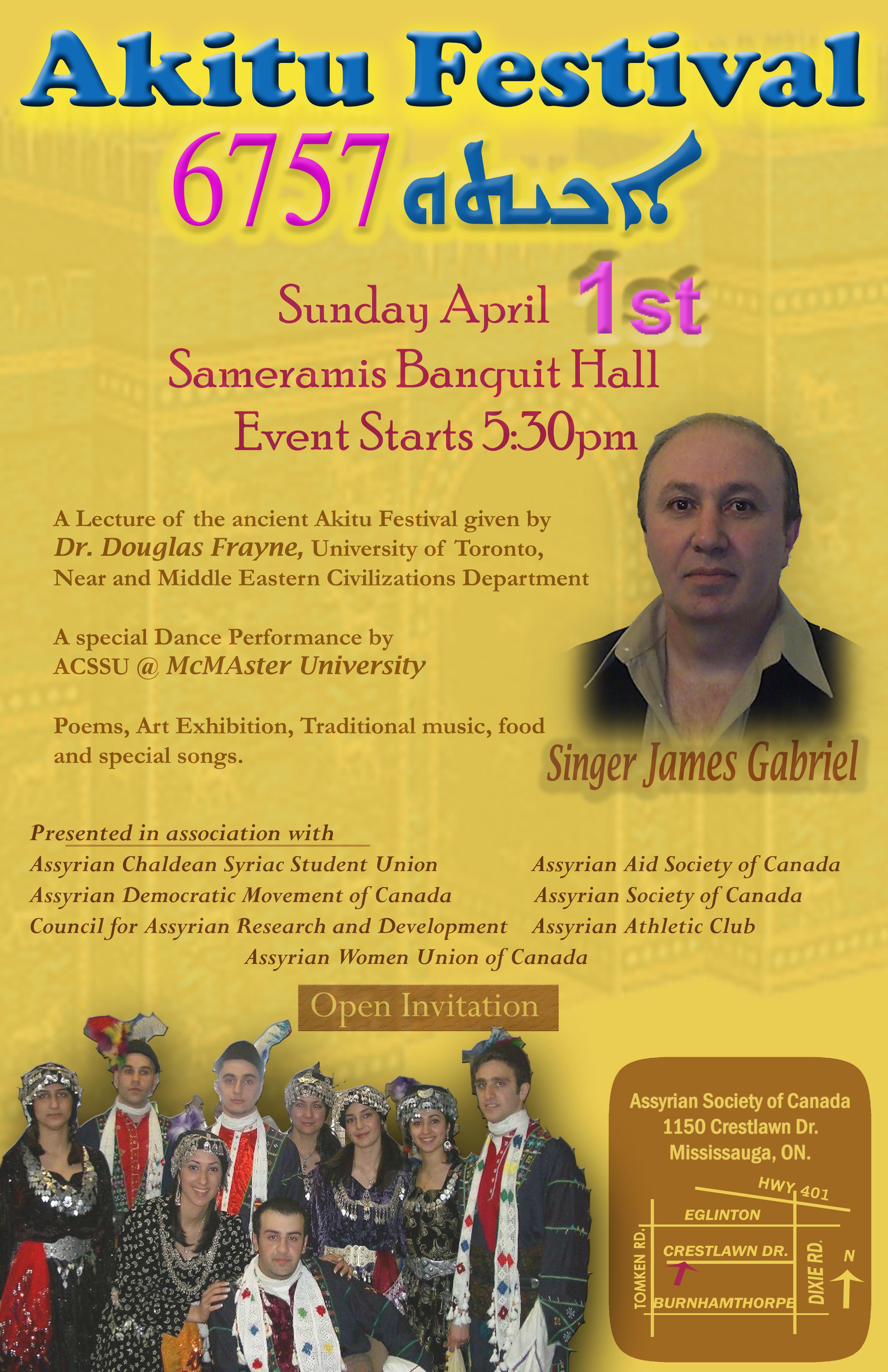
Midyat Hosts First International Syriac Symposium Courtesy of Today's Zaman (ZNDA: Istanbul) A two-day international symposium opens today in Midyat, in southeastern Turkey, with the goal of improving "equality, tolerance and peace" in Turkey by preserving the historical heritage of the 5,000-year-old Syriac culture in Turkey. The international symposium is a first of its kind that will bring together academics who study Syriac culture, representatives of various non-governmental organizations and members of the Syriac community from both Turkey and Europe. The European Union lent its support to the symposium jointly organized by the Accessible Life Association (UYD) and the European Syriac Union (ESU). The Midyat Syriac Association, the Mesopotamia Culture and Solidarity Association and Suroyo TV, a Sweden-based television channel, also lent their support to the symposium. Hacer Foggo of the Accessible Life Association (UYD), in a brief telephone interview summarized the goals of the symposium: "Sharing international experiences concerning Syriac culture; determining joint problems of the Syriac community in the country as well as around the world; structuring a program for the resolution of problems of Syriacs which have prior importance; defining legal problematic fields of Syriacs and improving joint proposals; defining conditions of intercultural dialogue and tolerance and maintaining communication; and establishing a communication network among Syriac community." In addition to Foggo, Yngve Engstrom of the Delegation of the European Commission to Turkey; Süleyman Bölünmez, independent member of the Turkish Parliament; Nihat Eri, Mardin deputy of the ruling Justice and Development Party (AK Party); Belgin Cengiz, head of the Accessible Life Association; and Tuma Çelik of ESU will deliver keynote speeches on the first day of the symposium. "The cultural heritage in the southeastern Anatolia region is under threat of being lost because of migration. As organizers of the symposium, we hope to contribute to efforts for protecting this cultural heritage and then transmitting it to the next generations by improving it," Foggo said. Following the end of the symposium on Saturday, Midyat will also host on Sunday the April 1 festival during which Syriacs will celebrate the Syriac New Year of Kha b'Nissan. Several Syriac bands who are known around the world, but who are unfortunately not familiar in Turkey, will join the festival, Foggo said. Folk ensemble Kardeş Türküler (Songs of Fraternity) -- who sing in Arabic, Armenian, Azerbaijani, Circassian, Georgian, Kurdish, Laz, Macedonian, Roma and Turkish as well as in Syriac -- will also be part of the festival. ADM on the Ankawa Conference
The Ankawa Conference, which was called for and prepared by the Stockholm Conference Committee, that became a popular conference, on March 11th and 12th of 2007, issued a final statement about the rights and unity of our people, and recommended the formation of a popular committee to follow up and execute its resolutions. We primarily agree with the general consensus on the fair assessment of the issues in the final statement which emphasizes; the unity of our nation, the patriotism of our people, and the importance of enjoying their full rights on their land, the call to for the promotion of the mother tongue (Syriac), the demand for a solution for the effects of demographic changes, to stop the trespassing on the villages of our people, and to have the lands be turned to their legal owners. However, we still have legitimate questions and comments which we believe will clarify what the conference has resolved thus far, and will help all who followed up with the results of the conference to better understand the complete picture of the aims which this conference can achieve, especially since the final statement did not contain more than principles and courses that were previously stated and agreed upon by the majority of our people, the ChaldoAssyrian Syriani people.
Today, our Assyrian Democratic Movement, through its positive evaluation of the final declaration, hopes that the issues raised will be translated into a working program which will support the issues that they have adopted at this stage, toward the goals and expectation of our people and their just rights. There are several issues regarding the results of this conference, that need to be clarified before it is evaluated, such as; the resolutions, recommendation and memorandums that resulted from the conference, in addition to the formation and intended course of the popular committee resolved to be formed, its programs and working mechanism - as what counts in the phases following a conference is in the implementation of its resolutions. For example it should be clarified beyond any ambiguity how the popular committee to be formed will follow up on the implementation of the resolutions and recommendations of the conference, and the nature of its work, and the mechanism of its formation, especially in regards to the role of the political parties. Before this can be done, the resolutions and recommendations must be publicized, made available to the public, to make it easy for everyone to give his or her opinion on the issues. This also applies to the two memorandums, which the final resolution mentioned, which call for the formation of special committees to amend the Iraqi and Iraqi Kurdistan Region Constitutions. Bear in mind that the final resolution has already declared that the two memorandums - containing the required constitutional amendments - have already been sent to the proper authorities. This act contradicts the intended work of the council that is to be formed to deal with the resolutions of the conference, and will make work more difficult for those who might join this council at a later time. We emphasize, again, that these comments and observations come in a framework of guiding all decisions, actions, and policies in the right direction, in order to reach positive results, to the benefit of our people' In regards to the conference that took place in Istanbul, Turkey, on March 12th and 13th of this year, and issued their final statement, we have the same observations and comments. We have learned that at end of March of 2007 there will be another conference held in Ceres, California, and we do not need to stress again that the most important outcome of any conference is the implementation of its resolutions and one of the logical principles to implement any resolution rests in the presence of the foundations of thought, real organization, masses and support, background and experience.
The Christian Iraqi Refugees in Lebanon; A Humiliating Wait for Immigration Visas Courtesy of al-Nahar (ZNDA: Beirut) Lebanon is a haven for the minorities, the persecuted of the East, and those fleeing the injustice of their leaders and their surroundings. Lebanon has ceased to be so since the beginning of its ordeal in 1975, after which the Lebanese groups needed someone to protect them against the injustice they inflicted on one another. Despite everything that happened on its land, some still hope to find in it a haven until the difficult days their country is experiencing are over. Among those are the Iraqi refugees, the second largest group of immigrants after the Palestinians. They chose Lebanon as a sanctuary until they can return to their country or emigrate to one of the parts of the world. The file of the Iraqi refugees is big and requires chapters. The file of the Christian Iraqi refugees, however, is the most tragic, for others - Sunnis and Shi'is - are leaving [their country] in quest for safety and in order to get away from the incidents of the war and its bloody course, but they will inevitably return to their native country. The Christians, however, are leaving without returning, and are being uprooted from their long historical roots, which date thousands of years ago. The suffering begins, but does not end, with threats of bullets and explosive charges or a mere letter with a clear threat to murder the "immoral infidel." In order to save his life, the Iraqi Christian flees with his family and whatever he could carry of his belongings either to the Christian areas in the northern Iraqi valley of Ninawa near Kurdistan, where safety and peace is provided for the Syriac, Chaldean, and Assyrian groups, or he leaves Iraq once and for all for Syria, Jordan, and Lebanon, pending the final departure from the East to the United States, Australia, and Europe away from the horrific dreams of the East and the nightmares of massacres, displacement, and murder. The UN High Commissioner for Refugees [UNHCR] estimates the number of Iraqi refugees in Syria and Jordan at around 700,000 and those in Lebanon at between 20,000 and 40,000, 17 per cent of whom said they are Christians. This means that, in the highest estimate, the number of the Iraqi Christians in Lebanon is around 6,000, who live in the Christian areas there, especially where the followers of the Syriac, Chaldean, and Assyrian denominations live in Zahlah, Al-Matn, and Al-Ashrafiyah. A Recurrent Asylum Tragedy The tragedy of Hanna, an Iraqi refugee living in Lebanon, is fit to be an example of the suffering of the Iraqi Christians. Hanna, who is from Mosul, moved to Baghdad in the seasons of the in-country immigration during the old days of the Iraqi economic prosperity. He worked there as an employee until it became clear to him that working in the tourism sector generates a greater income. He opened a restaurant, which generated for him a lot of money, and he was therefore able to lead a prosperous life, get married, and build a family. This continued until the breakout of the latest war on Iraq. His work gradually deteriorated until he became unemployed. Things began to gradually worsen until the fundamentalists started to accuse him, as they accused his Christian neighbours and acquaintances in Iraq, of being an agent to the Americans and colonialism. Hanna's restaurant was blown up, and he received repeated warnings and threats. He packed his luggage and fled to Lebanon, leaving behind - once and for all - all the profits he made and the memories. Hanna lives in Lebanon under semi-miraculous conditions. He spent all the money he saved to feed his kids. He is working to support his family and shoulder the burdens of an already high living cost in Lebanon. His condition, however, is much better than others. The followers of the Syriac denomination in Beirut found him a room with amenities where he lives with a family waiting for relief. The aid he received from the Christian associations in Lebanon and the world or from his fellow Iraqis was exclusively in-kind, such as sugar, rice, food cans, tea, and other stuff. He carries a UN refugee identity card waiting to get a visa to the United States so he and his family can leave without returning. He is trying to get news about the remaining members of his family in Iraq, who are in turn getting ready to leave unless they are provided with conditions for a decent living and, most importantly, protection. The UNHCR confirms that, because of their large number, the Iraqi refugees in Lebanon are not receiving any financial aid, but that the UNHCR extends aid in emergency cases to the weakest and neediest of refugees following a meticulous study of their needs. That is why the UNHCR is trying to build a network of non-governmental organizations and charities in order to cover some of their various needs, including education and medical treatment. Habib Afram, head of the Syriac Association, who is directly concerned with the fate of his denomination members, says that "the tragedy is very big and requires huge funding and continued aid." In his opinion, the biggest problem is that "the Christians have no social and political support, and no one is inquiring about them, neither the Vatican nor the other countries that rush to help the other societies, leaving the Christians of the East to face their black fate." Waiting to Leave Lebanon The Christian Iraqi refugees avoid talking directly about what they are doing in order to emigrate to the West. What is for sure, however, is that none of them is thinking of returning to Iraq or staying in Lebanon. It is clear that their sole concern is to be able to contact, as soon as possible, their families who emigrated to Australia and the United States. They, therefore, gather at places where international calling cards are sold, and discuss with their relatives and acquaintances who went before them into exile or to their new countries means of getting the necessary immigration documents. In this field, the UNHCR is helping them according to what is called "resettlement in a third country." It officially justifies that by saying that it evaluates the need of each resettlement case separately and submits the respective files to several countries. Ironically, the Iraqi Christians, who held fast and resisted the rule of the Seljuk, the Abbasids, the Memluk, the Ottomans, and finally the Iraqi Ba'thists, are today leaving their land, memories, and heritage under the US flag and US President Bush's policy, which claims to be seeking to spread democracy in the Middle East! Based on Afram's statistics and daily follow-up effort in detailing the conditions of the Christians in Iraq, the next 10 years might witness the end of the Christian presence there, something he said would cause a real disaster to the Christians of the East. He explained that the Christians had represented 20 per cent of the population of Iraq, and the best of statistics today indicate the presence of less than half a million of them in Iraq under very tragic conditions. He said: "All the Iraqi sects have their own security and militias, except the Iraqi Christians. The Kurds are supported by America; the Sunnis are supported by the entire Arab world; the Shi'is are supported by Iran; and the Turkmen are supported by Turkey. The Christians, on the other hand, are orphans, about whom no one cares. They are not even thinking of possessing weapons to defend themselves. The persecution and injustice the Christians of Iraq are facing is an example of a historic suffering. They are blamed whenever something happens in any part of the world. This is what happened following the publication of the Danish cartoons that slandered the prophet and also when Pope Benedict XVI delivered his lecture on Islam. The result was the bombing of churches, the abduction and murder of priests, and other such despicable acts. The Last Safe Haven According to Afram, the only safe haven for the Christians of Iraq is the Kurdistan Region and the Ninawa Governorate, "where the Kurds are cunningly trying to prove to the world public, especially the US, that they are people who are open to all cultures and peoples, especially the Christians. They appointed Christian ministers in the regional government and elected Christian deputies to the Legislative Council in Kurdistan. At the borders of Kurdistan, the remaining Iraqi Christians are gathering in the Ninawa valley, where a large number of Christians are holding fast in scores of villages and towns. Those are calling for a region of their own within the framework of the promised Iraqi federal system of government, which is stipulated in the Iraqi Constitution, or for joining the Kurdistan region. The problem of the Christians in Iraq, however, is the US policy, which does not recognize this file, "because the Americans do not want more problems." The Christian refugees in Lebanon repeat endless stories about crimes of murder, abduction, threat, and subjugation they faced. Every new refugee carries with him news about what happened and what others faced at the hands of the fundamentalists. What is painful in these stories is that the spiritual leaders of the Iraqi Christians - patriarchs, bishops, and priests - are living in a state of worry and complete failure to get anything to help their communities, something which further intimidates the members of their Christian denominations. In what is to some extent similar to what happened in Lebanon, the electoral system being adopted in Iraq has led to the demise of the Iraqi Christian political leadership before it was born. The electoral system turned the Christian representatives into followers of the Shi'i, Sunni, and Kurdish blocs. In their long history, the Christians of Iraq experienced waves of persecution and displacement, but what is happening at present is the most severe. Meanwhile, Hanna, Bahnam, and Rufa are spending their days as refugees in Lebanon in misery and under humiliating living conditions in the hope of obtaining an entry visa to the countries that respect humans and do not discriminate against their citizens.
Construction Begins for $15 Million Church in Qatar Courtesy of the Christian Post (ZNDA: Washington) Construction has begun for a multi-million dollar church in the desert of the small Arabia Gulf state of Qatar where native inhabitants are almost entirely Muslim. The new Catholic Church will serve as the house of worship for the country’s large population of Christian migrant workers, reported the Qatar-based television network Al Jazeera on Saturday. “We have to accept that we are expatriates in every sense of the word,” said the Bishop Paul Hinder, the Catholic Church’s Bishop of Arabia, to Al Jazeera, referring to congregants of Arab churches. “We are a pure pilgrimage church.” Hinder noted that despite the difficulties of being a Christian in the Arab world – such as not being able to freely worship and gather – the believers are often more active in their faith than when they are in their homeland; most of the two million expatriate Christians attending the services are Filipino, Lebanese and Indian. For example, he pointed out that church attendance on the Arabian peninsula regularly outnumbers congregations in Europe and even in the United States. “The challenge is especially that we are a multi-cultural, multi-lingual, multi-racial church composed of faithful [people] from more or less all over the world,” commented Hinder. There are about 70,000 Christians, consisting of about 7,000 Anglicans and 50,000 Catholics in Qatar, according to the World Christian Database. Christianity was brought to the Gulf States by missionaries in the second half of the 5th century but disappeared almost completely in the Gulf Arab states with the arrival of Islam in the 7th century. It was not until 2006 that Qatar witnessed its first church building in 14 centuries with the opening of the Church of the Epiphany ($7 million). The land for the Anglican Church center – which includes conference facilities, temporary living accommodations, a library, and a café - was donated by the Emir of Qatar, Sheikh Hamad bin Khalifa al-Thani. The $15 million Roman Catholic Church – which is being funded by Catholics throughout the Arabian Peninsula – is scheduled to open at the end of this year.
|
||||||||||
LARUS Leaves AUA (ZNDA: Moscow) The League of the Assyrian in Russia or LARUS earlier this month announced its decision to withraw its membership from the Assyrian Univeral Alliance, an umbrella organization of several Assyrian federations and associations. LARUS was formed shortly after the Glasnost and invited to become a member of the AUA during the early tenure of its Secretary General, Fr. Senator John Nimrod. According to Mr. William Yosifov, vice president of LARUS, the decision was based on AUA's recent policies. Mr. Yosifov's letter announcing the decision to withdraw is published in this week's "SURFS UP" section. ADO Condemns Crime Against Ghazi Younan For Immediate Release Assyrian Democratic OrganizationSyria 26 March 2007 ADO Strongly Condemns the Heinous Crime Against Martyr Ghazi Issac Younan On the 11th of March as Mr. Ghazi Issac Younan was about to drive out of the petrol station near the town of Malkia in northeast Syria, two men and a woman inside a car were watching his moves outside the station prior to killing him. As soon as he came closer they fired a volley of shots at him until he was dead and then ran away. Eyewitnesses near the scene of the crime identified the killers to be members of "al-Sharabie" Arab clan. The apparent motive for Mr. Younan's killing was to avenge for the killing of their relative who died from a warning bullet 49 years ago allegedly shot accidentally by the Ghazi Younan's father . The story that took place half a century ago says that the villagers at " Khanik " village near the town of Derik in order to protect their plantations used to take turn to nightwatch their crops lest the Bedouins living nearby would let their sheep and cattle into these plantations to graze, ruining thereby their whole harvest. During one of these night-watching shifts the guards opened fire to warn and scare off the infiltrators and their sheep off the crops. one of these shots mistakenly hit a shepherd and caused his death. Mr. Issac Younan, Ghazi's father, was one of the guards during that shift. He bore the responsibility for the incident, though no one was certain which bullet caused the shepherd's death in the darkness of that night. Few years later a reconciliation was reached between Mr.Issac and the relatives of the dead man according to the norms and the tribal traditions followed in the area and under the sponsorship of Sheik Mayzar al-Madloul, chief of "alShamar" clan, during which a sum of money called "al-Dia" was duly paid to the relatives and the matter was settled and this according to the tribal tradition meant the end of the problem and the return to the normal life. Consequently any act of revenge, blackmail and pressure is considered a breach of this tribal tradition. These all took place half a century ago. There seems to be a huge gap between the mentality of these criminals and the adherence to the laws and traditions. Forty nine years later and after resolving the problem and achieving reconciliation these people have decided to have a revenge and kill an innocent man who was not even born at that time. The crime was committed cold-bloodedly at mid-day. It was carefully planned. The criminals have used a relative milk-woman to watch the Mr. Younan's everyday movements and then report to them. Moreover, in the middle of the current circumstances, one can not rule out the possibility of a premeditated scheme for creating unrest in the Syrian society. The late Mr.Ghazi whose blood spilt to irrigate the soil of the motherland has joined his proud forefathers to say to these killers : "We are here in spite of your hatred fanaticism and ignorance. We are here because this land is ours; we are going to stick to it and defend our existence and freedom no matter whatever the sacrifices" . This horrible crime has shocked and greatly saddened our people not only in the town of "al-Malkie" but everywhere in the motherland and the Diaspora. On the 12th of March Mr. Younan was buried in "al-Malkia " in an unprecedented burial ceremony attended by all the segments of the local community who expressed their heartfelt sympathy as well as strong condemnation of the cowardly killing, the like of which has not happened in the Syrian society, demanding at the same time the toughest punishment for the criminals. Three days after the funeral and during the mourning ceremony held under a big tent in "al-Malkie ", a large delegation from the Assyrian Democratic Organization offered condolences to the relatives of the deceased and Comrade Bashir Saadi, the chairman of the ADO Political Bureau, delivered a speech on behalf of the Organization. In the presence of hundreds of sympathizers Mr. Saadi expressed the Organization's and our people's deep sorrow over the loss of one of its sons who was a victim of the repulsive crime committed by criminals driven by blind hatred and fanaticism, adding that the crime was not directed toward the deceased and his family but to the people of Syria as a whole with all its national and religious diversity as well as to the stability and the peace in the country. He further remarked that the murder was a monstrous and cowardly act which was against the laws, customs, traditions, social and religious values that characterized our Syrian society throughout its long history. No one in the area had ever heard of an act of revenge committed half a century later and after achieving full reconciliation and paying the blood-price "al-Dia". Mr. Saadi noted: "This crime puts forth a big question mark and is not viewed by us as an ordinary crime directed towards an individual. We suspect it to be a deliberate plan for creating troubles and targeting the stability, security and the national peace in our society in this extremely volatile situation the area is passing through. Hence we demand the authorities and its various apparatuses to give special attention to this crime and deal with it seriously far from bureaucratic procedures and indifference shown towards previous similar cases. This is a crime that has targeted all of society and we hold the authorities full responsibility for it. It should act relentlessly until the murderers are arrested and brought to justice and get their rightful punishment in order to become a lesson for others to learn from". Mr. Saadi then said that it was the duty of all the political, social, and tribal forces, with all their religious and national diversit. to join hands and stay unified against the criminals, in particular the relatives and the tribe of the perpetrators were demanded to condemn this crime and side with the community against the criminals and not try to find any pretexts and justifications, whatever the circumstances for the murder. Mr. Saadi then concluded that "this crime should not be forgotten by us as soon as the mourning comes to an end and that we should not stand idly by as we usually do. Instead we should act together and demand the authorities in one voice to arrest the culprits and bring them to justice with utmost speed. Finally, he pointed out that the ADO would be in touch with the relatives of the deceased and follow up this issue till the end because it was not an individual incident, rather it concerned our whole community. This was the case of protecting our Syrian people against the evil forces of darkness and fanaticism.
Save Assyria Front - Concluding Statement
Save Assyrian Front In order to address the complicated circumstances in our region and the fabricated democracy in Iraq resulting in marginalization and exclusion of our Assyrian case, and taking into consideration the high national Interest of our Assyrian people, the Expanded Assyrian conference held in Sweden in December 15-17, 2006 proposed the establishment of an Assyrian front to include all the Assyrian efforts and potentials representing all political parties, organizations, institutions, and independent activists under the name “Save Assyria Front” based on the following principals:
Furthermore, to the expanded Assyrian conference held in Sweden, the “Save Assyrian Front” first conference was held in Tbilisi, Georgia in March 15-17, 2007 under the slogan “Our Salvation is in Our Unity” where, in those three days, the delegates discussed the timetable of the conference and submitted the bylaws and the internal political program for “Save Assyria Front” as a national political entity which believes in Assyrian identity and represents a coalition including political parties, organizations, institutions, and independent activists struggling for the national rights of Assyrian people and based on the following strategies:
In conclusion, “Save Assyria Front” extends its gratitude to the people and the government of the Republic of Georgia for facilitating this conference. Long live the United Free Iraq Current Members of “Save Assyrian Front”:
2. Assyrian Universal Independent Activists Forum
Statement of the First Conference of the Assyrian General Conference Press Release: No Bargain on Our National Rights In the recent political circumstances in Iraq and both the international and regional equations, the conference took place between March 10-12 where the delegates discussed numerous cases concerning the national and patriotic issues in Iraq. On the national level, Assyrians feel that they were marginalized and been purposely distinguished notwithstanding the fact that the Assyrians are the indigenous people of Iraq. The conference decided to work on preserving the Iraqi national unity based on Lawful State, separation of authorities, and dissemination of the brotherhood principals among all the religious and ethnic groups to clear paths to all the sects of Iraqi people to live their own national rights. Under the umbrella of this Lawful State, the Conference demands reinforcement of the national unity of the Assyrian people, reveal its national identity stated in the constitution. Also, to remove the unjust acts caused to them since the establishment of Iraq until today. Furthermore, to secure their rights and return to their historical land in order to practice their national rights, and the need to establish an Assyrian Federal region within a United Federalized Iraq as per the constitution. On the patriotic level, the conference discussed the Iraqi constitution which in its articles aborted the rights of the Assyrian people. The conference also discussed Kirkuk issue considering it as a patriotic one not to be included in narrow scales. The conference looks at Kirkuk as a smaller Iraq where all the sects of the Iraqi people meet. In addition, the conference discussed the normalization issue in Dohuk demanding activation of all the relevant articles included in the Iraqi constitution and the necessity of centralizing the law to distribute the resources to the central government. The conference is thankful to the neighboring countries for adopting a positive attitude in all their standings toward the Iraqi affair. As for the international level, the conference decided to approach the international community to protect the rights of Assyrians in Iraq, the unity of Iraq, and the principals of human rights.
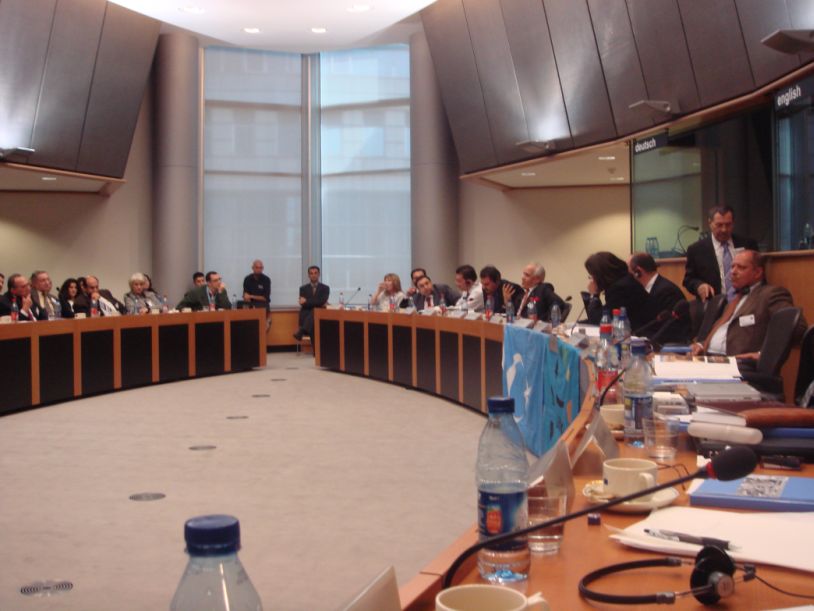
Assyrian Delegation Attends European Parliament Conference on Kirkuk Crisis Report by the Assyrian Democratic Organization in Brussels, Belgium On 26 and 27 March 2007, the Unrepresented Nations and Peoples Organization (UNPO) and the Iraqi Turkmen Human Rights Research Foundation (SOITM), in partnership with the Alliance of Liberals and Democrats for Europe (ALDE) and the Nonviolent Radical Party (NRP), organized a conference entitled “Iraqi Turkmen: The Human Rights Situation and Crisis in Kirkuk”, held at the European Parliament in Brussels.
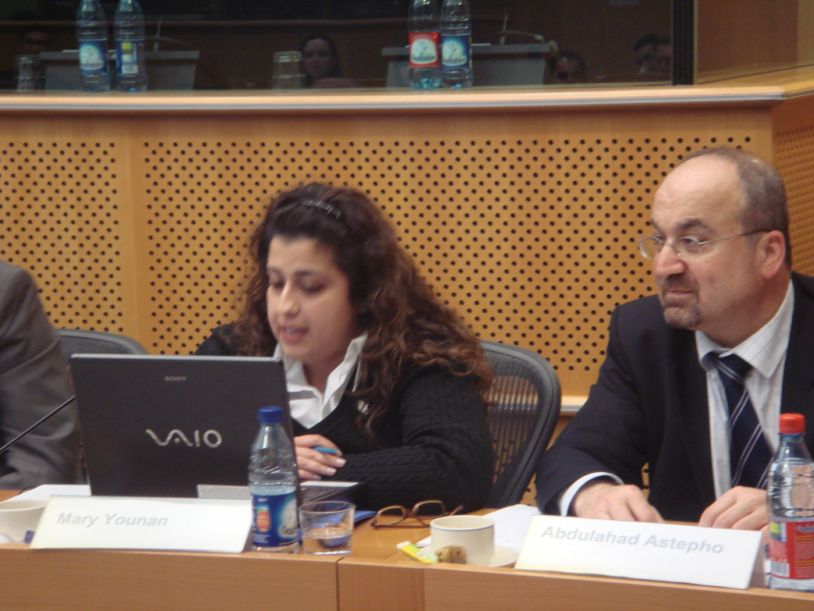
Two goals were focused for this conference, the history and concerns of the Iraqi Turkmen, for the first session titled “Sources of Conflict”, followed by “An Iraq for the future and the Crisis in Kirkuk”. The assembled press, parliamentarians, European leaders, and civil society activists took part at the round table conference. These includeded Mr. Marco Cappato MEP, Committee on Foreign Affairs and Subcommittee on Human Rights; Mr. Marco Pannella MEP, leader of the Nonviolent Radical Party; Mr. Jan Marinus Wiersma MEP, Vice-Chairman of the Socialist Group; Mr. Nicola Dell Arciprete, Parliamentary Assistant ALDE Group; Mr. Marino Busdachin, UNPO General Secretary; Mr. Ken Kostyo, Director of Global Democracy Resource; Mr. Martin Schulthes, Special Programs Manager of No Peace without Justice. Many prominent figures from the Turkmen community were in attendance, both from Iraq and the Diaspora. These included Mr. Muzaffer Arslan, Advisor on Turkmen Affairs to President Jalal Talabani; Ali Mehdi, Head of the Turkmen Group at the Kirkuk City Council; Sheth Jerjis, SOITM Chairman; Merry Fitzgerald, Secretary of the Representative of the Iraqi Turkmen Front in Belgium; Dr. Hassan Aydinli, Iraqi Turkmen Front Europe representative and many other Turkmen authors and editors. The Iraqi Arabs were represented by a member of the Kirkuk City Council. In addition, the courageous participation of Burhan Jaf, EU Representative of the Kurdish Regional Government, was appreciated by most participants at the conference. The Assyrian delegation comprised Ms. Mary Younan, Executive Secretary of the Assyrian Universal Alliance (AUA), Mr. Ablahad Astepho, Mr. Rimon Youkanna and Mr. Naher Arslan from the Assyrian Institute of Europe (ASINE). Mary Younan in the first day session spoke about “The Assyrians of Northern Iraq " and clearly denounced the Arabisation and Kurdification campaigns, violation of human rights and expropriation of lands and villages of the Assyrian people in their ancestral homeland. She added that “above and beyond all ethnic and religious differences, they were all gathered as Iraqis and it is the duty of each one to ensure that basic human rights of all Iraqis are guaranteed”. Ablahad Astepho, Director of ASINE, in his presentation during the following session expressed the “deep concern and growing alarm over the Assyrian Chaldean Syriac Communities in the Diaspora at the rapidly deteriorating situation of the ethnic and religious minorities in Iraq, specifically our Assyrian people”. He noted that “this dramatic situation touches all national, ethnic and religious groups that constitute the Iraqi society. However, the escalation of violence, since Ramadan October 2006, towards Christians in Iraq spread terror and despair within this already ravaged, persecuted and dispersed community; his high-ranking clergy and political leaders consider it as a fore phase to a final coup de grâce not only for Christians of Iraq, but also for all the Christians of the Middle East”. Then he asked the audience to refer to “the excellent recent report of the Minority Rights Group International 2007 by Preti Taneja, entitled “Assimilation, Exodus and Eradication: Iraq’s minority communities since 2003”, which paints a very dark image of the human rights situation of these minorities”. Exposing briefly the conflicting aspects of the “brewing battle over Kirkuk”: oil riches, ethnic competition over its identity between the four main communities- Assyrian, Arab, Kurd and Turkmen, interpretation of articles 140 and 142 of the Iraqi Constitution, controversies over normalisation, census and referendum program, he concluded “that Kirkuk’s Assyrians don’t enjoy great political influence, mirroring their demographic numbers and political power nationally. But they should have a big and important role in acting as Etat de tampon, an intermediary that can play an important role in the process of facilitating a negotiated interim solution for Kirkuk’s question.
He continued “ we agree and support the International Crisis Group - Middle East Report N° 56 - 18 July 2006, and we consider that its recommendations to all sides are a solid basis for a road map consisting of compromised arrangements which may not completely meet the vital interests or agendas of all ethnic and religious groups in Kirkuk, but at the very least it would curb if not put an end to this rapidly deteriorating situation and eventually, and contain the potentially violent sectarian conflict and the spreading of civil war”. He asked all participants to look at Kirkuk as “a smaller Iraq where all the components of the Iraqi society meet and contribute progressively to the suppression and/or solution of possible conflicts, to adopt principles of democracy, citizenship, cohabitation and to build together, as partners, a modern political, economic and social system, on a solid foundation based on dialogue, comprehension and mutual respect”. Considering “the participation of all ethnic, national and linguistic communities’ in a common federal system will undoubtedly constitute a rich model and serve as a safety-valve for the future of the united federalised and lawful state of Iraq”. Ablahad Astepho in his closing statement alarmed the audience “Until Kirkuk’s December 2007 deadline, we can only observe and note the fact that it is over for yesterday’s Iraq. And now the question is: What does the future hold for Iraq, will it adopt and implement a federal system within a strong and united country or will it be fragmented into small and vulnerable separate entities”. At the end of the two-day meeting, prior to the press conference, a few participants attempted to open Kirkuk’s Pandora’s Box, thankfully the atmosphere of courtesy continued and this was appreciated and highlighted during the press conference. The organizers of this conference, UNPO and SOITM, recommended an EU-appointed commission to continue dialogue and discussions started at this conference, aiming to securing a sustainable solution and preventing further conflict and confrontation. Assyrian Benefactor Donates $4 Million to Chicago Hospital Courtesy of the Chicago Tribune
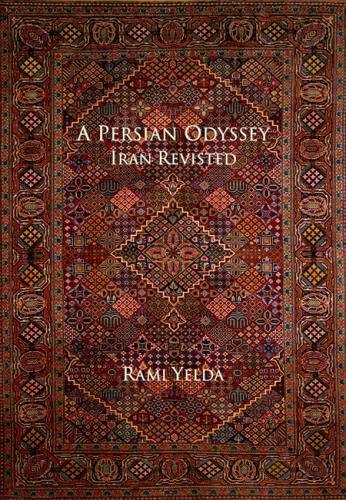
(ZNDA: Chicago) A family of Iranian emigres has given $4 million to Swedish Covenant Hospital, the North Side Chicago institution where one family member was an orthopedic surgeon for many years. As a result of the gift, the hospital, which was itself founded by immigrants 120 years ago, is naming its newly remodeled emergency department after the benefactors, the Yelda family of Chicago. Dr. Rami "Sam" Yelda, 65, now retired, had been a surgeon at Swedish and other Chicago hospitals since he and his family emigrated from Iran about 40 years ago. The gift was made in his name and in the names of his wife, Beth, his mother, Jeannette, and sister Flora. Beth Yelda graduated from North Park University, which, like Swedish, is part of the Chicago-based Evangelical Covenant Church.Dr. Yelda also is the author of "A Persian Odyssey: Iran Revisited," a 2005 book in which this Assyrian Christian recounts two trips he made to his homeland after the Sept. 11, 2001, terror attacks here. Dr. Yelda was said to be traveling and couldn't be reached for comment. Swedish's CEO, Mark Newton, noted that the Yeldas also have established a trust to help the hospital meet future needs. |
|||||||
|
Farewell to AUA ! William Yosifov To the Executive of the Assyrian Universal Alliance, Ladies and Gentlemen, The League of Assyrians of Russia, or LARUS, hereby announces a decision to withdraw from the Assyrian Universal Alliance. After weighing with utmost responsibility all pros and contras of this move, we grudgingly judged it the wisest possible in the current circumstances.
Unfortunately, the latter-day policies of the AUA leadership have been either devoid of action or directly destructive. The AUA is headed by people who put their egoistic calculation and unfounded ambition way before the interests of the Assyrian communities and organizations for whom they are supposed to speak. Most of these people are without national pride. They also ignore the principal chartered pursuit of the AUA, that of bringing about global Assyrian unity -- regardless of political, tribal, confessional, geographic or other divides. The struggle is for unity, not schism of any kind. These days, we also urge the AUA to focus effort on helping our brothers and sisters in our historical homeland in Iraq. Diasporal solidarity for this purpose would help them survive, preserve the sacred graves of our Assyrian forefathers and keep at least part of our ancestral land for us. Unfortunately, the AUA is now directed by people who dance to the tune of the Kurds. These people, including Dr Kambar, Mr Fawzi Hariri and the entire Darmo clan, are going out of their way to mislead the Assyrian nation to the benefit of their oil-rich masters. The television channel of Mr Sargon Dadesho is an even more destructive influence. Any Assyrian with a semblance of reasoning will have already cracked Mr Dadesho as a national enemy driven by a megalomaniac ambition to be the father of all Assyrians. His Modesto home from which he seeks to father us is of course a glitzy paradise with comfortable, warm and shiny washrooms on hand. This is a universe away from the conditions of his ethnic kin in Iraq, where they suffer untold misery and lack access to even basic sanitation, leave alone clean water, nutritious food or a living income. The impression is that Mr Dadesho is mentally unwell and needs compassion and medical help. Why then a sudden decision by the AUA to merge with the organization under him? Naturally, this merger creates a situation in which LARUS can no longer cooperate with the AUA. All our hope is now pinned on the Nineveh Plains Administrative Area Project. A secure homeland in Iraq would enable the Iraqi Assyrians to improve their social and economic conditions, retain at least part of their ancestral land and save themselves from genocide. All Assyrians must unite in demanding change that ensures the survival of their people. And unless they speak up as one, the world will not hear them. The latest executive decision by the AUA runs counter to the founding charter of this group. In an understandable reaction to this, the League of Assyrians of Russia, or LARUS, is hereby informing the executive of the Assyrian Universal Alliance, or the AUA, of its decision to sever ties with the AUA. Greetings from Iraq! Velma Toma There is a group of us who have come to Atra from America to visit our roots and connect with our people. We have been here since Monday. We have had the chance to truly see the work of our Assyrian Democratic Movement and Assyrian Aid Society. As an American born Assyrian, visiting my roots, i am truly overwhelmed with everything the Assyrian Democratic Movement and Assyrian Aid Society have done for our people here in Atra. We have visited the Assyrian Democratic Movement and Assyrian Aid Society built schools from elementary to high school all being taught in Assyrian, daycares, youth centers, womens centers, the villages of Core Gavana (where our latest Sahda Warda Sleewo lived), Gonda Cosa (one of Assyrian Democratic Movement's qrotanahs village which also holds a special place in my heart because it is my father's village).
I have sent these pictures because i am so anxious and happy to see my Assyrian people and see what the Assyrian Democratic Movement and Assyrian Aid Society have done to keep our language and culture alive and what they have done to provide a better life for our people here in Atra. I truly cant wait to spread the message when i return back home to America, until then, can you please post some of these pictures in the next edition, and inform readers of our current visit here. I will be following up with more pictures and a full report upon my return.
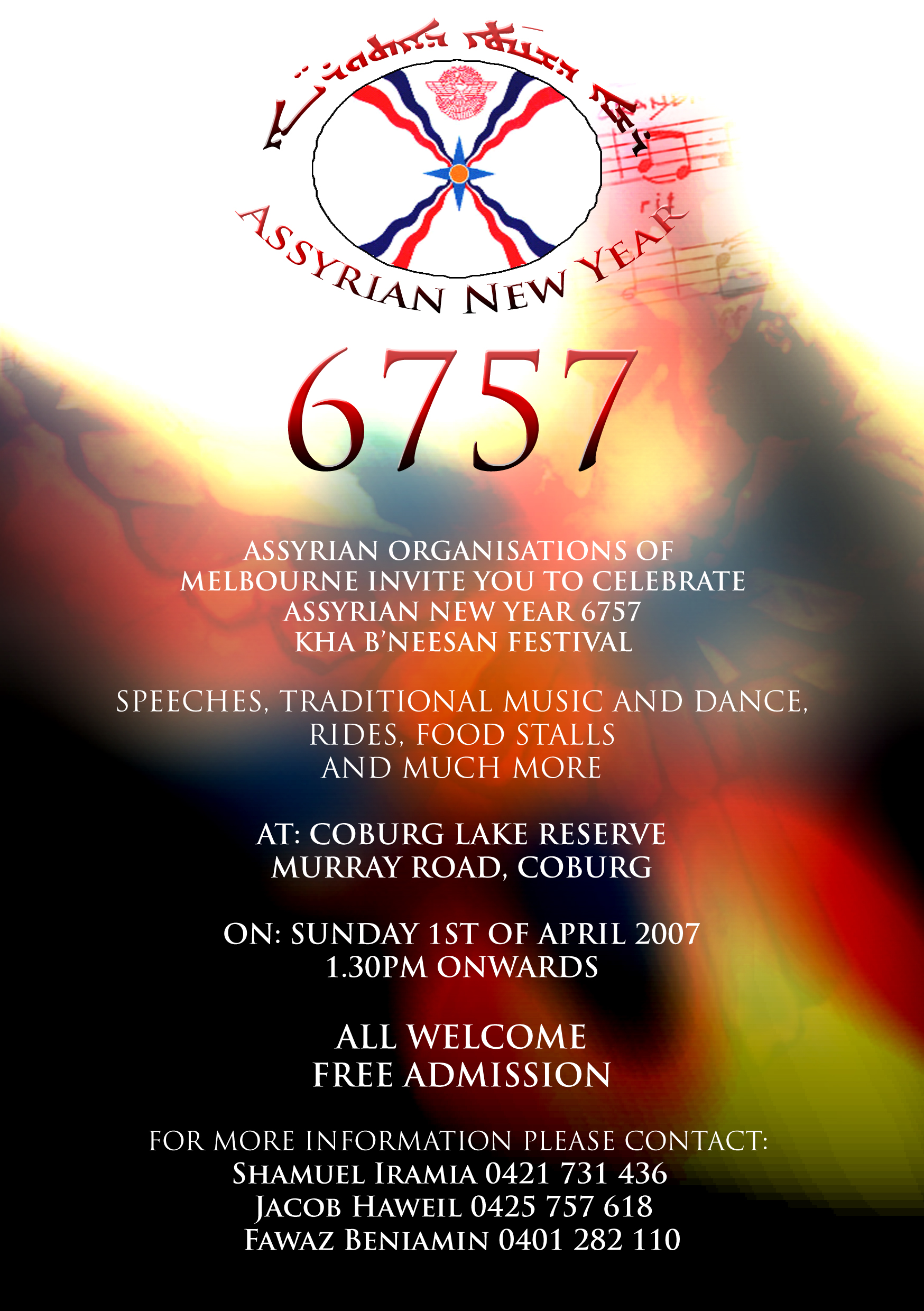
Australian Assyrian Arts and Literature Foundation Jacob Haweil Founded in 2006 the Australian Assyrian Arts and Literature Foundation was created with the vision of the advancement of Assyrian arts and literature. Within this context the mission of the Foundation is to engage Assyrian and non-Assyrian historians, archaeologists, litterateurs, poets, teachers and artists in contributing to the purpose of the Foundation. The Foundation is a not-for-profit organisation which is located in Melbourne, Australia. Having only recently been established (after close to three years of planning) the Foundation has already endeavoured to hold and undertaken successfully a joint Conference between the Assyrian, Greek and Armenian communities of Melbourne where many pre-eminent scholars of the Assyrian Genocide were present to present papers on the topic (as reported in the last issue of Zinda Magazine). The Foundation is also engaged in maintaining Assyrian culture through such activities as taking part in and organising the Assyrian New Year and Assyrian Martyr’s Day annually. Currently the Foundation is working on an ambitious project involving textbooks for primary Assyrian language school students. Any contributions or assistance would be welcomed and the Foundation looks forward to hearing from members of the Assyrian Nation who seek to make any contribution. For further information please write to the Australian Assyrian Arts and Literature Foundation, P.O. Box 422, Niddrie, VIC 3042, Australia or e-mail jacob_kse@yahoo.com.au. Ashamed of What We Have Become Danny A. Youmara I am sure you have heard this many times but for some reason our culture can not come to the truth. The name of our people keeps getting hyphenated, semicolon, slashed, etc. Enough is enough people. Take a look at the land between the two rivers (Mesopotamia) and see what our enemies are doing to us. It is shocking to see that in 2007 and on the eve of our cultural New Year (Kha b'Neesan) that we can not come to the realization that we are Assyrians (ethnically) and religiously different denominations.
We look at the Arabs in the Middle East; regardless of their territorial location they still call themselves Arab. Are we no better than them to realize our true identity? Our culture has survived coming this April, 6757 years, years of endless contribution to mankind and surviving holocaust after holocaust of arabization and murder. How can we still sit here and argue? Open a book, read about who we are; that we are Assyrians! Our enemies do not care what religious affiliation we belong to nor do they care if you call yourself Chaldean, Jacobite or Syrianee. What they care about is an Arab Islamic State and if your not apart of their philosophy, then you are apart of the problem. Take a look at our churches in Iraq, regardless of religious affiliation; Church of the East, Chaldean, Syriac, etc. The same thing is happening all over the country. The murdering, rape and assimilation of our people and the destruction of our churches, literally fundamentalist drive a truck next to the church and blow it up, my fellow Assyrians who belong to the Chaldean Church can attest to this; many of their churches have suffered the fate of these acts as well as the rest of our denominations. Ladies and gentlemen, I am ashamed of what we have become, and surprised that you can still sit there and try to express your political views and ideology. This is why no one helps us, this is why we have not achieved state hood in the Middle East for centuries, this is why your children are being murdered. In the name of Jesus Christ, take a look at yourself in the mirror. Are you happy of what you see? How can you sleep at night and know that your enemy is trying to divide and conquer you, which they have since the time our empire collapsed. I am not here to preach to you, I am not here to tell you that I am right and you are wrong, I am here to be a voice of reason. Ladies and gentlemen, my friends, my brothers and sisters, please if not for your future but your children’s future, realize your cultural identity. Realize that you are Assyrians, who help create the world you see today. Realize that you are a unique culture indigenous to the land between the two rivers (Mesopotamia) and it is your God given right for freedom. Freedom from tyranny of our enemies, freedom from the yolk of violence and the freedom to live in peace and tranquility. We are Assyrians; composed of many clans/villages, (i.e. Gawar, Jilu, Alkoosh, Telkif, Tyaree, Nochi, Baz, Urmi, etc) yet we have the same culture, language and heritage. We are Assyrians; composed of beautiful religions (Church of the East, Chaldean (Catholic), Syriac, Jacobite, Presbyterian, etc). We are Assyrians and proud of that we should be. Because if we do realize this and we understand our cultural identity, and unite in the cause of freedom and democracy, we will have something that we haven’t had in a long time. A country of our own. These words are not a dream nor are they random banter. If the entire world knows that we are all Assyrians composed of different clans/village and of different religious affiliations, why cant we? Are we not educated? Are we not civilized? If Arabs who belong to different sects of Islam know that in the end they are Arabs, are we not smart enough to realize the same about ourselves? This is a new year approaching us, let us think for ourselves and realize who we are and where we have come from. That we deserve the right to live in freedom, free of tyranny and persecution and free from the political web that numerous people are trying to oppress against us. My fellow Assyrians, may God bless you and your families and may he keep them from harms way and may this New Year of 6757 approach with hope that in time you hear the call of your ancestors and who’s blood stain the very grounds of Mesopotamia, to remember. Remember who you are and where you came from. You are the oldest culture in the world, you are one of the greatest empires the world has ever seen, you are the Assyrians. Not A Matter of Master And Server Sam Shalalo It is very unfortunate and regrettable that one or more of our “Assyrian” writers keep on talking about how only the Assyrians represent our nation and no one else has got any right to say anything other than to forget all our other names that some if not more of us have been using for so many hundreds of years if not more. The issue at hand is not merely a matter of serving more than one master when someone mentions or uses or deploys a combined name for our “whole” nation at this very critical and dangerous point of time. When one mentions the name “Chaldean”, it does not mean that he or she is “serving” two masters. Or if someone uses the combination of the name “Assyrian Chaldean Syriac”, it does not in any way or form lead to serving three masters. Who is the master here and who is the servant? When our Lord Jesus Christ said that you cannot serve two masters, he meant that you cannot serve God and “mammon” or money. Assyrians, Chaldeans and Syriacs are not claiming that they are Gods or that they are mammon. Those of us believing that all three of those names are sacred and dear names of our own people, use them not to show that one is the master and the others are servers, as those self-styled writers would lead you readers to believe. The situation in the land of our forefathers, Bet-Nahrain, calls us all, Assyrians, Chaldeans and Syriacs to dedicate all our efforts and capabilities to unite together and work with each other, and forget for the time being how and when were we called by those different names. The most important thing now is to apply the motto “If we as Assyrians, Chaldean and Syriacs can work with others, then why can’t we work together for the benefit of our one nation?” To be so idealistic, to say the least, or to go so far as to deny all the other elements that make up our one nation, is not only wrong, but it also denies the basic human rights for some people that the whole world is nowadays adopting as a very common right for everyone in this world. If we as “Assyrians” do not subscribe to this universally accepted law, then we are not any better than those who have denied our own rights for so many centuries in the land of our forefathers.
If someone does not want to be called by the name that you choose or if he or she would prefer to be called by a different name, then what right or to be more precise, why would you have more right to call him or her by the name that you choose? This is particularly true in the case of people having used or taught to use a name to be identified by, for hundreds of years. It is not a simple matter of substitution as used in mathematics or something that one can force on someone else just like that. It certainly will not work if some of us work day and night, and not leave any occasion at all if not monopolise it to attack anyone using a name other than your chosen one. In fact, some of us are trying their best to obliterate one or more names used by our people, thinking against human nature, that by doing so they would succeed in passing their own agenda over the rest of our people. This is simply and utterly wrong. You cannot have your cake and eat it too. To write in a way so offensive and so very degrading to others is naturally unacceptable, but to write in a way that is so deliberately humiliating to other sections of one’s own people is even more unnatural and uncivilised. This sort of prose has got to stop. It has to be replaced by a more understanding and appreciative logic based on the belief that if sections of a people confess and identify as one nation, having one common history, language, traditions and environment, then what does it matter if sections of that same people use different terms to be recognised by? The only fact to be applied in this analysis is that we all have to be steadfast on the issue that “we are one nation”. To say that we as Assyrians or Chaldeans or Syriacs form three different nations is just not even open for discussion. One nation we were and one nation we shall remain. We were never more than one nation. We may be of many different religious affiliations and belong to many different churches and perhaps speak a few different dialects and even our alphabet and writing may be a bit different, but the overall rule that binds us all, whatever we may call ourselves, is that we are the one and the same nation. In conclusion, Assyrians, Chaldeans and Syriacs may call themselves whatever they like, or more precisely by whatever name they feel comfortable with; yet they all do believe and trust that they belong to the one and the same nation, known perhaps by different names throughout history and in different regions of the land of their common forefathers, Bet-Nahrain. We are Assyrians Chaldeans Syriacs, and if that sounds a mouthful, then we will eventually come to learn to use one word to call ourselves. But until we arrive at that point, we will not be a party to those who want to separate us and break us apart for their own purposes and to put us in a position to make it easier for our enemies to make us fight each other over the one word name, while they gain all the benefits of their unified strategy of nation building upon our people’s dispersion. |
|
My Father's Apple
Assyrians love food. It’s in our culture. Our soul. Our blood. I have only to look at myself – an Assyrian from my ALAP to my TAW. So I’m having breakfast and already thinking about lunch and dinner. Friends wonder if food is all I think about it. No, I think of a lot of things – and food is up there. Don’t get me wrong. I don’t devour food like a survivor from a shipwreck. I go for small portions. It’s not how much you eat, but what you eat. My late father always said to stop eating before being full to make the taste linger. After all, my father loved food as a poet loves words, as an artist uses brush strokes. But it was only on that memorable Sunday afternoon at his small home in Chicago when I finally understood what that love meant. I learned the essence, the profound value of something that had been instilled in me throughout my childhood. Of course, I was blessed with a family of master cooks, culinary geniuses who made a feast from nothing. We may have been poor, but we ate well. That Sunday afternoon my father held up the apple he was munching on and turned it as if dazzled by a magnificent jewel. He beamed, his eyes sparkling as though he were gazing at heaven’s gate. “This is a sweet Gala,” he announced. “It’s an apple shaped like a heart that is full of life.” Nature had brushed the apple in pink and orange stripes on a soft-yellow background, creating perfect harmony between shape and color. “When I smell it,” he said, “I think of a sunny, green field sprinkled with wildflowers – God’s wonders.” He paused and then took several small bites from the apple, crunching slowly, methodically, as if carving a sculpture. Juice trickled down his fingers. “Delicious,” he declared. “It tastes like a soft nut drenched in an essence of peach and rose.” In my own mind, I admired the apple’s shape with him, smelled and tasted it. I felt the same sparkle in my own eyes, the same joy in life’s little things. Being a writer, I took pride in my powers of observation and description. Yet at that moment, I stepped back humbly and tipped my hat to my father. My father wrote rings around me with his verbal imagery. I watched and listened, mesmerized as he brought that little apple to life. My father regarded food with reverence. He relished everything he ate as if it were his last meal. Nor did Pop tackle food like a linebacker. To him, food was not a conquest, or a contract to be fulfilled. Rather, it was a journey of discovery. My father didn’t just eat. My father dined. There was a difference in eating and dining, he thought: eating was life’s requirement and dining was life’s pleasure. For Pop, you didn’t rush dining; you took your time. He studied the bounty on his plate like a connoisseur viewing a Rembrandt or a Degas. I doubt Pop ever saw any of them. His art flourished in a different world. The food before him was his kind of a masterpiece: the way it looked, smelled and tasted. He loved everything, but there was nothing quite as good as an American steak grilled in his backyard – charred on the outside and blushing on the inside. He preferred a plate of fresh vegetables to a tossed salad. A little salt and pepper. No dressing. I can hear him now: Why distort the taste of something that God made with something that man made? Another thing: The worst gastronomical crime was a great steak torpedoed by bottled sauce – it should have been written in the United States Constitution. That Sunday afternoon the T-bone sizzled, and the freshly cut vegetables from his garden heaped on a big platter. We also had cooked rice, one of my father’s specialties. It filled the air with the bouquet of popcorn, each kernel separate, and, according to Pop, as big as the Cub’s baseball bat. He studied his plate as if digesting a map; then turned it for the best vantage to approach everything. He picked up his knife and fork and made his first precise cut into the steak. Juice oozed from the meat. And after he took his first bite, savoring it as if he had hit on the perfect combination of texture, aroma and taste, he leaned back and composed a little smile. It told me that Pop knew he had a masterpiece. I knew he did after I tasted my steak that was cooked the same way. The dessert plate held a treasure of Assyrian pastries – kadeh, nazookeh. Next to it sat a bowl of sweet Gala apples. Until then I had never been too fond of apples, but after that Sunday of learning art from my father, I often found myself craving them. I still do. I eat the apple slowly, methodically, trying to sculpt my own work of art. It’s not the masterpiece Pop created with his apple, but it’s all mine. My father is gone now. Still, when I forget to eat that apple every day, somehow I get a reminder from him, like a hunger to wander through fields of wildflowers. And I get a taste for a soft nut drenched in an essence of peach and rose.
|
|
Assyrian New Year Celebration in Sydney Hermiz Shahen The Assyrian Australian National Federation (“AANF”) in collaboration with the Assyrian Universal Alliance – Australian Chapter will be hosting this year’s Assyrian New Year Festival on Sunday, 1st April 2007 at the Fairfield Showground – Sydney, The Festival starts at 10:00 am to 10:00 pm.
Over 10,000 people are expected to attend this special celebration, including officials from Local, State and Federal Government. Also included will be many representatives of the vast majority of the Assyrian Churches, organisations and several other prominent Assyrians. The official opening will commence at 1:00 pm. A variety of speeches, poetry, traditional dancing and political addresses and songs will be delivered, including speeches by the organisers, welcoming the guests and the crowd and give a brief account about the importance of this historic day for the Assyrians. About 10 Assyrian singers will be entertaining the audience all day supported with non-stop traditional dancing from the audience. At 8:00 pm, there will be a spectacular Firework show. The Assyrian New Year is the most important national festival handed down thru history from our remote past. The Assyrians of today all over the world celebrate this day as their national festival. The beginning of spring is when nature wakes up from its winter sleep, and the trees, plants, fields and flowers begin to bloom again. This means that our Assyrian ancestors gave new life a great credit to their philosophy of creation. Revival and rising from death played a big role in mythology. Assyrian New Year was the biggest festival in the ancient Assyrian. It started on March 21st, which was the first day on month of (Nissan) and beginning of the New Year on the Assyrian calendar. This festival was celebrated for 12 days. This is confirmed by the tablets discovered and deciphered by the archaeologists explaining the festivities celebrated in those days. In Assyria, this festival was considered as one of the most important events of the year. People from all over the Empire came to either the political capital, Nineveh or the religious capital, Babylon and participated in the celebration. Nowadays the Assyrian New Year falls close to the Easter holiday. We therefore, wish all our people a happy Easter and may God bless our Assyrian Nation all Assyrians are invited to come and celebrate with us this very special day. Exhibition of Paul Batou's Paintings in Glendale Harvest gallery presents Paul Batou an artist and writer with his recent paintings and a collection of poems. Artist opening reception and book signing: Friday, April 13, 7:00-10:00pm Exhibition dates: Friday, April 13 through Sunday, April 29 Harvest Gallery: 938 N. Brand Blvd. Glendale, California Exhibition titled “My Iraq…The Destruction and Aftermath of Mesopotamia” will present over 25 original paintings.
Paul Batou, a native Iraqi artist, had his first art show in Baghdad in 1980. In 1989 he moved to Los Angeles with his family. Inspired by his Assyrian-Chaldean heritage Paul continues to create art and write poems. Paul Batou paints scenes of ancient civilizations and their transformations into the cities and countries that people see today. He presents the relationship between the destruction and rebirth. My Last Thoughts on Iraq is a timely book that will give the readers a glimpse inside Iraq during its most troubled times. Iraq at present is still at turmoil and Batou gives us insights on this place, its people and its gradual destruction. It reveals the state of fear in Iraq, the wars, invasions and sanctions that led to the decay of modern Baghdad and the suffering of its citizens around the world. Exhibition “My Iraq…The Destruction and Aftermath of Mesopotamia” will be on display from Friday, April 13 through Sunday, April 29. Paul Batou's Book: "My Last Thoughts about Iraq" Author Paul Batou shares his raw thoughts, feelings and memories of Iraq
(ZNDA: Los Angeles) Mesopotamia was once known as the greatest civilization on earth. But invasions, wars and sanctions have lead to the destruction remarkable civilization. Author Paul Batou shares his thoughts, and feelings about the ruin of Mesopotamia in "My Last Thoughts on Iraq". This book is a collection of the author’s memories and experiences as an Assyrian-Chaldean artist. He shares his reactions to the suffering and sadness, which has plagued Mesopotamia through poetry that clearly expresses the pain, humiliation, and destruction of a once great civilization. My Last Thoughts on Iraq reveals the state of fear in Iraq, the wars, invasions and sanctions that led to the decay of modern Baghdad and the suffering of its citizens around the world. My Last Thoughts on Iraq is a timely book that will give readers a glimpse inside Iraq during its most troubled times. Iraq at present is still at turmoil and Batou gives us insights on this place, its people and its gradual destruction. This truly interesting read will tell us the real score instead of the media’s often-colored view of the news. Buy a copy of this intriguing read now online at Xlibris.com or your local book retailer! About the Author Paul Batou, a native Iraqi artist, received a degree in pharmacy in 1982 from the University of Baghdad. While in school, Paul worked and was inspired by many teachers and artists studying at the University. In 1980, he had his first art show in Baghdad. During his years spent in Baghdad, Paul placed his art in several galleries, learned to play the guitar, and was forced into service during the Iraq-Iran war as a medic. In 1989, he fled Iraq with his family and moved to Los Angeles. In the United States, Paul continues to create art and write poems that inspire all those close to him. As a father, an uncle, an artist, and a pharmacist, Paul has achieved the admiration and respect of all those around him. "My Last Thoughts about Iraq" by Paul Batou To request a complimentary paperback review copy, contact the publisher at (888) 795-4274 x. 472. Tearsheets may be sent by regular or electronic mail to Marketing Services. To purchase copies of the book for resale, please fax Xlibris at (610) 915-0294 or call (888) 795-4274 x.876. Xlibris books can be purchased at Xlibris bookstore. For more information, contact Xlibris at (888) 795-4274 or on the web at www.Xlibris.com. Bedjan's Chaldean Christian Doctrine in the Urmia Dialect
Paul Bedjan produced this catechism to advance the knowledge of Catholicism among Aramaic-speaking Christians of the Middle East. The book is written in Modern Aramaic, in the dialect of Urmia. The book is of interest not only for pedagogical purposes among the Aramaic speakers, but also will give the Neo-Aramaic scholar a literary text from the late nineteenth century. Order Information
Gorgias Press |
Cultural Genocide of the Assyrians in Kurdish controlled Regions Maggie Yonan You cannot divorce language from its speakers. If you have people who have been disenfranchised, neglected, marginalized, and rejected such as the Assyrians in their own homeland, it is very difficult for society at large, to elevate their language. Thus when one starts to make a case for legitimizing the Assyrian language in Iraq, you are talking about bringing the Assyrian people to a status comparable to the Kurds, Arabs, and Turkomen. We cannot talk about the Assyrian language as separate and distinct from the state of the Assyrian people in Iraq as a neglected and as an underclass, marginalized people. When we speak of a group of people and their language, we cannot be “for it” or “against it” to the extent that it EXISTS. The Assyrian language to the Assyrian people (wherever they may live, but especially in their own homeland) is the language they heard as their mothers nursed them and changed their diapers and played peek-a-boo with them. It is the language through which they first encountered love, nurturance, and joy. Assyrians know having access to the politically mandated language, (Kurdish or English only-as was recently demanded by the KRG in northern Iraq) will not by any means, guarantee economic success for the Assyrians in northern Iraq. Constant coercion seldom has the desired effect. Forcing speakers to monitor their language typically produces fear and silence. Those of us that are educators know that when children start attending school, their language most approximates their teacher’s in school. Surprisingly enough, however, by fourth grade, when one might assume growing competence in standard forms, their language moves significantly toward their home dialect. The fourth graders, thus have the competence to express themselves in a more standard form, but choose, consciously or unconsciously, to use the language of those in their local environment. Researchers believe that, by age eight to nine, these children become aware of their group membership and its importance to their well-being, and this realization will reflect in their language. They may become increasingly aware of their government and its institutions’ negative attitude toward their community and find it necessary through choice of linguistic form to decide with which camp to identify.
The linguistic form a child uses is intimately connected with loved one’s community, and personal identity. To suggest that one cannot use their language at their own place of business, or in school, is ignorant and oppressive, as it implies there is something wrong with that language and the people who speak it. This implication fits the perfect definition of Racism and Discrimination, which is what the Assyrians of northern Iraq are currently experiencing at the hands of the Kurds! Prejudice and discrimination tend to focus on the biases and negative perceptions of individuals toward members of other groups. Gordon Allport, in his ground-breaking work on the nature of prejudice, quotes a United Nations document defining discrimination as, “any conduct based on the distinction made on the grounds of natural or social categories, which have no relation either to individual capacities or merits, or to the concrete behavior of the individual person.” While this definition is helpful, it is incomplete in so far as it fails to describe the harmful effects of such conduct. More broadly speaking, discrimination denotes negative or destructive behaviors that can result in denying some group’s life necessities as well as their privileges, rights, and opportunities enjoyed by other groups. Discrimination is usually based on prejudice, that is, the attitudes and beliefs of individuals about entire groups of people. These attitudes and beliefs are almost always, negative, because they limit human perspective of an entire group of people, to the extent that others will stereotype such groups in the overall culture, and both material and psychological resources will be distributed differently to such stereotypical groups. The Kurds in northern Iraq are categorizing people according to both visible and invisible traits, and using such classification to deduce fixed behavioral and mental traits, and then applying policies and practices that jeopardize some and benefit others. In modern society, the metaphor of “pulling yourself up by your boot straps” is powerful indeed: It allows little room for alternative explanations based on structural inequality. Racism and other forms of discrimination are based on the perception that one ethnic group or language is superior to all others. In northern Iraq, for example, the Kurdish language is instituted as the conventional norm used to measure all other languages, particularly the Assyrian. In the Kurdish controlled regions of northern Iraq, discrimination based on perceptions of superiority is part of the structure of schools, the curriculum, the education most teachers receive, and the interaction among the teachers, students, and the community. This discrimination is not simply an individual bias; it is above all, an institutional practice. Most definitions of racism and discrimination obscure the institutional nature of oppression. Although the beliefs and behaviors of individuals may be hurtful, far greater damage is done through institutional discrimination, that is, the systematic use of economic and political power in institutions that leads to detrimental policies and practices. These policies and practices have a harmful effect on groups that share a particular identity, be it racial or ethnic. The major difference between individual and institutional discrimination is the wielding of power to the extent it is primarily through the power of the people who control institutions such as schools and businesses that oppressive policies and practices are reinforced and legitimized. Institutional discrimination generally refers to how people are excluded or deprived of rights, privileges, and opportunities as a result of the normal operations of the institution. Although individuals involved in instituting policies may not have racist intentions or even awareness of how others may be harmed, the result may nevertheless be racist. In this sense, intentional and unintentional racism are different, but because they both result in negative outcomes, in the end it does not really matter whether racism and other forms of discrimination are intentional. In other words, there are all sorts of underlying rules that if you’re not this, you can’t do that, (i.e. if you are Assyrian, you can’t use your own language in the KRG controlled regions of northern Iraq). In the case of the recent banning by the Kurds of Assyrian language from Assyrian businesses, the Kurds seek to not only control the Assyrians in Ankawa, where the Assyrians are the majority, but to destroy their economic success and deprive them of the use of their own language, which is a fundamental human right. Interethnic and intra-ethnic biases and personal prejudices, while negative and hurtful, simply do not have the long-range and life-limiting effects of institutional racism and discrimination. Prejudice and discrimination, then, are not just personality traits or psychological phenomenon, they are also a manifestation of economic, political, and social power. An understanding of racism and discrimination as a system of advantage presents a serious challenge in northern Iraq, to the notion of the Kurdish region as a just society, where rewards are based solely on one’s “merit.” Racism, as an institutional system implies that some people and groups benefit and others lose. Discrimination always helps somebody; those with the most power, which explains why racism and discrimination continues in the Kurdish controlled regions. According to Meyer Weinberg, racism is a system of privilege and penalty. One is rewarded or punished in housing, education, employment, health, and so on, by the simple fact of belonging to a particular group, regardless of one’s individual merits or faults. He goes on to explain, “Racism consists centrally of two facets: First, a belief in the inherent superiority of some people and the inherent inferiority of others; and second, the acceptance of distributing goods and services, let alone respect, in accordance with such judgments of unequal worth.” The most blatant form of institutional discrimination practiced in the Kurdish-controlled regions of northern Iraq, is the way in which the Kurds are withholding education, linguistic practice, and economic opportunities from the Assyrians in their own homeland. The Assyrians of northern Iraq are encouraged to adopt the ways of the dominant group, (the Kurds) in sundry ways, from subtle persuasion to physical punishment, to psychological coercion for speaking their native language, or trying to implement Assyrian educational and cultural institutions, or putting up signs in the Assyrian language in places where business is conducted. The majority of Assyrians in northern Iraq do not speak English or Kurdish, and the new policy instituted by the Kurds will negatively impact the Assyrian communities in ways that will affect their daily lives and their future, by denying them access to their own language, culture, and goods and services offered by Assyrian businesses. In this manner, the Kurds hope to extinguish the linguistic, cultural, and socio-economic aspirations of the Assyrians, denying them basic human and civil rights. To that extent, Assyrians cannot be free unless conditions are created which enable them to enjoy full civil, political, economic, social, cultural, and linguistic rights. Considering that, in the Recife, Brazil, Declaration of 9 October 1987, the 12th Seminar of the International Association for the Development of Intercultural Communication, recommended the United Nations Organization to take the necessary steps to approve and implement a Universal Declaration of Linguistic Rights, the Kurds are instituting illegal policies by which to oppress the Assyrians of northern Iraq. The Kurds should show some regard to the Universal Declaration of the Collective Rights of Peoples, (Barcelona, May 1990) which declared that all peoples have the right to express and develop their culture, language, and rules of organization and, to this end, to adopt political, educational, communications and governmental structures of their own, within different political frameworks. After all, did the Kurds not establish for themselves those very same rights within the political framework of Iraq? Or have the Kurds become so emboldened by the United States that they perceive themselves to be the new dictatorship in Iraq, replacing Saddam, in exchange for Assyrian homeland? According to United Nations, the majority of the world's endangered languages belong to non-sovereign peoples and that the main factors, which prevent the development of these languages and accelerate the process of language substitution include the lack of self-government and the policy of states which impose their political and administrative structures and their language. This is precisely what the Kurds are doing in the northern regions of Iraq, illegally imposing their will and their language against the will of the indigenous Assyrians. Invasion, colonization, occupation and other instances of political, economic, or social subordination often involve the direct imposition of a foreign language, (in this case, Kurdish) and at the very least, distort perceptions of the value of languages and give rise to hierarchical linguistic attitudes which undermine the language loyalty of speakers. Universal rights must be based on a conception of linguistic and
cultural diversity which prevails over trends towards homogenization and towards exclusionary isolation. In order to ensure peaceful coexistence between language communities, overall principles must be found so as to guarantee the promotion and respect of all languages and their social use in public and in private; The Declaration of the Inter-American Human Rights Commission on the Rights of Indigenous Peoples, approved at session 1278 on September 18, 1995, adopted the following articles; which are now incorporated into the United Nations Charter: Article 1 1. This Declaration considers as a language community any human society, established historically in a particular territorial space, whether this space be, recognized or not, which identifies itself as a people and has developed a common language as a natural means of communication and cultural cohesion among its members. The term language proper to a territory refers to the language of the community historically established in such a space.
2. This Declaration takes as its point of departure the principle that linguistic rights are individual and collective at one and the same time. In defining the full range of linguistic rights, it adopts as its referent the case of a historical language community within its own territorial space, this space being understood, not only as the geographical area where the community lives, but also as the social and functional space vital to the full development of the language. Only on this basis is it possible to define the rights of the language groups mentioned in point 5 of the present article, and those of individuals living outside the territory of their community, in terms of a gradation or continuum. 3. For the purpose of this Declaration, groups are also deemed to be in their own territory and to belong to a language community in the following circumstances: A-when they are separated from the main body of their community by political or administrative boundaries; B-when they have been historically established in a small geographical area surrounded by members of other language communities; or C-when they are established in a geographical area which they share with the members of other language communities with similar historical antecedents. 1. This Declaration considers that, whenever various language communities and groups share the same territory, the rights formulated in this Declaration must be exercised on a basis of mutual respect and in such a way that democracy may be guaranteed to the greatest possible extent. 2. In the quest for a satisfactory sociolinguistic balance, that is, in order to establish the appropriate articulation between the respective rights of such language communities and groups and the persons belonging to them, various factors, besides their respective historical antecedents in the territory and their democratically expressed will, must be taken into account. Such factors, which may call for compensatory treatment aimed at restoring a balance, include the coercive nature of the migrations, which have led to the coexistence of the different communities and groups, and their degree of political, socioeconomic and cultural vulnerability. 1. This Declaration considers the following to be inalienable personal rights, which may be exercised in any situation: the right to be recognized as a member of a language community; the right to the use of one's own language both in private and in public; the right to the use of one's own name; the right to interrelate and associate with other members of one's language community of origin; the right to maintain and develop one's own culture; and all the other rights related to language which are recognized in the International Covenant on Civil and Political Rights of 16 December 1966 and the International Covenant on Economic, Social and Cultural Rights of the same date. 2. This Declaration considers that the collective rights of language groups may include the following, in addition to the rights attributed to the members of language groups in the foregoing paragraph, and in accordance with the conditions laid down in article 2.2: The right for their own language and culture to be taught; the right of access to cultural services; the right to an equitable presence of their language and culture in the communications media; the right to receive attention in their own language from government bodies and in socioeconomic relations. The aforementioned rights of persons and language groups must in no way hinder the interrelation of such persons or groups with the host language community or their integration into that community. Nor must they restrict the rights of the host community or its members to the full public use of the community's own language throughout its territorial space. In conclusion, the Kurds have no right to impose their will on the indigenous Assyrians of northern Iraq, in the way of banning the Assyrian language from any institutional space, especially, when the Kurds are but guests of the Assyrians in Iraq.
Conference on Assyrian Genocide (Seyfo) at the European Parliament Willy Fautré
On 26 March, MEP Eva-Britt Svensson (European United Left/ Nordic Green Left) hosted a conference called "Assyrian Genocide (Seyfo)" and organized at the European Parliament by the Assyrian Federations of Sweden, Holland, Germany and Firodil Institute. The speakers were MEP Eva-Britt Svensson (GUE/ NGL), MEP Markus Ferber (EVP-ED), Sabri Atman (Seyfo Center), Prof. David Gaunt (Sodertorns University College, Sweden), Willy Fautré (Human Rights Without Frontiers). More than 500 people from Belgium, The Netherlands, Germany, Sweden, the U.S., etc. had registered to attend the conference but only half of them could participate in it. Both MEPs stressed that they had received several phone calls from the Turkish embassy in Brussels and a letter from the Turkish ambassador - that they showed - trying to dissuade them to host the conference . See below the presentation of Human Rights Without Frontiers Int'l on negationism in Belgium. The Ottoman Empire’s widespread persecution of Assyrian civilians during World War I constituted a form of genocide, the present-day term for an attempt to destroy a national, ethnic or religious group, in whole or in part. Ottoman soldiers and their Kurdish and Persian militia partners subjected hundreds of thousands of Assyrians to a deliberate and systematic campaign of massacre, torture, abduction, deportation, impoverishment and cultural and ethnic destruction. Up to now, the international community has been hesitant to recognize the Assyrian experience as a form of genocide. However, the Assyrian genocide is indistinguishable in form from its Armenian counterpart. Both are narrowly intertwined. My presentation will deal with the debate about the genocide issue on the Belgian scene in the form that it has explicitly taken, the Armenian genocide, and implicitly and indirectly the Assyrian genocide, Seyfo. My analysis will identify a number of negationist actors in Belgium, highlight their objectives and their strategies, their links with Belgian political parties, with the Turkish embassy in Brussels and with not very commendable organizations in Turkey. The Belgian State and the Ottoman Genocide In 1998, the Belgian senate recognized the genocide committed by the Ottomans against the Armenians during WW I. On June 6, 2005, the Justice Commission of the Belgian Senate rejected a draft bill (Ref. 51/ 1284) meant to extend the March 23, 1995 law criminalizing the negationism of the Nazi genocide against the Jews to all the genocides and crimes against humanity legally recognized. The issue of the Armenian genocide which was recognized by all the parties was sneaked in during the debate, especially by the MRAX (Movement against Racism, Anti-Semitism and Xenophobia), but was excluded from the draft law because it had not been recognized by an international jurisdiction. The draft bill extending the criminalization of negationism divided the parties in power and was finally rejected with twelve ‘no’ votes to two ‘yes’ votes. If it had been approved in Parliament, Belgium would have been the first country to punish those who deny the Armenian genocide allegations. Revisionist and Negationist Players in Belgium Several Turkish nationalist organizations based and operating in Belgium but linked to sister-organizations based in Turkey are opposed to the qualification of genocide attributed to the mass-scale massacres of Armenians during WWI and even deny the very existence of such massacres. The Association of Ataturk’s Philosophy in Belgium/ Association de la Pensée d’Ataturk en Belgique (APAB-BADD) is a non-profit association linked to the Turkish Labor Party, a nationalist maoist party which is hostile to the United States and to the European Union. It receives public subsidies. EYAD/ The House of Turkey is a social association. Strange though it may be, its chairman Metin Edeer is also a member of the municipal council of the Turkish town Emirdag (22,000 inhabitants) although he lives in Belgium. He was elected in 2004 on the list of the MHP (Green Wolves), the nationalist extreme-right party in Turkey. The Turkish Islamic Religious Foundation of Belgium / Fondation religieuse islamique turque de Belgique (FRITB-BTIDV), better known under the name Diyanet whose president is the adviser for social affairs at the Turkish embassy in Brussels, Omer Faruk Turan. The Belgian-Turkish Coordination Council (CCBT-BTKK), which was created in March 1996, is an umbrella organization for more than ninety Turkish associations. It gathers together nationalist extreme-right movements depending directly from the Turkish embassy in Brussels. Its leader, Kenan Daggun, was sentenced to nine days in prison due to the incidents that took place during the demonstration against the monument erected in memory of the Armenian genocide in Ixelles. The Sports Federation of the Turks of Belgium/ Fédération sportive des Turcs de Belgique is an organization depending from the Turkish embassy in Brussels. Yeni Belturk is an association which published a magazine and runs a nationalist and negationist website bearing the same name. The symbolic target of the revisionist and negationist actors operating on the Belgian territory, and especially in Brussels, is an Armenian monument. In 1995, the Armenian community in Belgium proposed to the municipal council of Ixelles (Brussels) to erect a monument in memory of the victims of the Armenian genocide at Square Henri Michaux in Ixelles (Brussels) The proposal was unanimously adopted. Revisionist and Negationist Campaign in Belgium In March 2003, the Association of Ataturk’s Philosophy in Belgium (APAB-BADD) organized a non-authorized demonstration in front of the monument dedicated to the Armenian genocide and spattered it with painting. The police had to intervene and to arrest several demonstrators. Elected members of Turkish descent belonging to several francophone political parties in power supported this campaign. In the same year, during the campaign for the parliamentary elections, the APAB-BADD and the Belgian-Turkish Coordination Council (BTKK) pressured the mayor of Ixelles to remove the monument commemorating the Armenian genocide. On May 29, 2004, during the political campaign for regional elections, Turkish extremists held a demonstration in Brussels under the slogan “Reject the assertions of genocide.” On this occasion, the Committee for the Coordination of the Turkish Associations claimed the destruction of the Armenian monument in Ixelles. Emir Kir, who was to become State Secretary of the Brussels Parliament in charge of Monuments after those elections participated in the demonstration. It was also the case for a number of Belgian elected candidates of Turkish descent belonging to the Socialist Party, the Liberal Party, the Green, the Democrat and Humanist Centre. Among the participants, it is worth mentioning Afyon Mahmut Koçak, a member of the Turkish Parliament belonging to the party of the Prime Minister, the president of the Turkish Chamber of Commerce and Industry, the mayor of the Turkish town Emirdag and a number of Brussels municipal councilors of Turkish descent. On December 16, 2004, Yves de Jonghe d’Ardoye addressed a question to the then mayor, Willy Decourty, and the councilors of Ixelles about a demonstration for the demolition of the Armenian monument. The opponents to the Armenian monument raised the issue of the legality of that construction but their attempt was unsuccessful. In his answer, the mayor admitted that Turkish movements had exerted pressure on him to remove the monument but he did not yield to it. On February 15, 2007, a number of negationist associations organized a conference called “A look at the so-called Armenian genocide” with a controversial guest-speaker, Mr. Yusuf Halaçoglu, President of the Turkish History Foundation. This foundation is not an academic institution but has always served the political agenda of Ataturk and his ideological heirs since its creation in the 1930s. Mr. Halaçoglu is currently prosecuted by Swiss justice on the basis of article 261 bis of the Swiss criminal code pertaining to racial discrimination after he delivered a speech in Winterthur in 2004. Despite these charges, the Socialist mayor of the commune of Saint-Josse (Brussels) failed to prohibit this meeting. Freedom of Expression and Negationism Another tactic that was used to try to silence anti-negationist activists was to prosecute them on the grounds of defamation. In November 2004, State Secretary of the Brussels Regional Parliament Emir Kir (Socialist Party) sued the persons in charge of the website Suffrage Universel who had called him “a negationist, a liar and a delinquent” regarding the issue of the Armenian genocide and his expenses during the last electoral campaign. In the part of his complaint related to the genocide issue, Emir Kir declared : “It is a fact that the Ottoman Empire ordered the massacre of the Armenian populations and internal displacements (…). This policy can only be unconditionally condemned (…) but I cannot make the next step consisting in affirming that it is a genocide to be assimilated to the genocide of the Jews by the Nazis as long as an independent commission of historians has not qualified these facts.” The defendants were Pierre-Yves Lambert, an independent researcher, and Mehmet Koksal, a journalist of Turkish descent. Both are running the website in their personal capacity. The trial started on September 14, 2005. Emir Kir was defended by a famous barrister, Marc Uyttendaele, the husband of Minister of Justice, Laurette Onkelinx, who belongs to the Socialist Party. The King’s Procurator Valery de Theux de Meylandt said about the accused that “the incriminated remarks were not off the acceptable limits.” The court decision was released on October 28, 2005. It was 100% in favor of the courageous defendants. Links Between the Belgian Political Parties and the Revisionist Players Due to the election system of proportionate representation, the political parties court the various cultural groups of foreign origin heavily present in Belgium, and in particular in Brussels, by putting Belgian citizens of Turkish, Moroccan, Congolese, etc… descent on their election lists to garner as many votes as possible from their respective communities. In the last local elections in Brussels, more than 50% of the candidates of the same political party were sometimes of foreign descent. The problem is not their origin but the fact that the major political parties have failed to screen them on the basis of a number of legitimate criteria and that they have put extreme-right and extreme-left nationalist candidates on their election lists. A number of them have campaigned in their native language and are said to have held a double language within and without their communities. They have now been elected at various levels of the legislative and executive institutions and some are accused of double allegiance, which is incompatible with the Belgian institutions. It must also be said that ministers and party leaders have campaigned in the premises of Turkish associations known to be negationist. Conclusions and Recommendations The debate around the terminology “genocide” or not is outdated. Those who delay their position on this issue until “an international independent commission of historians is put in place and publicizes its verdict” just do not want to recognize the first genocide of the 20th century. Such a commission exists: it is the international community of historians who throughout the last 90 years have amply demonstrated that a genocide was perpetrated by the Ottoman Empire against the Armenians and the Assyrians during WW I. The Ottoman genocide of the Armenians and the Ottoman genocide of the Assyrians are the two sides of the same coin. They cannot be separated from each other. They are one and the same genocide. Our organization “Human Rights Without Frontiers Int’l” recommends to the Belgian political parties
Sources: Hannibal Travis, ‘”Native Christians Massacred”: The Ottoman Genocide of the Assyrians during World War I.’, Genocide Studies and Prevention 1,3 (December 2006): 327-371. Suffrage Universel: http://www.minorities.org http://www.suffrage-universel.be Info-Turk : http://www.info-turk.be
Attitudes Toward Assyrians 1919-20 Stavros T.Stavridis Persian attitude toward the Assyrians in 1919 Hussein Ali , a diplomat of the Imperial Legation of Persia in Washington DC, sent a note to AW Dulles, the Chief of Near Eastern Division, Department of State, on February 2, 1923 with two attachments. This correspondence (click here/PDF) describes the attitude of the Persian Government towards the Assyrians who had no right to complain regarding their treatment. The first letter was addressed to Professor WL Westermann, a member of the American Delegation to Negotiate Peace in Paris, on June 16, 1919 and the second one was sent to the editor of the New York Times on July 26, 1919.
There are five themes that emerge from these two documents. Firstly the Persians blame the Assyrians for all the problems that happened to Persia during the course of the First World War; secondly Hussein Ali is correct that Russian and Turkish forces invaded and occupied neutral Persian territory; thirdly there is no mention of Kurds attacking Assyrians around Urmia in 1915; fourth the Persian were trying to claim war damages; and finally it is reported in the letter to the New York Times editor that “ Mar Shamoon was killed while making an attack upon the town on which occasion many thousands of unarmed Moslems lost their lives. He would have been spared had he not put himself at the head of armed force on neutral soil of Persia.” This brief quote fails to mention that the Mar Shimun was murdered by the renegade Kurdish Simko. Assyrians in Baquba in 1920 This official U.S. document (click here/PDF) dated March 10, 1920 sent from US Consul, Oscar Heizer , Baghdad, Mesopotamia (Iraq) to the State Department mentions that the Lady Surma Khanum, the sister of the Nestorian Patriarch Mar Shimum, was to be sent under British auspices to the United States to explain Britain’s role in the treatment of Assyrians at the Baqubah refugee camp. It would be interesting to learn the identity of the Assyrian who gave this document to Heizer and how he came into possession of such secret information. One can only guess that this correspondence may have come from someone close to the Nestorian Patriarch. This dispatch also contains enclosures between the British Civil Administration, Baghdad, India Office, London and the Government of India. One of the enclosures mentions that the Presbyterian Church in the United States believed that the Nestorian Patriarch had sold out his people to British interests and “[British] retention of them at Ba’qubah is part of an imperialistic scheme to obtain over their destinies.” The visit of Lady Surma to the United States would have given her the opportunity to address her fellow Assyrians in America that Britain had no ulterior motives towards the Assyrians at Baqubah. In fact, Britain was looking to close down the Baqubah refugee camp and repatriating the Assyrians to their former homes. It is mentioned that “ the formation of Urmian and Assyrian battalions by the military authorities in connection with repatriation has been similarly represented.” This quote requires a brief explanation that the British administration in Baghdad divided the refugee camp into three groups: the Armenians from the Lake Van region; the Assyrians from the Hakkiari Mountains; and the Assyrians and Armenians from Urmia and Salmas plains of Persia. When the British demobilised its army in 1919, the Assyrian units were formed , trained and put under British command. These Assyrian units might be employed to protect refugees in their repatriation from maurading Arab and Kurdish tribes [1]. Notes: 1. Brig-Gen. HH Austin, The Baqubah refugee camp:an account of work on behalf of the persecuted
The East-West Tale of a Once and Future King
Jonathan Rosen Book Review: "The Buried Book The Loss and Rediscovery of the Great Epic of Gilgamesh". By David Damrosch Illustrated. 315 pages. $26. Henry Holt Company. The stylized images of ancient Assyrian kings, with their braided beards and Art Deco muscles, riding out in chariots to hunt lions or men, are now familiar, but until the 19th century nothing was known of them. All evidence had been buried for more than two millenniums under the soil of what is today Iraq. How we came to uncover that world, and how that world reached out toward our own, is part of the story David Damrosch tells in "The Buried Book: The Loss and Rediscovery of the Great Epic of Gilgamesh." But the kingdom of ancient Assyria held other secrets, even older, and Damrosch is telling that story, too. One of the last Assyrian kings, Ashurbanipal, had the literary skills and interests of a scribe. To warfare and lion hunting he added reading, building a great library in his capital city of Nineveh and filling it with thousands of inscribed clay tablets, including several copies of "The Epic of Gilgamesh," a story already ancient in Ashurbanipal's time. When Nineveh fell in 612 B.C., the library, loaded with the cultural heritage of ancient Mesopotamia, fell, too, its contents lost until the middle of the 19th century, when British archaeologists dug up its remains and British scholars cracked the cuneiform code of the tablets. "Gilgamesh," the oldest work of great literature we have, sprang back to life, surrounded by the shards of a prebiblical culture that challenged assumptions about the primacy of biblical authority, a concept already crumbling fast in Victorian England. Damrosch, a professor of English and comparative literature at Columbia, crams more than 4,000 years of history into his narrative without making it feel crammed at all. He accomplishes this in part by telling his story backward, beginning with the 19th century and ending up somewhere around 2700 B.C., when the real Gilgamesh might actually have lived. This is a highly effective strategy, giving the whole book a narrative urgency and a simultaneous sense of archaeological unfolding. Along the way, Damrosch creates vivid portraits of archaeologists, Assyriologists and ancient kings, lending his history an almost novelistic sense of character. First we meet George Smith, a 19th- century scholar of humble origins who started out as an engraver of bank notes. Fascinated by biblical history, he was drawn to the vast collection of clay tablets in the British Museum, where he proved himself adept at assembling the fragments into a semi-coherent whole, earning himself a spot as assistant curator of the collection. Scholars were only just figuring out how to read cuneiform. Smith was soon reading it better than anyone else, and in 1872, in a now famous moment of scholarly discovery, he decoded the story of a flood very much like the biblical account of Noah and became so excited he began undressing. The tablet Smith had translated formed a piece of the "Gilgamesh" narrative, the story of a great king who, after the death of his beloved friend Enkidu, goes searching for immortality. Gilgamesh consults a distant relative, a man who not only survived the terrible flood but was rewarded with eternal life. This relative gives Gilgamesh the bad news: he must die like everyone else. Damrosch, an eloquent champion of world literature, makes a persuasive case for "Gilgamesh" as a unifying story that knits East and West together. The dramatic narrative of the book's fortunes accomplishes the same thing: Gilgamesh is a once and future king who fell asleep in ancient Mesopotamia and woke up in the British Museum. For this reason, the most captivating 19th-century figure in Damrosch's narrative is Hormuzd Rassam, who seems to embody the confluence of East and West that fascinates Damrosch. Rassam, who assisted Austen Henry Layard in his discovery of Ashurbanipal's library and eventually became a great archaeologist in his own right, was born in Mosul to an old Chaldean Christian family. He converted to the Anglican Church at age 14, was educated at Oxford and, promoted by Layard, became adept at uncovering the buried history of his homeland. His fluency in Arabic and his familiarity with the world of his birth helped him excavate a staggering number of artifacts, which were dutifully sent to the British Museum. Despite experiencing British discrimination, he settled in England. Though Damrosch calls him "both a loyal son of Mosul and a proud participant in the British imperial enterprise," it is not entirely clear by whose definition he remained "a loyal son of Mosul." Damrosch's eagerness for universal themes leads him to stumble awkwardly in his coda, where he compares Saddam Hussein's first novel, which draws loose inspiration from "Gilgamesh," to Philip Roth's "Great American Novel," which features a baseball player named Gil Gamesh. Damrosch writes that Hussein and Roth are "both children of Abraham, and both heirs of their common literary father, the globe- trotting Papa Hemingway." Keen to make this point about "disparate" but "interconnected" authors, he ignores the import of his own chilling disclosure that Hussein most likely murdered the Iraqi writer he forced to work on the book; the notion of Hussein as "author" is a fiction that suits Damrosch's larger purpose — which, however laudable in its longing for universality, elides differences that matter very much. Having made his Hemingway-Hussein-Roth union, Damrosch writes that "'The Epic of Gilgamesh' powerfully illustrates the underlying unity of the extended family that the historian Richard Bulliet calls 'Islamo-Christian civilization.'" The term comes from Bulliet's book "The Case for Islamo- Christian Civilization," published in 2004. In that book, Bulliet explains that he has lopped off "Judeo" in his coinage because it evokes only a shared ancient scriptural heritage, not, presumably, a modern political one. Beyond the oddness of enlisting Philip Roth in "Islamo-Christian civilization" is the larger oddness of invoking a book with a polemically exclusionary title. However recently coined and inaccurate the term "Judeo-Christian" may be, replacing it with "Islamo-Christian" — and employing that coinage when arguing for the universal nature of a Middle Eastern epic — is, to say the least, problematic. Unlike "Gilgamesh," the Hebrew Bible is at once a part of world literature and the expression of a people still alive in the world, with a modern Middle Eastern present as well as an ancient Mesopotamian past. But ancient Mesopotamian culture has, since its 19th-century discovery, stirred contemporary passions. Damrosch mentions the 19th-century Assyriologist Friedrich Delitzsch only in passing, but his story is instructive. Delitzsch, who became quite famous, came to feel that since "Gilgamesh," and indeed all of Babylonian culture, was older than the Hebrew Bible — and superior to it — there was no need for the Hebrew Bible at all. An anti-Semite and a German nationalist, he proposed replacing the Old Testament with German folklore. Though it is easy to dismiss the entirely discredited Delitzsch, the old battles for supremacy and supersession are felt today in subtler, secularized form. Damrosch, who could not be farther from Delitzsch in spirit or intent, blunders into another reductive master narrative. He has done a superb job of bringing what was buried to life. Surely it is possible to do this without buying into a narrative that buries that which still lives. |
||||||||||||||
Franklin & Marshall College's John Joseph International Center
The Joseph International Center is another step by Franklin and Marshall College to prepare students to be global citizens. The $945,000 Center, which opened in October, 2006, is a two-story light-filled, elegantly decorated embodiment of the College’s growing commitment to encouraging its students, to travel, and think, beyond the borders of the United States. This is a place to gather, study, and host lecturers and discussions. The Center is named after Dr. John Joseph, Lewis Audenreid Professor of History, Emeritus, who from 1961 to 1988 taught the history of the Middle East. In his writings he has dealt at length with East-West relations, especially since the 1800s. The reading writing and thought he demanded of students are a lasting memory of Andrew J. Schindler, class of 1972. A history major Schindler took three courses from Joseph. “He taught me how to think and how to write, mid gave me a self-confidence about my intellectual ability that I never had,” he said. After graduation Schindler continued his studies at Wharton School of Business of the University of Pennsylvania.
Schindler eventually became chairman, president and chief executive officer of R.J. Reynolds Tobacco Holdings, Inc. He contributed a lead gift of $679,000 toward the College’s International Center and asked that it be named for Joseph. “An international perspective is one of the most valuable]e gifts a college can offer,” Schindler said, citing the knowledge of the cultures, religions and history of the Middle Fast he gained through Joseph. “It intellectually gives you perspective about the world and about people and cultures,” said this boner head of a Fortune 500 corporation. You carry it with you your whole life. It gives you a framework for thinking about things and analyzing things in a way that’s a little bit broader.” Joseph, a 1950 graduate of Franklin and Marschall, is a native of Iraq who came to the U.S. in 946 with a group of 350 students, the first from the Middle East issued visas to study overseas after World War II. They traveled from Egypt to New York on a Liberty ship (a war-time cargo ship), with bunks six deep in the sleeping quarters. ‘There were inches between my nose and the mattress of the person above me,” Joseph said. “It took us three weeks. High seas - it was January, February, and we were seasick.” Once acclamated in Lancaster, Joseph found that Franklin and Marshall didn’t have an International Relations Club. He wrote to the Carnegie Endowment for International Peace - which sponsored a club at his school in Baghdad - and by October 1946, F&M had its club, with 26 members and Joseph its president. On and off campus, interest in the Middle East was high as the U.N. took steps toward establishing a Jewish state in Palestine. As a student from Iraq and a member of an ancient Christian minority, Joseph was assumed to be knowledgeable about Middle Eastern topics. “I would be asked to talk to Rotary Clubs, women’s organizations, church groups,” he recalls. In fact, as a product of a Western education at the American School for Boys in Baghdad, Joseph had little knowledge of Middle Eastern history and politics as he grew up. So Joseph prepared his Rotary Club lectures by scoring American newspapers and magazines. For information on the “Nestorians” he consulted the Encyclopedia Britannica. As he read, his interest grew. ‘Why had his parents, who settled in Baghdad as religious refugees of World War , been driven from their homes in northwest Persia? "One of the wonderful things about the American School was its fantastic international student body," he said. "I had good friends who were Jewish and good friends who were Muslims, and when I came here I wanted to know the history of inter-group relations in the Middle East." Presumed to be an expert, he slowly became one. After graduating with a history degree, Joseph earned a Ph.D. from Princeton University. He authored the entry on "Nestorianism" in the Encyclopedia Americana, and Princerton University Press published his "The Nestorians and Their Muslim Neighbors: A Study of Western Influence on Their Relations" (1961). A standard on the modern history of minority Christian communities in the Middle East, the book was revised and expanded under the title "The Modern Assyrians of the Middle East, Encounters with Western Christian Missions, Archaeologists, & Colonial Powers" (E. J. Brill, 2000). His book "Muslim-Christian Relatons and Inter-Christian Rivalries in the Middle East" (State University of New York Press, 1983), was noted by American Library Association's periodical "Choice" as an "Outstanding Academic Book for 1983-84." Also in 1983 John Joseph received the Lindback Foundation Award for Excellence in Teaching .
As the current war in Iraq continues and tension escalates in the Middle East, Americans look forward, wondering what the future holds, Joseph wishes that more would also look back: To Russian colonialism, for instance, when the Tsarist government, from the 18th century on, occupied and ruthlessly ruled the Muslims inhabiting territories of Central Asia and the Caucasus, including lands that belonged to Persia. More recently, to look back to the Iraqi cities of Karbala and Najaf during British occupation in the 1920s, when they were sites of insurgency just as they are today. "An enlightened citizenry,"Joseph concluded, "is very important to a democracy. The Middle East will be with us for a long time. It's important to understand: How did we get here? International relations today is marred by a great deal of misunderstanding, a great deal of ignorance. Much of that can be taken care of through the educational system." Now 83, Joseph lives in Lancaster with his wife, Betty, also from Iraq.The Josephs, who speak English and Syriac - a dialect of Aramaic - at home, haven't visited Iraq in 35 years, and watch with concern events in the Middle East. They have three children, Paul, a professor of mechanical engineering at Clemson University; Larry, an attorney in Washington D.C., and Deena who teaches English as a second language in Wareham, Massachusetts. They are all married and, between them, have four children of their own.
|
||||||||||||||
|
||||||||||||||
|
||||||||||||||
ZINDA Magazine is published on Mondays. Views expressed in ZINDA do not necessarily represent those of the ZINDA editors, or any of our associated staff. This publication reserves the right, at its sole discretion, not to publish comments or articles previously printed in or submitted to other journals. ZINDA reserves the right to publish and republish your submission in any form or medium. All letters and messages require the name(s) of sender and/or author. All messages published in the SURFS UP! section must be in 500 words or less and bear the name of the author(s). Distribution of material featured in ZINDA is not restricted, but permission from ZINDA is required. This service is meant for the exchange of information, analyses and news. Any material published in Zinda Magazine will not be removed later at the request of the sender. For free subscription to Zinda Magazine, send e-mail with your name, address, telephone number to: zcrew@zindamagazine.com. ZINDA means "Spark of Fire" in modern Syriac (Assyrian); Zinda's Red Swoosh is a rendering of the seventh letter in the Assyrian alphabet, letter ZEN, and the first letter in the word "Zinda". For more information about the Assyrian culture and heritage write to Zinda Magazine. Zinda Magazine™ Copyright © Zinda Inc., 1994-2007 - All Rights Reserved - www.zindamagazine.com |