Assyria and Assyrians Since the 2003 US Occupation of Iraq
Fred Aprim
California
fredaprim.com
A few weeks ago, a friend asked me if I was going to publish my fourth book and if so, he wondered about the subject of that book. He added that a book on Assyria and the Assyrian situation since the 2003 U.S. intervention in Iraq and the fall of Saddam Hussein would be of significant interest. Indeed, the last five years have been cluttered, chaotic and devastating for the Assyrian Christians (also known as Nestorians, Chaldeans, Syriacs, Suryan and ChaldoAssyrians), but not without a dim hope. Considering the diminishing population of Assyrian in Iraq (and in other Middle Eastern countries) since 2003, their political groups were involved in countless political alliances and severances, announcements and official statements and congresses and conferences. However, most of these conferences, alliances and statements were and/are by insignificant groups designed for local consumption.
I told my friend that the book project was worthy, but I was not up to that task at this moment in time. Still, I felt that it would be beneficial to list and/or analyze few important topics and events related to the Assyrians and Assyria within that timetable. Such events included:
- The bombing of churches in Iraq continues since 2004 (visit www.fredaprim.com for detailed accounts). About 45 churches have been reportedly bombed since the U.S. intervention without a proper media coverage. Imagine the media frenzy if one mosque was bombed in any Christian country. The New York Times and CNN would rush to report it and even condemn it. While Islamists perpetrate most of these bombings, especially those in Baghdad, Mosul and Basra, some observers believe that the Kurdish political groups and their armed peshmergas might have been involved in certain bombings in Kirkuk and Mosul. It is obvious to observe that the most recent church bombings in Kirkuk and Mosul were not designed to kill per se, but to bring fear in the hearts and minds of the indigenous Assyrians and force them to leave the country altogether, seek Kurdish protection, or migrate to, or find refuge in, the Kurdish controlled region where they would be under a complete Kurdish submission and mercy. Thus, any independent Assyrian national activity could be suppressed easily and controlled. It is a win-win situation for the Kurds. Historically, most of the region of northern Iraq (Nineveh, Dohuk, Arbil and Kirkuk Governorates) is Assyrian. This region was later a strong Syriac-speaking Christian center of the Assyrians until the 14th Century invasion of the Mongols. In fact, most of today's Dohuk Governorate, which was detached from Nineveh (Mosul) Governorate by the Ba'ath regime and offered to the Kurds to secure the 1970 peace agreement, and certain parts of Arbil and Nineveh Governorates, were predominantly Assyrian even in the early 20th Century. The League of Nations (later United Nations) documents post WWI prove that most of today's Dohuk region was suppose to be the future home of the Assyrians (read also Article 62 of the 1920 Treaty of Sevres). If the indigenous Assyrians continue to flee the Nineveh Governorate, the Kurds are conveniently positioned to claim ownership, just as they did in Arbil and Dohuk. On the other hand, if the Assyrians migrate to the Kurdish controlled region in the north (Arbil and Dohuk in particular), the Kurds would look good in the eyes of the presumed "Christian" West as the protectors of Christians. Here, the process serves the Kurds in more ways particularly in their efforts to usurp the Nineveh Plains of the Nineveh Governorate (the last Assyrian stronghold) into the "relatively calm" Kurdish region. Of course, the Kurdish leaders are planning to usurp other regions within the Nineveh Governorate into the Kurdish region (taking advantage of Article 140 of the Iraqi Constitution) in order to get access to the Syrian borders, thus it would be easier in the future to join parts of northeastern Syria with those in northern Iraq and be a step closer to create that illusive "Greater Kurdistan."
- Targeting Assyrians through murder, assassination, harassment, rape, kidnapping, etc. intensified because Islamists and Jihadists see Assyrians, the Christians, as collaborators with what they portray as the "Modern Crusaders," i.e., the Americans. This, combined with the bombing of churches, led to the massive exodus of Assyrian Christians from Iraq. Hundreds of thousands of Iraqi Christians found themselves as refugees in Syria and Jordan. Over half of the Assyrian Christians have fled Iraq since the U.S. intervention. Many of these refugees are in dire need of assistance on every thinkable humanitarian level. Collective efforts on behalf of Assyrian institutions whether political, religious or civic to resolve this tragedy is minimal if not almost absent. This calamity happened while Iraq remains under the direct rule of the United States. Under the United Nations charters, the United States, as an occupying state, is legally responsible for the welfare of Iraq, the dwindling presence of the indigenous Assyrians and for their pathetic situation. We must return to WW I in order to witness a massive Assyrian exodus in such magnitude and effect. The Assyrians' exodus serves the Kurds foremost since the Assyrians alone have the legal claims to the lands in northern Iraq (Assyria) being the indigenous people of the region considering that they neither had handed those rights to Kurds nor sold those lands to them. The Kurds have taken position of northern Iraq by force, under threat or through various terror methods throughout the last three centuries.
- The influx of Kurds into what the Iraqi Constitution refers to as "disputed regions", such as Kirkuk and Mosul, rises. Reports indicate that certain Iraqi embassies around the world controlled by Kurdish officials, falsify documents in order to bring non-Iraqi Kurds originally from Syria, Turkey and Iran to northern Iraq. In addition, the Kurdish authorities in the north had done their part to provide for the newly arriving Kurds all necessary living conditions and any necessary documents. This is designed to boost the Kurdish population in the disputed northern Iraq regions in preparation for the census that has been postponed six to twelve months (originally set up for December 2007).
- The mess in the Assyrian Church of the East (known officially as the Church of the East before 1976) lingers and the negative ramifications get compounded daily. Meanwhile, the questionable actions of the five bishops of the Chaldean Catholic Church in northern Iraq raise many concerns. I will address these events in some details later in this article.
-
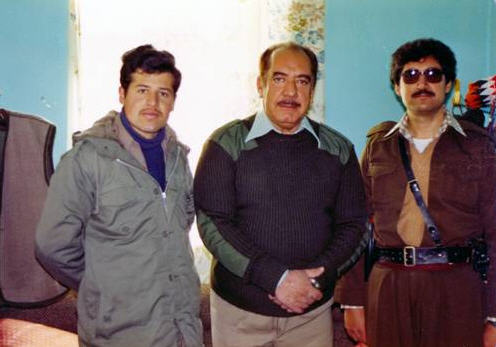 |
Sargis Aghajan (L) and Fadhil Mirani of KDP (in dark glasses). |
The Chaldean Syriac Assyrian National Council (CSANC) that emerged from the March 12, 2007 Ankawa Conference of Sargis Aghajan, Minister of Finance in the Kurdish regional government (KRG), and supported and backed by the Kurdish authorities, moves aggressively forward. The group of five that work with the Kurdish leadership closely, including: Assyrian Patriotic Party (APP) of Nimrod Baito Youkhana, Bet Nahrain Democratic Party (BNDP) of Romeo Hakkari, Chaldean Democratic Forum (CDF) of Sa'eed Shamaya, Chaldean Cultural Center (CCC) of Poulus Shamoun and the Chaldo Ashur Section of the Communist Party have joined Aghajan abnd his council. They all have issued statements agreeing to usurp the Nineveh Plains region (part of Nineveh Governorate) into the Kurdish region. The CSANC is planning to overtake the leadership of the Assyrian people and decide their future according to the best interests of the Kurds. Aghajan, the longtime member of the Kurdistan Democratic Party (KDP) of Barazani, is pushed forward by the Kurdish leadership to lead the Christians of Iraq. The empowered Kurdish leadership and others encouraged Assyrian religious leaders to praise Aghajan, glorify him and bestow medals upon him in order to boost his image and groom him for this leadership position. The photo below is for Aghajan in his early political life seen with Fadhil Mirani, a Pan-Kurdish chauvinist and the head of the KDP Political Bureau today flanking a Kurdish officer.
- Kurdish officials and writers continue to deny Assyrian historic rights and question Assyrian history in northern Iraq through their actions and/or writings. They continue to falsify the history of northern Iraq and claim it to be Kurdish. The Kurdish writers link their history to every single ancient group that existed in, or passed through, Mesopotamia in the ancient times, including the Sumerians, Halaf culture, Ubaid culture, Hurrians, Hittites, Medes, and the list gets longer every day. Kurdish writers and historians could not link their ambiguous history to any one specific group; thus, they carefully construct a mediocre history built around bizarre and peculiar links to many groups and then claim that they are a mix of all those groups. Archaeologists have struggled for a quarter of century to find any archaeological evidence that support Kurdish claims of Mesopotamian (Iraqi) connection or roots. The original home of the Kurds is the Zagros Mountains region of northwestern Iran. On the other hand, tons of archaeological artifacts, monuments, stele, Cuneiform tablets in the British, Louvre, Berlin and Iraq's museums, including numerous excavated ancient sites, prove fervently and beyond any reasonable doubt the Assyrian heritage of northern Iraq (Assyria). My articles concerning such Kurdish denial of Assyrian history and/or the corruption of that of the Kurds by Jalal Talabani, Mulla Bakhtiyar, Fadhil Mirani, Mehrdad Izady, Diayako Xarib, and others are posted on www.fredaprim.com.
- The Assyrian Democratic Movement (ADM), the only serious Assyrian political group in Iraq, seems very passive, at least on the outside, since late 2006.
Considering all circumstances, it is unfortunate that many Assyrian politicians have not learned form the tragic experiences of the past. Furthermore, a segment within the society continues to find more satisfaction and comfort relating to church rather than facing the demands and the challenges of today's politically vicious and sophisticated world. That segment of society is influenced by the church to a large degree and is not fighting back for its national rights. This could be attributed to two reasons: First is internal, as some religious leaders do not like to see political organizations advancing, thus jeopardizing their own authority in society. The second reason is that international and regional powers do not see the Assyrians in the Middle East's bigger picture. The Assyrians might have justification for not fighting back because they know that they couldn't do it alone. The Arabs of the Arabian Peninsula did not fight alone against the Ottoman rule during WWI (1914-1918) while seeking independence. The British assisted them. The Jews were assisted (and still are) in many ways while planning to establish Israel in 1948. The Kurds had support from Russians, Iranians, Israel, and the United States at different stages (and were used sometimes). The Assyrians were betrayed by the British and have been left alone since WWI; thus, they sought (and continue to seek) comfort in exile as persecution against them mounted (and continues to mount). The Assyrians cherish the land of Mesopotamia, but even when they prove themselves patriots time and again, they are still reminded by Islamists and chauvinists that they are infidels and/or insignificant and not worthy to be treated in par with the larger Arabs, Turkish and Kurdish Muslim groups.
There is no better way to describe the Assyrians' situation today than reading "Auto Emancipation," a pamphlet by Leo Pinsker (1821-1891) who pleaded to fellow western European Jews to assist in establishing Jewish colonies in Palestine. Pinsker states: "When we are ill-used, robbed, plundered and dishonored, we dare not defend ourselves, and, worse still, we take it almost as a matter of course. When our face is slapped, we soothe our burning cheek with cold water; and when a bloody wound has been inflicted, we apply a bandage. When we are turned out of the house, which we ourselves built, we beg humbly for mercy, and when we fail to reach the heart of our oppressor we move on in search of another exile."
Assyrians are still in search of that one secular leader, one trusted independent national hero to follow or one militant organization capable of dealing with the traitors of the Assyrian nation; traitors who are non-elected, yet proclaim themselves Assyrian representatives and make unauthorized deals on behalf of the nation with the occupiers and oppressors of the Assyrian people, including questionable deals with the current chauvinistic Kurdish leadership.
The indigenous Assyrians of modern Iraq (ancient Mesopotamia) are overwhelmed by the events around and within them. They stumble, fumble and wander around searching for direction. Many have sunk so low that they become jubilant simply when any official pity them, mention them in passing or when they are handed few crumbs. As indigenous people of Mesopotamia, the Assyrians deserve (rightfully so under international laws) parts of their historic Assyria that they could call home.
Whereas, a Christian cannot live in dignity under the rule of Islam and Shari'aa (Islamic Law), because the teachings of the Koran are clear about that and since the pathetic history of the Christians in the Middle East proves it.
And, whereas, an Assyrian cannot live under the oppressive non-democratic behavior of Kurdish chauvinists and their backward tribal mentality or under the Pan-Arab policies,
Thereafter, there is no other way to save the Assyrian Christians (and all other non-Muslims, such as the Mandeans, Shabaks and Izidis or Yezidis) from future extinction unless these groups rule themselves within a true federal system.
The Assyrians are not less than Arabs, Jews or Kurds; they are looking to the Super Powers to assist them established their own home, just as the Arabs, Jews and others, such as the Muslim Albanian Kosovars more recently, were assisted. Many Assyrians understand what is at stake. They have taken the streets throughout the world to protest the treatment of the Assyrian Christians in Iraq and demand self-rule. They demonstrated, for example, on June 15, 2007 (San Diego, California), June 2007 (Stockholm, Sweden), June 16, 2007 (Gothenburg, Sweden), June 23, 2007 (Marcelle, France), June 27, 2007 (Modesto, California), June 28, 2007 (Chicago, Illinois), June 30, 2007 (Detroit, Michigan, Oslo, Norway, and Linkoping, Sweden), July 7, 2007 (Denmark), July 12, 2007 (Moscow, Russia), July 15, 2007 (Auckland, New Zealand and Athens, Greece), July 22, 2007 (Melbourne, Australia), July 25, 2007 (Los Angeles, California), July 26, 2007 (Stuttgart, Germany), July 28, 2007 (Wiesbaden, Germany), August 7, 2007 (Canberra, Australia) and on September 7, 2007 (Berlin, Germany).
However, certain events contribute adversely in achieving a national consensus that leads to the rebirth of Assyria and discourages the Super Powers from actively working towards that national ambition. I am going to categorize some of those events into two sections. The first is on the religious level and the second is on the national level. Furthermore, I will comment, add a few thoughts and analyze when necessary.
I. On the Religious Level
The controversies surrounding the affairs of the churches and their involvement in politics have for centuries kept the Assyrian nation and people moving one step forward, but two steps backwards, thus in almost a retreat or stationary mode. It is imperative to point to few of the latest controversies or events so that the reader would have a clearer picture and an idea about the complexity of the current situation. Notice that these events might appear religious in nature, but they are intertwined with national issues.
A) It goes beyond saying that the mess in the Assyrian Church of the East (ACOE) was avoidable if there was a genuine will to do so. The people did not need another division. Many educated Assyrians believe that the ACOE leadership should have handled the issue differently. The November 16, 2005 decision to suspend Bishop Mar Bawai Soro, who supported the ADM, was much profound than the initial reason (and I emphasize the initial reason) given by the ACOE Synod, i.e., writing two private letters to His Holiness Mar Dinkha, the patriarch of the ACOE. This action brought much superfluous mischief considering that the suspension decision came only weeks before the crucial Iraqi national elections of December 15, 2005. Many assert that the suspension was intended to cause damage to the ADM. Of course, the ACOE has opposed the ADM and has worked against it on various occasions. Consider the letter of Archbishop Mar Giwargis Sliwa, the representative of Patriarch Mar Dinkha in Iraq, to Fuoad Ma'soom, Head of the Preparatory Committee for the National Conference, dated August 12, 2004, in which the archbishop recommended George Yacoub Bakos (a non-ADM affiliate) for the new national assembly. The involvement of the ACOE in the political matters never stopped despite claims by clergymen in the contrary. On December 20, 2006, Archbishop Mar Giwargis sent a letter to Sheikh Hamam Hamoodi, Chairman of the Iraqi Constitution Review Committee, in which His Grace demanded that the name Assyrian be included in the constitution. Of course, the demand is honorable, but the letter was really intended to challenge the efforts of the ADM in using the compound title "ChaldoAssyrians" as a name promoting unity for all Syriac-speaking Christians in Iraq. This letter was to confirm yet another earlier letter dated July 26, 2005 from the Synod of the ACOE in regards to the same matter. Consider that the same church today supports Aghajan and his compound title "Chaldean Syriac Assyrian." These efforts, combined by actions and/or reactions by Chaldean Catholic Church leaders kept the two sides divided and prevented them from working together under one voice in these crucial times.
 |
In the earlier January 30, 2005 Iraqi national elections, the ADM's success was a surprise to many observers, considering that the elections were a new experience for the Assyrians on such an important level. The ADM won a seat in Iraqi Parliament despite efforts by the Kurdish leadership since 1992 to weaken and undermine the ADM by creating puppet and/or paper-like Assyrian and Chaldean groups to compete with the ADM, in addition to other obstacles such as lack of necessary funds and logistical issues. Many believe that this success alarmed the Kurdish leadership. In fact, relations between the Kurdish leadership and the ADM were strained since the October 23, 2003 Baghdad Conference because the Kurdish leadership detest any serious unity efforts among truly independent Assyrian civic, cultural and political groups from all Assyrian denominations. The Kurdish leadership did not favor the practical and achievable decisions/recommendations of the conference, especially those related to the future of the Nineveh Plains and the unified political title ChaldoAssyrians. The Kurdish leadership does not want to see a united independent Assyrian voice in Iraq. The Assyrians have a historic conflict with the Kurds. Since WWI, the Kurds have illegally occupied Assyrian lands, villages and towns in northern Iraq (and in northwestern Iran, northeastern Syria and southeastern Turkey). The Kurdish leadership continues to Kurdify other parts of northern Iraq at the expense of religious groups, such as the Izidis (Yazidis) and Shabaks. Of course, the Kurds have other problems in the city of Kirkuk, which had a Turkoman majority less than a century ago. Being united, the Assyrians would direct their emphasis and energy on land dispute cases with Kurds and their future as free people, instead of being preoccupied with useless internal conflicts.
Mar Bawai's suspension led to serious fractures and yet another division among the members of the ACOE. It injured many spirits and demoralized hopes. Many Assyrians contribute the anemic participation by Assyrians in the December 15, 2005 Iraqi national elections and the general negative state of mind to this division and to other actions or statements by various church leaders. Many were anticipating a stronger, more organized participation and yet better results than those of January 2005 elections since the Assyrians were supposed to have learned from the January elections experience. Some analysts expected that Assyrians (under the unified ChaldoAssyrian title) to win a minimum of five seats. Of course, the Kurdish authorities played a sullied game in blocking some 150,000 Assyrians from voting in and around the Nineveh Plains near Mosul and intimidated many others throughout northern Iraq during the election process. Despite Kurdish interferences, the Assyrian votes were enough to win an independent Assyrian seat in the Iraqi parliament again. The Kurdish leadership realized that it needed to take stronger measures to face the ADM. Here came the rise of Sargis Aghajan, his Ankawa Conference and the carefully selected individuals of the CSANC.
Most recently, some Assyrians were shocked to read the newly published book "The Church of the East: An Illustrated History of Assyrian Christianity" by Christoph Baumer. In his book, Baumer addresses periods of trials and divisions in the Church of the East and how the various lines of patriarchs were established. On page 251 he states: "The surprising results of these complex unions and divisions consists in the fact that the Chaldean Catholic Church, led today by Patriarch Mar Emmanuel III Delly (in office since 2003), is the successor of the ancient catholicate of Seleucia-Ctesiphon, while the Assyrian Church of the East, led by Patriarch Mar Dinkha IV (in office since 1976), is descended from the formerly Catholic patriarchate of John Sulaqa." According to Baumer (see chart below), Mar Dinkha's line was created in February 15, 1553 when Sulaqa accepted the Catholic creed. It is puzzling for ACOE members because many references assert that their church was established during the time of the Apostles and later strictly structured and defined as an independent church when the bishop of Seleucia-Ctesiphon (today's al-Madaa-in near Baghdad) took the title "Catholicos" in the Synod of A.D. 410. What is even more puzzling is that Baumer included Mar Dinkha's foreword in his book. Patriarch Mar Dinkha writes in his foreword: "…As Catholicos Patriarch I offer deepest thanks for the interest shown in composing this exhaustive labor of love for The Holy Church which in earlier times covered the whole Eastern World from Seleucia-Ctesiphon to the Islands of Japan and to Java, present day Indonesia. I offer my prayers and blessings upon you, and upon all those who seek to enlighten their knowledge in the history of this ancient Semitic Church of our Lord." With this foreword, Patriarch Mar Dinkha endorsed and approved information that his own church and many scholars consider untruthful.
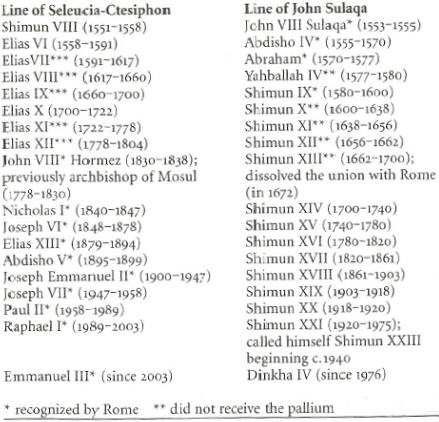 |
| The chart from Dr. Baumer's book showing the two patriarchal lines of Seleucia-Ctesiphon and John Sulaqa. |
Is the patriarch accustomed to making decisions or taking actions without examining the circumstances thoroughly, such as approving or endorsing a book that publishes false information about the history of ACOE?
On October 26, 2005, less than two months before the Iraqi national elections and few weeks before Mar Bawai's suspension, His Holiness Mar Dinkha met secretly with the KDP's leader Masoud Barazani who was visiting Washington (Zinda, October 29, 2005 issue). On September 17, 2006, His Holiness visited northern Iraq and met again with M. Barazani, Nechirvan Barazani and other Kurdish leaders and with Aghajan. On October 17, 2006, Mar Dinkha awarded Aghajan two special medals created specifically for him. On August 29, 2006, His Holiness Pope Benedict XVI honored Aghajan by naming him a Knight Commander of the Order of Saint Gregory the Great. His Beatitude Cardinal Mar Emmanuel Delly did the honor of presenting Aghajan with another medal. His Holiness Mar Ignatius Zakka I Iwas, patriarch of Antioch and all the East, the Head of the Syrian Orthodox Church in the world, issued on October 2, 2006 the medal of St. Ignatius Theophoros of the degree of Commander, the highest medal of his church to Aghajan. On July 4, 2007, His Holiness Mar Addai,II, patriarch of the Ancient Church of the East, awarded Aghajan the Sacred Cross medal, the highest of his church. Coptic and Armenian Church leaders did the same as well.
While Mar Dinkha emphasizes the Assyrian heritage of his flock during his addresses in the Diaspora, this author failed to hear the word Assyrian being emphasized in many video-taped recordings of His Holiness' long visit to northern Iraq. Throughout the visit, Mar Dinkha tried to give the impression that Assyrians and Kurds shared friendly relations historically. He went out of his way to thank Barazani and Aghajan repeatedly (Example: His visit to Nahla region on October 3, 2006). He praised the progress and reconstruction made in what he referred to as "Kurdistan" (His visit to Adiabene Hall, Ankawa on October 17, 2006). Most peculiarly, the patriarch repeatedly asked his church members to take advantage of the good opportunities in the region and raise sheep, chickens and bees. While Iraq is being reshaped, the head of a church is asking his oppressed flock to raise sheep, chickens and bees. That is incomprehensible to this author. In fact, Mar Dinkha neglected to mention the word Assyrians, as people, in his letter dated May 9, 2007 to President George Bush. However, the name Assyrian appeared twice where the name of the church, i.e. Assyrian Church of the East, was mentioned. Mar Dinkha repeatedly emphasized on the situation of Christians (and not Assyrians) in Iraq. On May 10, 2007, His Holiness Mar Dinkha and His Beatitude Cardinal Mar Delly, patriarch of the Chaldean Catholic Church, issued a joint statement in which they demanded from the Iraqi government the protection of, and again, the Christians from the Islamist militant groups that were responsible for most of the threat against the remaining Christians in Baghdad. They also asked the United Nations to interfere and protect the Christians.
One must admit that the timing of Mar Bawai's suspension (and we are not talking about whether it was right or wrong, which requires a separate research on its own) was detrimental. One cannot hide his/her head in the sand and choose to ignore recent mistakes that have been committed by other bishops within the ACOE only to receive a gentle slap on the hand at best and one cannot overlook the double standard policies of the church. The examples are plentiful and I am not going to repeat them, since most Assyrians are aware of them, but I am going to point to one that many are not aware about. Fact is that even Mar Dinkha has broken the Canon Law of the ACOE. Mar Dinkha, then a Bishop of Iran; Mar Narsai de Baz; Mar Aprim Khamis; Mar Youkhanna Philipos Aziz; Mar Youkhana Oraham; and Mar Daniel Yaqu convened in a council in Beirut, Lebanon in September 6-13, 1973, and illegally and against the Canon Law suspended and humiliated the patriarch at the time, His Holiness the Late Mar Eshai Shimun. The Canon Law of the ACOE is clear about this matter. The Synod of Mar Dadisho of A.D. 424 declares: "… by the ‘Word of the Trinity’ no one is allowed to convene a council against the catholicos or cause disputes, schisms, or divisions, or to send copies of written summaries to the dioceses as they sent out against Mar Papa, or to insinuate himself into houses for his wicked tale-bearing." Therefore, the six bishops broke the Canon Law of the ACOE by meeting illegally in Beirut and suspending their patriarch.
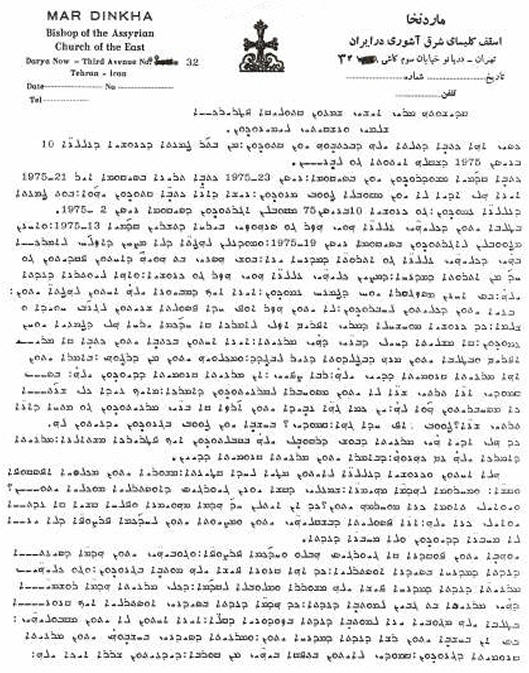
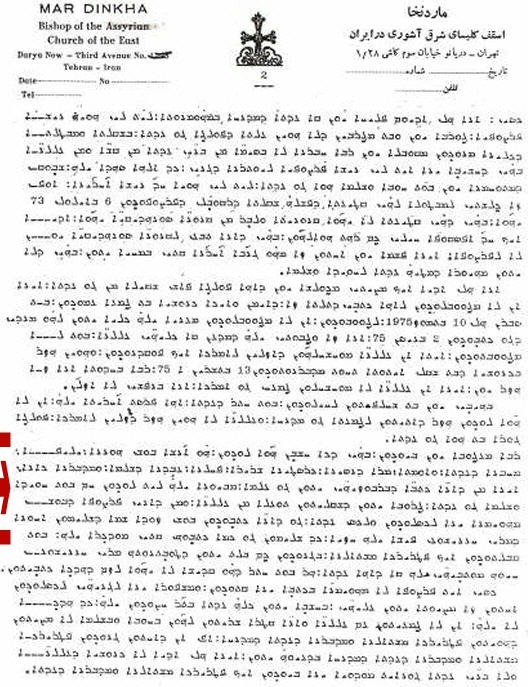
Furthermore, Mar Dinkha, while a Bishop of Iran, wrote a letter dated June 24, 1975 to His Holiness the Late Patriarch Mar Eshai Shimun. In his letter, Mar Dinkha accused the patriarch of being stubborn and looking for excuses for not meeting with the bishops and that he was not willing to take one single step towards unity and peace. He questioned the patriarch for not fulfilling his religious duties towards his U.S. parishioners for two years. Furthermore, Mar Dinkha questioned his patriarch for suspending and/or excommunicating priests and bishops. He also accused him of not bringing love and peace to the Church of the East and stated that the patriarch was seeking revenge against church leaders. Most relevant, Mar Dinkha at the end of his letter criticized the patriarch for making a private letter from Bishop Mar Youkhana Oraham to the patriarch public. A fair question arises here: If Mar Dinkha (as a bishop) thought that the Late Patriarch Mar Shimun should not have made a private letter from Bishop Youkhana public, why did he (Mar Dinkha) now as patriarch make the two private letters of Bishop Mar Bawai to him public, which led to the suspension of the latter bishop?
 |
 |
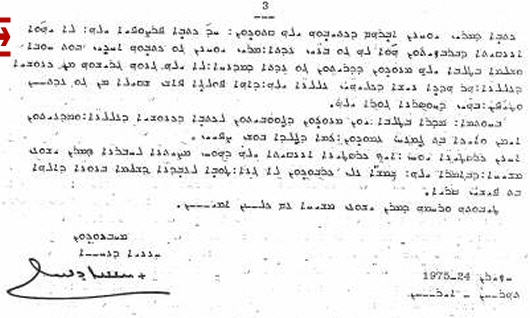 |
| Letter of Mar Dinkha, then Bishop of the Assyrian Church of the East in Tehran, Iran to the Late-Patriarch Mar Eshai Shimmun. Letter is dated 24 June 1975. |
Assyrians must mature politically and nationally. They must be fair and reasonable when addressing and analyzing what happened/happens around and/or within them. Emotional outbursts or attacking those that simply point to facts solve nothing. Leaders, whether civic, political, or religious, are human beings and they make mistakes just as common people do. Leaders must set the example for the rest of us and because their mistakes have the tendency to affect the community at large they must watch every step they take. President Bush, the Pope, Mar Dinkha, Mar Delly, Mar Bawai and every human being on earth have made and will make mistakes. The important thing is do we correct ourselves when we realize the harmful consequences of our mistakes. Fact is that the suspension of Mar Bawai caused a division and unrest in the community that continues to linger. Just ask any Assyrian family from the ACOE around you. Why is the church allowing this division to persist?
The depressing saga continues. On November 20, 2007, a statement distressed many Assyrians. The Bet Nahrain Forum moderators posted that His Grace Mar Meelis Zaia, the Bishop of the Diocese of Australia and New Zealand, and the Secretary of the ACOE Holy Synod, had made a speech at a private dinner with the Bet-Nahrain Inc. Board of Directors and AssyriaSat TV volunteer staff. In that speech, Mar Meelis (according to a post by the Bet Nahrain Forum moderators who attended the dinner) asked the members of the ACOE that supported the decision of the synod in essence to boycott any Assyrian, including business owners, who had supported Mar Bawai. Is this what the Bible teaches the faithful, i.e., boycott, hate and isolate sisters and brothers? The Bible (George Lamsa. Holy Bible: From the Ancient Eastern Text. The First Epistle General of John, Chapter 4, Verse 20) says: "If a man says, I love God, and yet hates his brother, he is a liar; for he who does not love his brother whom he has seen, how can he love God whom he has not seen?" Many within the Bet Nahrain Inc. and Bet Nahrain Democratic Party organizations (affiliated with Sargon Dadesho) cheered Mar Meelis' speech and even asked for harsher measures. How could these people claim to be Christians?
Why is His Holiness Mar Dinkha asking his flock to forgive, however, few of his bishops and priests continue to agitate the parishioners and incite hate? What does such behavior indicate? The suspension is going to cause yet further damage to the Assyrians' cause and future in Iraq, as the church keeps many Assyrians around the world busy with the church conflict, its continuous bitter and expensive U.S. courts lawsuits while the future of Iraq is being drawn.
The future of Bishop Mar Bawai in the post suspension from the ACOE was finally revealed in a "Declaration of Intent" that was issued on January 17, 2008. In the declaration, His Grace, priests and deacons announced the establishment of the Assyrian Catholic Apostolic Diocese (ACAD) and declared that they pursue full communion with the Vatican, which should lead to unity with the Chaldean Catholic Church. On February 10, 2008, His Grace Mar Sarhad Jammo, Bishop of the Chaldean Catholic Church St. Peter the Apostle in the Western United States, issued a statement in which he stated that it was his Episcopal duty to respond positively to the "Declaration of Intent" and to pursue the canonical process with the Holy See and the Chaldean Patriarchate and Synod, in order to formulate and enact a concrete model of ecclesial unity suitable for all concerned. On November 9, 2007, Mar Bawai sent a letter to His Holiness Mar Addai II, patriarch of the Ancient Church of the East. In the letter Mar Bawai suggested a union between the Chaldean Catholic Church, Ancient Church of the East and his newly established Diocese. On December 5, 2007, Patriarch Mar Addai II responded by stating that the kind of unity that Mar Bawai was seeking was not possible because the eastern church was never and will never be under the submission of the Pope and because the Chaldean Catholic Church will not free itself from such submission. The patriarch said that he informed Mar Bawai about his opinion during their get together in Mar Giwargis Church in Arizona on January 20, 2007 and on November 3, 2007 when they spoke on the phone while the patriarch was in Sydney, Australia. However, His Holiness welcomed any other issues that might be raised by His Grace and emphasized that there was enough love and closeness between the Assyrian and Chaldean churches to achieve more. (Read al-ufuq "Upqa" magazine, published by the Patriarchate of the Ancient Church of the East, Baghdad, No. 28, January-March 2008, pages 15-17)
B) In the Chaldean Catholic Church, the five bishops, whose jurisdictions are within the Kurdish regional government (KRG) in northern Iraq (Assyria) or within the area of Kurdish influence, continue to behave in a suspicious manner and challenge the authority of their patriarch in Baghdad, His Beatitude Cardinal Mar Delly. These bishops do not technically report directly to the Vatican, since their jurisdictions falls within the collapsed Ottoman Empire (partitioned post WWI), thus they report to the patriarch in Baghdad, unlike the Chaldean Catholic Church Dioceses of Eastern and Western United States for example that fell outside the Ottoman Empire jurisdictions, therefore, the bishops of Dioceses in Detroit and San Diego (Eastern and Western United States respectively) report to the Vatican directly, technically again. It is an intricate relationship.
Who are these five bishops?
- Bishop Petros Hanna Issa Al-Harboli (Zakho), ordained February 1, 2002
- Bishop Rabban Al-Qas (Amadiya) and Administrator of Arbil, ordained February 1, 2002
- Bishop Mikha Pola Maqdassi (Alqosh), ordained February 1, 2002
- Archbishop Louis Sako (Kirkuk), ordained November 14, 2003
- André Sana, Emeritus of Kirkuk (retired).
We could see that the first four active bishops were ordained in or after 2002. Meaning, either during the presence of the two Kurdish local governments in Arbil and Sulaimaniya (created in 1992) and about a year before the U.S. intervention in Iraq or after it. They are heavily influenced by the Kurdish leadership and they support Kurdish plans to usurp the historic Assyrian Nineveh Plains to the Kurdish region and the KRG. In an article on Asia News, Bishop Louis Sako rejects a Nineveh Plains Assyrian enclave (AsiaNews June 19, 2007). The latest remarks by Bishop Sako at a meeting in Germany (AsiaNews January 28, 2008) regarding the importance of negotiating with the KRG are just the latest of such propaganda. Of course, the concerns of Bishop Sako for the dire future of Christians in Iraq are genuine. In another news, Bishop Rabban Al-Qas is referred to as "Bishop of Kurdistan" (AsiaNews, April 24, 2007). Bishop Al-Qas comes out strong to condemn, what he refers to as the Turkish army incursion "against Kurdistan" (AsiaNews, February 23, 2008) even when Turkey is defending herself against PKK terrorist Kurdish armed guerrillas that are causing havoc in southeastern Turkey and were supported by Barazani for years. His Beatitude Cardinal Mar Delly has to walk a very thin line. His Church is spread in the Arab, Turkish, and Iranian Muslim world. The Arabs, Turks and Iranians look cautiously to all Kurdish movements, including partition from Iraq. In the eye of His Beatitude the Cardinal, supporting the Kurds publicly is not in the best interest of the Chaldean Catholic Church. It is a different case of course when it comes to bishops that are directly influenced by, or are under, the Kurdish control.
On May 7, 2006, His Beatitude Mar Delly stated: "Any Chaldean who calls himself Assyrian is a traitor, and so is every Assyrian who calls himself Chaldean." He made this statement in an interview on Ishtar Satellite TV. The interview was by George Mansour, the General Manager of Ishtar TV at the time and currently Minister of Civic Society in the KRG. Consider that His Beatitude participated in the October 23, 2003 ADM Baghdad Conference and had supported the term ChaldoAssyrians initially.
On June 1-5, 2007, the Chaldean Catholic Church Synod took place in Alqosh, northern Iraq, with eleven bishops attending, which made the forum complete and legal. The five bishops of northern Iraq did not attend the Synod. The future of this confrontation is yet to be seen.
Then there is the position of His Grace Mar Sarhad Jammo. His Grace is very concerned by the Arabization and Kurdification of his church in Iraq. Mar Sarhad wants to de-Arabize and de-Kurdify the church and has embarked on a campaign to emphasize on the Chaldeanism of the church since the 1990s and he was very vocal about that during the 2000 U.S. Census. However, His Grace does not support joining the Nineveh Plains to the Kurdish region.
C) There are other events that twist many heads and keep many people baffled. For example, many ask: What is General Georges Sada, the President of the National Presbyterian Church in Baghdad and Chairman of the Assembly of Iraqi Evangelical Presbyterian Churches, a spokesman and advisor to the ex-Iraqi Prime Minister Dr. Ayad Allawi, doing as the Military Advisor to the KRG? In May 2006, Nechirvan Barzani, the Prime Minister of the KRG, met with Sada and Dr. Terry Law, president of World Compassion, a Christian relief organization based in Oklahoma, U.S. It is claimed that the prime minister vowed to protect the ancient Assyrian Christian community there as well as any new believers from persecution and violence. Nechirvan declared: "I would rather see a Muslim become a Christian than a radical Muslim." Sada reported on Kurds converting to Christianity by the hundreds and that a certain church had some 800 new Kurdish Christian converts. I just wonder, why does Sada think that this is something to propagate? Does he really believe that this nominal Kurdish Muslims conversion would help the indigenous Assyrian Christians of northern Iraq (historic Assyria)? The Kurdish support for Christians (and not Assyrians as an ethnic group) continues of course.
D) Many following the Assyrian affairs understand the influence of Masoud Barazani and the KDP on the patriarchs of the Syriac-speaking churches in Iraq, whether they reside in Iraq or outside. Many believe that perhaps it was Barazani's persuasion if not arm-twisting of those patriarchs to bestow on Aghajan medals of honors of all kinds and shapes to glorify and popularize him. Others believe that the mastermind of this drama is the United States. I want to pose this question: why would Vatican's Pope Benedict XVI, Alexandria's Coptic Pope Anba Shnoda III, and the Supreme Patriarch Karekin II of Armenians, for example, bestow on Aghajan medals of honor? It becomes very strange if we understand that there are perhaps some two-dozen Armenian families and perhaps less of the Copts living within the KRG. Since when were patriarchs of any group giving medals to government officials who took care of 100 or 200 members of their churches in certain countries? Has Pope Anba Shnoda III given a medal to any Sudanese official, because the government of Khartoum hosts some Egyptian Copts in Sudan? I could understand if the Pope decided to bestow a medal upon the Emir of Qatar for his approval to build the first ever Catholic Church in that Muslim country.
Other Remarks
It seems to me that the presumed "Christian" West has finally decided to face the pathetic situation of the Christians of the Middle East and began to emphasize the importance of the survival of Christianity where it was born, i.e., the Middle East. It would be an understatement to declare that the maps of Lebanon, Syria, Iraq and Iran have been redrawn. One could conclude that the war on Islamic fundamentalism has begun under the pretext of the "War on Terrorism" and a new policy towards all the Christians of the Middle East is underway; thus, churches solidarity is shaping up and the Kurdish leadership might have been advised to play the role of protectors of Christians within their region. Thus, Aghajan's front face is of many advantages. First, he is a Christian, thus could be trusted by the naïve Christians. Second, he is a member of the KDP, thus he will ultimately continue to have the Kurdish goals as his primary goals, because, and as I stated in a previous article, Aghajan could not have a split and conflicting national loyalties: Assyrian and Kurdish, at the same time.
Most importantly, this fits well with the Kurdish plans to expand the Kurdish region by usurping the Nineveh Plains to the current Kurdish region under the pretext of protecting the religious minorities. Then came the October 17, 2007 declaration of Pope Benedict XVI who named His Beatitude Mar Emmanuel Delly a Cardinal, an honor that took place on November 24, 2007 Vatican's General Church Council meeting. With that came many statements by Vatican leaders, including the Pope, demanding protection of the Christians of Iraq.
More global concern for the indigenous Syriac-speaking Churches in the Middle East emerged and if that is the case, I just cannot comprehend any reasons behind the isolation policies that certain churches in Iraq continue to follow. The various Assyrian denominations, which claim to base themselves on the Word of God, are built on sand and the Bible as the Word of God has become obsolete. The churches have been politicized and each patriarch or church leader is searching for his own self-satisfaction and glory with lesser considerations to the future of the people on the whole. These patriarchs have been relying on Kurds and Arabs to save their churches and flocks when they should rely on their own power that comes from their unity.
II. On the National Level
On the national level, it is obvious that there is a great momentum behind Aghajan's Chaldean Syriac Assyrian National Council (CSANC). Much of this momentum is orchestrated through the Kurdish leadership in Iraq and through international sources in the back scene that might include the U.S. The CSANC continues to expand and it has opened offices in Europe, Chicago, Detroit and Canada.
Aghajan and CSANC claim that they are seeking self-rule of the "Chaldean Syriac Assyrian" people in the Nineveh Plains. They claim that they have requested that from the KRG and Kurdish leadership (consider the March 3, 2008 meeting of Jamil Zeto, the Head of the CSANC, and his delegation with KDP Political Bureau, headed by Fadhil Mirani). However, there are issues to consider here, because the current Kurdish constitution issued on August 22, 2006 contradicts that claim. Article II, Part 1 of the Kurdish constitution claims already that the Nineveh Plains region (Nineveh Governorate) is part of Kurdistan-Iraq (consisting officially from the three Dohuk, Arbil and Sulaimaniya Governorates only). Then in Article III, the said constitution states that it is not permitted to establish a new region within the borders of the existing Kurdistan-Iraq region. Aghajan and CSANC could claim that they are asking for self-rule, and perhaps they are, but the Kurdish constitution does not permit it. Meanwhile, the ADM has since 2003 demanded from the Iraqi authorities self-administration in the Nineveh Plains and the Iraqi Constitution (Article 125) allows the creation of such administrative area linked to the Central Government. Article 125 reads: “The Constitution shall guarantee the administrative, political, cultural, and educational rights of the various nationalities, such as Turkomen, Chaldeans, Assyrians, and all other constituents, and this shall be regulated by law.” Thus ADM's demands are achievable and legal through the Iraqi Constitution; however, Aghajan and CSANC's demands are prohibited categorically by the Kurdish constitution, unless Aghajan would succeed to convince the Kurdish leadership to amend Article III and other important articles of the KRG constitution and prove that the zone he is advocating is not strictly a Christian one.
The wave of the CSANC that originated in the high seas must come to an end, either gracefully at a peaceful shore or breaks violently on a solid rock. How are we to deal with this wave?
The question that I want to ask is: If the CSANC was a legitimate Assyrian institution, would the KDP be its promoter? Why should individuals that have loyalties to Communists or KDP be part of its current leadership?
On February 23, 2008, CSANC-Germany branch, organized a seminar in Berlin. The seminar was about the demands of the Assyrian people. Among the participants was the Assyrian Democratic Organization (ADO). The APP (Nimrod Baito's group) participated as well and Terry Potros (APP) published an article on ankawa.com web site (click here) about the seminar and the position of the ADO. From Terry's article, one could conclude that the ADO presented different thoughts than what the organizers had wished and/or expected and those thoughts were basically against the recommendations of CSANC. Terry stated that the ADO conditioned that the self-ruled region be linked to central government in Baghdad and not to Kurdish region and that the ADO recommended a safe heaven region for our people instead of self-rule. It would be beneficiary if the ADO issued a clear statement about its participation in the Berlin seminar and where it stands officially.
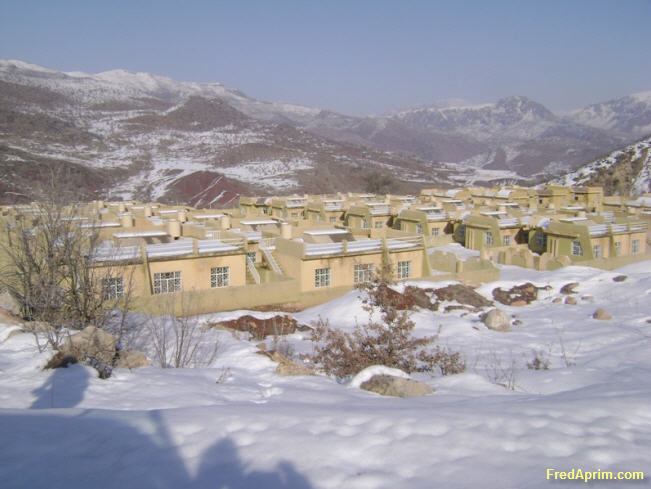
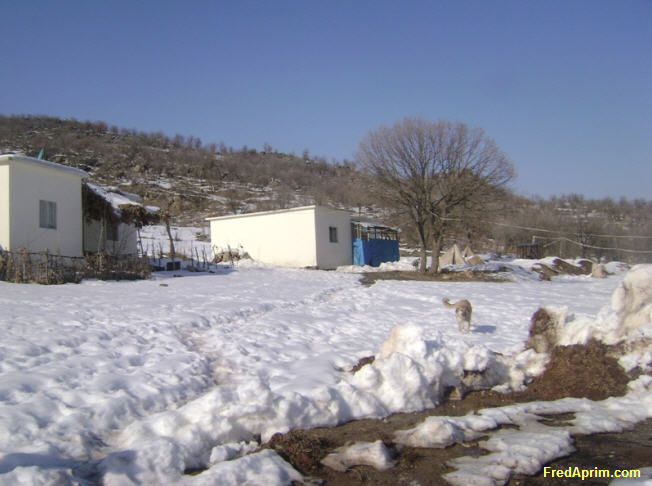
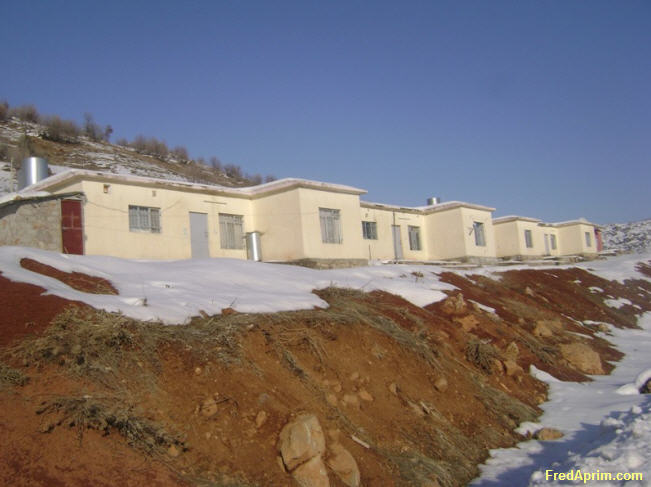
Most importantly, are we questioning what Aghajan is really doing to deserve this attention? Aghajan is the Minister of Finance in the KRG. He spends money that is allocated to his ministry by the KRG or as much as he is authorized by other international institutions through donations. So why is Aghajan taking credit for the construction of churches, houses and mini-villages? Is the money used in the construction his own private money? The answer is no. It is Iraq Oil and U.S. aid monies. What I still want to know is: why are the homes built for Kurds in the Kurdish areas fenced and more spacious and attractive than those built for Assyrians in the Assyrian areas? Furthermore, many people are raising red flags in connection to the Grant Deeds of the houses that are being built in the Assyrian regions? The question is: Do the people that are granted these houses own the grant deeds of the "land and house" or only given the keys to the houses and asked to live in them and cultivate the land? The issue is of great importance, because the connection of these people is not to the land but to the house. It is as if these people are living in what the American Real Estate market refers to as condominiums or town houses. These people have no grant deeds to the land; therefore, they could loose these houses at any given time.
I will leave it to the readers to judge for themselves by examining a sample of photos provided below, which represent some of the houses built under the supervision of Aghajan. Here are four photos, two in the Kurdish villages of Brefka and Tarwanish and two of Assyrian houses built in the villages of Mayeh and Malakhtha. The Kurdish houses cost around $45,000; they are spacious and fenced, while the Assyrian houses are cramped, tiny and unfenced and cost around $10,000.
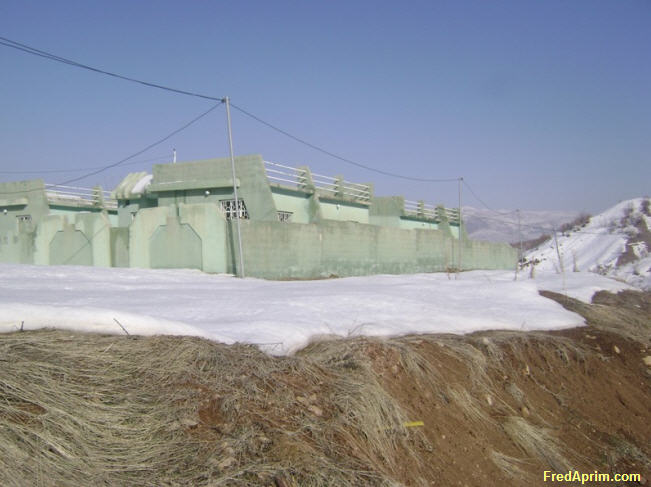 |
Kurdish village of Brefka in north Iraq. |
 |
Kurdish village of Tarwanish in north Iraq. |
 |
Assyrian village of Mayeh in north Iraq. |
 |
Assyrian village of Malakhta in north Iraq. |
On the other hand, Aghajan is using his satellite television station Ishtar TV in a very irresponsible and foolish manner. While Iraq is suffering, Ishtar is broadcasting continuous images and clips of celebrations and parties and where Assyrian women are shown dancing and sometimes most inappropriately. Furthermore, Ishtar TV's propaganda for the Kurdish cause, language, and culture and for Barazani is noticeable. In reality, Ishtar TV is part of the Kurdification process of the Assyrian people.
In the middle of this, the ADM seems to be playing the wait and see game. It might be a smart step at this particular junction; however, many Assyrians are anxious to hear from the ADM. After all, the ADM is the most popular among Assyrians and is widely supported in Iraq and around the world and the two Iraqi national elections proved it as the ADM won 85% of the Assyrian votes in both elections. The ADM continues to follow the policy it drew at its 2003 Baghdad Conference. On November 2, 2006, for example, the ADM sent a memo to the KRG parliament regarding the 2006 Kurdish constitution. The ADM emphasized that the Nineveh Plains region has its own ethnic and religious uniqueness and could be administered and governed by the locals and that the Nineveh Plains should not be joined to Kurdish region before solving many problems according to article 140 of the Iraqi Constitution.
Worth mentioning that many of the members of the ADM Central Committee have stepped down during the June 28-30, 2007 ADM 5th General Congress (but have not abandoned the ADM of course) and many younger nationals have stepped in. Would these young nationals be successful in bringing and applying new thoughts and policies or would they be on a collision coarse with the policies of the Secretary General Younadam Kanna?
The Scrambling Direction
In early 2007, U.S. Congresswoman Anna Eshoo was planning to summit a resolution to U.S. Congress for the establishment of the Nineveh Plains Administrative Area for ChaldoAssyrian Christians of Iraq linked to Central government in Baghdad. This proposal was carefully initiated by Michael Youash, director of the Iraq Sustainable Democracy Project (ISDP), and backed by other Assyrian and Chaldean groups. On Wednesday, January 17, 2007, Fawzi Hariri (KRG Minister) and his advisor Fraidon Darmo, Assyrian Universal Alliance (AUA) were summoned to Washington. They met with Congresswoman Eshoo's staff and claimed, among many things that Assyrians do not have the necessary numbers anywhere in Iraq even in Nineveh Plains to justify having a region of their own, that they do not have the resources and capability to administer themselves, that the establishment of an administrative region for the Assyrians would do more harms and damage than good and recommended that dealing with Aghajan was the right path to follow.
Simultaneously with this visit, members/supporters of the AUA, few BNDP supporters along with clergyman from the ACOE in San Jose stormed the office of Congresswoman Anna Eshoo in Palo Alto, California, to express their opposition for the resolution. I don't know about you, but this I find very troubling and strange.
Meanwhile, Assyria National Assembly, through its website ANA Ashur seems to be the most visible group on the Internet, which continues to hammer at the Kurdish leadership chauvinistic plans and emphasizes on the unity of Iraq and the rights of Assyrians on their ancestral lands in northern Iraq (Assyria).
On March 10-12, 2007 the Assyrian General Conference of Ishaya Isho held its first congress in Istanbul, since many participants could not get visa to enter Iraq. The final statement emphasized the followings:
- An Assyrian federal region within Iraq.
- Kirkuk must be treated as a patriotic and Iraqi issue and should be treated as a little Iraq.
- Return all Assyrian lands and villages that were lost since the creation of Iraq.
- Undo the demographic change that befell the Assyrians in Dohuk.
On March 24, 2007, the Assyrian National Congress (ANC) headed by Sargon Dadesho opened its 8th congress in Ceres, California. Dadesho invited the AUA to attend the congress. This caused a rift in the AUA. Some executive members of the AUA agreed to attend while others opposed it. Dr. Emmanuel Kamber, the Secretary General of the AUA had taken up the leadership of the AUA in July 2005. The AUA needed an intellectual Iraqi born to head the organization at that time for the obvious reasons. Dr. Kamber faced friction with certain executive members from the beginning, which led to his resignation on February 22, 2007. Assyrian observers believe that the suspicious visit of Hariri and Darmo to Congresswoman Eshoo's office was behind the resignation. Darmo succeeded Dr. Kamber as the AUA Secretary General. Consider that Darmo is an advisor to Patriarch Mar Dinkha. Of course, the relationship between Mar Dinkha and the AUA goes back to the days when the patriarch was still the Bishop of Iran and the concept of the AUA was born among Assyrian intellectuals from Iran (officially founded in 1968). On March 1, 2007, Darmo, Acting Secretary General of the AUA, asked for an emergency AUA congress in California to take place prior to Dadesho's ANC congress, to discuss the AUA mess (as other executive members had sidelined their membership), elect a new secretary general and a new executive board. Most importantly, the AUA new congress was to discuss whether to attend Dadesho's congress or not. At the end, the AUA represented by Carlo Ganjeh, Yonatan Bet Kolia, and others attended the ANC congress. According to Odisho Malko, Dadesho and the 8th congress sent an official letter to the Chaldean Syriac Assyrian National Council (of Aghajan) asking them to meet as early as possible to unify the efforts, goals and demands. Of course, Aghajan is well respected and honored on the Bet Nahrain Forum and is referred to as "raabi." This supposedly nationalist institution, i.e., the ANC has yet to criticize the Kurdish leadership for any its unfair treatment of Assyrians, including undermining and marginalizing Assyrians in the Iraqi and KRG constitutions. The ANC and BNDP-Dadesho, through their Forum and AssyriaSat TV satellite station, have become the mouthpiece of the ACOE and have been concentrating mainly on religious affairs of the said church.
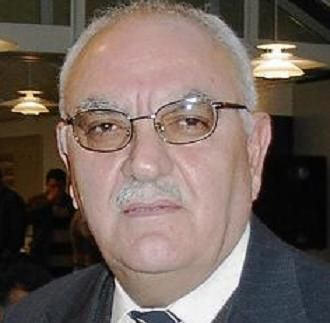
It is worth mentioning here that an AUA delegation from Iran under MP Yonatan Bet Kolia, the representative of the Assyrian and Chaldean Christian communities in the Iranian Parliament (Majlis) and the AUA Asia Chapter Secretary began a visit to the Kurdish region of northern Iraq from the second week of December 2007. Bet Kolia's statements have been anything but factual. On June 6, 2006 (PAYVAND), Bet Kolia said that the propaganda of the West on violation of the minorities' rights in Iran are illusive claims. He said that according to Constitution's Article 19, all Iranian people from various ethnic groups enjoy equal rights. The MP said that Iran is the only country where religious minorities coexist comfortably. On July 25, 2007 (MNA), he pointed to what he referred to as the proper living conditions of Assyrians in Iran, he said: “We are having equal rights with Muslims, my vote carries the same weight as that of a Muslim’s with the power to dismiss or appoint an official and this shows the respect Iran pays to the religious minority groups.” He lauded Iran’s policy of obligatory religious training at schools, adding that it is a unique initiative and “to the benefit of our children.” And on March 1, 2008 (PRESS TV) he returned to support his government after the Security Council imposed further sanctions on Iran and said that he and his co-religionists enjoyed freedom in Iran and were allowed to lead their lives in accordance with their religious teachings and traditions without any restrictions imposed by the government
I wonder, is this why the Assyrian population decreased from more than 50,000 in 1979 (before the Islamic Revolution) to about 10,000 in 2007 and during his leadership in the Majlis?
The efforts of the Iraq Sustainable Democracy Project (ISDP) are to be closely monitored and encouraged as it lately secured a grant of $10 million for the Nineveh Plain region. Of course, this grant prompted Kurdish leadership to consult with its contacts in Washington in order to undermine it, since the Kurds do not want to see any rival group that could take away from the popularity of its popularized figure Aghajan. The success of ISDP prompted Assyrians in Europe to establish a similar Assyrian lobby group in Brussels to work closely and in similar manner with the European Union (EU). Other individual Assyrians in various government and civic institutions within and without the EU, especially in Sweden, The Netherlands and Australia have been working hard to win the support of their respective governments to guarantee the Assyrian rights in Iraq. On the other end, the Chaldean Assyrian Syriac Council of America (CASCA), not to be confused with Aghajan's CSANC, is working diligently to bring the various legitimate Diaspora groups together and work with the U.S. government on several fronts. CASCA comprises from these four organizations: Assyrian American National Federation (AANF), Assyrian National Council of Illinois (ANCI), Chaldean American Chamber of Commerce (CACC) and Chaldean Federation of America (CFA). Two of the most important issues that CASCA lobbies for are: Advocate Article 125 of the Iraqi Constitution and actively work on a proposal for establishing the administrative area in the Nineveh Plains, with direct ties to the Iraqi Central Government. This administrative area would be protected by an Iraqi security force comprised of local trained personnel and would provide immediate security to Christians and other minorities and may also provide an alternative to hundreds of thousands of internally and externally displaced minorities. In essence this seems more in line with what the ADM proposed in its 2003 Baghdad Conference.
Article 140 of the Iraqi Constitution
On January 23, 2008, the special committee that oversees applying article 140 of the Iraqi Constitution decided to form a sub-committee (headed by Ashur Yalda Benyamin) to travel to Telkaif, investigate and present its report by February 28, 2008. This took place due to a report by Abd al-Ahad Afram, Secretary General of the Chaldean Democratic Union Party, member of KDP, and member of Iraqi Parliament (won his seat by being on the Kurdish slate) who asked the special committee to look into the demographic changes that were inflicted on Telkaif and others, hinting to the Arabization of the town. I wonder, why isn't Abd al-Ahad Afram asking the special committee to look into all the demographic changes, specially those inflicted by Kurds over hundreds of Assyrian towns and villages in northern Iraq, including those in Dohuk Governorate? Why only address the Arabization of Telkaif, why not talk about Kurdification of Assyrian towns and villages.
In fact, if we try to compare between the Assyrian towns and villages that have been Arabized and Kurdified in the last three centuries, we would find the scale overwhelmingly tilted toward the Kurdification side. The Kurdish leadership policy of kurdification continues even this very moment. The Kurdish leadership takes advantage of every event to spread Kurdish propaganda. The curriculum in northern Iraq Kurdish region public schools indoctrinates the Assyrian youth and children. Not even clubs escape the Kurdish domination. I leave the photos below to speak for themselves. One photo is for an event in memory of the late Hurmiz Malek Chikko. See the size of the photos of Kurdish leader and Kurdish flags. Is this a Kurdish event or an Assyrian event? The other photo is for Akad Ankawa Club (see the domination of Kurdish flags in the background).
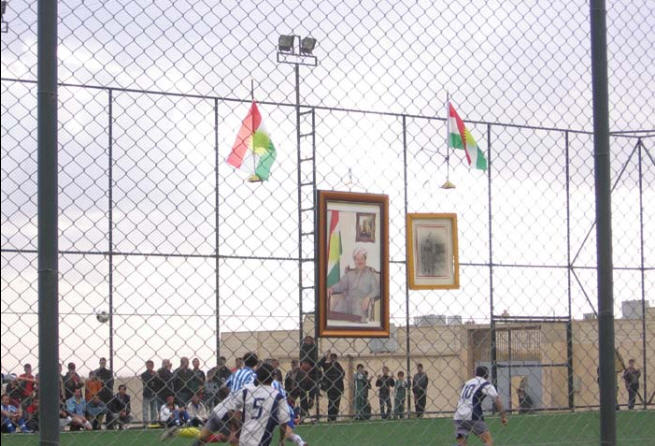 |
A sports event in the memory of the late Hurmiz Malek Chikko in north Iraq. |
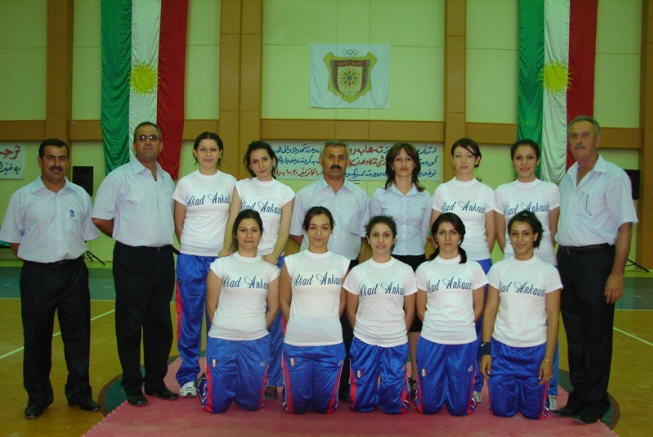 |
The Akad Club of Ankawa in north Iraq. |
Harassment of the Assyrians Continues
Furthermore, harassment, imprisonment and assassination of Assyrian nationalists in northern Iraq continue. Most recently, on February 17, 2008 members of the KDP peshmerga of Barazani abducted writer Johnny Khoshaba from his home in Telkepe (Telkaif). Even though Telkepe is part of Nineveh Governorate and not part of the Kurdish region, Kurdish militants were involved in the abduction where they transferred Mr. Khoshaba to a high Kurdish security prison near Sarsink, north of Dohuk in the Kurdish region. He was charged with criticizing the Kurdish authorities and the KRG Minister Aghajan. He was also warned against writing about the corruption and other scandals by ACOE Bishop Ishaq Khamis and about the loyalty of the bishop to the Kurdish authorities. Mr. Khoshaba was released after four days on condition that he would not criticize the KRG or write about certain religious figures in the future. Mr. Khoshaba's life is still in danger, not without justification, if we recall what happened to other activists, Kurdish included, and more recently the attempted murder of Dr. Kamal Sayid Qadir in Austria by Kurdish Security personnel accompanying Masroor Barazani, the head of the Kurdish Intelligence. Dr. Qadir has criticized the Barazani regime in his writings repeatedly. He was imprisoned and sentenced for 20 years when he traveled to Arbil, but released after mounting pressure from international human rights institutions. Lastly but not least, Aprim Isaac (born 1982) from the region of Barwari Bala was murdered outside his village by Kurds a week before the kidnapping of the Chaldean Catholic Church Bishop Polous Faraj Rahho in Mosul on February 29, 2008.
The "law of the jungle" and the concept that "might is above any law" have been unveiled as the true ideals of the Kurdish authorities in northern Iraq.
Final Thoughts
The Assyrians have come a long way since their genocide during and post WWI and the massacre in Simele, northern Iraq, in 1933. It is unfortunate however that the complexity of the Assyrian society is allowing churches to meddle to a greater degree in the political matters and in the process transform the religious conflict and division that exists between the various churches to the national and political scene. The enemy of the Assyrian people and nation understands this weakness and is using the churches to continue with their struggle and division, thus undermine the national activism and efforts. I just cannot comprehend why one cares whether an Assyrian is a member of the ACOE, Chaldean Catholic Church, Ancient Church of the East, Assyrian Presbyterian Church, Syriac Orthodox and Catholic Churches, or any other church? How could those who claim to be the representatives of God on earth cause so much hatred and division among one people and nation?
Why are the various Assyrian churches working against each other? Is this what Christianity and Jesus Christ taught our church leaders, i.e., if one is not within your church then he/she is your enemy? On the other hand, why are most of our so-called political leaders and nationalists busy with church internal disputes? Why are certain forums, like that of Bet Nahrain Forum and AssyriaSat Satellite TV station preoccupied almost completely with church issues while ignoring the Assyrians in future Iraq and the Kurdish threats?
With the continuous attacks on churches, Ishtar TV aired an interview with Iraqi Prime Minister Nuri al-Maliki on February 29, 2008. The interview was posted later on www.ankawa.com. The following question and answer are of interest:
Ishtar TV: Your Excellency Prime Minister, honestly, the Chaldean Syriac Assyrian people seek to gain self-rule on the lands where they existed historically. For this purpose, the Chaldean Syriac Assyrian National Council was established in order to gain this self-rule. What is your comment regarding this subject?
Nuri al-Maliki: "I say, in all honesty, that the new Iraq is still in motion. The constitution organized the motions of the demands of the fraternal ethnic groups within the Iraqi society. Definitely, all [these demands] must be within the constitution, moving towards the unity of Iraq and the unity of Iraqis whether they acquire federal regions, self-rule, or in governorates not belonging to any region. In the final analysis, all these fit together to form the [Iraqi] national unity fabric. I, for a fact, with the framework of what is granted, and with the framework of the rights granted to other ethnic groups, this ethnic group, in particular, is entitled to demand, put questions, and work to organize such demands. I do not know how this will be from the geographical point of view, the place or the timing aspect of it; however, as a principle and according to the constitution, it is the entitlement of every component to demand its rights, the rights that are within the framework of the national unity and not the rights, which mean any stage of the separation stages. The self-rule, local administration … progress to the regional federations, these all, in our estimations are legitimate demands and the Chaldean Assyrian Christian people have the right to demand them just as the Turkomans are demanding now. This is a legitimate right for all, but what remains is its formation, its ways and means, where and how and this matter is discussed within the constitution framework and within the [Iraqi] national unity."
If this is the case, what is preventing Iraqi governmental institutions from implementing and forming the Assyrian self-ruled region? Is it because no one is asking for it officially, as few claim?
I am asking all Assyrian politicians, nationalist or groups that are involved directly or indirectly via communications with Iraqi groups and/or government and with Kurdish groups and/or regional government (KRG) to issue a clear statement regarding their position with article 140 and the Arabized and Kurdified Assyrian towns and villages. The December 31, 2007 was the deadline to finalize the normalization of Kirkuk and all other disputed territories and have the census taken. That did not happen. A six-month extension has been issued. Are Assyrians achieving anything in that regard?
I am asking Younadam Kanna, Nimrod Baito Youkhana, Romeo Hakkari, Abd al-Ahad Afram, Sargis Aghajan, Ishaya Isho, Sargon Dadesho, Hikmat Hakim, Odisho Malko, Giwargis Sada, Fawzi Hariri, Sa'eed Shamaya, Fraydon Darmo, Younatan Bet Kolia, Gilyana Yonan, George Mansour, Poulus Shamoun, Nuri Mansour, Joseph Kassab, Bashir Sa'adi, etc., etc.: Where are you standing from applying article 140 to all the Arabized and Kurdified Assyrian towns and villages in Arbil, Dohuk and Nineveh Governorates? Have you submitted any reports/petitions regarding all the Arabized and Kurdified Assyrian towns and villages to the Iraqi special committee overseeing the implementation of article 140? Article 140 of the Iraqi Constitution instituted addressing any forced demographic changes and then formed a special committee to do what is necessary to finalize the normalization of the situation. This did not pertain, or was relevant, to Kikruk alone, but also to any other disputed territories. Article 140 relies on Article 58 of the Transitional Administrative Law (TAL). Article 58 was not written for Kurdish claims only. Assyrians have many villages and towns in northern Iraq that have been Kurdified and Arabized, but mainly the former, thus, they are all considered Disputed Territories and the situation there must be normalized as well.
Furthermore, has any political group/individuals demanded officially a self-rule for the Assyrian Christian people within the framework of Iraqi Constitution and the one united Iraq? The Iraqi Constitution supports it and the Prime Minister al-Maliki made it clear that he supports it.
I ask every moment: When will Assyria give birth to a new leader who will personify the principles and courage of giants such as Ashur Yousuf, Na'om Faiq, Fraidon Atouraya, Yousif Malek, Farid Nuzha, Addai Alkhas, David Perley, Youbert Benyamin, Yousip Toma, Youkhanna Esho, Francis Shabo and other giant Assyrians? This nation is not futile, barren or ineffectual to accept living with the slaved and cowardly so-called leaders that are searching only for self-glory and satisfaction?
Arise thy savior of this nation…
Take the leadership realm of this nation from the ineffective and selfish leaders that are assembling meaninglessly with their own circle of relatives and friends in Chicago, Modesto, Detroit, Sydney, Tehran, Baghdad and Arbil.
This nation is desperately anticipating you to emerge…
Arise thy savior, because Assyria had enough of worthless self-appointed leaders that continue to claim leadership of this nation even when they failed miserably to prove in the last two Iraqi national elections that they represent the Assyrian people.
Arise, for Assyrians refuse to live as Kurdish slaves, third class citizens or as Dhimmi people under the rule of Islam on their own historic lands.
Arise thy savior and gather all the fragments of the Assyrian nation … teach them how to work together, in unison and with absolute devotion towards the one ultimate dream … Assyria.
|




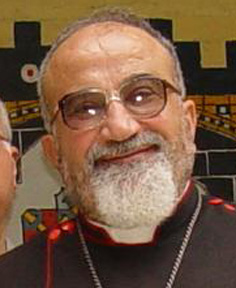
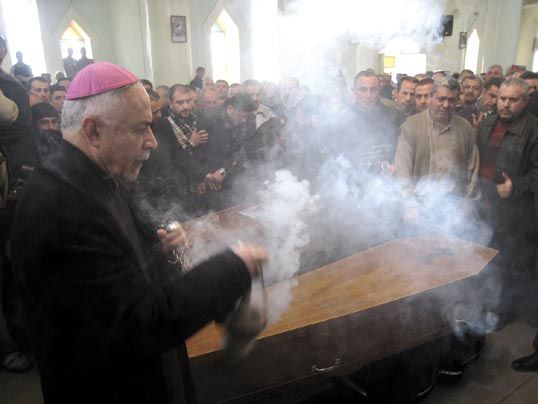



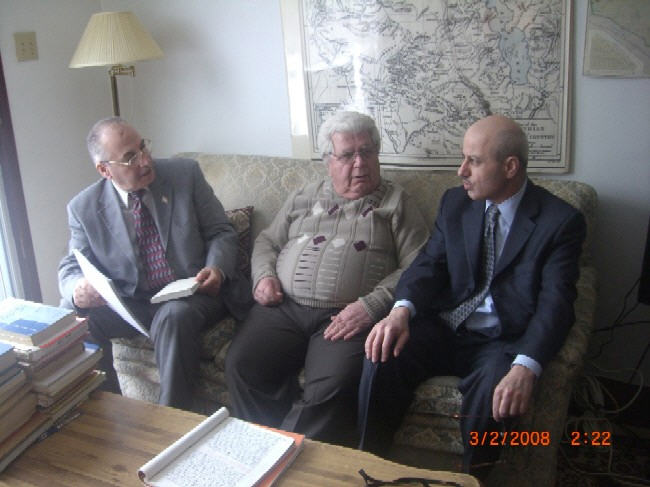

 Mr. Bet-Kolia is a candidate in this week's parliamentary elections in Tehran and his family including his wife and brother live in California. Elections to the Islamic Consultative Assembly in the Islamic Republic of Iran are scheduled to take place on Friday, 14 March.