|
||||||||||||||||
Click on Blue Links in the left column to jump to that section within this issue. Most blue links are hyperlinked to other sections or URLs. |
||||||||||||||||
|
||||||||||||||||||||
|
|||||||||||||||||||||||||||||||||||||
|
On the Path to Reconciliation Habib Afram
|
|||
A Report on the Assyrian Refugees in Istanbul Sister Hatune Dogan
After my visit to Jordan with Nuri Kino and Febroniya Atto I heard that also in Istanbul, Turkey there are Christian refugees from Iraq. Before my visit to Istanbul I had an idea about the situation of our people there. I myself am a refugee from Turkey and I know the mentality of the Turks and Kurds, so I could imagine their attitude towards the Christians from Iraq. I decided to go to Istanbul to study the situation of the Christians of Iraq, to meet our people personally. My feelings pushed me to go there. I took 130 kilograms of various aid supplies for the refugees such as clothing, medicine, toys for children, etc. I took more toys for children to bring them joy and make them happy. I landed on 26th of June 2007 at 6:00 at the Istanbul airport. At 7:00 Aboona Hanna Aykurt came with his daughter, Tullin, to pick me up. I had some rest until 11:00 and then he brought me to Aboona Y. Sag, as he lives closer to the place where our refugees from Iraq are living. I also met Aboona Fransua. He is a Chaldean priest and is a very active and enthusiastic person. He took me to his office and described the severe situation of our refugees from Iraq. We had to plan what to do in the next few days. Thank God there is an organization called ACMC and Aboona Fransua presides over it. Together with some of his people they have established the KASDER society and try to help our refugees. Four people are working full time and others volunteer. Refugees with their UNCHR number are registered also by this Society and they are given clothes and other provisions. I left the clothes I brought with me so that the refugees could have them for free as well. I stayed at this place with Aboona Fransua and his team until 13:00. During that time I could see how good people are working there. Later I was brought to the residence of Bishop Mor Filoksinos Yusuf Cetin. I stayed for a night at the Bishops’ place. First working day with the Iraqi refugees in Istanbul At 10 a.m. Essam Yousif picked me up from the Bishop’s House and brought me to the Refugee Office. He is one of the KESDER members. I talked with all four of them and Fr. Fransua. I asked questions about their working conditions and also about the situation of the Christian refugees in Turkey. I received detailed and factual information from them. Ms. Wasam Davod Iskender and Mr. Esam Yousif expressed their willingness to go with me and show me some refugee families. They both also are refugees from Iraq. They were members of a Chaldean Church and were originally from Kirkuk. Now they have an official refugee status. They both were with me almost all the time and I could visit refugee families with their help. Father (47) Widat Hanna Matte Widat Hanna Matte recently had an operation and he is paralyzed on one side. He is in need of an urgent medical treatment. The family is living in a damp basement and has only one sleeping room. The same living conditions are true for 98% of all Christian refugees from Iraq in Istanbul, because of the very high rental costs in Turkey. Their kitchen is too small; it is only 1 by 2 meters. All the walls are mildewed and half broken. For this so called apartment the family has to pay about 200 EUROs monthly. Their two daughters are visiting “Don Bosco School”. This is a private school and it is in the neighborhood. The school has been funded by the local Chaldean Church. In addition to the many subjects, children learn English too. I gave 100 EUROs to the mother of the family and she got tears in her eyes. It was not so much. But unfortunately I couldn’t give more, because I wanted to help other refugee families as well. June 27: Visiting Rafael Israel and Maryam Yusuf We visited another family. They also are living in a small, damp and mildewed basement. I could hardly stay there because of the moisture. I told myself how could this family live in such severe conditions? The family lost their two sons: Iskender and Israel. Rafael and Maryam have no idea what happened to their sons and where they could be. They also have one daughter, but I couldn’t meet her home. At that time she was cleaning somewhere to earn some money for their everyday bread. Also this family pays for their small living place about 200 EUROs per month. I gave them 200 EUROs and they were very happy with it. Later, I met a quiet young Christian woman, a mother, 39 years old, and her three sons. One of them has heart problems. He overcame very serious surgical operation on his heart and for the rehabilitation he normally needs a special medical examination every two months. Because of the financial problems the family has no possibility to pay for these medical procedures. Two other boys are working, but they always are afraid of being recognized as Christians. Every day at work they hear what the Muslims talk about the Christians and they hide their religious belief. They need this work to earn some money for their everyday life. They also are afraid of being deported because of not having an official refugee status. I got some donation in the amount of 300 EUROs and gave this donation to the family for the medical treatment of their sick boy. After visiting this family I went to “Don Bosco School”. I distributed some toys for children there. Unfortunately it was not enough for all of them. I wanted to buy some ice cream for the other children but we had no time. On that day I was alone because my helpers couldn’t come with me. I stayed at the Bishop’s house and from the balcony of this house I could see several families living in the neighborhood. On that day I visited 5 refugee families from Iraq. Two of these families were living in better conditions. They also have very small premises, but they didn’t live in damp basements as others. The men are working illegally and they are always afraid of being killed because of their religion. On 29 June I met a girl whom I will never forget. Her family consisted of 5 members and they lived in Baghdad, when in 2004 she was kidnapped. The ransom sum was in amount of $USD 10 000. The family and their relatives collected all their money and gold and gave them to their neighbor, who promised to release their daughter. It is very difficult to tell this story. The girl could hardly speak about what happened three years ago. I understood she was violated and that’s why she couldn’t talk about it in the presence of her family. I asked them to leave me with the girl and asked her to tell me her story. During the 10 days she was violated by three men. It was terrible. When she told her story she could hardly breathe because of the tears. I put her in my arms and tried to calm her. This story happened to the girl three years ago, but still she is living in great fear. When she hears Arabic language she panics. I think everyone I met needs humanitarian and moral support. None of these Christian families can’t stay in here. First, they are not officially registered, and second, they live in fear because of their Christian religion. Christian children go to Muslim schools and they have been attacked by Muslim children with knives. They are afraid to go to school and prefer to stay at home, in the damp basements. This is a very long story and it is impossible to describe all the cases in detail. That’s why I will finish here. This is quite enough to understand what is happening to our Christian Assyrian refugees from Iraq. If people want to donate to the Assyrian refugees from Iraq they can donate to the following foundation, mentioning ‘donation to the poor’ (Donations are tax deductable). I will take the responsibility that the most needy get your financial aid: For more information you can contact me at: india_charity@hotmail.de |
|||
Iraqi Christians Pack Churches for Christmas Mass Despite Violence
Courtesy of the the Associated Press (ZNDA: Baghdad) Thousands of Iraqi Christians picked their way through checkpoints and along dusty streets lined with concrete blast walls, packing churches in Baghdad on Tuesday for Christmas Mass.
Death is never far in Iraq — two separate suicide bombings north of Baghdad killed at least 34 people and wounded scores more. But the number of attacks has fallen dramatically in the past few months — the U.S. military says by 60 percent since June — and the country's small Christian community took advantage of the lower violence to turn out in numbers unthinkable a year ago. "We did not celebrate last year, but this year we have security and we feel better," said Rasha Ghaban, one of many women at the small Church of the Holy Family in Karradah, a mainly Shiite district in downtown Baghdad where many Christians live. "We hope our future will be better, God willing." Families streamed into the church's courtyard, wrapped in heavy winter jackets to protect them from the early morning chill. Young children with neatly combed hair held their parents' hands, and women stopped by the front door to pick through a basket of small lacy headscarves, placing them over their hair before walking in. The pews were almost full — women toward the back and on the right side of the church, the men on the left — and still more people streamed in. Outside, police armed with automatic rifles manned a checkpoint at the corner of the narrow street, searching every passing car for possible bombs. Christians have often been the target of attacks by Islamic extremists in Iraq, forcing tens of thousands to flee. Many of those who stayed were isolated in neighborhoods protected by barricades and checkpoints. Less than 3 percent of Iraq's 26 million people are Christians — the majority Chaldean-Assyrians and Armenians, with small numbers of Roman Catholics. A coordinated bombing campaign in 2004 targeted churches in the Iraqi capital, and anti-Christian violence also flared last September after Pope Benedict XVI made comments perceived to be against Islam.
But this year, with the Muslim holiday of Eid al-Adha coming just before Christmas, Iraq has been living through some of the most peaceful moments since the U.S.-led invasion of 2003. Cardinal Emmanuel III Delly, leader of the ancient Chaldean Catholic Church and Iraq's first cardinal, celebrated Mass before about 2,000 people in the Mar Eliya Church the capital's eastern New Baghdad neighborhood. "Iraq is a bouquet of flowers of different colors, each color represents a religion or ethnicity but all of them have the same scent," the 80-year-old Delly told the congregation. Muslim clerics — both Sunni and Shiite — also attended the service in a sign of unity. "May Iraq be safe every year, and may our Christian brothers be safe every year," Shiite cleric Hadi al-Jazail told AP Television News outside the church. "We came to celebrate with them and to reassure them." William Jalal, a 39-year old father of three attending Mass at Mar Eliya, said this Christmas was clearly different. "We didn't celebrate like this in the past two years as we were holding limited celebrations for relatives in an atmosphere filled with fear," said Jalal, a cook in one of Baghdad's social clubs. "Now we feel better as we see all these security forces in the streets to protect us." Bombers still attack city markets, police or army patrols and stores, and the dead bodies of tortured kidnap victims turn up almost daily along river banks or dumped on the streets. Venturing out in large numbers late at night in Baghdad is still unthinkable, so the capital's Christians celebrated midnight Mass in the middle of the afternoon on Christmas Eve. Delly, speaking to The Associated Press at his guarded compound in western Baghdad on Christmas Eve, said fear still pervaded everyday life, despite the fall in violence. "Everyone is still afraid to go out," he said. "Even small animals are afraid of the danger." But in Irbil, a city in northern Iraq's much safer Kurdish autonomous region, thousands packed the Mar Yusef church at night for midnight Mass on Christmas Eve — unlike in Baghdad, where the service was held in the afternoon. Sita Butrous, a 31-year-old Chaldean Christian, wore a tight teeshirt and jeans, clothes she said she could no longer wear in Baghdad. "There's some improvement in security (in Baghdad), but I'm not reassured," Butrous said. "Our sect doesn't have weapons to protect us, and we are a minority." Worshipers headed to the town of Ain Kawa, near Irbil where Kurdish Christians live. Some 1,600 Arab Christian families from Baghdad and nearby regions have settled there, said the local mayor, Fahmi Sulafa. Matti Gordese, a 40-year-old father of four originally from Baghdad, said that "here, I feel my soul is at rest. "I can practise my religion without feeling that suddenly, a bomb will explode and kill you in God's house," he said. Iraqi Army Soldiers Deliver Season's Tidings to Assyrian Christians in Kirkuk Courtesy of the Black Anthem Military News
(ZNDA: Kirkuk) The 2nd Brigade, 4th Iraqi Army Division invited Coalition Forces to a Christmas Party at an Assyrian Christian School in Kirkuk, Iraq, 15 December.
"We want to live and work with our neighbors in harmony ... as Iraqis," Maj. Zyad Junaid Omar, 2-4 IA Civil Affairs officer, said. Zyad, whose father is an Arab and mother a Turkman, said that he invites CF Soldiers along to show Iraqis that, "Americans are good people that want to help." He also wanted the Iraqi public to see how well the IA and CF work together.
"We're honored to be a part of their program," said Markert. "These children are the future of Iraq; they are the most important equation in our mission here." "I fought as a Marine in the Gulf War against some of these Soldiers who I am now mentoring," Ganiszewski said. "This brotherhood we've formed is making a positive impact on the children of Iraq ... its future." He said that both groups of Soldiers agree that what they are doing has a larger impact than "kicking doors down and brandishing weapons." He underlined the importance of getting involved by saying, "That child who is given a pair of shoes may return home and convince a relative not to place an IED out on the road. Or, if he sees someone trying to hurt an IA or CF Soldier, he'll report it." Kidnappers of Christian Doctors Arrested in Kirkuk Courtesy of Asia News (ZNDA: Kirkuk) On 13 December Iraqi police captured the members of a gang specialised in kidnapping Christian doctors. The criminal organisation was made up of 4 brothers, arrested in various raids between December 11th and 13th. Two unemployed relatives aided the brothers. All of the gang members have confessed to the crime. They are Muslims who have no connection to terrorist organisations, or Islamic extremism. They, themselves confessed that they chose the kidnapping industry to “make easy money, what’s more according to sharia taking money from a Christian is legitimate”. The group had a complete list of doctors and pharmacists, possible future targets. The Chaldean Archdiocese’ excellent relations with other civil and religious authorities in Kirkuk greatly contributed to the capture. Committed to protecting the community, Church leaders frequently visit and meet with political parties, government authorities, Imam’s, Sheiks and police and National Guard commanders. The medical profession has long been a target for terrorists and criminals throughout Iraq. Recently in Kirkuk 4 specialised doctors have been kidnapped. Their families were forced to pay extortionate sums for their release, amounting to thousands of dollars. Under increased pressure from constant threats 3 doctors had already left the city in the last few weeks heading for the safer climate of Iraqi Kurdistan. Just this week in Baghdad unknown assailants killed the director of the psychiatric hospital 'al-Rashad', the nation’s most important clinic for mental health problems. These increasing attacks on the medical profession have forced numerous leading doctors and specialists as well as simple GP’s to leave Iraq, thus depriving the nation of their vital talents. In Mosul, for example, threats to male Gynaecologists, who are virtually extinct, have resulted in pregnant women being unable to find medical assistance for child birth. Stabbed Italian Priest Discharged from Turkish Hospital Courtesy of the New Anatolian (ZNDA: Ankara) Italian priest Adriano Francini, who was hospitalized after he was stabbed at a church in Karsiyaka town of western province of Izmir on Sunday, 16 December, was discharged from the hospital on 20 December. Prof. Dr. Sinan Ersin of the Aegean University (EU) Faculty of Medicine Hospital stated that the health condition of Italian priest Adriano Francini is well and he was discharged from the hospital Wednesday morning. 65 year old Priest Adriano Franchini had been missionary in the Aegean port city of Izmir for more than 27 years. The priest was responsible for the Capucine order in Turkey and heads the Church of the Virgin Mary in Ephesus. The suspected 19 year old assailant had traveled to Izmir from a town in the north, Balikesir, claiming to be interested in Christianity. Franchini was taken to hospital, had minor surgery and spoke to the media from his hospital bed. There have been a series of attacks on Christians in Turkey in recent years. In one of the deadlest incidents, three Protestants were killed at the office of a Christian publishing house in the eastern city of Malatya in April. In February 2006, at a time of widespread anger in the Islamic world over the publication in European newspapers of caricatures of Islam's Prophet Muhammad, a 16-year-old boy fatally shot a Catholic priest as he knelt in prayer inside his church in the Black Sea city of Trabzon. Following that killing, a Catholic priest was attacked and threatened in Izmir, and another was stabbed in the Black Sea port of Samsun. In November this year, an Assyrian cleric was abducted in southeast Turkey and rescued by security forces. In April, three Christians were killed at a publishing house that produces Bibles. Last week, Turkey began an investigation into alleged collusion between police officers and at least one of the suspects charged in the killings. The three victims, a German and two Turks who had converted to Christianity, were tied up and had their throats slit. The European Union has long complained that Turkey, an EU applicant, is not fully protecting the religious freedoms of its Christian minority, which makes up less than one percent of the population. 7 Christian Families Leaving Turkey Again Courtesy of Doğan News Agency (ZNDA: Şirnak) A group of Chaldean Christians who were forced to leave their homes in Beytüşşebap, Şırnak, near the border with Iraq, in 1988 due to an escalation in acts of terrorism have once again decided to abandon their homes and move to Belgium. Forty people from seven families first moved to Belgium in 1988 but decided to return in 2004 when the terrorism problem had somewhat abated. The families returned to their village of Cevizağaç and built modern homes. However, with the escalation of outlawed Kurdistan Workers' Party (PKK) terrorism in 2005, they were forced to begin packing for Belgium once again. One villager, Şenol Yaramış, said: "We lived in Belgium for many years but never forgot our country. We longed for our village. We returned in 2004. However, the escalation of clashes last year, especially in our region, kept us up at night. We are going to lock our homes and go to Belgium. If the tension subsides, we will return next summer." Erdogan: Attacks on Christians in Turkey Unacceptable, Against Islam Courtesy of the New Anatolian (ZNDA: Ankara) Prime Minister Recep Tayyip Erdogan said Saturday that attacks on several priests and a publishing house in Turkey are incidents that the government "can never accept." "The Santoro incident in Trabzon, the incident in Malatya (publishing house incident), and the recent incident in Izmir (an attack injuring a priest). We can never accept them," he told in a gathering in Istanbul to exchange Eid al-Adha greetings. "Those who are staging them do not know anything about Islam," he said. Erdogan said his government is at equal distance to Muslims, Christians and Jews in Turkey. "It is true that 99 percent of our country consists of Muslims, but there are also people of different religions." Erdogan said the government has to guarantee security of life to every citizen and said those attacks are not things that a Muslim can do because Islam is the religion of peace and tolerance. "We will do what we have to do (to end these incidents) until the very end," he told. Erdogan said his government is against ethnic, regional and religious nationalism because one can be proud of his/her ethnic identity, but cannot keep it over the other's identity. "Some say there are 38 ethnic identities in Turkey, some think there are 30 different ethnic identities," he told. Erdogan said whatever the number of ethnic identities, what is important is the Turkish citizenship that unites everybody. "As the administrators of the Republic of Turkey, we are at an equal distance to 70 million people in our country," he stressed. On another issue Erdogan said nobody should think of "any surgical operation on Turkey." "If there is any one with such a thought, they will see us against themselves he told members of his party at the Justice and Development (AK) Party office in Uskudar, Istanbul. Erdogan said his party has red lines and it is against regional nationalism. "Former governments made their investments in the west of the country," he said. Erdogan said Turkey is a 780,000-kilometer square country and those who played on regional nationalism made wrong calculations. "We have visited all our cities because we have a policy. It is one flag, one homeland, and one state," he declared. Earlier Erdogan terrorism is a calamity for all humanity, not only Turkey. "Therefore, all humanity has to launch a joint fight against terrorism," Erdogan told members of his party. Erdogan said Turkey staged raids against the PKK in northern Iraq, and took diplomatic, political, economic, social and military steps before this operation. "Turkey has rights under the international law, but being right is not always sufficient," he told. Erdogan said Turkey should explain to the world that it is justified, otherwise it will be isolated. "We visited Gulf countries, EU member states and the United States, and a positive atmosphere emerged after all these visits (allowinmg the raids in northjern Iraq)," he said. Erdogan said Turkey is determined to eradicate terrorism. Mar Delly Calls For Tariz Aziz' Freedom Courtesy of the BBC (ZNDA: Baghdad) The spiritual leader of Iraq's Chaldean Christian community has called on US forces to release Saddam Hussein's ex-deputy Prime Minister Tariq Aziz.
Cardinal Emmanuel Delly made the request in his Christmas message. Mr Aziz, who is himself a Christian, gave himself up to US forces after the invasion of Iraq in 2003 but no charges have been brought against him. He was seen in court last year in his pyjamas, testifying for the defence in the trial of Saddam Hussein. "In terms of Tariq Aziz," Cardinal Delly said, "we have to demand the release of all those who were captured and which have no evidence against them." The Chaldean patriarch of Baghdad, who criticised the US-led invasion in 2003, said his requests to visit Mr Aziz in prison had been turned down. Iraqi prosecutors say he could face charges in connection with the crushing of the Shia Muslim uprising after the 1991 Gulf War. In January last year, Mr Aziz's lawyer said his client had suffered a stroke. In his message, Cardinal Delly also called for religious freedom in Iraq, where many Christians have been kidnapped, killed or forced to flee. Assyrian Monasteries in Turkey Destroyed by Treasure Hunters Courtesy of the Turkish Daily News (ZNDA: Midyat) Treasure hunters are targeting Assyrian monasteries and churches in Şırnak and Mardin provinces as Assyrians have migrated abroad due to terror events in southeastern Anatolia, the daily Taraf reported yesterday. The project to develop cultural heritage as part of the Southeastern Anatolia Project Region, organized by Midyat Assyrian Culture Association (MSCA) with European Union funds, seeks to locate and preserve vulnerable cultural artifacts for future generations. “There is no place left in our houses of worship that is not dug out and destroyed. A history which is the common heritage of the world is disappearing,” said Yuhanna Aktaş, head of MSCA. Our sites of worship should be protected and restored by the Culture and Tourism Ministry immediately, said Aktaş, adding that Assyrians do not have the financial resources to do this work alone. |
Assyrian Professor Murdered in Sweden
(ZNDA: Stockholm) Dr. Fuat Deniz, an Assyrian professor of sociology at Örebro University in Sweden, was stabbed with a knife in the back of the neck on 11 December. A six-hour surgery was performed immediately, but to no avail. His conditioned continued to worsen until his death due to his injuries on Thursday, 13 December. He dies two days later He was 40. The attacker remains at large. Dr. Deniz lectured at the Department of Social and Political Sciences at Örebro University. So far there is no conclusive evidenceno as to the motive for Dr. Deniz' murder. Swedish security police (SÄPO), the equivalent of the FBI in Sweden, suspects that the attack was politically motivated. Dr. Deniz’s work was mainly focused on the Assyrian identity and touched upon the Turkish genocide of Assyrians. The identity of the suspect has not been fully described at press time, but a sketchy description has been provided by the Swedish police as a result of interviews with witnesses and a picture provided from a suveillance cameria. According to the Swedish daily, Dagens Nyheter, Dr. Deniz and other researchers who have contributed to the study of the Assyrian Genocide in 1915- including Dr. David Gaunt - have been receiving death threats. Dr. Deniz was born in the village of Kerburan in the Tur-Abdin region in south-east Turkey. His family emigrated to Sweden when he was only 9. He was invited to speak at the 69th Annual National Assyrian Convention in Detroit, Michigan where he lectured on the "Maintenance and Transformation of Ethnic Identity: the Assyrian Case". This was also the title of his doctoral dissertation: "The Odyssey of a Minority. Maintenance and Transformation of Ethnic Identity in Response to Processes of Modernization - the Assyrian Case". His dissertation was written in Swedish with an English summary. On Wednesday, 19 December at 6 pm Swedish time eight Swedish university cities -Örebro, Stockholm, Jönköping, Uppsala, Lund, Linköping, Gothenburg and Norrköping - held special memorial ceremonies simultaneously for Dr. Fuat Deniz. The Swedish flag in front of the Örebro University was flown at half mast. Dr. Deniz was to receive the Örebro University's "Good Educator" award last week. He was admired among colleagues and students who chose him as their favourite for the award. Fuat Deniz is survived by his wife and a 3-year-old daughter whose birthday was celebrated last week. US House of Reps Passes $10M Assistance to Nineveh Plain U.S. Rep. Mark Kirk 19 December 2007 Kirk Language Providing $10 Million to Assyrian Christians in Nineveh Plain Final Omnibus Appropriations Bill Reasserts Support for Nineveh Plain;
Washington, D.C. – The House of Representatives today will pass a final omnibus appropriations bill, including $10 million in assistance to internally displaced religious minorities in the Nineveh Plain region of Iraq. U.S. Rep. Mark Kirk (R-Ill.) first proposed the $10 million initiative in June as an amendment to the House State-Foreign Operations Appropriations bill. The amendment passed unanimously by the full Appropriations Committee and later passed the House. “As Sunni-Shia sectarian violence drops and refugees begin returning home, religious minorities in Iraq remain at risk and ignored,” Kirk said. “We must build a safe and secure home for Christians in Iraq. This $10 million is the first step toward building that home in the Nineveh Plain.” In addition to the $10 million, Kirk won additional language in the final omnibus appropriations bill, ordering the State Department to designate a point person within the Department to “focus, coordinate, and improve United States government efforts to provide for [Assyrian] humanitarian, security and development needs.” Kirk said he plans to arrange a meeting early next year between Assyrian-American leaders and the new State Department designee. “There must be a clear line of authority and accountability at the State Department for assistance to the Nineveh Plain – less bureaucracy and a lot more action,” Kirk said. CASCA Release: $10 Million Appropriation Headed to President's Desk For Immediate Release Chaldean Assyrian Syriac Council of America CASCA Advocacy Successful in Shining Light on Plight of Chaldean/Assyrian/Syriac People and Securing U.S. Government Aid $10 million appropriation in the recently passed Congressional Appropriations (Washington, DC) – Today the U.S. Congress completed action on the Fiscal Year 2008 Omnibus Appropriations Act, sending the bill to the President’s desk for his signature. For the first time, the bill contained money and policy direction for administering U.S. Government aid to address the suffering of the Chaldean/Assyrian/Syriac people of Iraq. Specifically, the bill includes the following language: “The Appropriations Committees support the use of prior year funds, as proposed by the House, to assist religious minorities in the Nineveh Plain region of Iraq, and direct that prior to the obligation of funds, the Department of State consult with ethno-religious minorities and locally-elected representatives to identify Iraq-based non-governmental organizations to implement these programs. The Appropriations Committees are concerned about the threat to the existence of Iraq’s most vulnerable minorities, particularly the Assyrian/Chaldean/Syriac Christians, who are confronting ethno-religious cleansing in Iraq. The Appropriations Committees expect the Department of State and USAID to designate a point person within the Department to focus, coordinate, and improve U.S. Government efforts to provide for these minorities’ humanitarian, security, and development needs.” The language is a tremendous victory for the advocacy efforts of the newly formed Chaldean Assyrian Syriac Council of America (CASCA). Jackie Bejan, the Executive Director of CASCA hailed the Congressional action, “The struggles of our people in Iraq are finally coming to light and Congress is stepping up to address the real challenges of the less recognized ethno-religious minorities in a meaningful way.” Martin Manna, another director from CASCA added, “Before this year, we had very little luck in getting the needs of the Chaldean/Assyrian/Syriac people recognized, much less addressed. By coming together, we achieved a major milestone for our people.” Ms. Bejan added, “There were several members of Congress who we worked with that understood the importance of making progress on this critical issue. I want to especially thank Representatives Eshoo, Kirk, Wolf, and Knollenberg for their leadership on this issue. I also want to recognize the openness and assistance of Representative Lowey and Senator Levin in this endeavor. Without the assistance of every one of these thoughtful leaders we would not be able to have achieved this outcome.” CASCA was formed in 2007 to educate U.S. policymakers on the plight of Iraq’s Chaldean/Assyrian/Syriac Christian minorities and to advocate for policies that will support stability, security, aid, and reconstruction relief within Iraq and assistance and resettlement of the most vulnerable refugees of this fragile population outside Iraq. CASCA was formed from the following 4 organizations: The Assyrian American National Federation, The Assyrian National Council of Illinois, The Chaldean American Chamber of Commerce, and The Chaldean Federation of America. Iraq’s true minorities are being driven from their homes and communities all across Iraq. Many have returned to their ancestral homeland in Nineveh, and many more have fled the country. The violence, economic and social displacement that drove them from their homes in Baghdad and other, once-integrated Iraqi cities has followed them to Nineveh. Today, violence permeates their existence and threatens to erase the presence of these people of antiquity from their ancestral homeland in Iraq altogether. ISDP Release: $10 Million for Nineveh Plain IDPs Passes Iraq Sustainable Democracy Project For Immediate Release $10 Million for Nineveh Plain IDPs Passes Washington: December 21, 2007 – In June this year ISDP announced the passage of $10 million in funding for internally displaced persons (IDPs) in the Nineveh Plain, proposed by Congressman Mark Kirk (R-Ill.). It rallied numerous concerned representatives, and with its ease of passage in the Senate, the focus is on maximizing outcomes for IDPs. The $10 million passed the Senate easily given the extent of the crisis facing the Assyrian/Chaldean/Syriac Christians, and other religious minorities in the Nineveh Plain. “ISDP is proud that its policy work and research could be the driving force behind this entire effort and that others in the community were able to rally to it and support our ground-breaking work”, said ISDP’s Project Director Michael Youash. The $10 million amendment is a major breakthrough as it focuses on a specific geographic area – the Nineveh Plain. This is unprecedented and reflects close to 3 years of constant work by ISDP to raise awareness on the vital role of the Nineveh Plain in ensuring a future for Assyrian/Chaldean/Syriacs, Shabaks, Yezidis and others. This message is growing, as demonstrated by Rep. Kirk’s own statement that, “We must build a safe and secure home for Christians in Iraq. This $10 million is the first step toward building that home in the Nineveh Plain.” Additionally, it rallied numerous community organizations and countless individuals to the push, making this a genuinely grass roots effort. From ISDP’s offices in Washington, events unfolded that made an entire community heard with historical results. “We are overjoyed that so many people have been able to play a part in this process and that other organizations have been able to take forward their own work as a result of ISDP’s efforts in Washington,” added Youash. ISDP has been working for months with aid and relief partners in Iraq on the types of projects needed for minorities, including IDPs, and coordinating its unique expertise with governmental and non-governmental stakeholders. This always has been and will remain a primary focus for ISDP. Reconstruction and development is one of the central policy pillars on which ISDP is working; with security and governance matters also being of central importance. International Genocide Scholars Association Officially Recognizes Assyrian, Greek Genocides For Immeidate Release Adam Jones, Ph.D. In a groundbreaking move, the International Association of Genocide Scholars (IAGS) has voted overwhelmingly to recognize the genocides inflicted on Assyrian and Greek populations of the Ottoman Empire between 1914 and 1923. The resolution passed with the support of fully 83 percent of IAGS members who voted. The resolution (text below) declares that "it is the conviction of the International Association of Genocide Scholars that the Ottoman campaign against Christian minorities of the Empire between 1914 and 1923 constituted a genocide against Armenians, Assyrians, and Pontian and Anatolian Greeks." It "calls upon the government of Turkey to acknowledge the genocides against these populations, to issue a formal apology, and to take prompt and meaningful steps toward restitution." In 1997, the IAGS officially recognized the Armenian genocide. The current resolution notes that while activist and scholarly efforts have resulted in widespread acceptance of the Armenian genocide, there has been "little recognition of the qualitatively similar genocides against other Christian minorities of the Ottoman Empire." Assyrians, along with Pontian and Anatolian Greeks, were killed on a scale equivalent in per capita terms to the catastrophe inflicted on the Armenian population of the empire -- and by much the same methods, including mass executions, death marches, and starvation. IAGS member Adam Jones drafted the resolution, and lobbied for it along with fellow member Thea Halo, whose mother Sano survived the Pontian Greek genocide. In an address to the membership at the IAGS conference in Sarajevo, Bosnia, in July 2007, Jones paid tribute to the efforts of "representatives of the Greek and Assyrian communities ... to publicize and call on the present Turkish government to acknowledge the genocides inflicted on their populations," which had made Asia Minor their home for millennia. The umbrella term "Assyrians" includes Chaldeans, Nestorians, Syriacs, Aramaens, Eastern Orthodox Syrians, and Jacobites. "The overwhelming backing given to this resolution by the world's leading genocide scholars organization will help to raise consciousness about the Assyrian and Greek genocides," Jones said on December 15. "It will also act as a powerful counter to those, especially in present-day Turkey, who still ignore or deny outright the genocides of the Ottoman Christian minorities." The resolution stated that "the denial of genocide is widely recognized
as the final stage of genocide, enshrining impunity for the
perpetrators of genocide, and demonstrably paving the way for future Extensive supporting documentation for the Assyrian and Greek genocides
was circulated to IAGS members in the months prior to the vote, and is
available at http://www.genocidetext.net/ FULL TEXT OF THE IAGS RESOLUTION
Christmas Message of Save Assyria Front For Immediate Release Save Assyria Front Since the fall of Saddam Hussein, the Assyrians have four times wished each other Merry Christmas. While the unarmed Assyrian nation is still confronting terrorism, Kurdification and Islamization conspiracies by the defiance of a large portion of the Assyrian people in the bereaved Assyria, we greet all the Christians in the world for the fifth time. We congratulate the oppressed Assyrian nation and all its persecuted religious sects on the occasion of Jesus Christ’s birthday. As we approach the New Year, we offer our best wishes to the hostage Iraqi nation including the Assyrians and the other groups. We call for peace and understanding each other in a patriotic Iraqi spirit, far from ethnic and religious intolerance, in order to make Iraq an example of democracy as the Iraqi opposition has always promised after the fall of the former regime. In order to achieve the legitimate goals of the Assyrian nation, the Save Assyria Front promises Assyrians to cooperate in facilitating the union of the Assyrian political organizations as much as possible. These are all mentioned in the closing statement of the Assyrian expanded conference, which was held in Stockholm from the 15th to 17th of December 2006. As our main aspiration, we continue to ask the Iraqi government and the international community to recognize Assyrians as the indigenous people of Iraq according to the principle of equality. Long live the Iraqi nation
Brother of Late Chaldean Patriarch Accused of Iraqi Spying Courtesy of the Detroit News (ZNDA: Detroit) An active member of Metro Detroit's Chaldean community and a younger brother of the late patriarch of the Chaldean church was secretly indicted for spying for Saddam Hussein shortly before he died, court records show. Jamal Bidawid, who was 67, died of a heart attack in a health club hot tub last month, federal officials said Thursday. Since then, Bidawid, of Sterling Heights, has been praised by some users of an online message board popular with Chaldeans as a "great Assyrian," but denounced by others as a traitor.
Federal court records show Bidawid was named in a sealed federal indictment in August, accused of infiltrating opposition groups and spying for Saddam Hussein's Iraqi Intelligence Service. He was the third Detroit-area man charged with spying for Saddam. On 27 November U.S. District Judge Julian Abele Cook quietly dismissed the charges of conspiracy, illegally acting as a foreign agent and violating the embargo with Iraq. Cook cited Bidawid's death Nov. 7 as the sole reason for the dismissals. Though charged, Bidawid had not been arrested or arraigned and the charges against him had not been publicized. "I don't believe it," Bidawid's daughter, Balsam Bidawid of Hazel Park, said Thursday. "He was not a spy." But Andy Akrawi of Sterling Heights, a local member of the Assyrian Democratic Movement, said intelligence reports Bidawid filed about Detroit-area members of the group that opposed the Saddam Hussein regime were found at Iraqi Intelligence Service headquarters after the fall of Baghdad. "Who could you trust more than the patriarch's brother?" Akrawi asked. "I'm so sorry he died. I wanted to go see him in jail." Patriarch Raphael I Bidawid, the head of the Chaldean Catholic Church and Jamal Bidawid's older brother, died in Beirut, Lebanon, in July 2003. According to the indictment, which was ordered unsealed 19 November, Bidawid illegally acted as an Iraqi agent from 1998 until 2002, used the code name "374," and was paid several thousand dollars by the Iraqi Intelligence Service to cover expenses. Bidawid, an Iraqi-born U.S. citizen, provided the Iraqis with cassette tapes and other materials, the indictment alleges. The indictment does not mention the specific groups Bidawid allegedly spied on. It does mention a trip Bidawid allegedly made in 1999 to the annual Assyrian Book Fair in Chicago. Sam Darmo, a Phoenix, Arizona Realtor who hosts the California-produced satellite television program "Assyrians for Justice," said he exposed Bidawid on his TV program in March. "He spied on the Chaldean community in Detroit, the Assyrian community in Chicago, and mainly the Assyrian Democratic Movement," endangering relatives of members who were still in Iraq, Darmo said, adding that he has copies of the Iraqi Intelligence Service reports related to Bidawid. Balsam Bidawid said she knew FBI agents had questioned her father, who was retired from the plumbing and heating business, but her understanding was that federal officials had dropped the matter. Ghazi Al-Awadi, 78, of Dearborn, was this month sentenced to 18 months in prison for spying for Iraq. Al-Awadi, who earlier served prison time for stabbing his son-in-law to death, bolstered his credentials with the Iraqis by telling them the killing was related to his son-ion-law's connections to an opposition party, officials said. Najib Shemami, 59, of Sterling Heights, who allegedly traveled from Michigan to Iraq on several occasions between 2002 and 2003 to meet with Iraqi intelligence officials, is awaiting trial. Synod Approves Consecration of Syrian Orthodox Bishop Courtesy of the Hindu (ZNDA: Kerala) A specially convened synod of the Malankara Orthodox Syrian Church held at the church headquarters at Devlokam, Kerala, India on Thursday, December 6th recognised the consecration of a German priest as Bishop of the newly formed Orthodox Archdiocese of Europe. Ramban Moosa Gurgan, a priest of the Antiochian Church in Germany, under the Holy See of Antioch, was consecrated Bishop Savarios Moosa Gurgan by two Bishops of the Orthodox Church clandestinely at Thrissur. The development marks a milestone in the decades-old war of nerves between the Orthodox Church and the Holy See of Anitoch. On 6 December, the Catholicate office said the Catholicos Baselius Marthoma Didymos I and the synod sought explanation from the two Bishops on the issue and they were satisfied with the explanation and accepted them. A section of the German Church which had differences of opinion with the parent church had sought the help of the Malankara Orthodox Church which had a similar fight with Antioch, in establishing their identity. The issue of consecration of the German Bishop had come up at the synod held in August. Things had moved in a clandestine manner and the progress was slow, as differences of opinion developed among the five Bishops who were in the know of things. However finally, while two of them kept away from the consecration ceremony, two of them were present at Thrissur. The third extended his support through a special message. Friday’s synod was scheduled earlier to discuss the revised norms for bishop-candidates. The Catholicate office said the decision to accept the explanation of the two bishops were unanimous. U.S. Assyrians Worry about Cultural Survival
Courtesy of the Associated Press (ZNDA: Modesto) Isaac Samow's ancestors have occupied Mesopotamia for millennia, surviving innumerable conquests and massacres. The headstones in the cemetery of his hometown near Mosul, Iraq, document centuries of his family's history there, and the ancient ruins that dot the arid plain near the Tigris and Euphrates rivers tell of his people's role in building humanity's first cities. Yet another war is now threatening the survival of Assyrian culture and language -- a derivation of the tongue spoken by Jesus -- in its native land. Among the first converts to Christianity, thousands of Assyrians have fled since the U.S. invasion. Samow's relatives are scattered worldwide, with some in Canada, Australia, Denmark, New Zealand, Greece, the Netherlands, England, Sweden and Germany. Others are refugees in Syria, Jordan, and inside Iraq, not knowing whether they can return to cities and towns carved into Sunni or Shiite enclaves. In such a climate, minorities such as Assyrian Christians face an uncertain future. "My children speak my language, but what about my grandchildren?" Samow said from his home in Modesto. "If there are no Assyrians left in Mesopotamia, how will our culture live?"
Successive waves of Assyrians have landed in the Central Valley, beginning with those who fled a massacre by Turks near the end of World War I. They were joined by families who escaped Iran when an Islamic revolution overthrew the shah in 1979, then by new arrivals escaping the first gulf war, when Samow came here with his family. A similar Assyrian community also thrives in Chicago. But with their numbers now dangerously low in the region where Iran, Iraq and Turkey meet, Assyrians here fear that the current wave of migration could mark their end. Community leaders in the United States are working to support Assyrians back home. The Assyrian American Civic Club of Turlock is housed in a fortress-like hall decorated with winged bulls that have human heads -- a traditional Assyrian protective figure known as a lamassus. An old map on the wall shows population centers that no longer exist. "Once, most villages in that area were Assyrian," said the club's president, Fred Betmaleck, who is Iranian-Assyrian. "Now there are very few left." The club works to keep Assyrian culture alive by hosting a radio station that plays Assyrian music and carries community news. It also holds festivals, such as the Assyrian New Year's celebration known as Kha-b-Nissan, in the spring. Members also raised money through dances and raffles to help Assyrians who remain in Iraq. "We try to help them stay there as much as possible, because when you leave, you never go back," Betmaleck said. "We encourage them not to come, but when there's persecution, what can you do?" For Isaac Samow, staying was too risky an option. He and his wife took their seven children -- the youngest a 1-year-old that Samow strapped to his back -- on a dangerous hike across the rugged snow-covered mountains between Iraq and Turkey. He spent all the money he had saved from his job as a construction contractor to smuggle his family to the dirt-floor tents of a Turkish refugee camp, then to Istanbul. They spent a year and a half in Greece before, with Red Cross help, they applied for asylum and were accepted into the United States in December 1992. Now, 15 years and another Iraq invasion later, the family is safe, but they worry about relatives back home -- and about the survival of their culture. "We feel this could be the end of a people who have survived since Babylonian times," said Zack Samow, 34, Isaac's oldest son. "This could be the wave that pushes Assyrians out of their homeland for good." Relatives and friends in Iraq have found menacing notes on their doors and heard of churches being bombed. The priest in Samow's hometown of Telkaif disconnected his phone to stop the barrage of threats, the family said. As cities and towns are reshaped at gunpoint into homogenized Sunni, Shiite or Kurdish territory, groups without their own militias or political power are left vulnerable to attacks, said Nina Shea, director of the Hudson Institute's Center for Religious Freedom and a member of the U.S. Commission on International Religious Freedom. Assyrian Christians and other ethnic and religious minorities have been particularly hard-hit by the sectarian violence, she said. Among those leaving are Jews; Sabean-Mandeans, who follow John the Baptist; Yazidis, who are ethnic Kurds whose religion precedes Christianity and Islam; Baha'i; and Iraqi Turkmen, Shea said. They might dress differently from their Muslim neighbors, speak other languages and pursue businesses that make them stand out -- selling liquor, for example. In addition to a construction business, Samow also ran three eating and drinking establishments in Iraq. Besides their religion, the fact that many speak English and work as translators means they also are often seen as siding with the United States, said Bill Frelick, refugee policy director for Human Rights Watch. "They're not just being hunted down because of their religious identity," he said. "Many of them are regarded as being pro-Western." Their absence could allow the region to become less tolerant as it loses the diversity that has characterized it for centuries. That could have long-term geopolitical consequences, Shea said. "It's a profound loss," she said. "These populations have lived together for a long time, but if this continues, it will not be a plural society any more. It'll be devoid of non-Muslims." Van Cliburn Competition Winner Credits His Assyrian TeacherBased on an article in the Modesto Bee
(ZNDA: Modesto) Jon Nakamatsu, 39, a San Jose navtive who won the 1997 gold medal in the prestigious Van Cliburn International Piano Competition credits his Assyrian piano teacher for most of what he knows about piano playing. The Van Cliburn Competition is held every four years and the winner and runner-ups receive substantial cash prizes plus a concert tour at world-famous venues featuring pieces of their choice. It rivals the Tchaikovsky competition. Nakamatsu performed a recital at the Gallo Center for the Arts last weekend. He says that his teacher, Marina Derryberry "was an incredible influence musically and became the conservatory for me." An Assyrian, Derryberry grew up in Tehran, Iran, and studied in the late Shah's conservatory. Now retired, she started teaching Nakamatsu in Sunnyvale when he was only 6 and continued coaching him through adulthood. He recalls her speaking fondly of visiting family and friends in the Assyrian community in the Turlock area. Nakamatsu considered pursuing a music degree but decided not to on his teacher's advice. She had spoken with a lot of professionals in the field who pointed out that enrolling in an acclaimed music school is no guarantee of a music career. Nakamatsu settled on studying German at Stanford University because he had always wanted to learn another language and he thought that one would be particularly helpful with music since so much of the great piano repertoire came out of German-speaking cultures. To hedge his bets in case his piano career didn't work out, Nakamatsu got a master's degree in education at Stanford and got a job teaching German at a high school in Mountain View. He was still working at the school when he entered the Cliburn competition. Out of the 250 pianists who applied to enter the contest, he was one of 165 given live auditions by judges, and then one of 35 invited to perform in Fort Worth, Texas, where the finals are held. "For me, that was a last chance," Nakamatsu said. "The competitions end (when pianists are) around 30 years or so, and I was already 28. The competition is only every four years and then I would have been too old." Nakamatsu didn't feel particularly confident about his abilities in Texas and considered quitting after the first round. But he persevered and emerged victorious at the end, becoming the first American pianist to win the contest in years. He quit the teaching job and launched his full-time professional solo career. Today, he is constantly on the road, going from concert to concert, and he couldn't be happier. "It's like living a dream," he said. "It's something in some ways I thought I'd never be able to do. Now that I'm doing it, I feel like I'm on vacation. I can't believe this is my life." At his recital at the Gallo Center, he played Haydn's dynamic Sonata No. 33 in C Minor, Beethoven's lyrical Sonata No. 15 in D Major and Chopin's technically demanding Andante spianato and Grande Polonaise. He also played three pieces by the great pianist Liszt, as well as five dances from "Danses Fantastiques" by Armenian composer Loris Tjeknavorian. |
|||||||||
|
An Assyrian Christmas Prayer Maggie Yonan The Ancient Assyrians had a name for Christmas-They called it YALDA-Just as they had a name for God, (the beginning) which they called ASHUR. Since we have those words in our language, I use it, lest we forget these words, and they get obscured and lost in time. Ashur is still our holy name, whether we use it for our people, our scattered nation, our language, or holy land. As Assyrians, we are all suffering, no matter who we are, no matter where we live, what we are doing, how we worship Ashur, or what political ideology we follow, because we are all struggling to maintain our national existence, our holy land, our language, and our culture. At times we forget all this, and our struggle manifests itself in ways that are incoherent, fractured, divisive, internally damaging, and externally skewed. When tempers flare, when passions run a muck, and our ideologies get the better of us, we pray that you deliver us from ourselves, dear Ashur, for you know better than all of us, that we are the sons and daughters of one nation, indivisible, fighting for liberty, and justice for ourselves and for others in your creation, just as our forefathers did centuries ago. It is in those times we need your wisdom and inspiration, dear lord Ashur. It is in those times that we ask you to shine your Shamash light and help us to see that we are all inter-connected, inter-related, and parts and parcels of the whole of Ashur, each acting a role to fulfill the purpose of our BE-ing. If we are left alone just a few decades, without massacres, without genocides, we begin to create, to rebuild what was destroyed, to recover from loss and displacement, and we begin to grow and flourish, and find ways to heal ourselves and our tattered nation. We begin to work for our existence, our survival, working to keep your holy name alive, the name we chose for ourselves, our land, our language, and our nation. Help us to heal and get past the darkness, our lord Ashur. Help us to work selflessly for our struggling nation, and future generations of Assyrians still to come, still unborn. Help us create something they will be proud of and will gladly work to preserve for all eternity. Keep us whole dear Ashur, by helping us to recognize our weaknesses and overcome them. Help us to realize our strengths and build upon them. Help us to love one another in your holy name, for it is your great and eternal love that binds us together in times when only despair surrounds us. Khaya Umtan Ashureta, Khayeh kool kha Ashuraya, khayeh kool gabba, shootasa, motwa, pilkhana qa Da’ateed d’Umta Ashureta. Long Live Assyria and all Assyrians. Eida d’YALDA hawe breekha, kool sheeta khayakh b’khadoota, psakhoota, shlama. Ameen. In Appreciation of the Good Samaritans Mikhael K. Pius Your feature article by Francis Sarguis “Assyrian Refugees in Jordan—The Primer” was, I think, the highlight of your issue of December 5. It is both interesting and a great work by someone who really cares enough to go to the trouble of making such a long trip to see for himself and report the real situation to his people, not to mention the sizeable expenses involved, presumably paid out of his own pocket. I hope those who have stuck cotton in their ears, particularly those individuals with “hot pockets” and the ‘big shot” organizations will wake up and heed the call and do their part in alleviating the misery of our displaced and needy, instead of just blowing hot air of “nationalism” and “Assyrianism”! I have read many of Francis’ writings. He is an accomplished writer, a retired lawyer and a savvy politician who says it as it is and doesn’t pull his punches. His attitude towards those who brag, exaggerate, and sometimes lie in order to prove themselves or their nationalism is always to the point. A good portion of our “prominent” Assyrians including the clergy does resort to such fake nationalism. Congratulations to Assyrian Aid Society for raising $160 (or was it $175?) thousand dollars at Narsai David’s November “A Taste of the Mediterranean.” Despite its limited resources, the Society has been doing a good humanitarian work for 15 years. And according to their statement 87% of the money raised goes towards alleviating the dire needs of our people in our homeland. Similarly, appreciation must go to the Assyrian Foundation of America from all men of good will for its long history of assistance to both our needy people and our disadvantaged students who show promise for higher education, in U.S. and elsewhere; as well as to all other groups or individuals who have helped. In early December someone from San Jose bragged that the $110 thousand dollars Bet-Nahrain Organization made recently by their telethon is a record Assyrian fund-raiser ever. Well, as he can see, it is not! Congratulations to Bet-Nahrain, nevertheless. But I hope this extra 110 thousand, or most of it, will benefit those who need it most and not those who need it least and whose coffers are already overflowing. Thanks also to all the persons or groups mentioned by Francis for their work and support as well as to the Assyrian aid church committee members in Jordan, regardless of denomination, for their work in properly distributing the aid received to the right people. Previously, dedicated voluntary work was also done for the refugees in Jordan by Raabi Farieda Benyamin Adam, Hormis Odisho Rehana, Patros A. Odesho, Frankie Sarmo and other unknown Good Samaritans. May God bless with health, wealth and happiness all those who have a soft spot in their hearts for the plight of our people and shame on those who do not lend a hand! Assyrian Youth and the Year 2008 "Blessed are the young for they shall inherit the national debt." Steven Ishak Darmo As we celebrate the holidays and forthcoming of the year 2008 I would like to congratulate you and wish you all wellness happiness and accomplishments. As we are getting ready to celebrate opening a new page from our jouraney’s book, lets take a moment and remember what our ancestors in Assyria and Babylon went through in order for us to carry this glorious name, let’s remember our martyrs and their dreams of having one unified strong nation, lets remember our emotions when we held our first Assyrian flag or when we tattooed the Assyrian Atta on our arms. I am sure that’s enough remembrance for you my fellow Assyrians to know how much our Ator is important in our life which we are all aware of, but what is not being brought up to reality is the following question, did we pay our dues to Assyria? And did we fulfill our forefathers’ dreams? After you thought of your answer, I would assume that you said no since we don’t have our own state or our own little house called (Ator) but now I would like to add this question: is it to late to act? And the answer to the previous question would be absolutely no! Comparing our ancestors accomplishments from Ashur Panipal all the way to Agha Potrus we can see that everything was done with generic tools (lack of education lack of communication tools and above all lack of global support) And with a quick glance at our current statues as youth, I can see that we fulfill all the previous needs and more. Despite all of that some of you khonwate o khatwate would refer to our tribal and church issues as our main road block in the way to an advanced unified independent nation, which is totally understandable due to the current miss understandings and obligations, how ever we shall not forget numerous nations had the same road blocks that we do( multiple beliefs or dominations, multiple tribal ties and loyalties) and let’s take Israel and Pakistan as a simple example to prove that. How ever, all those nations overcame their objections and achieved the most valuable dream which is a state for their people. Our nation is going through many curved roads( segregations and demographic changes) with our increasing numbers of citizens seeking refuge in numerous countries around the globe, therefore we should start expecting a major land fall and lack of national Why Are You So Upset by the Truth? Margareta Viklund In the November issue of Zinda Magazine a man called Elias Bet-Shmuel presented several accusations against me. Bet-Shmuel and a few other individuals have lately become desperate to undermine my credibility and in the long run the credibility of the report I have written about the conditions of the Assyrians in northern Iraq. Bet-Shmuel and these few others are astonished to see that I call things by their true name. A traitor is a traitor, and I know a traitor when I see one! Was it not for people like Nemrod Baito, Sargis Aghajan and a few others, the Kurdish political parties in northern Iraq would have no chance of carrying out the marginalizing policies against Assyrians as they do today. I am hopeful that the Assyrian nation will not be deceived by these men who have sold the true interests of their own nation for their personal interests and that of the Kurdish political parties. I am hopeful they will be held accountable for their deeds when the day comes. I want also to announce that I will not answer any further inputs by Bet-Shmuel or any other person regarding this issue, neither in Zinda Magazine or any other media. Remembering Fuad Deniz Abdulmesih BarAbraham To the beloved family of Fuat Deniz and his Friends! I am shocked by the cowardly murder of an Assyrian young man, who by his virtue, life story and education became a role model for a future generation to come. I regard his killing as an attack on Assyrian identity and I am convinced that it will mobilize reams of young Assyrians to follow Fuat's footsteps and accomplish his vision. My deepest condolences to the family of Denis and all the friends and relatives. Prof. Dr Bas ter Haar Romeny
Unfortunately, at the beginning of this meeting I have to bring you very sad news. Last Tuesday one of our speakers, Dr Fuat Deniz, was attacked on the campus of his University in Örebro, Sweden. He was stabbed in the back of the neck. At the hospital, they have performed surgery on him for six hours, and although his situation seemed to stabilize at first, later it deteriorated. He died on Thursday as a result of his injuries. Swedish police have collected a description of the suspect, who remains at large, from witnesses and have a picture of him from a surveillance camera. The motif remains unclear. Fuat Deniz was married and had one daughter, three years old. He himself was born in the village of Kerburan, in Tur-Abdin, as the family’s eldest son. When he was nine years old, his family emigrated to Sweden. As a bright young man, he studied in University and sociology became his main subject. In recent years he moved to other subjects as well, but his first books discuss the situation of the Assyrians/Syriacs. I am referring to his A life between two worlds and his 2001 dissertation The odyssey of a minority. Maintenance and transformation of ethnic identity in response to processes of modernization – the Assyrian case, written in Swedish with an English summary. This dissertation considers the history of the Assyrians/Syriacs in the twentieth century in the context of the break-up of the Ottoman Empire and the formation of the Turkish national state which brought with it discrimination, forced movement, and mass murder of the Christian minorities. In addition to the historical investigation, the dissertation investigates Assyrians/Syriacs who have migrated to Sweden, and adapted to a new context, maintaining as well as transforming their identity in doing so. He discusses, for instance, how the elderly coped with the fact that they expected to arrive in a Christian country, only to discover on Swedish soil that Sweden was a secularized nation. Fuat was the first to publish an in-depth study of the migration of his people and their experience as a minority in Sweden. As his methodology is very strong, I am sure that this book will remain a standard work for a long time. He set an example to all of us of how this kind of research should be done. In 2005, we invited Fuat to lecture for us, and since then we have maintained contact, and we established cooperation between our project and his research. He became one of the main members of the committee of examiners of the PhD thesis of Naures Atto, which deals with the identity discourses of Assyrians/Syriacs in Sweden and Germany. She has now almost finished and was looking forward to discuss a number of chapters with him this weekend. In Sweden, at the University and in the community, people are shocked and saddened by the news. Fuat was to receive Örebro University’s ‘good educator’ award next week. He was admired among colleagues and students, who chose him as their favourite for the award. But he was also respected outside Sweden. The members of my research project here in the Netherlands and all of us present at this Symposium join in their feelings of admiration, and in the sense of disbelief, shock, and sadness that is caused by his death. We find it hard to understand that such a wonderful and promising colleague and friend would meet his end in such a way. Our thoughts and prayers go to his family, relatives, and friends. We have decided to dedicate our symposium to his memory. His Excellency Mor Polycarpus Augin Aydin I am glad to be able to say few words and chant a prayer in memory Dr Deniz, a remarkable scholar and intellectual who was pioneer among the Diaspora Suryoye in writing and telling the story of his people in Mesopotamia, and chronicling their dramatic journey from their homeland and their settlement in Western Europe. Dr Deniz himself had fled with his parents from his homeland in Tur ‘Abdin and took refuge in Sweden in hope of finding a brighter future as well as security there. Indeed, he found a better place in his new home, Sweden, where he flourished and soon became a role model for his fellow young Suryoye in the Diaspora. It seems that people who had feared the acumen and brilliance of his words wanted to end his life and thereby silence him. However, they did not realize that Dr Fuat is able to speak and guide even after his death. The story which he wrote and shared with the academic community and his people will continue to speak volumes through future generations, and will even become a poem as well as a psalm for them. The prayerful poem I chose to chant in memory of Dr. Fuat Deniz is taken from Mor Sohduno, also known as Martyrius who lived in the seventh century. The poem is relevant to the life and mission of Dr. Fuat Deniz and clearly tells us that our academic hero is not dead. The knife and silence of the coward killer(s) can not put him to sleep. The story spoken through Dr. Fuat Deniz will be spoken by future generations of the academic community and will become a poem of praise in the mouth of energetic and peaceful young Suryoye throughout the world. Here comes the poem in Syriac/Aramaic:
It translates: Even after my death, I will not refrain from your praise May the memory of our Malphono Fuat Deniz be eternal. At this time our thoughts and prayers are with his family and his friends. I would like to conclude by saying the Lord’s Prayer in memory of our Malphono. Dr. Alison Salvesen We arrived in Leiden to learn of the shocking murder of one of the participants, Dr Fuat Deniz, of Örebro University in Sweden. He was attacked on Tuesday and died in hospital just the day before the conference was due to start, as yet we don't know the motive for the murder, but his work on the communal identity of the Assyrians in Sweden may be connected in some way to the tragedy of his death. Though we as academics may imagine that we can examine such a theme in an abstract and dispassionate way, without risks, it apparently raises strong feelings because of the challenge that it poses to other views. Our thoughts and prayers are very much with the family, friends and students of our esteemed colleague Fuat Deniz.
Statement Regarding the Late Hurmiz Malek Chikko Fred Aprim An article about a soccer (football) tournament organized in Alqosh (Nineveh Province, northern Iraq) on November 22, 2007 for the 44th anniversary of the death of Hurmiz Malek Chikko was posted on Ankawa website. Malek Chikko was killed in December 2, 1963 in a battle with Iraqi army units in the village of Aalooka, southeast of the Assyrian city of Nohadra (Dohuk): click here. The article stated that the Kurdistan Democratic Party (KDP) – Alqosh branch and the Kurdistani Youth Union in the region sponsored the event. Besides the two Kurdish groups, the article did not mention any other groups or institutions (Assyrians or non-Assyrians) as sponsors or organizers of the event. The article was posted on Beth Suryoyo Assyrian Forum. The post stirred some back and forth arguments between two groups. One group (camp A) that posted the article considered Hurmiz as an Assyrian martyr because he, as they stated, fought for the rights of the Assyrians. The other group (camp B) asked why was the soccer field where the event took place filled with Kurdish flags (not a single Assyrian flag), decorated with a large sized picture of Masoud Barazani (and a very small one of the late Hurmiz), and dressed up with banners in Kurdish language only (not a single one in Assyrian language). They concluded, was this an Assyrian event or Kurdish? They also wondered: Why was this happening in Alqosh, in this purely Assyrian town, which is not even within the Kurdish regional government (KRG) territory? I, as one of two moderators of the Beth Suryoyo Assyrian Forum, received several e-mails and even phone calls questioning why I was removing and/or keeping certain responses related to the article. It is very unfortunate that some people jump to point fingers unfairly and without studying all facts and circumstances. It is also unfortunate that few individuals allow emotions to dictate the course of their actions. There are two sides to this matter that I would like to address: The first as a moderator and the second as an activist Assyrian. As a Moderator As one of the two moderators of the Beth Suryoyo Forum, I have the responsibility to protect common individuals from false accusations, slander, etc. While public figures are subject to criticism, the laws of the United States protect ordinary citizens from slander. One cannot just call another person a Ba'athi agent in this country; this is not the Middle East where people are crucified before facing a fair trail and convicted. In this country one is presumed innocent until proven guilty. I am not sure if those few individuals from camp (A) understand the meaning of the word slander. I wonder if those two or three individuals in camp (A) understand the possible legal ramification of accusing an ordinary Assyrian falsely and maliciously trying to injure his reputation. If a person in camp (A) called another from camp (B) a "Ba'athi agent" then that is slander, which might be subjected to prosecution; however, if the person in camp (B) who is being labeled as a Ba'athi agent called anyone "not bright" then that is not slander. Calling anyone "not bright" is not a crime. Therefore, deleting posts that contained slander and keeping one that called someone "not bright" was neither strange nor bias. We, as moderators at Beth Suryoyo, abide by set of rules and general guidelines. Unlike certain other forums, we will not accept anonymous individuals calling a known individual, who courageously posts under his real name, a Ba'athi agent unless solid and documented proof is provided. As a moderator, I have deleted only those responses that included slander. I left everything else, including the post regarding the life of the late Hurmiz Chikko. That post has 1460 hits and counting. Of course, the hits count is misleading in a way because there are individuals that click on the same post repeatedly in order to give the impression that many people are reading it. People have the right to use public forums in order to express their personal opinion about historical figures. That does not mean that I, as a moderator, agree or disagree with what I leave or delete. I just moderate by following the rules and guidelines and I try my best to be fair to everyone. In this process, one cannot satisfy everyone and that is expected. As an Assyrian Activist In regards to my personal opinion about the event, allow me to explain that when the late Hurmiz Malek Chikko was part of the armed movement against Baghdad's regime in northern Iraq, Assyrians did not have a known organized political party to be part of or to join. Years before the British were driven out from Iraq with the 1958 revolution, they shut down an organized Assyrian political movement that its seeds were planted in Habbaniya after World War II. That left a vacuum in the Assyrian organized political activities. However, the Assyrian national thought never died since the days it was born prior to World War I. It is believed that many brave individual Assyrians fought side by side with the better-organized Kurds in and after 1961 hoping that a Kurdish progress would mean a progress for the Assyrian national dream as well. I could imagine that this was the feeling of most, if not all, of those Assyrians that fought besides the Kurds in the 1960s, including the late Hurmiz Chikko. Therefore, I am not going to second-guess what those Assyrians were thinking during that period and under those circumstances.
However, in 1970, seven years after the death of Malek Chikko, things changed. The Kurds proved to us that they were not really interested in the Assyrian cause. Why should they? They are occupying Assyrian historic lands after all. In March 11, 1970 the Ba'athist Government and the Kurds reached a peace agreement. The Assyrians were completely ignored in the articles of that peace treaty. Few might argue that the Kurds might have been working for a special and separate arrangement for the Assyrians. Well, couple of years later, we witnessed the Iraqi Presidential Decree # 251 on April 16, 1972 that granted cultural rights to those uttering the Syriac language (as the decree put it), but nothing on the Assyrian patriotic and national level. Here, many could argue that Assyrians had no more excuses to join the Kurdish movement again. In fact, documents will be published soon, which show how Kurdish leadership much earlier had undermined the Assyrian movement in northern Iraq. At any rate, one group in the Kurdish leadership realized later that the 1970 peace treaty came short compared to what the Kurds were hoping for and for others it was ink on paper. The Kurdish armed struggle continued and we all know what happened after Iraq and Iran reached their peace agreement in Algiers in 1975. The Iranian support to Kurds was halted, the Kurdish armed rebellion felt apart and their main leader Mustafa al-Barazani fled to Iran and from there to the United States. Let it be clear that these activities by Kurdish political groups (a controlled soccer tournament in this case) are planned for one purpose only and that is propaganda. It is kurdification at its best; this is one form of acculturation (brainwashing). When Assyrian kids and youth participate in such events and they see nothing but Kurdish flags, Kurdish banners with Kurdish language, pictures of Barazani everywhere they would begin to wonder. When these kids watch continuous glorification of the Kurdish leadership on presumed Assyrian websites and TV stations such as ankawa.com or Ishtar TV and when they listen to unjustifiably repeated praise for the Barazani clan by Assyrian religious leadership or certain Assyrian politicians, they would get the impression that their own leaders accept the Kurdish leadership and its policies. I just want to ask, what is the difference between what Saddam Hussein did and what Masoud Barazani is doing? Nothing! Absolutely nothing! The former was a Pan Arabist and bloodthirsty dictator ruling from Baghdad while the latter is a Pan Kurdish tyrant ruling from Arbil. Kurdish nationalists never had any good intentions for Assyrians as a nation, but to use them. That has been the case in the past and that is the case at the present. May be few individual Assyrians and Assyrian families, groups or institutions benefited and continue to benefit from their relationship with the Kurds and the Barazani family. However, as a nation, the Assyrians continued, continue and will continue to lose land, property and demography to the Kurds. The Kurds will continue with their planned policy until northern Iraq (historic Assyria) is almost completely emptied from the indigenous Assyrians. Those few Assyrians that would remain in northern Iraq few generations from today would know one reality and that is that they are Kurdistani Christians. May God rest the soul of Hurmiz Malek Chikko, a brave Assyrian. Patriotism Sargon Levi Gabriel Patriotism is a Holy duty. We learn it at home from our patriot parents, our patriot brothers and sisters and our friends. Patriotism must be taught to our children, and grandchildren in our churches, social and political gatherings every day of the week by competent and educated tutors and cadres. The word nation is often a synonym for people. What had given unity to our nation in the past were our pre-existing characteristics, language, religion, tradition, customs, and the most important our glorious history. All these characteristics are common today among us but we are not united. The division has been sown among us by ourselves, and these divisions have become indigenous to our beloved Assyrian nation. To erase these divisions we need competent and educated leaders in the field of patriotism. Courageous leaders, with identity and full of energy, skilled and experienced in public life, not wimps and clan persons like the ones we have today, whose consciousness is shaped by favouritism and tribal bond. Tribalism and clanism have become a source of political division and weakness that plagues the unity of our nation. We must force the Assyrian patriot movement to chip away at the tribal, and regional divisions, and try to create that unity which will at last make the nation of Ashur possible. We have to be aggressive, voice our concerns when an Ashurayeh individual, or a secular or religious institution acts wrongly. Division creators and reactionaries must not intimidate us. It was the leadership and tribalism that prevented our people from joining the educated and patriot Ashurayeh, Malik Kambar Malik Warda who created an enclave in Jazira, Syria, from 1919-1922, and it was the same leadership and tribalism that prevented our unity to fight under the leadership of the most decorated and educated Ashurayah military leader General Agha Petros in late 1920’s. Let all Assyrians know that General Agha Petros was accepted only as a military leader by Urmia battalion and Malik Khoshaba as he was the most qualified for that post. Leadership and tribalism killed our patriot feelings then as is doing today. Since the assassination of His Holiness Mar Eshay Shamoun one of the learned and eloquent Assyrian Patriarchs in the history of The Holy Apostolic Catholic Assyrian Church of the east, and one of the many patriot Assyrian Patriarchs of the past, in cold blood, turmoil has been created in the Assyrian Nation. We lost a great and true Assyrian Patriot leader, courageous, and determined person who was moving the Assyrian Nation irrevocably along her goals trying to claim our legitimate rights as the heirs of the plains of Nineveh, Land of Ashur, The Assyria, (the case that was shelved at the Conference of Lausanne in 1923). Since then the tribalism has been creating havoc in The Holy Apostolic Catholic Assyrian Church of the East and among our national political parties and organizations. The division created today was to get rid of the qualified one to replace His Holiness Mar Dinkha IV the Patriarch of the Holy Apostolic Catholic Assyrian Church of the East in the future, and to promote their own man But what I have noticed, there is no one of substance on the stage or any understudy of caliber among the division creators that might rise as a patriot leader, and even a pundit to replace His Holiness Mar Dinkha IV. The Canon, a guiding principle, a law of the Church for centuries, was changed in a split second. We spent Millions of Dollars in vain for lawyers to deprive our faithful Assyrians from a Church or a place of worship, while our beautiful innocent daughters and sisters, Assyrian refugees from Iraq, in Syria and Jordan are going into the sickening trade of prostitution to earn their daily bread to feed their families. It is all over the Internet regarding the Iraqi women. What are the gains that the Assyrians are cheering about? The division among our people has been exacerbated. This is what James says in The Holy Book, “Dear brothers, what’s the use of saying that you have faith and are Christians if you are not proving it by helping others? Will that kind of faith save anyone? You say to them well goodbye and God bless you, stay warm and eat hearty and then didn’t give them clothes and food, what good does that do? What is happening to our Assyrian Christian faith and our patriot feelings? We are becoming perfunctory patriots, more revengeful and full of hatred. The poison of tribalism is turning us into monsters. Wake up you faithful Assyrians and ask questions. Why? Do not be careless, as your carelessness is doing more damage to our Assyrian unity than any thing else. You can see that the ones who are obsessed by a specter that perturbs their minds are in full control. Jesus Christ our saviour faults anyone for placing heavy burdens on the shoulders of their parishioners while not lifting a finger to help lighten their burden. Spending millions of dollars in vain for lawyers and in gigantic cathedral buildings similar to Hanging Gardens of Babylon is to aggrandize their our image and reputation. Taking portraits of themselves with the Tiara on their heads and holding the Scepter of authority, and not the shepherd’s staff, by their right hand posing as if they are the emperors. This is Pride the general root of all Evils. From Pride springs certain branches, as Envy, Wrath, Sloth, Avarice, and Lust. But Humility is truth in self-understanding and truth in action. Humility does not demand that we deny our goodness, and our talents. It is a direct opposite of Pride. One truism that I have often proclaimed is tribalism and clanism poison souls. This may sound harsh to some, trite to others, scintillating to politically astute. Today Iam convinced it is more on the mark than ever. Tribalism is like a disease or an addiction that can destroy the character of the person who falls under its spell. We must motivate our people, successful people, productive and patriots. We have to force our Ashurayeh institutions to abide by the ideals of patriotism, one nation, nation of Ashur. The Ashurayeh have always understood and accepted sacrifices. They knew in years gone bye there were things worth dying for. Let us unite now, and force all Assyrian Churches, and our political parties’ leaders to stand firm and proclaim that we must unite and be one powerful force to resist assimilation into Kurdish identity. We do not have to praise Sarkis Aghajan or Ninef Matran. They have sold their dignity for a fistful of dollars and the positions in KRG’s parliament. KRG stands for Kurdish Regional Government in the heart of Assyria. Through Masaoud’s money they are debasing our national and patriot movements, and promoting Kurdish identity and a compound nation name. This will be a national movement of rebirth and renewal in the land of Ashur, the historical birthplace of the nation of Ashur. The yearning to return to Ashur, the Biblical name of our land must be the cornerstone of Ashurayeh religious life and to be embedded in our prayers, ritual, literature and culture. Let us create cohesion to fuse the ancient Land of Ashur, biblical and historical ties to the ancestral homeland with the modern concept of patriotism into a vision of establishing an Ashurayeh state in the Land of Ashur. This movement will consolidate various strands of our political, social and religious parties, organizations, and institutes into an organized political movement advocating for international recognition of our homeland, and encouraging immigration of our people to rebuild the land. Such movement will be the duty of the committee of elected Leadership by all. It will also be the guide of our patriot movement for all Ashurayeh around the world who believe in, support and identify with The Land of Ashur, our homeland. History has demonstrated the need to ensure our survival as a people through such a homeland. This movement with the support of all Ashurayeh world-wide will struggle to re-establish a safe haven, or an autonomy in Bet-Nahrain after centuries of struggle to overcome foreign rule and mass immigration is a vindication of the fundamental concepts of the equality of nations and self-determination. To question our right to national existence and freedom is not only to deny our people the right accorded to every other people in the universe, but also to deny the central precepts of the United Nations. We have to expose Saddam’s cronies and informers and all the ones that attended his birthday party in Rashid hotel in Baghdad before the invasion of coalition forces and Kurdish cronies of today everyday in our writings. We should not be intimidated. But we have to expose only facts, no rumors. We have to find out why His Holiness Mar Eshay Shimoun was assassinated? Long live Ashur the Highland (Arid-Ram) between the two Great Rivers, Tigris and Euphrates. |
|
Nana's Magical Tea
Nana’s tea lulled me into a state of bliss. I felt calm, serene, my senses porous and hungry to absorb everything around me. The brew sparkled with an amber color and had a pleasant but unassuming taste. Its pungent bouquet summoned the warmth and charm of village life. On balmy summer afternoons long ago in Urmia, she set up the samovar on the table on the deck in the yard, which was cooled by the shade from the big cherry tree. From there, I would delight in the view of the garden. I spent many summers in Digala, a village in Urmia in northwest Iran, and tea was a daily ritual. That particular summer, my last Urmia, remains the most special. My grandmother bought the tea in bulk from the city of Urmia, a 20-minute droshky ride from her home, or sometimes from the little general store in Digala. The store was located in the village square known as tanbal khana – loosely describing a lazy hangout. I don’t recall what type of tea she used, except that it was one of the numerous Iranian or Russian-style black tea blends popular in the region. She brewed it by filling the samovar with water from her well that was a few steps away from where we sat. Then she dumped a handful of loose tea in the teapot and filled it when the water boiled. Five minutes later we had Nana’s magical tea. Nana also put out a delicious spread of lavash bread, butter, goat cheese and fruit preserves including quince, apple and berries. No matter how much I ate, it wasn’t enough for her. “What’s the matter, why don’t you eat?” she would say. The lavash was baked in the oven pit in the yard. Every few weeks the local baker, an eccentric woman with a ready smile and a bank of tall tales, came in and by day’s end we had stacks of lavash. Nana then turned to nature’s refrigeration and stored the bread in a cool and dark room. A couple of minutes before serving, she sprinkled the crisp flats of the lavash with water and wrapped them in a clean cloth to soften just enough to make them pliable. Sometimes we also had the Assyrian pastry kadah. Nana’s kadah burst with a rich, buttery flavor and a sweet tingle. Its intense golden brown color echoed the fields of wheat after a rain in the Nineveh of my imagination. I have been blessed with a lifetime experience of culinary delights, but kadah holds a special place in my heart. One reason is because of my memories of that summer, when I had Nana all to myself. Another is that kadah also possesses the earthy and hearty character of the Assyrian people. And of course, for me, nothing makes kadah dance on the palate like sweet tea. Those afternoons of my last summer in Urmia, as the birds chattered in the trees and the dry breezes fanned my brow, I feasted on a hearty spread of Nana’s delights, washed down with glass after glass of tea. Nana was full of stories about the old days, and colored them in her wry wit and natural humor. Even after all the years, I find myself going back to that summer when Nana and I whittled the afternoons away as if in an idyllic scene from a Chekhov story. Nana was not only my beloved grandmother with a heart as big as the universe, but she was also my best friend and tea companion. In the old country, Assyrians drank tea plain in a glass through a lump of sugar held inside the front of the mouth. Nowadays I drink it in a glass with a little sugar substitute stirred in. Real sugar raises the wrath of my daughters Sonja, a dietician, and Sadie, a nurse – life’s not fair, what can I say? In my British mode, the tea, with milk and sweetener added, is exquisite in my cup and saucer in the Royal Albert design. As a special treat, my Royal Highnesses approve tea with British sweetened condensed milk. Since tea was a favorite staple and a symbol of welcome, Assyrian homes sported at least one samovar. I imagine many still do. For those unfamiliar with the samovar and the Assyrian tea culture, the samovar is a Russian invention that conjures up an image of a portly gentleman with squatty legs and an open-topped chapeau. The rotund appliance is used for heating the water by wrapping a water tank around a perpendicular pipe that runs its full height. Lighted charcoal in the pipe heats the water in the tank. Some modern samovars are electric. Either way, when boiled, the water is defused from the samovar’s spout into a porcelain teapot with a handful of loose tea. The teapot then is placed on top of the cradle resembling the open-topped chapeau to steep. And voila! It’s art – and a piece of heaven in Assyrianland. Samovars vary in size and ornamentation. Nana owned two in the popular sizes: a fancy one, which she stoked when we had guests, and a regular one for our daily use. Through the years I have tried to duplicate her wonderful brew, and even though I know that’s not possible, I still love trying. What I don’t have is one of the most important ingredients in Nana’s tea: the fresh, cold and crisp water from her well. Tea’s history is steeped in myth and legend, much like our history. Tea is known to have originated in southwest China. By 350 A.D., the Chinese were cultivating what they called “froth of the liquid jade.” By then the Assyrian empire had fallen, but the Assyrian people flourished throughout the Middle East. At what point in history did our people embrace tea I have no idea, although I assume it was when the rest of the Middle East discovered it. Travelers and missionaries took tea to Europe in the 17th century, and the Dutch settlers introduced it to America around 1750. By then tea was also the national drink of Britain. I drink both straight black teas and blends, depending on my mood. In straight teas, I prefer those of Sri Lanka and India. Indian Darjeeling (full-bodied, fragrant and golden red) and Assam (hearty, pungent and red) both make delightful brews. Black teas from Sri Lanka are splendid, with strength, sweetness and fragrance. The celebrated Earl Gray blends Ceylon and other teas with a touch of the oil of bergamot for a refreshing afternoon tea. Some English breakfast blends include Keemun teas from China, while others combine Indian and Ceylon teas. Irish breakfast tea is somewhat similar with a slightly richer and stronger flavor. Russian-style tea, smoky in flavor, combines black Indias and some Chinese green for a satisfying brew. As I look back on those last summer afternoons in Urmia with Nana, I know she would roll her eyes and announce, “What’s all this fancy talk about tea?” She then would stoke the samovar and say, “Now let’s have a little tea, bruni.” When making tea in my home in Wisconsin, Nana’s spirit is always with me, because I know she made the greatest samovar of tea I have ever tasted. Her method was simple, really. Nana’s brew started with the sparkling water from her well. Her loving heart did the rest. |
|
Pictures and Letters from Miles City, Montana Christmas, US Troops and American Students and Iraqi and Assyrian News and Culture
Zinda Magazine: Basil “Wiska” Pius, is a retired college teacher in Miles City, Montana, where he has been living with his family since 1966. He and his wife, Babs. have three grown-up sons and a daughter. They lost their first-born Ben, aged 33, to cancer in 1998 and their second son, Daniel, has been in the Navy for more than 12 years. Three months after Ben’s death in June 1998 Wiska went to Jordan and “fought” tooth and nail and finally managed, with official assistance from his congressman and financial sponsorship from his siblings and relatives in Modesto, to obtain visa in November 1998 and bring his disabled younger brother Meshael “Kooya” (now aged 68) to Miles City, where he and Babs have been taking care of him in their home. Though retarded, Kooya was granted American citizenship last year. Wiska, now 75, is a University of Baghdad former graduate with a MA degree from the University of Portland majoring in English Literature. He has taught for 30 years in Miles Community College, including a class in Middle East Culture. He is quite well known in Miles City with a population of 10 thousand and is the only Assyrian living there. Among his students were foreign exchange students from various foreign countries and former students now include the Manager of the bank, the police chief supermarket workers and other Miles City officials and people of various walks of life. He tries to keep in touch with his Assyrian people and their problems and lends a helping hand whenever he can. Wiska, with Babs and Kooya, will be reuniting with siblings and relatives and with a niece and her daughter from Germany in Modesto and Turlock, California, for the Holidays. The following pictures and letters were forwarded to us from Modesto by his older brother, Mikhael Pius. We are publishing them because we think they are of human interest.
|
The Missing Christmas Present A Christmas Short Story Mikhael K. Pius As Yaqu strolled on the street, snowflakes crunched under his shoes. But his attention was not on the snow. His eyes and mind were focused on a big house at the far end of the coarsely-paved street. It was Christmas morning, approaching noontime. The weather was somewhat chilly, but sunny and bright. It was a perfect day for a holiday; for rejoicing in the birth of Christ Child, the Redeemer; for dispensing love and goodwill; for feeling at peace with himself and the world. The house was a two-storey, burnt-brick structure with six bedrooms, a large sitting room and halls and corridors. It usually hummed and vibrated with a variety of noises: talk, murmur, soft laughter, yelling. And sometimes it rumbled with sharp resounding noises and lusty voices. They were mostly sounds of joy and laughter, but there were also loud, angry words and occasionally screams and tears. But most of the time they were homey sounds of a big vibrant family that lived happily together, loving and supporting each other despite the occasional differences of opinion or outbursts of emotion. It had been like that for many years as the family gradually almost doubled from eight to fifteen members. Then suddenly things began to change. And Yaqu made the first change himself. Despite his parents’ pleadings to dissuade him, he soon rented a smaller house farther up on the street and went with his wife and purchased some furniture and placed it in it. He then came with a hired truck to remove his family’s personal belongings from his parents’ home. As if this wasn’t enough pain for the family, some months later his mother became ill with a mysterious disease. Aggravated by her unrelenting grief for her dead son, her illness wore her down rapidly despite the good medical attention she received, and she finally succumbed to her illness, stunning the whole family a second time and leaving her aged husband and teen-aged handicapped daughter to manage the big house and to cope with its echoing emptiness and the haunting memories its empty chambers held. Ever since the day he “separated” from his extended family, Yaqu had made it a habit to drop in on his parents often to see how they were faring. He would also visit them first thing after breakfast on every
He remembered his father in earlier years. Though getting on in years, he was robust and healthy and usually happy and proud especially when surrounded by his wife, children and grandchildren. And to continue to be living during old age with a son or sons, especially with the first born, was every Assyrian parent’s privilege and pride. But as he saw his father staring out of the window, all alone with only a handicapped daughter for company, Yaqu suddenly realized how lonely, forlorn and really old his father was. The realization added to the tremulous disquiet he felt in his heart. He drew in a deep sigh and mounted the three familiar steps he had so often climbed. But as he lifted his hand to knock, the door squeaked open. His father stood in the doorway. He was stooped with age, his face wrinkled and his long beard almost white. He was steadying himself with his walking stick as he smiled wistfully. Yaqu gazed at his father intently. His father looked back at him, still smiling. Then they both moved forward hesitantly and embraced, wishing each other Merry Christmas. In their mutual awkwardness, Yaqu’s kiss landed on his father’s eyebrow instead of his cheek and his father kissed him on the chin. He then absent-mindedly turned as though to meet and greet a third person. His gaze fell on the family-room sofa on which his mother would always sit. It was vacant and his mother was not there. Yaqu then remembered that his mother was no longer there to rise up to meet and greet him with her shy and gentle smile as she had done on previous Christmases and Easters; to give him his holiday present—a warm kiss on each cheek. Standing stock-still for a long moment to catch his breath and check his emotion, he looked deeply into his father’s eyes and said: “My father, my family and I…we are returning…uh… to live with you again!” Before his father could comprehend his meaning and reply, Yaqu heard a pattering of little feet. He glanced sideways and saw his three-year-old niece Mary running towards him and crying out “Khaalu! Khaalu!” [8] She was followed by her mother who apparently had preceded him for a Christmas visit with her father and sister. * * * * *
Trilogoy of Murder: Conspiracy & Beyond Courtesy of the Turkish Daily News Orhan Kemal Cengiz Let us look at the Father Santora, the Hrant Dink and the Malatya murders from a different perspective. Santora was a Catholic priest in Trabzon. Hrant Dink was of Armenian descent and a well-known intellectual but also he belonged to the Orthodox community. As everyone knows, the missionaries who were brutally killed in Malatya were Protestants. Basically three sets of murders eliminated people who belonged to three different sects of Christianity. If you are a person who likes conspiracy theories you could produce really complicated and plausible conspiracy theories in the face of these murders. Imagine there are some “deep state” elements within Turkey who follow the Ittihat ve Terakki (Union and Progress) mentality which prevailed in the falling Ottoman Empire. If you assume the existence of this kind of central power/deep state apparatus which wishes to manipulate Turkey and its political atmosphere, and their involvement in these murders, then the whole meaning and the context of these man slaughters would be changed. The message of the murders Let us continue our conspiracy instruction process. What would these murders then mean? What would be the target of these moves? What kind of purpose would these murders possibly be serving? Three murders from three Christian sects in Turkey. You are sending very strong message to the every individual member of these sects that they are not wanted in Turkey. In this way you would be one step closer to your final goal of getting rid of the remaining handful Christians and you would contribute to the ethnic/religious “purification” of Turkey. What else? These moves will also have the potential to block the European Union process. Do not forget that just last week a Syriac priest had been kidnapped and a journalist of Greek descent have been severely beaten by “unknown” people, both of which indicate that, if there is such a conspiracy, it is still unfolding. If you want to continue this conspiracy theory you can go even deeper and make it more sophisticated still. Trabzon and Malatya Santora was killed in Trabzon which is very cosmopolitan and full of potential for conflict between different sectors of society who are sharply separated ethnically, religiously and culturally. Likewise, Malatya has a similar demographic structure. Dink was killed in Istanbul but his murder was a huge conspiracy on its own. As you see this chain of murders have the potential to serve multiple purposes at once. The Christian population will be got rid of. The seeds of huge conflicts will be sown in some cities that have huge potential for internal conflict between different sectors of the society and another obstacle between Europe and Turkey will be put in place. I could continue this conspiracy producing process but I think this is far enough! People in Turkey like conspiracy theories a lot and most of the time they tend to think that “foreign intelligence services” have had a finger in these kinds of events in order to lead Turkey into an unknown position. Our people, however, are not aware of the fact that what has been happening in Turkey has a huge potential to create implausible, well supported conspiracy theories about Turkey's internal power balances, as I indicated above. Let us put conspiracy theories aside for a while and look at some concrete facts and try to evaluate them in this trilogy of murders If we leave aside speculations, what we have in our hands is the following: These are typical hate crimes aiming at eliminating some people because of their thoughts and their religious affiliations. In spite of these murders there has been no punishment or a prosecution for the ongoing hate speech campaigns toward minorities on the Internet and in media in Turkey. There is no awareness whatsoever on the part of the judiciary about their duty to stop these kinds of “hate speech campaigns,” instead they still press charges against intellectuals who publicly discuss the existence of minorities in Turkey. Basically legal provisions, similar to their western counterparts, aiming at protecting minorities against hate speech are used to punish those who claim that there are certain minorities in Turkey. This is really unbelievable but unfortunately a routine practice. What about the court cases that continue right now? ... It would constitute a conspiracy theory to allege that all these murders are centrally planned and coordinated. ... A Syriac academic, who was reportedly working on Armenian and Syriac genocide related issues, was killed when his throat was slit and as you all know a catholic priest was stabbed in the stomach while he was conducting a religious ceremony in İzmir. After each incident I kept saying that these incidents would not be the last ones. I was in Malatya just one day after the massacre of three Christians there and I held a press conference together with the leaders of the Protestant community in which we said, we know this will not be the last incident. And it was not. Murder of the Syriac academic and the assault on the catholic priest will not be the last ones either. This will continue. Maybe until Turkey faces a series of pressure from the outside world! I still do not believe any central planning for these attacks. What I do believe, though, is not less serious than these conspiracy theories about the central power's notorious acts in Turkey. I believe there is a deep-rooted institutionalized racist attitude among the security forces in Turkey. I believe a significant portion of Turkish society somehow identify themselves with the murderers not with the victims. I know many people believe that Christians, especially missionaries, are extremely dangerous and their only aim is to divide this country for the Western powers! There are many books, thousands of articles about these kinds of “clandestine” missionary activities. The National Security Council, which includes our big, big generals, seriously put the threats posed by the missionaries on its agenda. Our generals have discussed many times the dangerous activities of the missionaries who were able to convert at the most 2,000 Muslims to Christianity so far. Our population is 70 million and we have the second biggest army within NATO, yet we are still deeply afraid of handful Christians. Of course if these big, big generals discuss this issue seriously, ultra nationalist, violent youth start to consider the matter as a life or death problem. When these youngsters decide to handle the problem in their own way, our security forces turn a blind eye to their activities, and many people applaud these youngsters after such incidents. Affiliations of the security forces some times go well beyond ignorance of the preparation processes. Some officials and some people who have links with officials whisper into the ears of these youngsters: “Look our country is in great danger! Someone should stop these Christians! Our hands are tied by laws, we cannot do anything, and someone should do something.” There are thousands upon thousands of youngsters out there who are ready to kill someone on the slightest indication that the person concerned is doing something against Turkey. These murders will continue unfortunately, because all necessary conditions exist and there is no plan, action whatsoever to stop this man eating machine. The government's responsibility For a long time the Recep Tayyip Erdoğan government has benefited from our infamous, notorious, unique, so-called division between the “state” and the “government.” This division indicates that you cannot be in power in Turkey just by being elected by the people because there are some other self appointed central powers. This is true to some extent. However, it is not a good excuse for the Erdoğan government for doing nothing in the face of these attacks over Christians. They not only are the government but also got the second man in the AKP elected as president. They may not be controlling the army but they have full control over the police forces. In all these murders, when you dig enough, you can trace the links of the murderers both within the police and the gendarmerie. Another institution, which is fully under control of the government, the Directorate of Religious Affairs, spreads discriminative and provocative propaganda against Christians in this country. It is high time for Erdoğan and his friends to put aside this role of helplessness and innocence. These attacks are strong wake up calls for the government. They preferred not to hear and to compromise against what happened in Şemdinli in which soldiers were caught red handed after bombing a bookstore. However if they continue this way, they may find themselves in a nightmare on Elm Street after which they may not be able to wake up again. I think Erdoğan government has no excuse anymore! If they do not take the necessary steps, they will have the full responsibility of these shameful acts! I hope they will wake up soon! God Revealing His Name Pastor Henry Andrius Shaheen Introduction If God, the creator of heavens and earth, has a Name then who would know it and how? Would this God accept the name we, sinners as we are, give to Him? Can the created give a name to his creator? Do we give names to our parents? Would any name we may choose be suitable of His nature, Person, Character of holiness, righteousness, justice and all His other attributes, all that He is? If we don’t and can not know Him then how can we name Him? The simple answer is: No; no one can unless He reveals Himself and His Name to us. In this article I will attempt to help fellow believers in Jesus Christ within our nation to understand the meaning of the Name of God, that He (God) revealed to Moses as we read in (Exodus 3:13-15), within the context of the whole Bible, and how that meaning is powerfully revealed, fulfilled and manifested in the Name above all names, in the Person of our Lord and Saviour Jesus Christ – Emmanuel (God with us Matthew 1:23). a) Jesus Christ and the Scriptures:
For all believers in our Lord and Saviour Jesus Christ, Jesus Christ is the Lord God (John 20:28) whom God the Father sent as the Saviour and Redeemer and the present and future Judge, to all nations of the earth to save them by His Grace revealed in Jesus (John 1:16-18) from Sin (John 1:29; Romans 3:9), and grant those who believe in him eternal life (John 20:31), and judge those who don’t believe accordingly (Acts 10:42). Jesus is the subject and interpreter of the Scriptures in both Old Testament (OT) and New Testament (NT). Now because Jesus is the climax, full and final Revelation of God and His glory (John 1:1, 14; 2 Timothy 5:16), then the key to understand OT Revelation is the person of Jesus Christ, his Words and Works and ultimately in his death on the cross and resurrection and ascension, and the descent of the Holy Spirit. Jesus Christ is himself The Revelation of God. He alone fulfils all Scriptures and all Prophecy (Matthew 5:17). The OT is the book about the Lord Jesus as he himself taught, preached and attested (Luke 24:25-27, 44-45) & (John 5:39-40). Jesus says that the Law, the Prophets and the Psalms, all predicted his suffering and glory. Jesus speaks of Moses as a real historical person who wrote about Jesus coming (John 5:45-47), and Moses wrote by the Holy Spirit of Christ’s sufferings (Hebrews 11:24-27). Therefore the Scriptures (from Genesis to Revelation) are our final and ultimate Authority in matters of faith and life, as well as in matters of interpretation and understanding the living Word of God the Word of the Holy Spirit (2 Timothy 3:16; 2 Peter 1:19-21). The fundamental rule is that Scripture interprets Scripture because it is one book and about the Person of Jesus Christ. Therefore, we listen first to Jesus our Lord, and secondly to his witnesses (the Apostles and the Prophets in the OT), and last of all sift what men and women, sinful as we are, say about biblical matters of Christian faith. We listen to our Lord and to his disciples how they quoted the OT Scriptures as being fulfilled in Jesus Christ the Saviour; and the NT is full of such quotations; but this article is not the place to discuss this subject in details. As believers we must be well educated and armed in the Word of God in both Testaments and ready to answer any one about our faith and hope (1 Peter 3:15). For some Christians the Word of God seems difficult to read and understand, but we forget that it is written for the normal person and not only for theologians or the most educated people in the society. Also, what helps in biblical studies is knowledge of the original languages of the Bible, namely Aramaic, Hebrew and Greek. We, the Aramaic speaking nation, are privileged to know Aramaic (if not then we aught to). b) Understanding stories in biblical Revelation: One of the main principles in reading, understanding and interpreting biblical stories is this: the Bible is God’s Revelation of Himself in time and space in the history of mankind. He describes and explains the significance of His actions with individuals and among all nations on earth. The biblical formula I would suggest when reading any biblical story, is what I have learned from a dear Christian believer, friend, theologian and preacher (Rev. David Jackman), and here it is: Event + Divine Explanation = Divine Revelation
A good example is Luke 9:28-36 where Peter, John and James witnessed our Lord Jesus Christ in his eternal divine glory on the mount of transfiguration. Two other figures appeared with Jesus, namely Moses and Elijah. The Disciples saw something (the event) and they misunderstood its meaning when Peter made the wrong suggestion by making three shelters for each one of them, as if all three stand on the same level of importance and allegiance. But then the voice of the Father (the Explanation) came from heaven explaining what and why this happened, and what they should do about it. “This is His beloved Son” whom should be obeyed alone (proper demanded response) because he is the True Leader who will lead his flock after completing his mission in Jerusalem on the cross (Luke 9:31). The Bible is God’s progressive Revelation of Himself. It is the story of God’s plan of salvation, His acts of salvation and judgement among all nations of the earth (none is excluded for God does not show favouritism Romans 2:11) since the Fall when man sinned and rebelled against God and His Word, as we read from Genesis chapter 3 onwards. It is about God the Father establishing His everlasting righteous kingdom (and not the kingdom of a specific nation; it doesn’t belong to any nation) and gathering people from all nations (since all have sinned and fall short of the glory of God Romans 3:23) by His Grace into this kingdom, without discrimination, where those chosen ones are created anew (a new creation), and transformed by the power of His Word and the Work of the Holy Spirit into Christ likeness, through faith in Jesus the King and His atoning death on the cross. He will rule through his cross. The Cross of Christ is central to the whole Bible. c) Who can know God’s Name? According to the biblical story (Genesis 6-10) only 8 people were saved from the universal flood judgement on sin and sinners (salvation in the midst of judgement). God saved Noah and his family by His Grace (Genesis 6:8); thus they have had the knowledge of the True God. In chapter 11 of the book of Genesis we read about the second universal judgement on mankind because of its rebellion against God in the story of the tower of Babel, where people had one language (all descendents of Adam from Noah after the flood) and tried to stay united and make a name for them other than the Name of God; they acted against God’s Will. The divine judgement was to confuse their language and make them speak different languages and then disperse them on the face of the earth. The knowledge of the True God and although was propagated through all succeeding descendents and generations, it became distorted from one people to another, and thus people according to nations began to create images from their own imaginations of this God. Some began even to classify gods and worship them accordingly. The history of all nations witness to this and world museums have these gods on their display for all to see and read about. Whenever and wherever God revealed Himself and communicated His messages, He had spoken to (inspired) the Prophets in the language they and their people understood. For example, we know our Lord Jesus spoke (beside other languages) the Galilean dialect of the Aramaic language, and in his days the classic Aramaic was the lingua-franca of the day in the Fertile Crescent. The Revelation (message) is more important than the medium (the language). d) The meaning of the biblical words “Ehyeh Asher Ehyeh”: In Exodus (3:13-15) God revealed His glory and His Name to Moses on mount Horeb in the flame of fire out of the midst of a mountain bush. It was an awesome sight that Moses couldn’t bare to stare at and look, that he covered his eyes and face, especially when God’s voice was heard; Moses was standing unconsumed in the presence of the Holy God. God’s holiness is central to His being and His love as well. The word Holy in the Hebrew language (qodesh) (and I think also in Aramaic) implies the separation. God is separated from His creation because He is the creator; He alone is the God of glory. He is the ethical standard and the basis and the Reference of all moral distinctions; i.e. any thing good is that which He wills, and any thing that resists this divine will is evil and sin. He is the righteous, pure, good and just. Both Testaments witness to these attributes. In this encounter, God reveals to Moses what He is about to do for His people the descendents of Abraham – the sons of Israel (Israel being the name which God gave to Jacob son of Isaac, son of Abraham). It is a crucial moment in the history of God’s plan of salvation for mankind, as we shall see later in this article, and also discover who the real children of Abraham and God’s people are. When Moses understands that he is chosen to take this message to the people and to Pharaoh, he asks God of His Name. He is aware that both fellow Israelites and Pharaoh will question him. Then God says to Moses (in Hebrew script): “ In Aramaic it is written like this: We have here two words both in Hebrew language, namely: “Asher” and “Ehyeh”, and form the biblical text (Exodus 3:13-15) we can clearly see that God’s Name is emphasised and revealed in relation to the word “Ehyeh” and not “Asher”, and shortly we will discover why. The word “Asher” in the biblical Hebrew language is a relative pronoun (made of three consonants only, Alap, Shen and Resh) and could be translated in our Aramaic language as either: “that - This word “Asher” must not be confused or replaced with the word “Ashur”. In biblical Hebrew the word is The second and more important word for our understanding of the Name of God is the word “Ehyeh”. It is a verb, the first person singular imperfect conjugation form of the verb Thus, the word Therefore, “Ehyeh” means either: “I AM”, or “I will be”. Thus the literal translation of these words is (in English): I AM WHO I AM, or I WILL BE WHO I WILL BE, or I AM THAT I AM. In Aramaic: In Arabic: In Exodus 3:15 God says [It is clearly seen now that God chose the verb word “Ehyeh” as the meaning of His Name, and this word actually conveys who He is eternally. He is who He is and who was and will be always. He is the unchanging God from eternity to eternity and by choosing this verb then He reveals that He is not a passive and alienated God from His creation and human beings, rather He is active in His creation and in the history of mankind according to His Will and purposes as revealed in the Bible from Genesis to Revelation. He is revealing and declaring independent existence, Will and determination]. Now that we’ve covered the literal meaning of these words, we shall resort now to the immediate and wider context of the book of Exodus and the Bible for deeper understanding of the meaning of God’s Name through God’s character, Word and Works; who He is, eternally that He is. The as a whole will help us to understand who He is (i.e. His Name). We already understood that He is the Holy God; holiness is His nature. First we will look how God revealed the meaning of His Name among His elect according to the Old Testament and then we will look how that meaning was revealed gloriously in the New Testament among His elect, the Church; so please be patient with me. 1) God’s Name seals the Covenant with His chosen people: Listen to what God says to Moses and to the Israelites when He revealed His Name: I AM the God of your fathers, the God of Abraham, the God of Isaac and the God of Jacob. God is revealing His Name (who He is) in relation to these three patriarchs, why and what relationship? It is the Covenantal Relationship which God has initiated with Abraham by His Grace, years and years ago when God made Divine promises to Abraham and his descendents (although Abraham was still childless), promises that which He (God) will bring to fulfilment. Through this Covenant Abraham and his descendent will become God’s people (His possession or property) and Him their God. Later in the article (point 3) we will understand who the true children of Abraham are. The blood of sacrifices which Abraham prepared as God commanded him sealed this Covenant, and was consumed by God (which means accepted by Him) (Genesis 15). In Genesis 12:1-3 (and repeated in following chapters too) we read about the threefold promises God made to Abraham: 1) God will make Abraham a great Nation; 2) God will give him a special Land and; 3) God will bless all nations of the earth through Abraham. Thus, the first aspect of the Name God is linked with His Will and what He has determined to do in accordance with His initiated Covenant. This promise was confirmed to Isaac (the son of the promise born miraculously to Abraham and Sarah), and to Jacob as we read it in (Genesis 26:1-5; 35:9-15); He didn’t make a new Covenant with Abraham’s descendents yet. He is the God of the Covenant and by this action people will have relationship with God in this Name (with who He is). Have you noticed God is simultaneously linking His Name with each of the patriarchs individually (… the God of Abraham, the God of Isaac and the God of Jacob …), and with the descendents collectively? He is, simultaneously, God of the individuals and God of the people; that is what He is always. He is the personal God who creates a relationship with persons (individuals) and people of His choice; the Creator is with His people on earth. At the time when God appeared to Moses, God have already fulfilled His first promise to Abraham, that He will make him a great Nation (We know God changed his name from Abram - the high father, to Abraham -father of many, Genesis 17:4-5). Please note also (Exodus 1:7) in the beginning of Exodus book where the children of Israel have multiplied and are still increasing in the Land of Egypt even though under persecution; but it is not their land and it is not the Land promised to the forefathers. But now God is about to fulfil His second part of His promise and take His people in a journey into the Promised Land. God is faithful to His Word of promise because that is His nature: He is faithful and His Name is linked with His faithfulness. So, God is the Covenant God who is Holy and faithful to His promises, who has willed and is determined to fulfil all His promises; this is who He is and how He acts from eternity to eternity; unlike sinful human beings, He never broke a promise He made to His elect. 2) The Name that Save His chosen people: In (Exodus 3:7-8) of this chapter God says to Moses: “I saw and heard the cry, the suffering and humiliation of my People in Egypt and therefore “I came down” to rescue/save them: I came down to be with them; not that He wasn’t with them until that moment otherwise His first promise of great nation wouldn’t have been fulfilled. Rather it means that God feels with and for His people in their suffering. He is compassionate about His people and this is another attribute of His character and nature. He has forgotten neither His promises nor His people. He moves with compassion towards His chosen people. In (Exodus 34:5-7) God reveals more about His nature, that He is loving, kind and merciful and full of Grace. By His Grace He chose Noah, Abraham and Isaac and Jacob and Israel, not because of their goodness or piety. In (Deuteronomy 7:7) God says to Israel I have chosen you because you are the least of all nations, and He acted as such because He is the loving God who is faithful to His promises made to the fathers (the Patriarchs). The Egyptians sought persecuting and destroying the people upon whom God chose and bestowed His Name those to whom the promises were made. The attack led by and under Pharaoh’s name and power is actually an attack on God’s Name and Word of promise and Will, on who He is. There is nothing that thwarts the Will of God from fulfilment and no one who can stop the Grace of God from achieving its works. In response to Pharaoh’s attitude towards the Israelites in Moses days, we know that more than 400 years had elapsed since Joseph and his family settled in Egypt. The new Pharaoh is either ignorant of his nations’ history, or (most probably) chose to refuse to recognize what this God saved Egypt and his forefathers from the famine through Joseph for Egypt. In the book of Ezekiel (36:20-21, 22) God speaks with compassion about His Holy Name and how He does everything for the sake of His Name (who He is). God is about to judge and punish the land and the people who try to defy and humiliate His Name, Work and Will, those who seek to destroy His people, and in the midst of this judgement He will save His people; Salvation in the midst of Judgement; salvation and judgement through signs and wonders in heaven and on earth. “I will come down and I will bring them up”, from the land of captivity and slavery to the land of freedom to worship “Me”, the Lord alone and live under and My law; the people of God in the land of God and under God’s rule and kingship. Moses says to God in V.11, who am I to go to Pharaoh; he is afraid, but God had already said to Moses: I AM sending you and I AM with you and I AM saving the people; not you Moses! He already said: I will come down; I will be with you; I will be with the people; I AM saving them and not you. It is as if God is saying to Moses: My Name is with you and with the people and against Pharaoh; I AM doing it for My Name. My Name is above yours and Pharaoh’s and above any other man’s given name under the sun. Through 10 plagues and with the eleventh when Pharaoh and His whole army drawn in the sea, salvation was completed. God’s Name was revealed in powerful acts of salvation and judgement. Thus, God wants His people to know, to remember and to teach and to proclaim Him as such, from one generation to another; that He is the loving gracious merciful God, who is the Saviour and Judge of all (even His own people when they rebel against Him), who keeps and fulfil every Word of promise that came from His mouth, because He is the only True God. This is His Name; I AM WHO I AM and He does every thing for His Holy Name (for who He is the Holy One). 3) The glory of God’s Name and the New Covenant in Jesus Christ: According to the book of Genesis chapter 3 and when Adam and Eve sinned and rebelled against God in the Garden of Eden the place of rest, harmony and peaceful relationship with the Holy God, God made a promise to both of them (Genesis 3:15) that one of their descendents (referring to a child/person in the singular) will come and will crush the serpent’s (Satan) head, and bring salvation to mankind (descendents of Adam & Eve, which means all nations are in view) and restore peace and rest with God. Satan enticed mankind to sin and thus were separated from God; sin became the barrier between the Holy God and sinful man (Isaiah 1:1). In Genesis 12:7 God reveals more about this promise of the special and unique descendent to Abraham the patriarch. A descendent (the word in this verse appears in the singular form, too) will come through whom the whole nations of the earth will be blessed. This is also confirmed (the descendent in the singular) by the Apostle Paul in his letter to Galatians (3:15-18). When we read about Adam’s descendents in Genesis 5, we note the phrase “… and he died …” repeated again and again of Adam and his children and grandchildren. Adam was eagerly waiting to see this descendent who will save him and all his family, from his/their sins and restore that lost relationship with the Holy God, and bring blessings. It wasn’t Able (who was killed) or Cane or Seth or Anosh or Noah or any of his children after the flood. It wasn’t Abraham nor Isaac nor Jacob or any body else, not even David or Solomon! They all died and their graves are witnesses to that till this day; they didn’t bring that great salvation to mankind, because a sinner cannot save sinners! Then who is he this child? Those who knew God and believed unto and were faithful to Him (like Simon in Luke 2:22), those whom God revealed Himself to them waited in hope for the coming of this child; they looked forward to meet him generation after generation. They lived by faith in God’s Word and Promise to see him. Who is he and how can we know him? Brothers and sisters, this child and person is the one in whom God will reveal all His eternal deity, glory and power and Grace, in him God will reveal the fullness of His Deity. In him God will reveal His mercy, steadfast love, salvation and judgment. In him God will reveal His Name and the power of His Name for salvation and judgement; to him alone will be given the Divine Name. This descendent will reveal who God is. This child brothers and sisters is non-other than our Lord and Saviour Jesus Christ as we find on the pages of the New Testament. In (Matthew 1:17) we read about all generations from Abraham to Jesus Christ which confirm that no one had ever filled this role, other than Jesus who is the Saviour. He is the blessing for all nations (Galatians 3:14). It is also worth noting that the Name of Christ is linked with captivity in Matthew (1:17). Spiritually all humanity is a prisoner and in the captivity of sin, and dead spiritually and eternally; all mankind is in need of this Saviour. In (Matthew 1:21-23) we read of the good news and tidings of the birth of Jesus. The angel says that the child in the Blessed Virgin (Luke 2:48) Mary’s womb is conceived by the Holy Spirit and that the child is a boy and he must be named “Jesus” (which means Saviour in biblical Hebrew) for he shall save his people from their sins. He is the Son of the Most High; he is the Son of God the Father; he is The King who will rule forever. His Name is Jesus ( Unlike the Gospel writers and witnesses Matthew & Luke who wrote about Jesus earthly birth (in time and place), John by the Holy Spirit writes and reminds believers of the eternal existence of the Son of God Jesus Christ within the Holy Trinity. In (John 1:1,14) the Apostle writes of the Word of God who was with God and is God and that this Word of God became flesh and dwelled among us and showed his glory that which of the Father. He revealed God the Father to mankind (John 1:18). He also says in (John1:17) that Grace and Truth were in Jesus Christ. He is greater than Moses. “He came down” and emptied himself from his glory to save those who believe. And here we see more of the revelation of the Name of God and about God Himself. The Holy Trinity was not known to those believers of old, but now God reveals more about His existence, about who He is – The Holy Trinity, The Father and The Son and The Holy Spirit. Paul writes to Timothy in (1Timothy 3:16) and says with all believers: “great is the mystery of godliness: God was manifested in the flesh, justified in the Spirit, Seen by angels, preached among the Gentiles, believed on in the world, received up in glory”. This person in whom God revealed all His Deity is Jesus Christ (Colossians 2:9). With the Apostle Thomas we say: “Jesus our God and Lord”. He himself came down to save humanity from the deadly disease called sin; where? Not in a palace! But on the cross; How? First by bearing our sins becoming the Lamb of God the holy divine sacrifice; secondly by taking the judgement and its punishment and wages of our sins that is eternal death. And then he rose in glory from the dead as a proof of his divinity and assurance of sin forgiveness and the promise of eternal life. “This is our God the Servant King” as we sing it in the church, joyfully. He had risen! Indeed risen and his tomb is empty; Jesus Christ has conquered sin and death for the sake of those who believe in him, and the Father who sent him. On the cross we see God’s glory; we see salvation and judgement, mercy and love and justice. This is why we boast in and are proud of the Cross of Christ (Galatians 6:14). In his resurrection Jesus will bring those who believe up from their death into life, with him into his glory. “He will bring them up”. Aren’t these the same words of God to Moses! I came down to take them up. Referring to his death on the cross Jesus says “if I am lifted up I will attract all to me” (John 12:32-33); all those who believe in his Name. He is the only good Shepherd who will lead his flock into eternity. In John 8:56-58 and speaking to the Jews our Lord reveals his eternal existence by saying: “Your father Abraham rejoiced to see my day and he saw it, and was glad. Then said the Jews unto him, Thou art not yet fifty years old, and hast thou seen Abraham? Jesus said unto them, Verily, verily, I say unto you, Before Abraham was, I AM.” Jesus says: IAM the Way, the Truth and The life; I AM the good shepherd; I AM the door; I AM the light of the world. I AM the Resurrection and the Life. And in the book of Revelation (1:8) he says: “I AM the alpha and Omega, the beginning and the end who is and who was and who is to come, the Almighty”; he is who he is eternally; He is Ehyeh He is the God who is always with His people and will never leave them and who will take them to be with him forever in his second coming. Jesus is the Name above all names and before whom every knee shall bow whether as saved believers or condemned rebellious sinners (Gal. 2:9-11). There is no other name given under heaven for salvation other than the Name of Jesus. Paul writes to the church in Philippi (2:8-11): … And being found in fashion as a man, he humbled himself, and became obedient unto death, even the death of the cross. Wherefore God also hath highly exalted him, and given him a name which is above every name: That at the name of Jesus every knee should bow, of things in heaven, and things in earth, and things under the earth; And that every tongue should confess that Jesus Christ is Lord, to the glory of God the Father. But is the story over? No. Remember his name is God with us and this is his promise as we read in (Matthew 28:20) IAM with you for ever. How? He ascended to the Father and then sent God the Holy Spirit to be with the Church (all those who believe in him from all nations) and to save and judge and condemn people from all nations, those who don’t believe (John 14). The Holy Spirit is with us, in us upholding us and changing us into Christ likeness through obedience. Now who are the true people of God who are Abraham’s descendents? Surely, they are not the descendents according to the flesh as Paul writes to the Galatians 3:26-29; (… For ye are all the children of God by faith in Christ Jesus. For as many of you as have been baptized into Christ have put on Christ. There is neither Jew nor Greek, there is neither bond nor free, there is neither male nor female: for ye are all one in Christ Jesus. And if ye be Christ's, then are ye Abraham's seed, and heirs according to the promise; rather they are those who are according to the faith of Abraham ….). Can it be clearer than this? God’s people, Abraham’s children are not those who descended according to the flesh but born from God the Father by faith in God’s Word, Jesus Christ the Word of God who is God. Abraham was justified neither by works, nor by circumcision nor by Moses Law; rather he was justified (made righteous) by God’s Grace (act of God) (Romans chapter 4). Abraham is the father of all those who believe in the Word of God and justified by his work on the cross. And what does the Apostle John says in the Gospel according to him in chapter one: …. He came unto his own, and his own received him not. But as many as received him, to them gave he power to become the sons of God, even to them that believe on his name: Which were born, not of blood, nor of the will of the flesh, nor of the will of man, but of God.…. (John 1:12-13). The children of God are those born of God through faith in Jesus His Son and his death and resurrection and second coming. Yes, brothers and sisters we are waiting and praying for his second coming as he commanded (Revelation 22:17 … And the Spirit and the bride say, Come. And let him that heareth say, Come. And let him that is athirst come) and promised to take us to the heavenly city, the eternal kingdom where there is no death or tear or sadness, rather joy forever. He is coming back to take his true church to be with him forever. If some one thinks that Abraham sought the earthly inheritance, then he should read (Hebrews 11:10). Abraham was looking forward to see not a man made city, rather the heavenly city whose builder and architect is God Himself. Paul writes in Romans 5:1-2; therefore, having being justified by faith, we have peace with God through our Lord Jesus Christ, through whom also we have access by faith into this grace in which we stand, and rejoice in hope of the glory of God. And in Romans 3:21-31 we read: But now the righteousness of God without the law is manifested, being witnessed by the law and the prophets; Even the righteousness of God which is by faith of Jesus Christ unto all and upon all them that believe: for there is no difference: For all have sinned, and come short of the glory of God; Being justified freely by his grace through the redemption that is in Christ Jesus: Whom God hath set forth to be a propitiation through faith in his blood, to declare his righteousness for the remission of sins that are past, through the forbearance of God; To declare, I say, at this time his righteousness: that he might be just, and the justifier of him which believeth in Jesus. Where is boasting then? It is excluded. By what law? of works? Nay: but by the law of faith. Therefore we conclude that a man is justified by faith without the deeds of the law. Is he the God of the Jews only? is he not also of the Gentiles? Yes, of the Gentiles also: Seeing it is one God, which shall justify the circumcision by faith, and uncircumcision through faith. Do we then make void the law through faith? God forbid: yea, we establish the law. Salvation is by God’s Grace in Christ and his works on the cross, his blood, his righteousness and not our works; we are saved to do good works, we do not do good works to be saved. He bestowed on us his righteousness to appear righteous before God the Father, all glory to His Name. On the Pentecost day (Acts 2) the Holy Spirit descended and gave the disciples to speak all available known languages to unite believers under one Name, Jesus Christ, by preaching repentance and salvation in his Name. This was the reverse of the incident of the tower of Babel mentioned earlier; Grace unites people whereas sin separates them from each other. Conclusion: The Apostle Paul writes about the relationship between believers and both Old and New Testaments and Jesus, saying that we (the Church): “… are built upon the foundation of the Apostles and Prophets, Jesus Christ himself being the chief corner stone” (Ephesians 2:20); and this is the faith of the Church since its birth in Jerusalem on the day of the Pentecost, and over the passed 2000 years and till this day, and will ever be till Jesus’ return. The church over the centuries preached the message of salvation in Christ Jesus Name as he himself preached it: “Repent for the Kingdom of God is near”. Peter the Apostle commands all sinners to repent from their sins and be baptized in the Name of Jesus Christ for the forgiveness of sins, and call Jesus “the Lord our God” (Acts 2:38-39); this call is for each one of us. The writer of the letter to the Hebrews says: Jesus Christ is the same, yesterday, today and forever (Hebrews 13:8); He is the never changing and the Great I AM. As believers in the Bible we worship God the Father through Jesus Christ the Son (and his divine given biblical names) by the Holy Spirit, we pray as commanded in the blessed Name of Jesus; we are baptised in the Name of Jesus (Acts 19:5; Romans 6:1-14). This is our God and this is His Name and the only Name found in the true and faithful church of Christ, before whom every knee ought to, must and shall bow in heaven, under the heavens, on earth and under the earth (Romans 14:11), either now for salvation or later for judgement. His Name is Jesus, the Rock of ages, and our Rock of Salvation and He will usher us into the everlasting Kingdom. Book References:
Ashurbanipal's Journey to Become a Hero Eli Mansour
|
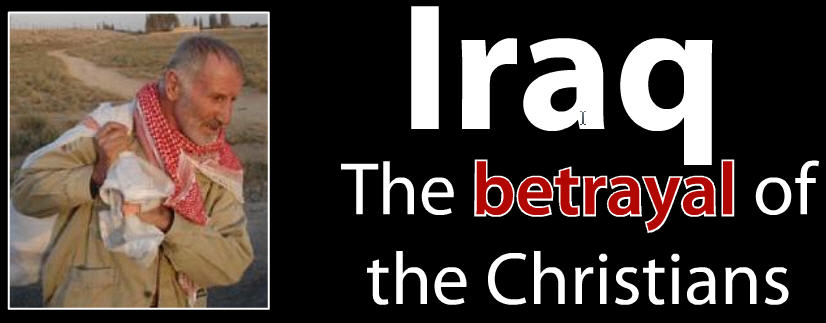 |
A Special Report on the Assyrians of Iraq by Barnabas Fund - 26 October 2007 To View the Report Click on Photo Above |
Alland Odisho's Shot at Olympics
Courtesy of the Catholic Weekly
25 November 2007
By Damir Govercin
 |
Alland Odisho is chasing discus and shot put gold. Photo by the Catholic Weekly.
|
Alland Odisho has set his sights on representing Australia at the Olympics after winning bronze medals in the discus and shot put at the recent state athletics titles at Homebush.
Alland, in Year 7 at Marist College, Pagewood, who is ranked third in the state under-12s in both disciplines, is gunning for the No 1 spot.
“I was delighted with the way I performed at the state titles going up against the best in NSW in the discus and shot put,” he said.
“I would like to be ranked No 1 in both events, but for that to happen I have to continue working hard in training to improve my skill level.”
Last month, Alland won gold in the discus and shot put at the Marist Schools competitions.
He then went on to compete at the Combined Catholic Schools competition where he won gold in the discus and finished runner-up in the shot put.
“The Combined Catholic Schools competition is really tough as there are so many students who have the potential to be No 1,” he said. “To come away with two medals from the competition was a great boost for my confidence, and gives me something to build on.”
Alland trains three times a week in his bid to improve on his personal best in shot put (11 metres) and discus (29 metres).
Marist College principal Damien Millar said: “Alland is a talented athlete who has already made his mark in the discus and shot put competitions.
“It is an inspiration to others that a young student could show such confidence to participate at major events let alone win them.”
Alland’s parents accompany him to all his competitions, giving him “great support and encouragement”.
“My parents have never put any pressure on me since I enrolled in the Randwick-Botany Little Athletics five years ago,” he said.
“They encourage me to do my best and are proud of what I have achieved in both disciplines thus far.
“My dream is to compete at the Olympics and with hard work and some luck I believe I can reach that goal.”
Thank You |
Naures Atto |
Holland |
| Jacklin Bejan | California |
| Dr. Matay Beth Arsan | Holland |
| Ramin Daniels | California |
| Mazin Enwiya | Chicago |
| Peter Esho | Australia |
| Dr. Eden Naby | Massachusettes |
| Thomas PA | India |
| Petr Kubálek | Czech Republic |
Anees Talia |
Australia |
ZINDA Magazine is typically published on a weekly basis. Views expressed in ZINDA do not necessarily represent those of the ZINDA editors, or any of our associated staff. This publication reserves the right, at its sole discretion, not to publish comments or articles previously printed in or submitted to other journals. ZINDA reserves the right to publish and republish your submission in any form or medium. All letters and messages require the name(s) of sender and/or author. All messages published in the SURFS UP! section must be in 500 words or less and bear the name of the author(s). Distribution of material featured in ZINDA is not restricted, but permission from ZINDA is required. This service is meant for the exchange of information, analyses and news. Any material published in Zinda Magazine will not be removed later at the request of the sender. For free subscription to Zinda Magazine, send e-mail with your name, address, telephone number to: zcrew@zindamagazine.com.
ZINDA means "Spark of Fire" in modern Syriac (Assyrian); Zinda's Red Swoosh is a rendering of the seventh letter in the Assyrian alphabet, letter ZEN, and the first letter in the word "Zinda". For more information about the Assyrian culture and heritage write to Zinda Magazine.
Zinda Magazine™ Copyright © Zinda Inc., 1994-2007 - All Rights Reserved - www.zindamagazine.com
Reproduction in whole or in part without permission is prohibited. Zinda Magazine is a service of Zinda Multimedia.

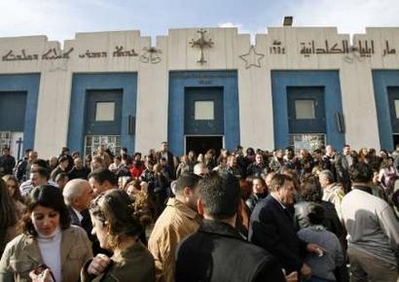

 The above was presented by the Mr. Afram on Friday, 17 March 2006 at the University of Istanbul.
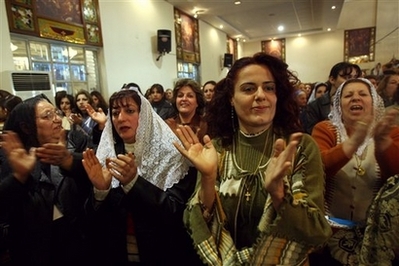

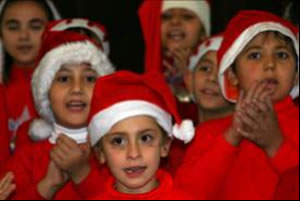

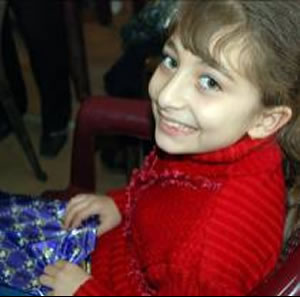
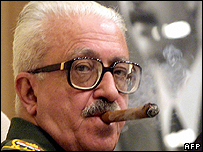

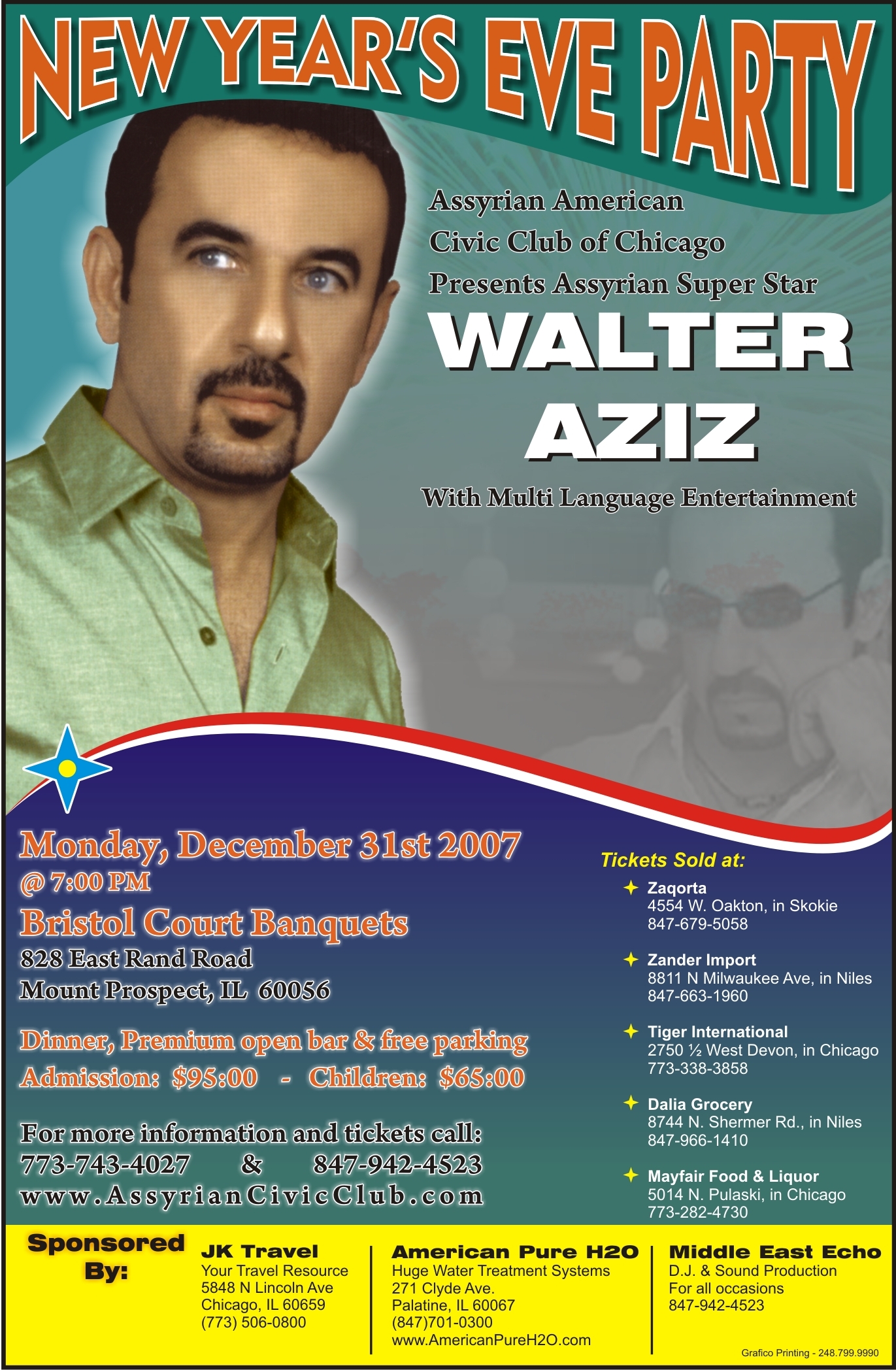

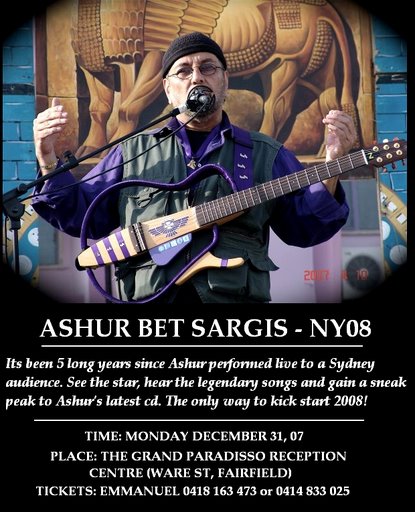
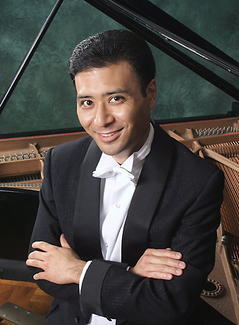
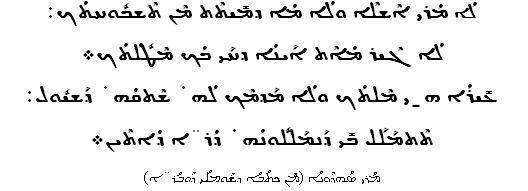

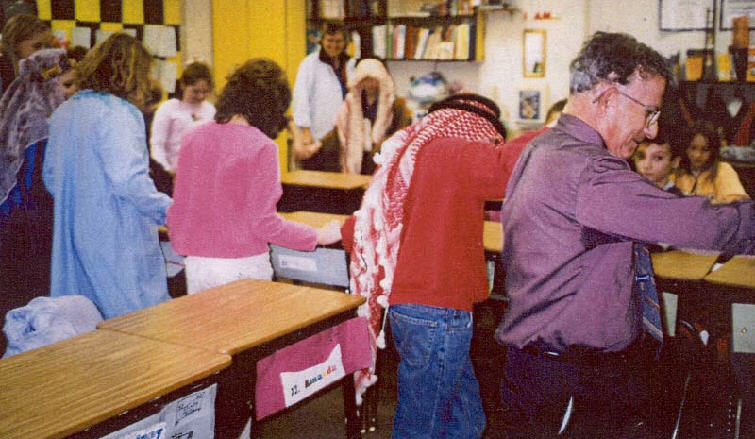
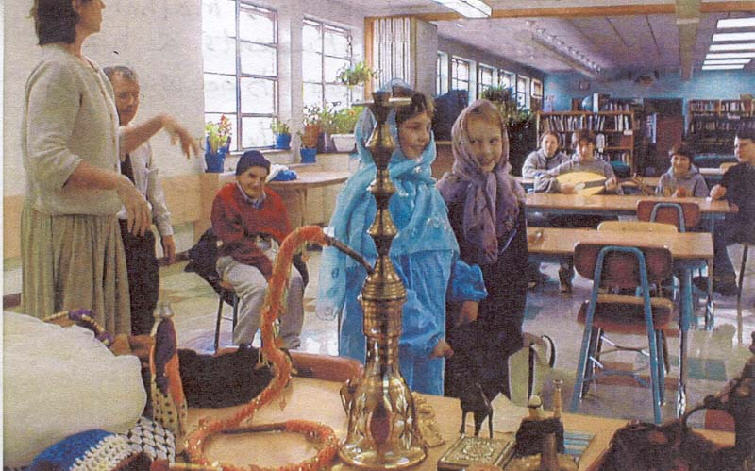
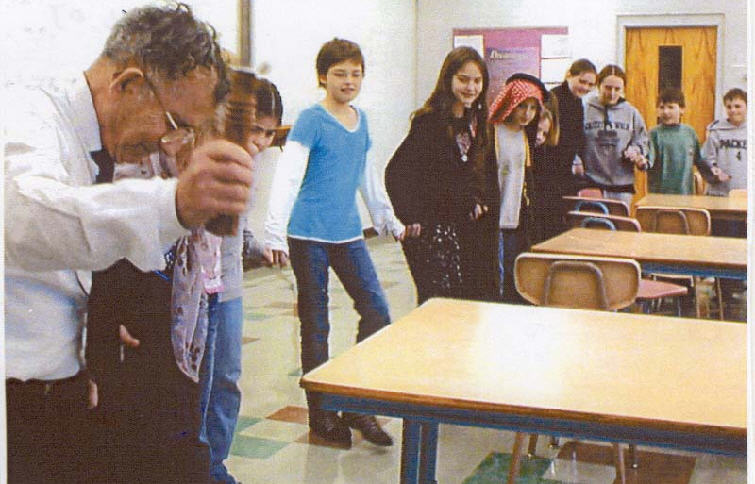
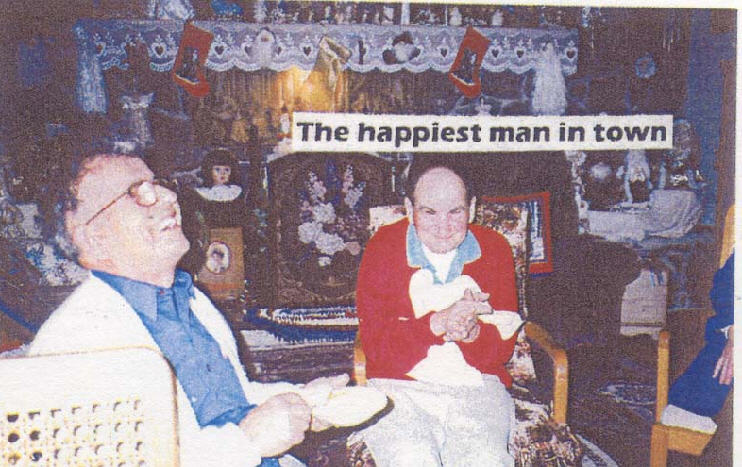
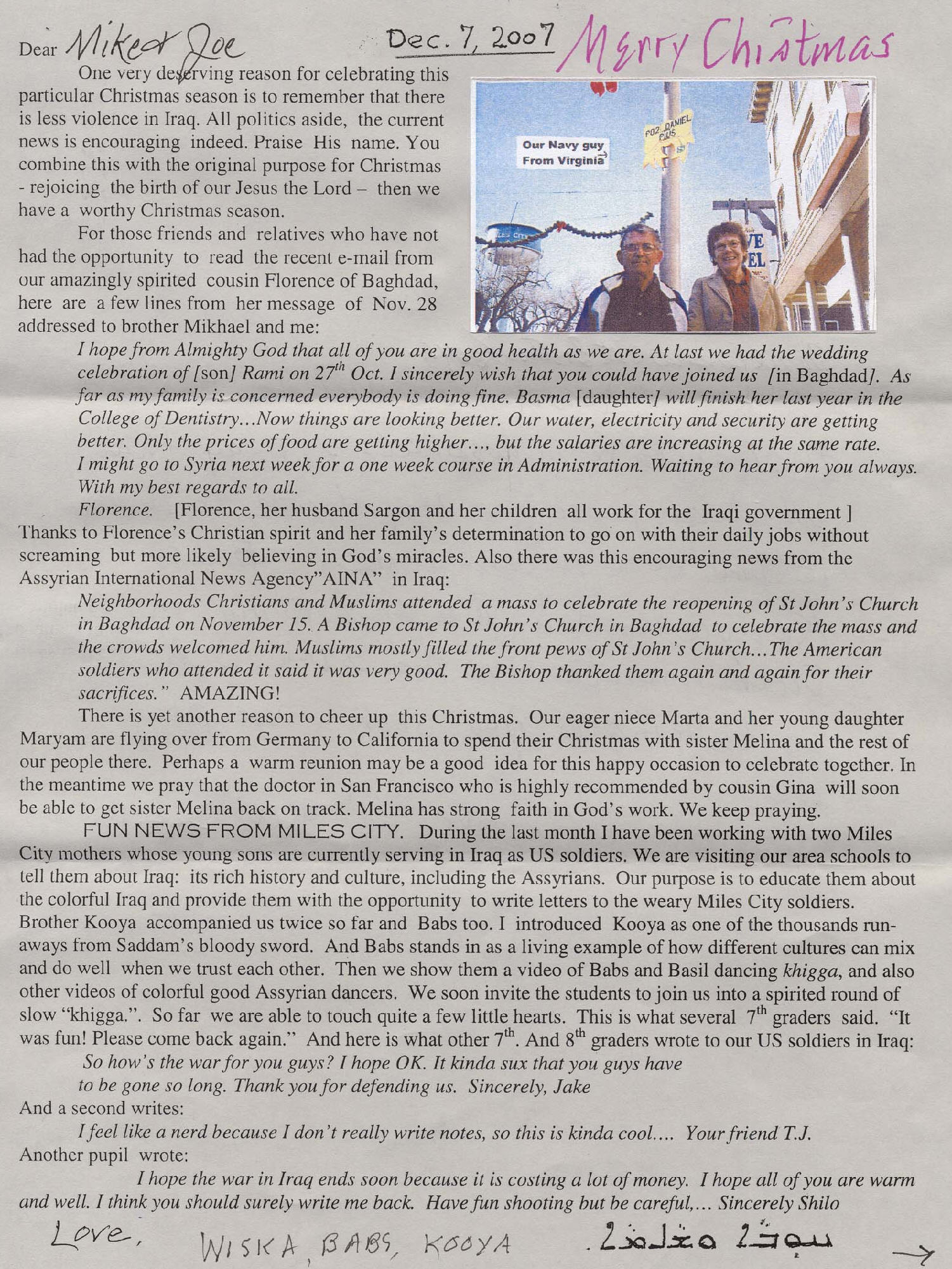
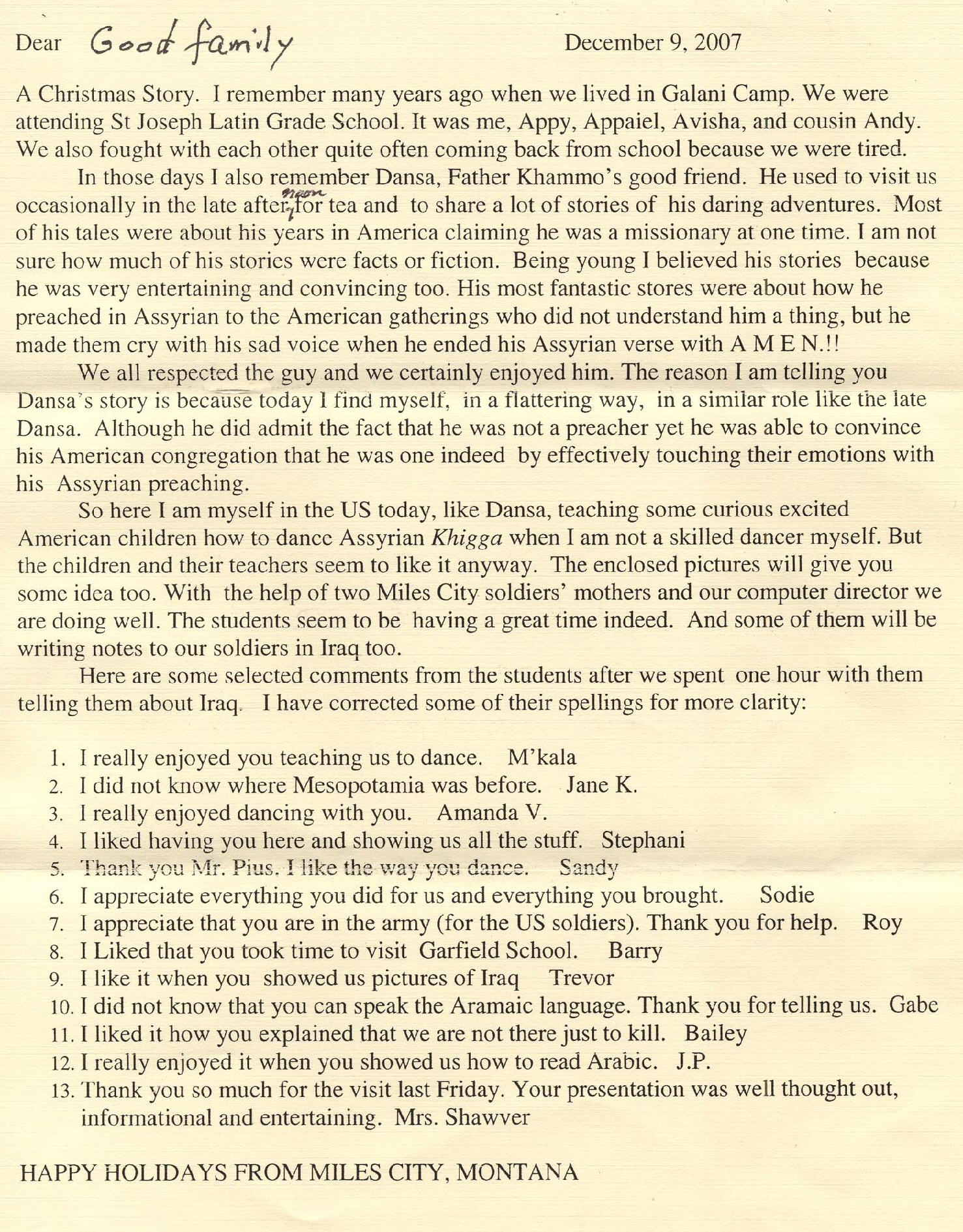
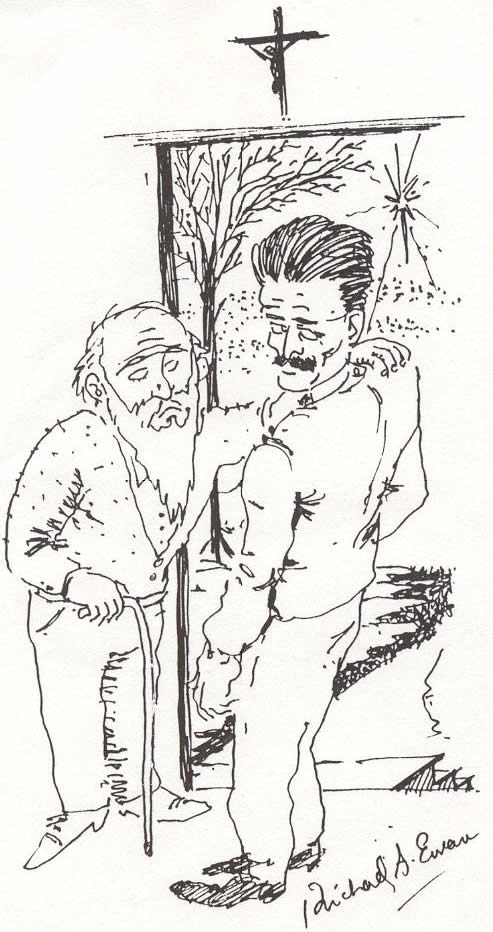
 - Ehyeh Asher Ehyeh” is My Name; and “
 - Ehyeh” is My Name.
 . But why did God use these specific words and what do these words mean?
 ” or “who –
 ” (in Arabic
  ، ) depending on the context of the sentence (who or what is referred to). These are the only meanings of this word in any (OT) biblical text and Hebrew language. When the Old Testament Hebrew text was translated into other languages then the equivalent pronoun (of God) in those languages was used. Some translations kept the original Hebrew phrase as in our Aramaic Bible, since translators saw that that is revering to God, but the original meaning remains unchanged.
 “emphasis on s and therefore some times is written as Asshur” (in Aramaic is
 ) which is a noun. In the Hebrew language the word “Ashur” as seen above is made of five consonants Alap, Shen (doubled with a dot inside), Waw and Resh (see Genesis 10:11, 22; two descendents of Noah named Asshur, one from Ham and the other from Shem). Linguists, and biblical scholars in particular would never attempt to impose the noun meaning within certain language over the pronoun meaning (or borrow the noun meaning from another language), because this will have impact on grammar and text meaning throughout the biblical text, and will render absurd grammar, translation, interpretation and meaning of text.
 (Hyh – in past tense), and the meaning (present tense) is: come to pass, become, be” (in Aramaic
 ) and (in Arabic
 ). In the present tense of the Hebrew verb is written as
  (in Aramaic
 ) and (
 - in Arabic ) and it means “to be” or “to become”. In the Bible “Be” is often used with the subordinate idea of becoming: exist or be in existence; the meaning relates to origins and beginnings (Ethothah
 ) and of (Shorayah



 – tell the people Yahweh (Yhwh) sent me; (
 in Aramaic); (in Arabic
  ) and grammatically this is the proper noun from the Hebrew verb “Hyh” mentioned above.
 ) because he saves (Matthew 1:22). Then and in accordance with Isaiah’s prophecy his Name is “Emmanuel” which we all know means “God with us