|
||||||||||||||||
Click on Blue Links in the left column to jump to that section within this issue. Most blue links are hyperlinked to other sections or URLs. |
||||||||||||||||
|
||||||||||||||||||||
|
||||||||||||||||||||||||||||||||||||||||||||
Dolabani: A Man Ahead of His Time Peter Butros There can only be few Assyrians today that have not yet heard of Bishop Filoksinos Yuhanon Dolabani. The stories about him have traveled from mouth to mouth and from one generation to another. We remember him today as a true church leader with great love for his people. Access to his writings has been almost impossible for the average person. But now, 38 years after his death, his writings are finally available in a newly published book. During most of his life Bishop Yuhanon Dolabani kept a diary of the occurrences of his time and his own experiences. His autobiography which constitutes the basic ingredient of the new book was released in Sweden in March. "The idea of publishing the memoirs of Dolabani was presented by the Assyrian intellectual, Abrohom Nuro, in Aleppo to Mr. Eliyo Dere, editor in chief of Hujådå Magazine’s Assyrian section," says Tomas Isik, the person most involved in the preparation of the manuscript. When Mr. Eliyo Dere heard about the yet unpublished writings of Dolabani he began to look for support from the Assyrian Youth Federation of Sweden (AUF) in order to get the project going. AUF liked the idea immediately and the compilation of the writings of Dolabani commenced in 2003. "That's when I became involved with the project," explains Tomas Isik. The work of collecting the material for the book eventually led to the Saffron Monastery (Dayro d-Kurkmo) in Mardin, Abrohom Nuro’s private library in Aleppo, and to the archives of the Syriac Orthodox Church in Jerusalem, where Dolabani had worked many times. "The search revealed that there were more writings than just the diary of Dolabani," Isik tells. "For example we discovered many highly interesting letters written by Dolabani that we didn’t know of. The letters are written by Dolabani, his colleagues, friends and pupils," Isik reveals. Much of what has been discovered describes the situation of the Assyrians in Anatolia the years before, during and after the Seyfo Genocide in 1915. The content of the letters shed light on a period of persecution and terrible massacres that were directed against the Assyrians in that time, thus helping fill a gap in the history of the Assyrians.
The autobiography and the writings that are included in the book increase our knowledge of Dolabani’s own thoughts and ideas. They increase our understanding of Dolabani as a person, his opinions and his stand on different questions. The book clearly shows what Dolabani thought of himself. Those who lived with him and those who knew him very well tell us about how much Dolabani loved his people, that the patriotism glowing from him infected those around him. The newly discovered poems and songs authored by Dolabani are his praises for the history of the Assyrians, their culture, their struggle for survival and about his beloved homeland, Assyria. Poems like Othur (Assyria), Neshono d-Othur (The Glory of Assyria), Yolufotho d-Othuroye b-Qiliqiya (The Students of the Assyrians in Cilicia) can make one forget about the troubles of every day life and mind-travel home to the land between the rivers of Euphrates and Tigris, visit churches and monasteries in Nineveh and Tur-Abdin and breathe the fresh air of our native country - Assyria. The Assyrian youth, or "layme othuroye", as Dolabani calls them are mentioned in many of the poems. Dolabani stood close to the Assyrian youth from the days he became responsible for the teaching in the Assyrian school for orphaned children in Adana, named after three Assyrian letters as “The Taw- Mim-Semkath School”. It was also at "The Taw Mim Semkath School" that Dolabani composed most of his poems. After the Seyfo Genocide in 1915 and the following persecutions of the Assyrians the Syriac Orthodox Church was forced to close the orphanage in Adana. But Dolabani later succeeded in re-opening "The Taw Mim Semkath School" in Beirut in 1922, making it a great success for the orphans. The story about the Taw Mim Semkath School, written by Dolabani himself, has its own place in the new book. "All in all there are 7 different parts in the book totaling some 400 pages, of which Dolabani’s autobiography constitute the main portion," Isik explains. The names of the other parts of the book are “Conversation of the Chiefs”, “Poems and Songs”, “The Assyrians of Cilicia”, “Correspondence”, “Poems and other writings about Dolabani” and “Dolabani’s books and literary works”. The entire book is written in the original Assyrian language, which few today master fully. But much time and work have been invested in the language in order to get the book as readable as possible. "Much work has been done to vocalize the handwritten texts of Dolabani," says Isik. It’s done in order to have the message reach as many as possible. There are no plans to translate the book into other languages, but it is definitely not impossible. "To translate the book to Swedish, English or German is not a problem in itself," says Isik. All that is required is strong financial support. For now we must rely on home language teachers, priests and others fluent in the Assyrian language to spread the knowledge about Dolabani to as many Assyrians as possible. Filuksinos Yuhanon Dolabani, born in 1885, has his origins in the outskirts of the Assyrian village Qeleth in Tur-Abdin. He became a monk at the Monastery of Dayro d-Kurkmo at the age of 22. In 1933 the monk Yuhanon Dolabani was appointed by the new patriarch Afrem Barsom I to be the patriarchal deputy for Mardin and the environs. Dolabani was later, in 1947, ordained bishop for Mardin. He came to be regarded as a great man among Assyrians, both as an enlightened church father and as the confronter of the hostile Turkish authorities. It is said that at his funeral in 1969 was attended, in addition to a large part of the Syriac Orthodox leadership, over 4000 mourning Assyrians. Today, Assyrians originating from Qeleth feel proud that Yuhanon Dolabani has his origins close to their village. Qeleth is today, as many other Assyrian villages and cities, emptied of its Assyrian population. But in Swedish cities like Lidköping, Skövde, Nässjö and Märsta there live thousands of Assyrians originally from Qeleth. They still remember the greatness of Dolabani and gladly name their sons "Yuhanon" or the shortened form "Hanna", after Bishop Yuhanon Dolabani. The heritage of Yuhanon Dolabani is for all Assyrian people and the treasures he left for us to manage are irreplaceable. Until today we have remembered him primarily through the stories of others. At last there is a possibility to personally understand Dolabani. For those Assyrians who faithfully stand by their cultural heritage this is an opportunity not to be lost. On the Newly Published “Biography of Yuhanon Dolabani” Tomas Isik The Assyrian Youth Federation and the Assyrian Federation in Sweden in March 2007 published the book entitled "The Biography of Yuhanon Dolabani and Other Writings." The late Bishop Filoksinos Yuhanon Dolabani (1885-1969), Syriac Orthodox Bishop of Mardin, was an outstanding scholar and poet, and perhaps the most productive among all his contemporary Assyrian writers. The book consists of different writings of Bishop Dolabani (except for parts of sections 5 and the entire section 7), selected and compiled here. The entire book is in the Assyrian language (also called Classical Syriac, in Serto script), except for one of his writings on the Assyrians of Cilicia, which is in Ottoman Turkish. Following is a brief description of each of the book’s seven parts: Part 1: The Story of Yuhanon Dolabani’s Life is the author's autobiography, and constitutes the main portion of this book. The publication is made from a copy of a manuscript in his own handwriting, currently in the possession of Rev. Gabriel Aydin in Sweden. This book gives us a good insight into the history, condition and lives of the Assyrians belonging to the Syriac Orthodox Church and to other Oriental Churches from the late 19th century until the middle of the 20th century, of which there is a great lack of knowledge. The publication of this book helps to bridge this gap. Part 2: The Conversation of the Chiefs is a conversation between the late Patriarch Mor Ignatius Elias III and bishop Mor Diyonosius Gewargis from India, which took place in the Dayr al-Za’faran Monastery near Mardin, south-east Turkey. Part 3: Poems and songs, is a collection of Dolabani's poems and songs, not of religious character, presently available to us. Much of this collection was written during his time as a teacher at the Assyrian orphanage in Adana. The poems deal mostly with Assyrian nationalism, culture and language. Part 4: The Assyrians of Cilicia is a collection of Dolabani's writings on the history of the Assyrians in this area and about the Assyrians and the Assyrian Orphanage, after the Genocide of the Assyrians during WWI, during which time he was a teacher. Part 5: Correspondence. Bishop Dolabani has left us a large number of letters. A few of them are published here in order to show the range of topics he discussed with his colleagues, friends and the disciples. Part 6: Poems and Other writings, is a selective collection of writings about Bishop Dolabani. Part 7: His books and Literary Works, is a bibliography of all of Dolabani's literary works, which amount to approximately 100 books in total.
The book is edited by Eliyo Dere and Tomas Isik. You can order your copy of this book from the following address: The Assyrian Federation E-mail to: kansliet@hujada.com. Purchase price of the book is 250 Swedish Kroners, approx. $US 36.00. Contact the Assyrian Federation for more detail on price and shipping & handling charges.
|
||||
Ethnic Cleansing First Against Yazidis, Soon Against Christians Courtesy of the AsiaNews
(ZNDA: Mosul) The death toll from Tuesday’s bomb attacks against Yazidi villages near Mosul might reach as high as 500. Provincial authorities in Nineveh province fear that in addition to those already accounted for, another 200 people might still be buried in the rubbles left by deadly truck bombings. Sources in Iraq warn AsiaNews that the multiple attacks are part of a wider plan that is likely to target Christian villages in the Nineveh plain very soon. The bombings in Qataniya, Adnaniya, al-Jazeera and Tal Uzair are the deadliest since the war began in 2003. The coordinated operation involved five trucks filled with explosives that killed more than 250 people and hurt another 350, this according to official preliminary figures. US army sources said that it is too soon to know who was behind the blasts but the scope and apparent coordination involved point the finger at Sunni-dominated al-Qaeda. “This is an act of ‘ethnic cleansing’,” said Major-General Benjamin Mixon, the commander of US forces in northern Iraq. Iraqi political leaders, including Prime Minister Nuri al-Maliki, a Shia, and President Jalal Talabani, an ethnic Kurd, condemned the “heinous” attacks and ordered an investigation. The Kurdistan Regional Government condemned "the cowardly and barbaric attack against innocent civilians of this tolerant religious minority". United Nations Secretary General Ban Ki-moon also slammed the bombings in Iraq. Now the attention is turning to the Christian villages in the Nineveh Plain. Sources in Mosul that requested anonymity for security reasons told AsiaNews that the bombings against the Yazidis are “part of a broad plan elaborated by Wahhabi extremists who now control the area to eliminate all those elements that might be in their way as they pursue their goals, namely an Islamic state and the caliphate. “They began with Shias and Christians in Mosul,” the source said.” Now it is the turn of the Yazidis who mostly live in these villages west of the city.” There are fears though that “tomorrow it will happen to the Christian villages in the Nineveh Plain, where there is no US or Iraqi army presence to speak of.” The area is already in the hands of extremists who have infiltrated the police and the national army. “Everything has been studied and prepared with the backing of foreign countries,” the sources said. The villages at risk are located between Qaraqosh and al-Qosh. Some 6,110 Christian families have arrived from Baghdad and Mosul and now live in the ten or so villages. However, it is estimated that about 70 per cent of the population in the diocese have abandoned their homes with most churches now lying empty. As a result of the weakness of the al-Maliki government, now involved in trying to survive its latest cabinet crisis, Baghdad authorities are virtually absent from the area. “Even a revived UN mission will not bring peace,” the sources told AsiaNews. “Only true reconciliation between Iraqis can help the country.” In the mist of the growing insecurity and uncertainty the decimated Christian community continues to pray for “peace”. Chaldean Christians yesterday prayed in a church in Kirkuk where Archbishop Louis Sako celebrated mass for the Solemnity of the Assumption of Our Lady. On this occasion, very important for the Chaldean Church, 40 children received their first communion. Mosul Christian Community Dwindles Courtesy of the Institute for War & Peace Reporting The Christians of Mosul can recite one horror story after another. Once a solid, middle-class community in this northern city, thousands of them have fled their homes under threat from militants. Their churches have been bombed, their clergy murdered, and community members regularly face threats and kidnappings.
The story of Mosul's Christians is not dissimilar to that of millions of other Iraqi citizens who live in a state of fear. But their religion makes them especially vulnerable, in a city where governance and the rule of law are non-existent, allowing criminal gangs and Islamic militant groups such as al-Qaeda to intimidate and kill with impunity. "Life has become difficult in Mosul," said Ilham Sabah, a Christian attorney who wears the veil because she fears she would otherwise be killed. "The militants threaten Christian women. They set them on fire or kill them if they refuse to wear Islamic dress as Muslim women do. "We only have one choice, and that is to flee Mosul and the hell created by the militants." Mosul is the capital of Nineveh province, and has been home to Christians of the Assyrian, Chaldean, Armenian and Catholic churches for more than millennium. Now they are being driven out en masse. Christians "are the weakest of the weak", said Joseph Kassab, originally from Mosul and now executive director of the Chaldean Federation of America. “The extremists there are highly active… they want to empty Mosul of Iraqi Christians," he said. There are no accurate demographic statistics for Iraq, but most estimates indicate there were between 800,000 and one million Iraqi Christians in Iraq in 2003. A 2005 report by the United Nations High Commissioner for Refugees, UNHCR, on non-Muslim religious minorities in Iraq said that most of the Christians were from Nineveh province, although substantial numbers lived and worked in Baghdad. UNHCR reported last year that about 24 per cent of the Iraqi refugees in Syria, which borders Nineveh province, were Christians. In addition, about 1,720 Christian families have fled Mosul for the relative safety of the Nineveh Plains outside the city, according to a Christian human rights advocate in the province who requested anonymity out of concern for his security. Thousands of Christians from Baghdad and other parts of Iraq have also fled to the plains. Christians, many of whom were successful entrepreneurs and professionals, were some of Iraq's first refugees. Community leaders in Nineveh province have faced increased threats in the wake of the furore created by a Danish newspaper’s publication last year of caricatures making fun of the Prophet Mohammed and linking Islam with terrorism. A controversial speech by Pope Benedict XVI in September 2006, which many Muslims perceived as anti-Islamic, also made Christians a target. By mid-October, a bomb had killed nine people in an Assyrian neighborhood of Mosul, and Syriac priest Paulos Iskandar was beheaded after being kidnapped by a militant group. His abductors demanded at least 250,000 US dollars in ransom and also that he post signs on his church apologizing for the Pope's remarks, according to the Assyrian International News Agency. They killed him two days after his abduction. The murder sent shock-waves through Mosul's Christian community, The violence has not abated since Iskandar's gruesome murder. Father Ragheed Ganni, a Chaldean Catholic priest at the Church of the Holy Spirit, and three of his deacons were gunned down in Mosul in June following a Sunday service. Ganni had been threatened and his church bombed prior to the attack. The four were shot dead when their vehicle was pulled over by armed gunmen. The militants then rigged the car with explosives, and it took several hours before a bomb-disposal unit arrived to defuse the charges. Less high-profile kidnappings, threats and killings of Christians rarely make the news, but they occur almost daily. The Assyria National Assembly tracks violence against Assyrian Christians in Iraq, and the daily online log of murders and other violent acts includes a plethora of kidnappings targeting Mosul’s Christians. Many Christians are kidnapped for ransom because they are successful businessmen, although most have fled or shut down their operations in Mosul since 2003. In one case last month, the assembly reported that Dawood Qoryaqos Hermis Farfash, a father of five, was carjacked and abducted in Mosul's al-Tahreer district. Earlier this year, Dawood was kidnapped in the same area and released after his family paid a ransom of 3.5 million Iraqi dinars, or about 2,800 dollars. The frequent attacks on churches and clergy have kept many away from services. Mosul used to have 23 churches, but many are no longer open and Christians often opt to practice their faith in secret, according to the human rights advocate. "Life was better under Saddam," said a 35-year-old Christian businessman in Mosul who asked not to be named because he feared retaliation by militant groups. "I used to go out socially and was well-respected, but not any more. In the past, there was law and order, but now nothing stops the extremists or criminals." This man, a lifelong Mosul resident, lives in a neighborhood where Christians are in a minority, and says most of his friends are Muslims. His brother left Mosul after his child was kidnapped and he himself was threatened earlier this year. Mosul's long history of religious and ethnic coexistence has not, however, disappeared because of the violence. "I and many of my friends and colleagues hurt just as much when a Christian is murdered as when a Muslim is killed," said Salim Abdul-Wahad, a Muslim teacher in Mosul. Kassab and the Christian rights advocate both said the security problems stem from a lack of government control over the province as a whole and Mosul in particular. Kassab said the province is so chaotic that it is often unclear who is attacking whom, or why. Christians may be specifically targeted by Islamic extremists, he said, but the perpetrators could also be criminal gangs or militias affiliated with political parties. "Everyone is subject to violence," said Kassab. " [The security forces] can't function, they can't provide safety and security very well in general. So how are they going to safeguard a minority in the community?" He said the security forces were "busy protecting themselves, protecting their establishments. It's hard to protect everyone in that area, and they don't have the resources, either". Michael Youash, project director for the Washington-based Iraq Sustainable Democracy Project, which advocates on behalf of Iraqi religious minorities, says the United States has not done enough to defend minority rights in Iraq even though many of the smaller religious groups supported the US-led overthrow of former Iraqi leader Saddam Hussein. "America has shown with abundant clarity that it’s not willing to lift a finger on this issue," he said. Christians from Mosul and other parts of Iraq such as Baghdad have fled in droves to the Nineveh Plains, which many Assyrians consider their homeland. There are other minority groups - Turkoman, Yazidis and Shabaks - living in this area, which consists of the Tel Kaif, al-Hamdaniya and al-Shikhan districts to the southeast, east and north of Mosul. The area borders on the Dohuk and Erbil provinces of Iraqi Kurdistan. "The Nineveh Plain is a bit of an oasis in terms of safety, and the main reason is because the communities really do know each other," said Youash. "Even with the new arrivals, they tend to know each other." The number of internally displaced persons, or IDPs, seeking refuge in the Nineveh Plains rose to more than 10,000 families five months ago, including 1,000 from the Shabak community. Nineveh province has nearly 90,000 IDPs, the second-largest for any province in the country, according to a July report by the International Organization for Migration. The largely agrarian plains have remained fairly safe for Christians and other minorities. They are partially controlled by the Kurdistan Regional Government and the Kurdistan Democratic Party, KDP, which is dominant in Erbil and Dohuk. Assyrians claim the Kurdish government and the KDP have discriminated against them, including confiscating land and disenfranchising Christian voters in the 2005 elections. The Kurdish government would like to incorporate much of the Nineveh Plain into its area of rule, but many residents want to create a special administrative area of their own there. "There isn't necessarily a special solution for Christians, because any solution needs to address all political, security and economic concerns through Iraq," said the human rights activist. "But Christians want their own autonomous region with the Shabak and the Yazidis in the Nineveh Plains." Youash agreed, saying,"This is what's needed to save these people." Advocates for a special territory run by minorities on the Nineveh Plains cite the Iraqi constitution, which guarantees administrative rights for minorities such as Turkoman, Chaldeans and Assyrians. If momentum gains for a minority-run area in Nineveh, it will probably be fiercely opposed by the Kurds and perhaps other political groups. Still, Youash and other Assyrian advocates are lobbying for US support for the plan and more support for the plains region. The over 82,000 Assyrians living in the US have formed a formidable lobby. The US Senate is currently considering a bill that would give 10 million dollars in aid to help religious minorities in the Nineveh Plains. It has already passed in the House of Representatives. Unless they have security backed up by strong governance, the Christians of Nineveh fear they will disappear altogether. "Most of us have fled abroad, and this is a serious concern," said Mosul resident Afram Abdul-Ahad, who lost his small restaurant and some family members because of targeted violence against Christians. "We're worried about the future of Christians in Iraq."
|
Statement of AGC on Assyrian Martyr Day For Immediate Release Assyrian General Conference 7 August 2007
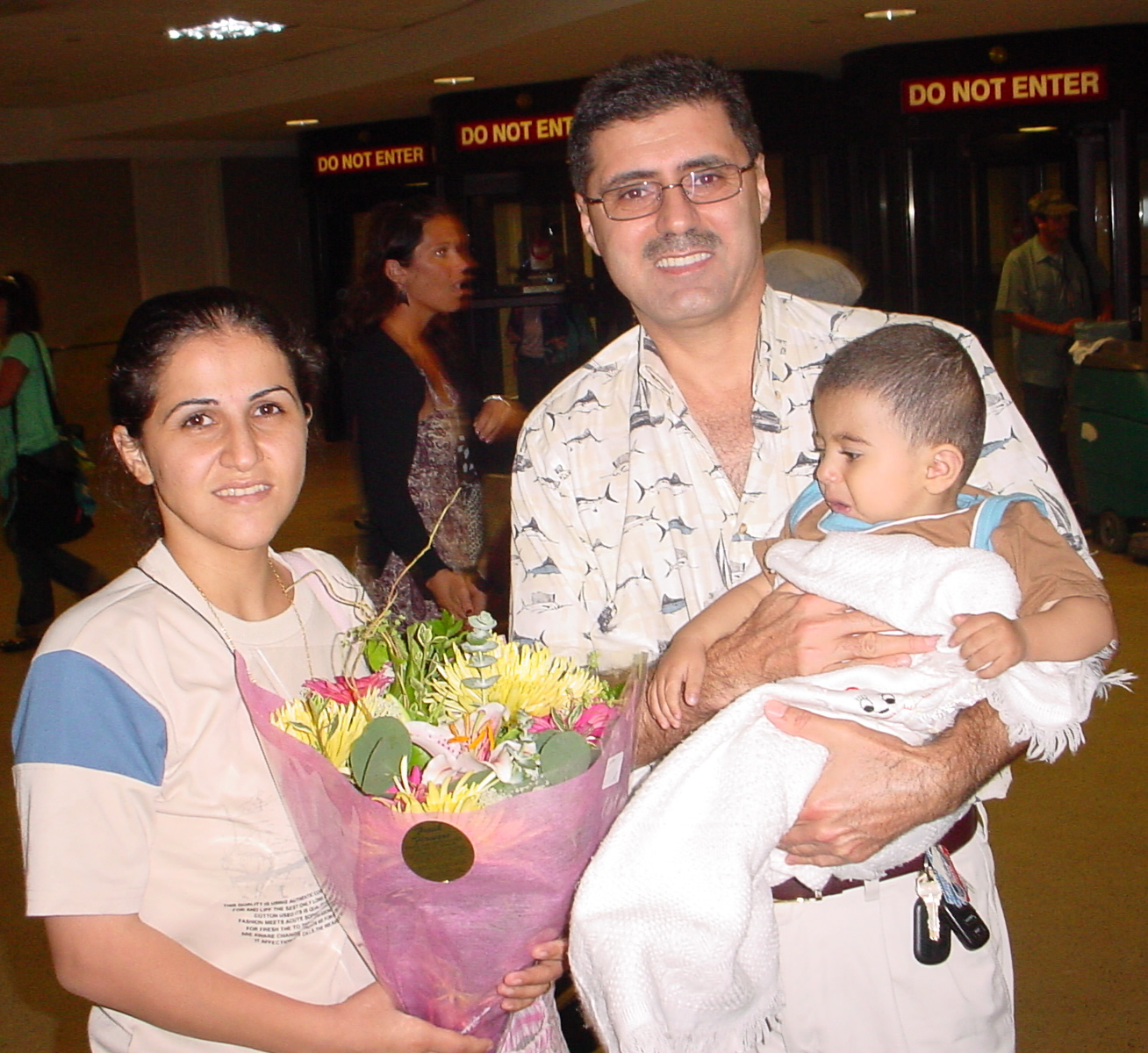
Baby Kirillos in Stable Condition After Heart Surgery
ZNDA: Los Angeles) Kirillos Faris George, an 13-month-old baby from Baghdad, accompanied by his mother, Vivan Banyameen Shamuel arrived in the U.S. last week for a life-saving operation for Kirillos in California. Kirillos suffers from a congenital heart defects known as Patent Ductus Arteriosus (PDA) and Tetralogy of Fallot. Thanks to the determined efforts of Dr. Samir Johna, the Medical Director of the Assyrian Aid Society of America and the Associate Clinical Professor of Surgery at Loma Linda University School of Medicine, Kirillos was treated at Loma Linda University Children's Hospital in Southern California on Wednesday, 16 August. At press time, after a difficult four-hour operation, Baby Kirillos is reported to be in stable condition, resting without the use of a ventilator in the ICU. Kirillos was accepted as a charitable patient and his cost of treatment will be covered by Loma Linda Hospital. Mikakos MP Urges Intake of Iraqi Assyrians by Australia By Joseph Haweil, reporting from Australia The following is the full text of the letter sent recently to the Hon. Alexander Downer MP, Australian Minister for Foreign Affairs by the Hon. Jenny Mikakos MP, Member for the Northern Metropolitan Region and Parliamentary Secretary for Planning in the Victorian Parliament. A while ago, Ms. Mikakos created a storm of media attention in Australia where she gave a speech in the Victorian Parliament recognizing the Armenian, Assyrian and Pontic Greek Genocide.
Assyrian Developer to Build World Tallest Building Courtesy of Chicago Sun-Times
Zaya Younan is not crazy. Since starting a real estate business in 2002, he has become one of the largest office landlords in Texas, and accumulated property worth about $1.5 billion, claiming strong and steady returns for investors. Now he wants to build the world's tallest building. He wants it in Chicago, Los Angeles or Houston. He wants it for the glory of the United States of America, and to take advantage of long-term trends that he said will lead to more vertical living in major cities. And he doesn't want a building that will barely rate a mention in the history books, a delicate titleholder surpassed in some Asian capital before its paint dries. "I want it to be the tallest for as long as I am alive," Younan told the Sun-Times. He's 44. The chairman of Younan Properties Inc. said that to build something with a lengthy hold on the record, he'll need about 500 feet of cushion between his building's height and any probable competitors. By today's standards, that means going up about 3,000 feet. It's Sears Tower times two. It could cost $4 billion. All of which might cause builders and property investors to wonder if Younan is conversant with reality. He insisted his own company can finance most of the project and that it can acquire the engineering and architectural know-how it needs. Younan is a buyer, holder and renovator of office buildings, with about 10 million square feet nationwide, with some 20 percent of his portfolio in the Chicago area. He said he emigrated from Iran at age 13, and loves the U.S. for its freedom and opportunities. "The U.S. is the country with the largest economy in the world, and it's shameful that we don't have the tallest building,'' Younan said. "My mission in life is to bring that crown back to the U.S." As for where to put it, he said he wants to decide the location by yearend. Los Angeles, where his company is based, is an early favorite because he sees it having a large unmet demand for cutting-edge office space. But he likes Chicago for its vibrant downtown and sustainable expansions in the office market. His options include buying a site or building on property he already owns. In Chicago, Younan controls buildings at 200 N. La Salle and 211 E. Ontario, plus several buildings in the northwest suburbs. Most of it he acquired in 2006 in a $175 million deal with Transwestern Investment Co. He declined to discuss likely sites for his project. The world's tallest building is under construction in the United Arab Emirates. Burj Dubai's final height is a secret, but the developers are believed to be aiming for 2,300 feet. The Santiago Calatrava-designed spire proposed for the Chicago lakefront would measure 2,000 feet. Sears Tower, once the record holder, has been surpassed by the twin Petronas Tower in Malaysia and the Taipei 101 tower in Taiwan. Younan's expertise is the office market, but he said he'd like a range of uses within the building. It could be a self-contained center, "a city within a city," he said, complete with condominiums, a hospital and a museum or other attractions. Younan pointed to his acquisition of a Dallas building, the 30-story One Dallas Centre, as a small-scale test of that vision. He's rebranding the building as Patriot Tower, and plans a museum dedicated to American veterans. Around Chicago, some real estate executives familiar with Younan said he has strong analytical skills and access to capital, but also an excessive ego and a need for self-promotion. He knows he has his detractors, but he said his instincts usually prove them wrong. "People have always told me in this business, 'Wait a minute, slow down, think about it again.' I'm generally glad that I didn't take their advice," he said. A Controversy over a Monastery in Turkey Courtesy of the Turkish Daily News (ZNDA: Istanbul) The Deyrülzafaran Monastery, located eight kilometers away from Mardin, is thought to have served for 640 years as one of the most important religious centers for Syriacs. The structure was built on a richly historical site, serving as a Roman citadel and prison at one point and as a sanctuary for sun worshippers before the birth of Christ. The monastery was given the name of Deyrülzafaran in the 15th century; throughout history, it was also named "Mor Sleymun Monastery" and "Mor Hananyo Monastery." Today Deyrülzafaran serves as the primary place of worship for the Assyrian Church, as well as the residence for Mardin Metropolitan Bishop Salina Özmen and other priests. The current monastery was built on the site in the fourth century A.D. Its original construction was finished in 497, and its final shape was completed in 1876 by Sarkis Elyas Lole (Levan). Many sections were added between the fourth and nineteenth centuries, but the monastery still gives the impression that it was designed by one architect alone. While this much is known about the monastery, one historian today disputes its allegedly Assyrian roots. Assyrian or Armenian? Tomas Cerme, a student of famous Armenian historian Kevork Pamukciyan, is the last generation representative of the Armenian Cerme family from Mardin. In light of his recent research, Cerme claimed the Deyrülzafaran Monastery was built by sun worshipper Armenians, "Arev Vortig," before Christ. He said Armenian churches were without exception the only presence of the Church of the East in the Christian world for centuries. Gabriel Akkurt, a priest at Deyrülzafaran, told the Turkish Daily News that Cerme's claims are unrealistic because there were no Armenians in Mardin during the monastery's construction period, and the building was built only on the 2000-year-old sanctuary area of the sun worshipper Assyrians. Professor Zeynep Ahunbay of the Istanbul University Restoration Department confirmed that the Deyrülzafaran Monastery served as a sanctuary to the sun worshippers before Christianity and was built in the direction of the East. The gigantic stone blocks used indicate construction techniques from the ancient period, added Ahunbay. Cerme continues to doubt the monastery's Assyrian roots. "It is said that the monastery belongs to Assyrians, but there are no photographs or engravings to prove this. With no exception in the Christian World, the Armenian Churches are the only churches looking to the East," he claimed. The second unit of the monastery was built by Sarkis Elyas Lole (Levon) in 1876, Cerme said. Cerme continues that he consulted with one of Lole's workers, who is 97 years old today. Lole built many structures in Mardin, Diyarbakir, Hasankeyf, Siirt, Bitlis, Van and Dogu Beyazit, he said. The structures built by Lole in Mardin reflect the architect's style in porticos, arches, inscriptions, exterior sidings and stone decorations. A change in ownership The Cerme family, as property owners and tradesmen in Mardin, kept the books of Zülkadiriye after the city joined in the Ottoman Empire. The books include various official information about commerce, politics, statistics and general views on Mardin. Cerme added that they contained information about the Cerme Family too. He said the family owned many properties in Mardin. Some of these properties are mansions carrying the emblem of the Cerme family. The famous Cerme Mansion was built by Lole in 1906 as a replica of the Florence State Museum Loffia Dei Lanzi. It was later sold, and the new owners changed its name to the "Sahkulubey Mansion." Cerme cannot discover the reason for the name change immediately after the restoration funded by the European Union. "In all official records about Mardin, the name of the building is Cerme Mansion," he continued. The controversial palace is situated on 1. Cadde (Avenue) in the direction of Savurkapu at Cumhuriyet Square. Cerme has been invited to a symposium on "Mardin and Armenian Affairs" organized by the Eurasia Strategical Researches Center. Many international scientists will attend the meeting to be held in October. Cerme said all cultural heritages in Mardin are ascribed to Assyrians, yet scientific data proves that this is far from accurate. Cerme moved with his family members to Istanbul in 1957. There are only two Armenian families living in Mardin, he said. Four Songs – One Football Team By Afram Barryakoub, reporting from Sweden (ZNDA: Sodeertalja) My Assyrian Team – The Team of My Dream is the title of the latest song about Assyriska, the football team that has become a sports ambassador for the Assyrian nation.
Established in 1974 by the Assyrian immigrants in Sweden the football (soccer) club has scored both in the football field and in the Swedish society at large, especially when it reached the highest league in the Swedish football. Assyriska made international headlines in 2006 when a documentary about this football club won the Golden Palm Award at the Beverly Hills Film Festival. The documentary, produced by Assyrian-Swedish journalist, Nuri Kino (see BRAVO), showed the strength of the team as a symbol of the Assyrian will to survive and resistance against the injustices facing the Assyrians. The popularity of the team has inspired the creation of several songs revolving around the Assyriska theme. The latest song, My Assyrian Team – The Team of My Dream, features Swedish producer and singer David Stenmarck, known for songs produced for several famous entertainers, including the highly popular boy-band Westlife. The voice of the Assyrian singer, Ninsun Poli, can be heard on this track, performed in English. Earlier, a Swedish heavy metal band named Blowsight produced the song “Assyriska”, performed in both English and Swedish. The third song called "Assyriska" was produced and sung in Assyrian by singer, Simon Kaplo, from Germany. The last of the four songs written about Assyriska is also performed in Assyrian and sung by the Assyrian singer, Addo. The song is titled "Basimo”, Assyrian for "good" or "feeling good". The lyrics describe the feeling of an Assyriska supporter as he watches his team perform. Assyrian Rapper Criticizes Timz and Andre Agassi (ZNDA: London) An England based rapper has criticized fellow rapper Timz (real name Tommy Hanna), acclaimed for his recent hit ‘Iraq’, and others for not using their fortunate position enough to highlight the plight of both Chaldeans and Assyrians. GeeMayne, the self-proclaimed ‘first Assyrian rapper’, hits out at both Timz and the tennis giant, Andre Agassi, in his new single ‘We’ve Got To End This.’ Even though on Timz's official website the words ‘chaldean…catholic…iraqi-american’ (timzonline.com) are noted, GeeMayne raps:
He then goes on to imply that Andre Agassi denies that he has Assyrian heritage. In a recent interview, when asked his motive behind these comments, GeeMayne explains: “As I was growing up I heard people say countless times ‘did you know so and so is Assyrian or part Assyrian?’ There are all these proud people boasting that there is a famous Assyrian, but what have they done to help us?" Mayne says that part of the reason that the genocide of Assyrians and other Middle Eastern Christian groups happens is because people are not educated enough. “They do not even know we exist.” He goes onto say: "Plenty of times someone has said to me ‘there are Christians in Iraq?!’ in surprise." Mayne is adamant that Iraqi Christians would receive more help if more people were aware and he has chosen to contribute to the cause in a more modern medium - rap music. He explains that while he is aware of the statement on Timz website, his song Iraq is what an nationalistic Arab might sing by highlighting injustices to the general population (such as the infamous Abu Ghraib scandal) rather than Christians in particular. GeeMayne's track is quite clearly a ‘bedroom production’, as he calls it, but its significance is noticeable in its current popularity. GeeMayne explains that he could do with some help in the producing department, but that it is “still early days” in respect to where this is going for him. GeeMayne prides in having made history by becoming the first Assyrian rapper whose lyrics contain Assyrian content! GeeMayne does not deny that there are other Assyrian rappers, but goes to say: "They are more like rappers who are Assyrian rather than ‘Assyrian rappers’ because they do not mention their culture at all”. The 20-year-old rapper from the United Kingdom has been producing tracks, alternative to the rappers' norm of violence and bragging about possessions, which has become all too characteristic of commercial rapping in the United States. GeeMayne saw a niche for the ‘Assyrian Rap’ and hopes that his first track will be a catalyst for bigger things. He sums up his reasons behind his new track: "Hip Hop and Rap originated from African-Americans so they have their own urban music. The Spanish and Latinos have Reggaeton, even the Nepalese have their own rap! Assyrians definitely have something real to rap about so it’s about time someone did and that’s where I come in. But I’m not sure I want to do it alone.” You can listen to GeeMayne’s single ‘We’ve Got To End This’ on his MySpace page: click here. A New Zinda Policy
Zinda accepts full responsibility for erroneously publishing an article that may have been submitted by an individual or a group acting as the "Save Assyria Front". We apologize for any inconvenience that this may have caused groups in Australia and the Save Assyria Front. To prevent any such errors in the future Zinda Magazine has now implemented a new policy which states that no press releases, articles of information, or letters of clarification from any organization, church, or political party will be printed in Zinda Magazine unless it is received DIRECTLY from the heads of such organizations, churches, or political parties. Otherwise, the leaderships of the said entities may in the next few weeks appoint an official "Zinda Contact" for all future correspondences with Zinda Magazine. To submit your "Zinda Contact" information an email from the heads of each organization, church, or political party may be sent to editor@zindamagazine.com. A corrected version of the deleted article may be included in the next issue of Zinda Magazine. |
||||||||||
|
AUA Demands from Zinda Credible Reporting Ninnos Benjamin It is regrettable that Zinda Magazine’s (Zinda) editorial article dated August 1, 2007 by Mr. Wilfred Bet-Alkhas is a composition of materially wrong facts, fundamentally false and biased analysis, and therefore conclusions that should not have been made by any credible publication. The blatant errors in reporting and extremity of the falsehoods are disrespectful to the intelligence of the Assyrian people and highly damaging to the Assyrian Cause. Indeed, Zinda is hereby reminded again that its freedom of expression and reporting, as provided under the first Amendment of the U.S. Constitution, also bears the responsibility to be accurate and responsible, rather than reporting false innuendos, allegations and accusations. More specifically, in spite of previously written notification to Zinda and its editor, in the subject article Mr. Bet-Alkhas has chosen again to engage in an act of malicious defamation, in part by using the phrase “rogue political leaders” in referring to the national leaders that attended the Assyrian Universal Conference in Tehran, Iran. Accordingly, this is a public, formal and official notification to Zinda and Mr. Bet-Alkhas that the referenced phrase is maliciously defamatory -- it is illegal -- and the attendees on behalf of the Assyrian Universal Alliance (AUA) reserve their rights under the applicable laws. As a matter of correction, the Assyrian Universal Conference in Tehran, Iran, contrary to erroneous reporting by Mr. Bet-Alkhas, was a follow-up on over 100 years of political process that the Assyrian nation has undertaken to resolve its on-going political problems. The conference held in Tehran had absolutely no relationship with another conference that was held recently in Ankawa, Arbil. In the imaginary and erroneous linkage, Mr. Bet-Alkhas has in fact revealed the extent of his mental pre-occupation with the Arbil conference and also the bias of his xenophobia that together have rendered his judgment and pen into blatant falsehoods.
In order to make progress in the Assyrian Cause and to promote the Assyrian rights and interests, AUA has and will engage in diplomatic dialogue with all relevant nations, organizations and parties. AUA rejects Zinda’s and all other suggestions of isolationism. Also, AUA rejects the related antagonistic criticisms that have stemmed from the narrow interests and dictatorial tendencies of a single political party system that has proven itself at best Stalinist in both policies and ideology, having no tolerance for descent. AUA rejects all elements of external and endogenous factors that aim to impose their narrow objectives upon the Assyrian freedoms. Indeed, AUA in its political and international relations needs neither the advice nor the political finesse of Mr. Bet-Alkhas. Foremost, in Zinda, Mr. Bet-Alkhas is responsible to report objectively and truthfully. Mr. Bet-Alkhas lacks the prerequisites of educational credentials and experience in political dialogue to engage in commentary on matters that are complex in their nature and ramifications. As to the support of the conference by the AUA, the event was attended by substantially all the executive board members of the AUA, together with a number of key AUA activists and organizers from across the world. The conference, however, was not sponsored by the AUA; rather it was structured to provide equivalent weight of presence and rights for contribution to all and every participating person and organization. The conference was accordingly attended by a number of learned scholars, members of the Assyrian National Congress (ANC), Bet Nahrain Democratic Party (BNDP), Assyrian Democratic Party (ADP), Assyria Liberation Party ( Furkono), Assyrian’s Democratic Movement, numerous Assyrian Associations from the homeland and throughout the USA, Iran, Iraq, Syria, Lebanon, Armenia, Georgia, Russia, Australia, Canada, Netherlands, Great Britain, and Sweden, as well as representatives from all chapters, branches and bureaus of the AUA. The overwhelming support for the conference was well evident and undeniable. As a result of the open structure of the conference, the attendees reached a unanimous determination that indeed the era for the single-party dictatorship is over; this is a time for a leadership structure that is committed to the Assyrian freedoms, democracy, pluralism and one that is proactive in promoting a progressive and tangible Assyrian national agenda. As far as the Assyrians’ relationship with the Islamic Republic of Iran and the Iranian people, unlike Zinda and its chief editor’s unfortunate mischaracterization, the government of Iran formally and officially recognizes Assyrians as a distinct nation and among the “Historic Heritages of Iran.” In Iran, Assyrians enjoy certain constitutional rights that are denied to the Assyrians in Iraq. There is however a fundamental difference as to the scope of the rights entitled by the Assyrians in Iran versus Iraq. In Iran, Assyrians are the sole beneficiary of the constitutional rights and that is the utmost scope of their rights; whereas in Iraq, constitutional rights - that which are currently denied to the Assyrians - are the minimum of the rights entitled by all Assyrians, whether those residing in Iraq or Diaspora. In the ancestral homeland, the Assyrian rights extend far further than the mere constitutional rights, and thus, the Assyrian nation’s claim for an autonomous territory and the right for self-determination. This is not to say that all was perfectly well in Iran. The country and its citizens, including the Assyrians, are adversely affected by 30 years of economic sanctions and eight years of imposed war enacted by the Iraq of Saddam Hussein’s era. The hardships faced by the Iranians could have been a legitimate reason for the Iranian government to disregard the Assyrians and the Assyrian issues altogether. Yet, the Iranians’ rich culture, as well as the county’s deep and profound understanding of history demonstrates its keen respect for the Assyrians not merely as a Christian minority but foremost as an ancient nation with national rights and national privileges. The respect granted by the Iranian officials to the conference attendees remains unparalleled. In meetings with the Iranian officials, none of which were held at the Majles of Iran (the Iranian Parliament), as opposed to the false reporting by Zinda, there was a formal and clear message by Dr. Manuchehr Mottakie, Iran’s prominent Foreign Minister, that “Iran and Iranians are the makers of Persian carpets, an art that bears unparalleled human energy, unique talents, persistence and multiple disciplines and the end-product most often is unparalleled in its aesthetic qualities, and yet when the carpet is finally made it is set forth on the floor for people to walk upon,” and so he considered it unwarranted for the west to accuse the Iranians with such profound quality of character and culture of being terrorists. He reiterated that “ Iran has never been an aggressor and only a defendant of weak and oppressed.” Indeed, Iran recognizes that in the ancestral homeland, the Assyrians are an oppressed nation, and therefore, Iranians have been and remain sympathetic to the Assyrian Cause.
Again, contrary to false perspectives of Zinda, Assyrians of Iran were immensely appreciative that prominent Assyrians from throughout the world had participated in the Assyrian Universal Conference in Tehran. The occasion of the conference provided an opportune time, in part, for the Hon. Betkolia and the leadership of the AUA to formally and yet respectfully express certain suggestions on behalf of the Assyrians of Iran to the Iranian officials. The suggested revisions in the Iranian code of civil procedures was well received by the Iranian officials, with the promise of due and timely consideration. As far as the undue and out of context reference by Zinda to the Iranian American prisoners in Iran, unless Mr. Bet-Alkhas elaborates further on the relevance, the Assyrians and the Assyrian Cause shall have no particular concern for the political prisoners being held either in Evin, Guantanamo Bay or anywhere else for that matter. It is rather unfortunate that the Iranians and the Iranian government’s understanding and their formal recognition of the “Assyrian national identity” is far more clear and precise than the statements of the chief editor at Zinda, where in his article he has made misplaced emphasis on the Christian identity of the Assyrians. By all measures this is a wrong and untimely emphasis and particularly unwarranted in face of the rising fundamentalist Islamic tendencies in the Middle East. This untimely and unwarranted emphasis reduces the Assyrians from a nation to a mere religious minority. The Assyrian Cause in the homeland is embedded in the continuity of the Assyrian national identity. As a result of this profound significance, the Assyrian identity often is intentionally attacked by dilution through misplaced emphasis and undue references to the Assyrians’ diverse religious and denominational identities. There shall, therefore, be an immediate and permanent end to all such dilutions of the Assyrian national identity. The Assyrian Cause has no room for the special interests of political parties with narrow and self-promotional agendas disguised under religious banners. The same also applies to those who recently attended yet another public hearing in the U.S. Congress on behalf of the Christians of Iraq. Indeed Zinda, and any person or group with such fallacy of its own national identity, shall have no right to speak for and on behalf of the Assyrian nation. Zinda , by holding interviews with those many that attended the Tehran Conference, could have sought their perspectives objectively, and yet, Mr. Bet-Alkhas has chosen to rush into arm-chair innuendos, fabricated and imaginary reporting. In reiteration, we strongly request and demand from Zinda and its chief editor to focus foremost on the responsibilities that are associated with credible journalism and unbiased reporting. On the front page of the same issue of Zinda, Mr. Bet-Alkhas uses the phrase “Besm Allah al Rahman al Rahim…Playing Dangerously in Tehran,” and thus he chooses to disgrace the phrase that praises of the name of God with his unfounded allegation of a play with danger. This is an undue play of words that reveals the agnostic beliefs of Zinda and its chief editor disguised under the banners of modernity and secularity. Assyrians, since their ancient inception as a state and empire through to the present have remained a faithful nation to the Heavenly Father, the one True God. This nation rejects any and all forms of ridicule and misuse of the name of God, no matter what may be the language of preference. This response to the Zinda editorial article shall not be deemed a report by the AUA on the Assyrian Universal Conference in Tehran. In the near future, AUA Americas Chapter will hold nationwide political rallies to report in detail on the AUA participation in the Tehran Conference to the interested Assyrian public.
To tens of thousands of readers, the name Zinda conveys trust and evokes integrity. Zinda stands by its editorials, reporters, the statements of its zCrew staff, and continues to encourage its readers to consistently question authority in whatever form it may present itself. Because in a democratic society - unlike those of Islamic Republic of Iran and the Kurdish Regional Government, only truth can set us free from political deceptions and manufactured lies. The Tehran Conference Wilson Eashoian I agree with you that those who attended the conference in Tehran are playing dangerous games with our people and the overall national interest of the Assyrians, and the Americans. It is well put together. Zinda is only media that can see the truth with no Shpara. Dealing with the Iranian government is like dealing with the last days of Hitler. Whoever teams up with the loser, he or she will be a loser in the international community. The example of that are Hamas of the Palestinians, and Hezbollah from Lebanon . They will never be able to achieve what they are looking for. Eventually their people will suffer in the history. We the Assyrians must not take the side of a government that is labeled a terrorist because we are not a terrorist people. We the Assyrians are considered infidels by those who are running that country. In the past 28 years, Iranian government has systematically displaced Assyrians from Iran by taking their schools away and forced them to take refuge in the west. Not to forget that there are still thousands from Iran living with the refugee status. Those who attended the conference in Tehran are suffering from self-confidence. They are pretending that they are very important individuals from our community. But they have not achieved any important milestone. They get some satisfaction by doing this kind of work. They are the unrepresented and un-elected members by the majority of Assyrians. They felt important when Iranian government let them sit in the Majlis (parliament) for a few hours. You can tell from their faces, as if children in a candy store. Iranian government may be trying to cut deal with every ethnic and religious group in Iraq so it can cause headache for the Americans. Remember that the Iranian government does not care about the Assyrians. It only cares about controlling the leadership of the Assyrians for its own interest, and even though, if it takes a few hours of leasing its government buildings to the infidels. May God grant badly needed brain power to our so-called leaders and stop them from looking after their own interest over our people interest. Finally, Yonathan Bet-Kolia is not a representative of the Assyrians people in the Iranian parliament; he is a representative of that government within the Assyrians community. Dr. Edward Odisho Leads a Scholarly Workshop in Chicago Helen Talia
On June 2nd and 9th a small group of Assyrian men and women attended an academic workshop in Chicago, a first of its kind, to learn critical thinking and research methodology, lead by non other than linguist scholar Dr. Edward Y. Odisho. The workshop’s primary intention was “the promotion of a culture of scholarship, academic inquisition and research. This particular culture is most needed at a time when our people, especially in Iraq, are striving for the preservation of their national identity, political rights and human rights as the indigenous people of Iraq and the builders of its ancient civilization,” said Dr. Odisho. “Unfortunately, added Dr. Odisho, this is an area where Assyrians are scholarly and academically most deficient, in the academic fields of Humanities and Social Sciences (e.g. Art, Music, Language, History, Economics, Politics, Philosophy, Linguistics, among others).” Known for his caliber and exquisite style, Dr. Edward Y. Odisho, by far, is the most influential scholar in modern Assyrianism. He is the publisher of seven books and countless publications on linguistic and cognitive approach studies, the sound system, and teaching techniques, and has appeared on numerous television interviews. His research has been published internationally - Australia, Italy, Germany, Finland, United Kingdom, and Jordan, in addition to United States, to name a few. In short, Dr. Odisho has the equivalence, in not more, of a political, social and economical system. The workshop was sponsored by the Assyrian National Council of Illinois, after learning that a group of post college and university graduates were interested in learning how to think outside the box, and pursue the application of post-education mentality, translating iwar youlpana in Assyrian, a phrase often used by Dr. Odisho. The students reported that they had gained a new incentive and a sense of mental balance, as if a mental light switch had been turned on, gaining access to creative thinking. “We are simply proud, stated Enwiya Giwargis, to be under the directorship of Dr. Odisho.” Another student, Nahrain Talia-Khoshaba said, “I am simply gratified to be in a genius’ presence.” We hope that students who are embarking on furthering their education to consider attending such workshops. Please check the Assyrian National Council of Illinois website for future postings www.anciassyrian.com. The Iraqi Definition of Survival and Challenge Steven Ishak Darmo
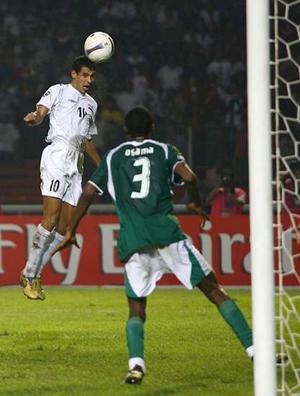
Since the war started in 2003 in Iraq many journalists and well-known anchormen predicted the fall of the Iraqi civilization and the Iraqi momentum, a normal predicament for a country under daily terrorist attacks and losing hundreds of its citizens every day because of such violence. With all that being said the Iraqi soccer (football) team traveled to Thailand to play in the Asian football championship (one of the world’s most popular soccer tournaments). The biggest challenge for the Iraqi team was the unstable security condition in Baghdad, which separated them from any other athletes around the globe. Iraq was placed in the First Group, which included Thailand, Oman, and Australia. The group was considered the hardest compared to the other groups. Iraq’s poorly prepared players drew Thailand the host country in the first game to a 1-1, which didn’t please the Iraqis looking for a win. The victory would have wiped down some of the daily pain and sadness experienced by every Iraqi citizen.
The second game was a great challenge for the Mesopotamian Lions against the mighty Australian team whose top players play for the best clubs in England and Europe. Again the Iraqis gave the audience around the world an example of a nation that wants to survive and succeed with a stunning win: 3 to 1 over Australia. The Mesopotamian Lions proved to the world their challenging spirit and drew a big smile on my face and some 27 other million faces across Iraq and the world. The new Iraqi generation of players, who many Iraqis like to call "the heroes" scored even bigger and finally clinched the first place in the Asian Cup. The Lions proved everyone wrong - anyone who doubted Iraqis' ability and spirit. A warm ovation goes to the Mesopotamian Lions and to the Iraqis that believe in freedom and peace. |
|
Satan's Notebook
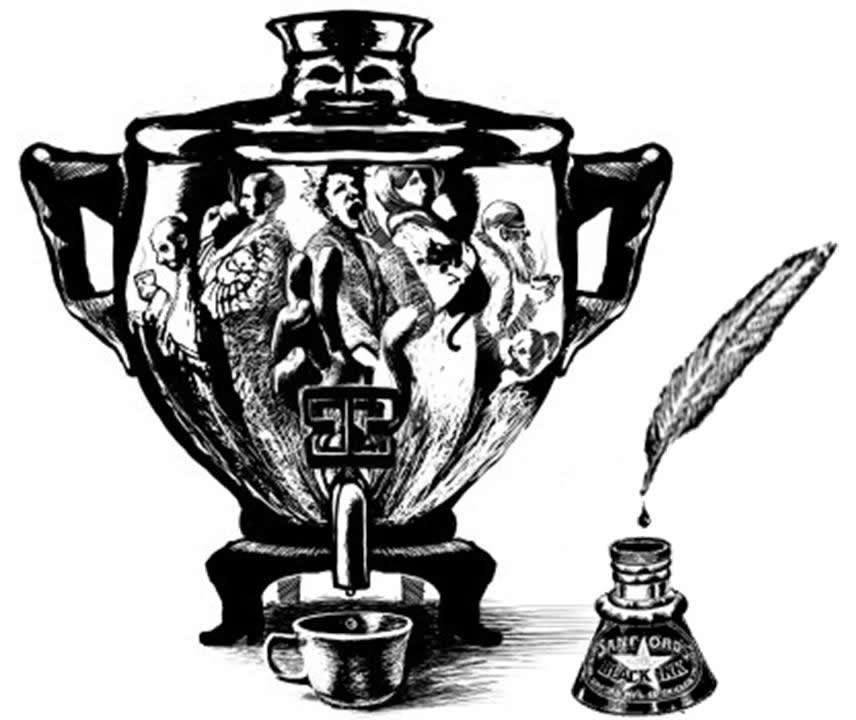
Shlimon claimed the only reason he went to church was because they needed a singer to keep the congregation awake. Everything else that came with that role was never part of the bargain. Yet one thing led to another and soon he was regarded as the village elder and a wise man. So here he was, he told himself, stuck with something he wanted no part of – and now what was he expected to do about Jabbar? With the village mayor away hunting wild boar and the priest tending his flock in the city, somebody had hollered, “Find Shlimon.” Village elder, bah! “One moment I see brother Jabbar scribbling in that Satan’s Notebook and the next –” Gewargis, Jabbar’s store clerk, stopped and eyed Jabbar’s account book. “I was putting away sacks of flour. I look over and brother Jabbar is dead like a cockroach.” Jabbar slumped over his desk in the back of his general store, his head resting on his open account book, a pencil sticking out of his twisted hand like an antenna. Spice and age stuffed the dank air, and a naked light bulb painted eerie shadows on the walls. Shlimon lit his pipe and stepped around Jabbar, nodding and grunting like a provincial gendarme. He produced a cloud of smoke and announced, “Dead like a blown tire.” Gewargis clucked his tongue. “I’d say his heart gave out.” “What little of it the miser had.” Shlimon shook his head and blew another cloud of smoke. “And in the end what good was all his fortune? Not even worth the coffin they’ll stick him in.” Gewargis nodded and threw up his hands. “But then brother Jabbar was ancient like Assyrians ourselves.” “What ancient?” Shlimon waved off the thought. “We were the same age, born in the same week, and look at me. Who says I’m old? Step up and show me.” “Whatever you say, brother.” Gewargis regarded the shield Shlimon wore for a chest. “I meant that brother Jabbar was old for his age.” Shlimon studied Jabbar through his pipe smoke and shook his head. “Look at him, curled up like a noodle.” “I came back here for a sack of flour –” Gewargis started. “They’ll need bread for his wake,” Shlimon cut him off. “So just as well the flour.” “Beg your pardon, brother, but who will come to the wake? Brother Jabbar’s friends wouldn’t fill the head of a pin.”
“Anyone hoping to inherit part of his fortune will.” Shlimon tamped his pipe and snickered. “Old Jabbar suddenly will have friends he didn’t know he had, and relatives – a pack of hungry wolves salivating sorrow.” Gewargis picked up Jabbar’s cane off the floor, mindful of the nail on the tip of it, and placed on the desk. Jabbar was known to nail cigarette butts off the ground and use the tobacco to make his own. “And what happens to that now, brother?” Gewargis asked, nodding at the account book. The book held an account of all the loans Jabbar had made to the villagers. Rumor had it that he slept with the dreaded little book under his pillow. Shlimon owed him nothing but had pity for those who did, for Jabbar held it over them like a rain of snakes. Good or bad times, Jabbar had no qualms about charging high interest rates. Thinking that for the time being no one would notice the account book missing, Shlimon slipped it out from under Jabbar’s heavy head and pocketed it. He then lifted the lifeless body and threw it over his shoulder like a side of beef. Outside, he loaded Jabbar onto his little wagon, covering him with a blanket, and led the donkey away by the reins. In the village square, the late afternoon air choked with dust as the returning cattle peeled off from the main herd and disappeared into alleyways toward individual barns. Two bulls locked horns like battering rams and Shlimon kicked them apart and out of his way, muttering, “It’s a sad day when even the cattle show no respect for you, Jabbar.” The donkey clopped along through a storm of questions from villagers curious about the miser’s demise. Some suspected foul play, since Jabbar’s dreaded account book made him more enemies than cattle made dung. Most clucked their tongue and said it was the way of the world. Shlimon growled under his breath and wished the mayor’s gun would jam and the priest’s droshky break a wheel. Lumbering into Jabbar’s house with the body, Shlimon thought the sudden wailing he heard would crack the walls. Jabbar’s wife and two daughters beat their breast while relatives tried to console them. They all begged Shlimon to explain why poor Jabbar had been taken and Shlimon reminded them that it was the way of the world. In the corner, Shlimon’s wife Sarah, who had volunteered to tend the samovar, pained for her husband. Jabbar’s house towered Shlimon’s cottage across the alley. For years the village children were warned to keep away from the big house for fear of being turned into gold teeth for the miser. Jabbar’s wife rarely ventured out of the house and his daughters stuck together like used soap. Shlimon sniffed the bleak air and thought of fishing along a gentle stream. Anything was better than stirring in this pot of self-righteous stew. Jabbar’s wake the next day was more dramatic. Relatives poured in from all over the region, and professional wailers whipped up a frenzy of tears. Everyone reminisced about Jabbar with fond stories. Suddenly he was a dear man. God rest his soul, he was a generous man with a heart of gold. Why, hadn’t he helped so and so in time of need? And so the laments gushed, to which Shlimon shook his head and pictured himself catching a monster for dinner. Poor Uncle Jabbar. “Uncle, now,” Shlimon barked to Sarah later, almost spilling his glass of tea. “Next thing they’ll make Jabbar a saint.” Sarah had set up the samovar for the two of them under the cherry tree in their cottage yard. Music from Azerbaijan on the shortwave radio played along with the summer breeze. A knock on the door soured Shlimon’s tranquil state. When he returned, he relit his pipe and blew out a cloud of smoke. “They have no suit to bury Jabbar in,” he said. “They asked for one of mine.” “One is all you have for church,” said Sarah. “Not like you’re a rich movie star.” Shlimon tamped his pipe and shrugged. “Also asked for a clean shirt, socks and shoes.” “Why not take your underwear, too?” “They’d gladly pay for my generosity, they said, but under the circumstance, they said, if I were so inclined as to refuse payment, seeing that Uncle Jabbar and I were such good friends, they’d understand.” The radio played a tune he knew and he sang along, his voice as sweet his pipe tobacco. Sarah regarded him. “And I suppose you agreed.” Shlimon stopped. “I thought it was the kind thing to do.” “That devil never helped you.” “Helped nobody.” “And did he pay you for repairing his fence?” Shlimon shook his head no. “But we were schoolmates. That must count for something.” “He had other schoolmates.” “I can only answer for myself, woman.” Sarah refilled his tea. “Next you’ll cry at his grave.” “Cry I will not, but a man deserves to look up from his grave and see faces he knows, even a miserable creature like Jabbar.” “What about his own kin, those vultures?” “He’ll spit in their eyes for lusting after his money.” “And you, old man, what do you want?” Shlimon wanted to say that since everyone thought of him as a village elder, like it or not, he had a duty to perform. Instead he drew on his pipe and said, “I owe him at least for the friendship we once had.” On the way to the cemetery, Shlimon thought about that old friendship, especially the times they had fought together against the cutthroats pillaging Assyrian villages. He remembered Jabbar’s bravery matched his own. Later they had both married and started families. Jabbar’s father lived then, mean as a scorpion, and the family lived in the big house. How life had poisoned Jabbar’s soul he would never know. The funeral procession crawled toward the old cemetery on the outskirts of the village, Shlimon holding the reins as his wagon carried the coffin. From the road he could see the village children already swarming over Jabbar’s prized walnut trees like locust, their shirts bulging with booty. Everyone said you haven’t tasted life until you’ve had a mouthful of walnuts from Jabbar’s trees. For years he had chased the kids away from raiding his trees, shaking his cane at them and cursing their ancestors, much in the way his father before him had done. Shlimon smiled at the sight and proceeded to light his pipe, only to fight to hold on to the reigns as the donkey suddenly brayed and kicked. The procession broke into a clatter of noise and dust, the crowd scattering like a hive of bees. In the frenzy the wagon broke loose from the beast, up ended, and the coffin smashed to the ground. The lid broke off and a stiff Jabbar tumbled out. Horror shot through the crowd: “A snake frightened the beast.” “My poor husband’s being sucked into hell.” “Stick Uncle Jabbar back in the coffin.” “A bad omen, God help us.” “Satan’s work.” “He’s already paying for his sins.” And Jabbar looked like a big eggplant rolled in flour. Jabbar’s wife wailed, beating her breast, and the daughters pulled their hair. The priest ran around muttering and crossing himself. No sign of the mayor. All Shlimon could think about was the state of what used to be his only suit and polished leather shoes. It would take him months, perhaps years, to save the money to replace them. Already he could feel the hot coals from Sarah’s glare at the sight of his coveralls in church come Sunday. Calm finally restored, Shlimon and Gewargis stuck the corpse back into the coffin, nailed down the lid, and the procession moved on. The sun warmed the air and the breeze hissed through the majestic trees along the old dirt road. Shlimon smoked his pipe and let his mind drift back to the early days, and to friendships that were no more. He thought the least he owed Jabbar was what he owed anyone else: a respectful passing. Yet because of their old friendship, he thought that perhaps his debt to Jabbar was bigger, big enough to send him off with the closest thing to Jabbar’s heart. That much Shlimon had managed to accomplish without anyone knowing it. Now brother Jabbar would go to his final resting place with the Satan’s Notebook tucked into his breast pocket.
|
|
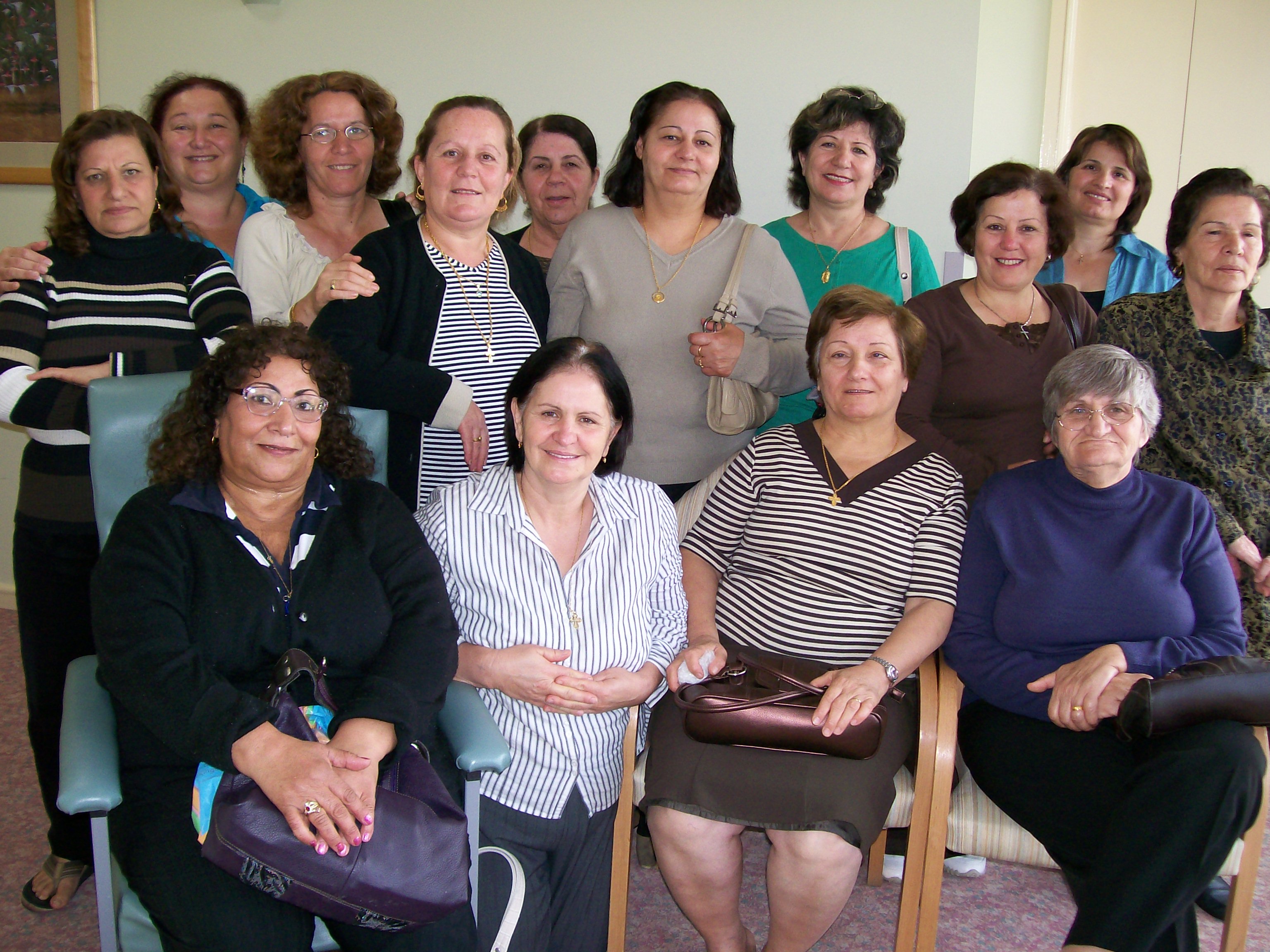
VASS Assyrian Chaldean Women's Group Babel Ochana
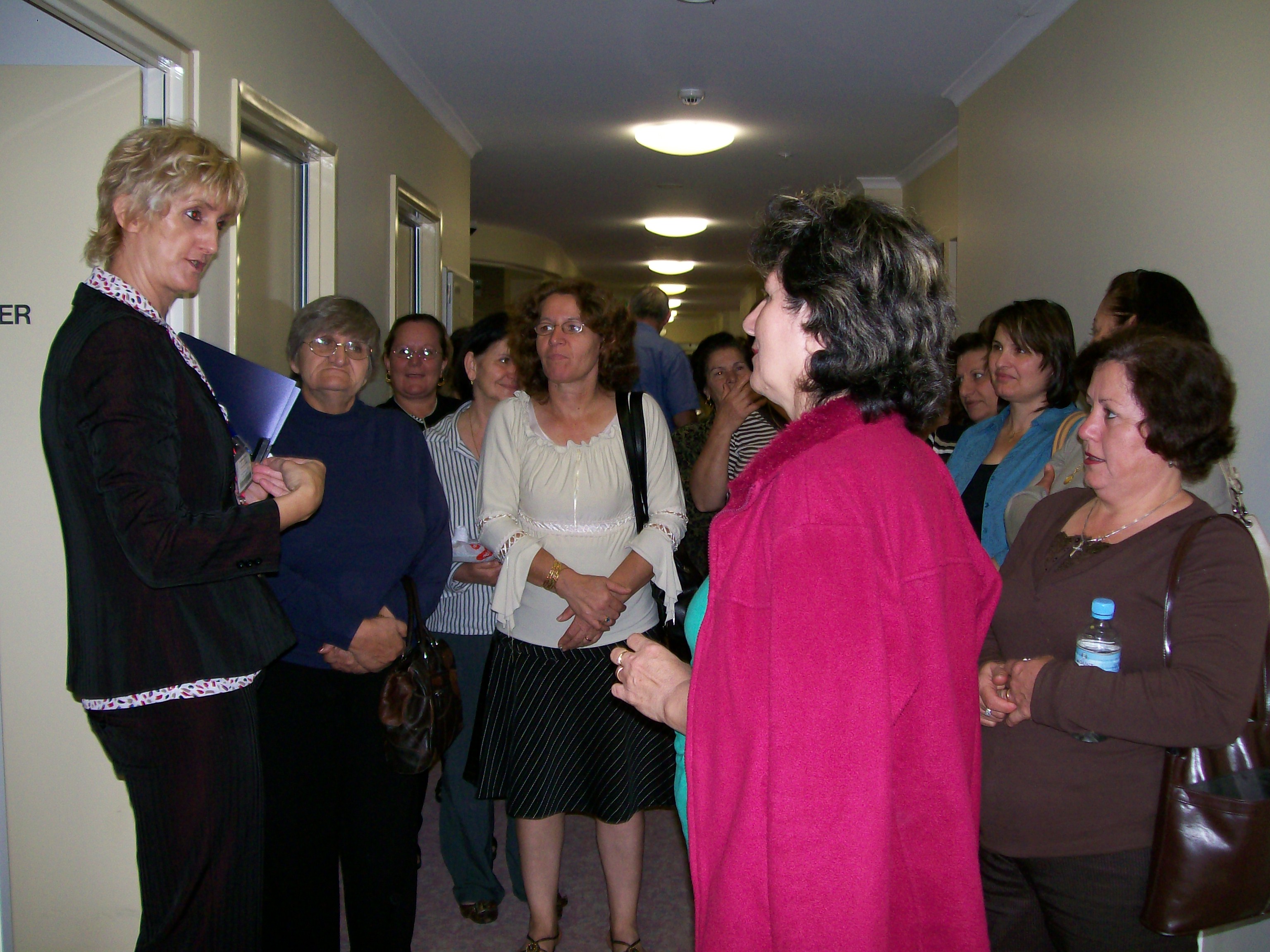
The Victorian Arabic Social Services is funded by Department of Health and Aging for another year till July 08 to work in promoting Community Partners Program (CPP) to the Arabic Speaking communities across the Northern and Western regions, and develop sustainable partnerships with Residential Aged care facilities across the two regions. We wish to inform the readers of Zinda Magazine on the achievements and activities of the CPP project. The aims of CPP are to increase access and delivery to Arabic speaking Communities to Aged Care Services. Also to provide the communities and the Aged Care support services with resources to enable them to make informed decisions about Aged Care Support Services and deliver culturally appropriate care. As part of our plan we have conducted a number of tours with community groups (Assyrian & Arabic) to residential care facilities. Four ladies from the Hume Assyrian Chaldean women’s group had attended one of many tours at a Residential Care Facility and were interviewed on their opinion before and after the tour to residential care facilities, their responses were: Before: “Had no idea on the services available at residential facilities” After: “My opinion totally changed, saw the services and good care given to the elderly” These tours have been very successful. We intend to do more tours in the coming months, we invite the readers if they are interested to join our tours and information sessions, we can be contacted at VASS on 9309 0055 during working hours. Please ask for Eva Wakim, Coordinator of Aged Care Services or Babel Ochana (Bella), CPP Project Officer.
"They Might Be Giants" Sing The Mesopotamians A report by Arvin Petros The band "They Might Be Giants"'s new album "The Else" was released on 10 July 2007. The last track on this album is called "The Mesopotamians". The lyrics even include the names of Assyrian kings and deities. Below are the lyrics:
|
The Triangle of Submissiveness A Guest Opinion Fred Aprim The three conferences held in Ankawa (Aghajan), Ceres/Modesto (Dadesho) and Tehran (Bet Kolia) have stirred many discussions among Assyrians (also known as Chaldeans, Nestorians, Jacobites, Suryanis, and ChaldoAssyrians) around the world. The perspectives expressed on the various Internet-based forums, around Assyrian dinner tables and over tea or coffee gatherings are entertaining. However while certain opinions lack touch with reality, and are biased and strictly emotional in nature, there is that sound opinion, which explores the events surrounding these three conferences with untarnished conviction based on logic, competent sense, impartial and virtuous understanding. The question being asked: Where these three conferences connected? What is/are the common denominator? Simple analysis of the circumstances and events suggests that the three conferences had a common mission to devastate the independent party of the Assyrian Democratic Movement (ADM). Furthermore, the three conferences construct the triangle of submissiveness; a submissiveness to the empowered and wealth augmented Kurds where they, i.e., the conferences, represent the three segments (sides) of this triangle. Further analysis indicates that certain patriarchs and/or bloc of bishops from the three main Syriac-speaking churches are the vertices of this triangle and the Kurdistan Democratic Party (KDP) as its centroid. Allow me to present an overview of the three carefully woven conferences and explore the bigger picture. The Ankawa Conference (in northern Iraq) of Mr. Sargis AghajanMr. Sargis Aghajan is a member of the KDP of Masoud Barazani and he is the Minister of Finance in the Northern Iraq's Kurdistan Regional Government (KRG). He orchestrated the Ankawa Conference of March 12-13, 2007. The Ankawa Conference was backed and financed by the KDP. Later, a People's Committee and a leadership from that committee were selected/elected. It can be argued that the Ankawa Conference had three main objectives:
An important point here is that the participants of the Ankawa Conference agreed to adopt the compound title "Chaldean Syriac Assyrian" in order to unify the various Syriac-speaking Christian communities in Iraq. This was to counter the "ChaldoAssyrian" term introduced by the ADM in Baghdad's Conference in 2003. Honoring Aghajan
The U.S. Government allocated billions of dollars of aid for the reconstruction efforts in Iraq. Over $30 millions were assigned for the Syriac-speaking Christian Assyrians. The U.S. aid monies allocated to the Christians were handed to the KRG to manage, since it is a governmental entity in northern Iraq. The KRG and perhaps other decision makers selected Aghajan to be in charge of the distribution and use of this U.S. aid package. The construction of churches and homes went under way. The two questions here are: Why were more extravagant churches being built for this Christians and why were not Assyrian schools and cultural centers built instead? On the one hand, it is in the best interest of the Kurds to ensure that religion continues to dominate Assyrian society. This would contribute to keeping the Assyrians divided across their religious denominations and maintain that confrontational and envy environment between the various Assyrian religious denominations. On the other hand, traditionally, schools and cultural centers play a vital role in raising national and patriotic awareness. Thus, it is not in the best interest of the KDP to promote that. Still, there are many questions on who owns the grant deeds of those homes and who is entitled to them. Reports indicate that certain grant deeds are at times linked to other institutions and that only KDP supporters are being rewarded with homes. At any rate, patriarchs began to praise Aghajan and presented him with medals of honor. Aghajan became a hero virtually overnight as patriarchs showered him with praise in their speeches, special letters and/or in their medal-award ceremonies. This process was a surprise to many Assyrians since they had not witnessed such system of honoring an individual before, applied by their churches. The medals seem to have been designed and created especially for Aghajan to glorify him. The making of Aghajan continued with the support of certain Assyrians that are KDP associates, such as Fawzi Hariri, and few other smaller and weaker organizations, including the Assyrian Patriotic Party (APP), Bet Nahrain Democratic Party (BNDP), Chaldean Cultural Center of Ankawa that are supported by the KRG and Barazani. The leaders of these institutions and those KDP associates were awarded ministerial cabinet positions in the KRG and the Central Government. Furthermore, the suspended Fr. Emmanuel Baito Youkhanna was reinstated in the Assyrian Church of the East (ACOE). Fr. Youkhanna is the brother of Nimrod Baito Youkhanna, the Secretary General of the APP. Fr. Youkhanna began his extensive attacks against the ADM with his Arabic articles that were posted on www.ankawa.com. Following in the footsteps of the ACOE, Mr. Sargon Dadesho's media outlets of Ceres/Modesto began to praise Aghajan as well. The Pro-Kurdish Propaganda of AghajanAghajan has been working very hard to ensure that whenever a special referendum is to take place in northern Iraq ( Assyria), our people would vote in favor of linking the Nineveh Plains to the Kurdish region and the KRG. Aghajan of course has his resources, whether in the form of the media (www.ankawa.com web site and Ishtar Satellite TV) or individuals and institutions that do most of the dirty work for him and for the KDP. For example, Mr. Jibrael Marko, a member of the preparatory committee of the Ankawa Conference and Mrs. Linda Gabriel (European Syriac Union) are touring Europe and presenting seminars about the concept of our people's self rule, its geographic borders and its administrative status within Iraq, as the announcement on www.ankawa.com puts it. However, the announcement did not refer to the Kurdish attempts to annex the Nineveh plains to the Kurdish region and thus swallowing the last stronghold of the Assyrians in Iraq. One such seminar was scheduled to take place in Vienna on August 12, 2007. On July 28, 2007, the two individuals had a similar seminar in London, England. According to Mr. Albert Michael of London, who attended the seminar, Mr. Marko flagrantly misrepresented the truth and promoted the KDP agenda as propagated by Aghajan. If we really listen to what Mr. Marko d stated we would find that his speech is baseless, because article 125 of the Iraqi Constitution allows only for the establishment of an administrative area. Any other form of autonomy or self-rule has no legal basis. To attain autonomy, which few of our groups are claiming to be working on, one must first amend the current Iraqi Constitution. When Mr. Marko and Ms. Gabriel were asked how they would overcome this major obstacle, they said that they would amend the Iraq Constitution. When Mr. Michael asked whether they had a member of Iraq’s constitutional committee actively working on this specific amendment, Ms. Gabriel replied "yes". A little later on, when Mr. Michael asked her to name the person, she retracted her earlier answer and confessed that there wasn’t anyone. Then how are they going to accomplish what they are claiming? According to Mr. Michael, the following were few of the deceptive and false statements made by Marko during his opening remarks. Of course, these false statements are repeated by every Aghajan associate:
These claims by Marko and Aghajan associates are absolutely false. Allow me to clarify that:
Conference of the Assyrian National Congress (Ceres/Modesto, California) of Mr. Sargon Dadesho and the Surprising Letter Mr. Odisho Malko is a well-known Iraqi Assyrian writer and historian. He ran in the January 2005 Iraqi national elections under Slate 139 and his name was positioned on top of all candidates on that slate. Slate 139 ran under the "Assyrian" only name and was strongly supported by Mr. Sargon Dadesho and his media outlets of Ceres, California. However, slate 139 failed to make any impact in the Iraqi elections. That is history. Where Malko stood after the 2005 elections, what he supported or attended are not the purpose of this article. Recently, Malko has posted an article on ANA-Ashur web site in which he presented his own thoughts about the various Assyrian conferences that we are addressing. In his article, Malko talks about a letter that most of us were unaware of. The letter interested this writer and it should be of interest to every Assyrian. Malko states that at the conclusion of the congress/conference of the ANC of Dadesho, which took place on March 24-25, 2007 in Ceres, the ANC sent an official letter to the leadership of the Ankawa Conference asking for a meeting between the two groups to address the general situation and unify the goals and demands of the various Assyrian groups. By planning his ANC conference following immediately that of Ankawa, Dadesho tried to add to the popularity of Aghajan and attempted to farther isolate the ADM in the Diaspora; what Aghajan was doing inside Iraq. An ACOE bishop and several priests attended the opening ceremonies of Dadesho's conference. Such participation of the churches in the national or political conferences is ceremonial in many occasions. Lies, Bias and Double StandardsFor years, Dadesho, who is linked directly to the ANC, BNDP, Bet Nahrain Inc. and its media organs AssyriaSat, Assyria Times and Bet Nahrain Forum, has claimed to be the defender and protector of the "Assyrian" name. He's often noted that he would never compromise the Assyrian name or accept any compounded names as a political compromise. Dadesho has been attacking the ADM since the 2003 Baghdad Conference in which the ADM introduced the compound title "ChaldoAssyrians" in order to unify the Chaldeans, Nestorians, Jacobites, Suryanis etc. On his AssyriaSat and Bet Nahrain Forum, Dadesho and his volunteers/supporters have been calling the ADM, its leaders, and all ADM supporters as traitors, nation-sellers, etc. for using that compound name. To be such a patriot is admirable, but one wonders: why such strong principles and stands are suddenly compromised? Why did he send that friendly letter to the Ankawa Conference leadership, which had adopted the compound name "Chaldean Syriac Assyrian"? If the ACOE has honored Aghajan with a medal knowing that he has introduced a compound name, why has Dadesho become the mouthpiece of the ACOE and its PR firm? As a politician, Dadesho couldn't accomplish anything or muster serious support from the Assyrian people; therefore, he turned to the churches to obtain that support. I would like to go farther and ask if the ACOE was against the 2003 Baghdad Conference, because ADM adopted a compound name, then why did it accept the compound name introduced by Aghajan and then reward the Kurdish official with a medal? Is the compound name of Aghajan made of gold while that of the ADM made of tin? This question I have asked repeatedly for almost a year. I am still waiting for an answer. Barazani Defends the Kurdish Cause. Who are the BNDP and ANC Defending?No Assyrian in his/her right mind would suggest that the KDP and Barazani are of benefit for the Assyrians, as an ethnic group (not as Christian millet) with historic rights in northern Iraq ( Assyria). Barazani and the KDP have been working hard for the establishment of the illusive Kurdistan over Assyrians' historic homelands (Assyria). They have marginalized the true Assyrian leadership, the Assyrians' historic rights and history. If that is the case, why is it that media outlets of BNDP and ANC in Ceres, i.e., AssyriaSat, Assyria Times and Bet Nahrain Forum, have not criticized and attacked Barazani and the KDP? One visit to the Bet Nahrain Forum for example one could see that the general discussion is predominantly religious in nature and about the greatness of the ACOE and its leadership, the court case of ACOE vs. Mar Bawai Soro, or how to boycott the Assyrian National Convention or how to jeopardize certain rallies that are being organized around the world to bring awareness to the unfair treatment of Assyrian Christians and their tragic fate since the 2003 invasion of Iraq. Those that post on Bet Nahrain Forum avoid discussing Barazani's undemocratic actions in northern Iraq ( Assyria); however, they attack fellow Assyrian writers, organizations, etc. Not even the Late Julius Shabbas who gave so much of his life for Assyrian cultural issues escaped the grime, filth, and tackiness of AssyriaSat. I have no problem with buttressing the ACOE or any other church for that matter, but these days external forces that are much powerful are challenging the Assyrian national movement. Therefore, it is vital that Assyrian nationalists, activists and political groups do the right thing and: First, work genuinely with one another towards the Assyrian common goals. Second, step aside and allow churches to handle their own internal disputes. The court of law will decide if one is guilty or not. Emotional outbursts, empty accusations and bias personal incrimination on Internet forums are worthless and do not stand in a court of law. We must end bringing personal convictions related to faith and its complications into national matters and into politics and vice versa. I am appalled how millions of desperately needed dollars are being wasted on court expenses when this money could have helped thousands of desperate Assyrians in Iraq, Syria, Jordan and other distressed places. The Assyrian Universal Conference of Mr. Yonatam Bet Kolia in Tehran, IranHaving gone over certain aspects of the Ankawa and ANC conferences, I would like to touch upon the July 24-26, 2007 Tehran's Assyrian Universal Conference as well, because it adds another dimension. Mr. Yonatam Bet Kolia, Assyrian Universal Alliance's (AUA) Secretary of Asia and the Member of Iranian Parliament, organized the Tehran Conference. The AUA was split in regards to the Tehran conference, but high-ranking officials, including Mr. Fraidon Darmo, acting Secretary General; Mr. Carlo Ganjeh (Secretary of the Americas), Mr. Youra Tarverdi (Executive Board Member) and others attended. We know that Mr. Darmo came to Washington with the KDP associate Fawzi Hariri and expressed their opposition to Congresswoman Anna Esho's planned proposition in U.S. Congress for a Nineveh Plain self-administrated region linked to the Central Government since this was against the KDP plans. Subsequently, the proposition was withdrawn. The AUA's cooperation with Aghajan and the Ankawa Conference is puzzling and most importantly contradictory to its official declarations since the Ankawa Conference adopted a compound name "Chaldean Syriac Assyrian" while the AUA in its 24th World Congress in London, July 7-9, 2005 stated clearly that: "We reaffirm that there will no longer be a variety of names to divide the Assyrian people, but all will be referred to as Assyrians." Furthermore, according to www.brasheet.com, Reverend Father Yousef Rashidi of the ACOE St. George's Cathedral in Tehran was present and he read a letter of support from Patriarch Mar Dinkha IV. Mar Ramzi Garmo, Bishop of the Chaldean Catholic Church is the only residing bishop from a Syriac-speaking church in Iran. He was present as well. Many Assyrians in Iran are Catholics and are members of the Chaldean Catholic Church. The last physically residing bishop from the ACOE in Iran was Mar Dinkha. He left Tehran after his consecration as patriarch in London in 1976. Even though Patriarch Mar Dinkha IV has been residing in Chicago, he personally continues to oversee the affairs of the ACOE diocese in Iran. Patriarch Mar Dinkha IV has special warm connection to Iran since he lived in Tehran while serving his church as a priest and as a bishop for two decades. Of course, Bet Kolia made sure to invite Dadesho and other members of the ANC and BNDP to the conference. Mr. Habib Afram of the Lebanese Syriac League was invited to the Tehran conference also. He was present at the Ankawa Conference as well. The Bigger Picture of Bet Kolia's ActionsWe have to look at the bigger picture and try to analyze what is taking place. Bet Kolia visited northern Iraq (Assyria) and attended the Ankawa Conference of Aghajan. Next, he visited the United States and was invited by Dadesho to attend the ANC conference in Ceres/Modesto, California. In San Jose earlier, he had a presentation at the Assyrian American Association (AAA) of San Jose, which this writer attended. In his presentation, Bet Kolia went out of his way to praise the ACOE and its patriarch. He praised the Iranian government and its policies repeatedly. This is not new of course. In an interview with Pawand's Iran News on June 6, 2006, he stated "Assyrians of Iran are not persecuted and that they are treated equal with Muslims." He returned on July 25, 2007 to state for MNA Iranian News that " Iran is a typical example of peaceful coexistence between members of different religions" and that "We [Christians] are having equal rights with Muslims." However, Bet Kolia did not explain why during his representation of the Assyrian community in the Iranian Parliament as the "Representative of the Assyrians and Chaldeans" most of the 100,000 Assyrians that lived in Iran before the 1979 Iranian Islamic Revolution have fled Iran. He did not explain why is it that today there are only between 10,000 and 15,000 Assyrians left in Iran, as he confirmed during that presentation. Furthermore, in his presentation, Bet Kolia repeatedly attacked the ADM. It appeared that he was there to incite the public against the ADM more than anything else and he did not forget to brag about his accomplishment for the Assyrians in Iran. That just amazed me looking at where Assyrians were in Iran during the rule of the Shah (before 1979) and where they are today under the Islamic Ayatollahs. On August 13, 2007, the AUA/Americas Chapter issued a statement in response to the editorial of Mr. Wilfred Bet Alkhas in the August 1, 2007 issue of Zinda magazine. In it, the AUA/Americas Chapter continued to praise the Iranian Islamic Government and its fair treatment of Assyrians. The statement went on to blame the Assyrian misfortunes in Iran basically on the thirty years of economic sanctions and the eight years of war (1980-1988) that Iraq initiated. It went further to say: "The hardships faced by the Iranians could have been a legitimate reason for the Iranian government to disregard the Assyrians and the Assyrian issues altogether." I am speechless! Worth mentioning that certain observers believe that the AUA as a whole is not part of what has been orchestrated lately. Certain AUA members disapprove of the latest questionable involvements of Bet Kolia in the Ankawa, Ceres and Tehran Conferences. As far as Iran is concerned, it seems to me that it outsmarted the Tehran Conference organizers. Because no matter what the goals of Bet Kolia/Dadesho were, Iran's main purpose for agreeing to host that conference was to get back at the U.S. Administration for lashing against it in regards to minority rights violations. Iranian officials used the conference as propaganda against the U.S. Administration. The rationale for hosting Dadesho in Tehran is that Iran perhaps needed to offer good gesture towards him as he stopped hosting television programs by the Azeri and Ahwazi Iranian secessionist groups that purchased air time on his AssyriaSat. The U.S. connection in this, if any, needs to be investigated and analyzed further. Aghajan, Dadesho and Bet Kolia: The Purpose is ClearI believe that the triangle of submissiveness toward the Kurds was well represented in the Ankawa (Aghajan), Ceres/Modesto (Dadesho) and Tehran (Bet Kolia) conferences and it fits with the bigger plans of the KDP. The KDP neutralized the ADM and it is about to officially annex the Nineveh Plain to the Kurdish region. Each player does his part for his own reasons, but they compliment one another at the end. Aghajan is in it because he is a member of the KDP and his loyalty is foremost to the Kurdish agenda. Aghajan could not have split royalties or reflect two fundamentally different agendas; Kurdish and Assyrian, especially when the two agendas are conflicting because of land disputes and other obvious historic issues. Dadesho would do anything just to hurt the ADM. For him it is a personal vendetta and ego satisfaction and working with Aghajan and the ACOE at this time serves him well. Dadesho changes his alliances as frequent as he changes his suits, shirts and neckties that he purchased after winning his tainted lawsuit against the fallen Iraqi government. His satellite TV is his real power. Bet Kolia's connection is due to his strong relationship with the ACOE, which is cooperating with the KDP and Aghajan. Many would agree that Bet Kolia should concentrate more on the problems and bleak future of the remaining 10,000 Assyrians in the Islamic Iran. I believe that this reflection is not beneficial. It was only post WWI that modern Iraq and Syria were created and that modern Turkey and Iran acquired their present borders. This contributed to dividing Assyrians and historic Assyria across four separate countries, which was not the case prior to WWI. Before WWI, Assyrians lived predominantly in a region falling mainly within the Ottoman Empire and partly within the Persian state and there were hardly any specifically defined frontiers between the two power states. The Assyrians in Iran, Iraq, Turkey and Syria are facing the same dark fate represented in the rise of fundamental and militant Islam and the Kurdish illegal expansion. However, we must consider that the policies of different countries might limit the involvement of Assyrian representatives (in Iran, Iraq and Syria for example) from being part of a more global effort regarding the future of Assyrians. Final RemarksWhen insignificant Assyrian groups, including the APP, BNDP, ANC, and individuals of split loyalties or questionable past become so active in organizing conferences, marginalizing the elected independent Assyrian group (ADM) and paving the road for the annexation of the Nineveh Plains to the Kurdish region, we must raise questions. When the weaker APP and BNDP opened the Assyrian door for the KDP to infiltrate, undermine and then marginalize the democratically elected ADM, it became very hard for Assyrians to manage the Assyrian home freely. Let me assert that the best interest of the Assyrians is not to be under the Kurdish control. The Kurds have proven throughout the centuries and most recently in the last two decades that they have no interest in respecting Assyrians' historic rights as indigenous people or being democratic. In fact, the Kurds have done the greatest damage to Assyrians in the last 300 years in Turkey, Syria, Iran and Iraq, more than any other ethnic group. One simple and swift look at who illegally occupies most of Assyrian ancestral lands and villages in northern Iraq, northwestern Iran, southeastern Turkey and northeastern Syria proves this point. On the other hand, the U.S. must uphold the principles of democracy and must protect the rights of the minorities and indigenous people across the board. First, Aghajan and Dadesho are not the Assyrians' representatives in Iraq; the former is a Kurdish party official and the latter is the head or part of some insignificant Diaspora institutions. Neither one is elected by the Assyrians. ADM was elected as the major representative of the Assyrians in Iraq through two Iraqi national elections. Thus, the U.S. Administration must deal with the ADM in principle. Secondly, the annexation of the Nineveh Plains to the Kurdish region is neither in the best interest of the Assyrians nor the United States. The Kurds have many problems with their neighbors, whether Sunni or Shi'aa or whether Arabs, Persians, or Turks. The present alliance between the Kurds and the Shi'aa in the Iraqi Government is superficial. The animosity between the Arabs and Kurds is much deeper for few politicians to patch, considering what the Kurds have done in the last four years in Iraq and what they are planning. Therefore, the Assyrians, Shabaks, and Yezidis should not be under the Kurdish control, because any future conflict between the Kurds and Arabs or between Kurds and Persians or Turks would lead to a complete disaster for those vulnerable small groups. If such was the case, the Kurds would not be in position to help these groups and a wholesale genocide could take place. The Nineveh Plains must be administered by independent Assyrians, Shabaks and Yezidis and under the direct control of the United States and the United Nations, now that the UN has voted to expand its role in Iraq. Furthermore, the Nineveh Plain region must be in good terms with the Iraqi Central Government. There are certain writers who claim that participating in a conference does not mean that one necessarily agrees with the final statement and decisions of that conference. This is strange to state, especially when that person or group does not issue a special statement to make that clear. These writers go on to state that the AUA for example in its 24th Congress (2005) made it clear that it is for the Assyrian name only, therefore, it does not need to elaborate on what the Ankawa Conference declared, regarding the name issue. These writers go on to state that the Assyrian groups should basically deal with the devil if necessary. I guess that this is in line with the AUA policy. The AUA/Americas Chapter in its August 13, 2007 statement states: "In order to make progress in the Assyrian Cause and to promote the Assyrian rights and interests, AUA has and will engage in diplomatic dialogue with all relevant nations, organizations and parties." The question remains: How many congresses, conferences and meetings have the Assyrian groups organized since the fall of Saddam Hussein in 2003? What did they accomplish? Conferences such as Ankawa, Ceres, and Tehran will remain dubious and suspicious to this writer, because we have seen too many of them by the same players, ending with nothing but a worthless declaration. The purpose of these conferences is the same: to impress the public and show objection to something that another group has stated, done or is planning to do. I have yet to see a conference with a serious agenda, short-term and long-term plans, follow ups, actions and then results. This is expected because the BNDP, APP, and others while sleeping with the KDP could not put one block on top of another if that was not in the interest of the Kurds. Thus, declarations and statements with emotional banners of "Khaya Atour" seem more of a façade for failure and defeat than a genuine concern for the fate of a nation. This writer's convictions today continue to be that many Assyrian institutions, political and religious, are not independent, are not endowed with free will, and are playing to the tunes of the KDP, which is dangerous and non-beneficial to the Assyrian question and future. Grievance Debate: Iraq
Maria Vamvakinou MP
Today I rise to speak on behalf of the many constituents living in my electorate of Calwell who currently have family living in Iraq, or family members who have been forced to flee Iraq as refugees. My electorate of Calwell is home to over 5,000 Iraqi Australians. They represent a number of different ethnic and religious groups, all of who share a strong commitment to Australia. Whenever I speak with members of the local Iraqi community, our conversations invariably turn to the fate of those family members left behind in Iraq. These conversations bring into sharp focus the untold tragedy of what is happening in Iraq and the effect this war is having on Australia’s own Iraqi community. More than anything else, they are a sobering reminder that innocent civilians are always the first casualties of war. There is little doubt today that the war in Iraq is increasingly unpopular, both here and overseas. In March 2003, the Howard government was among the first to offer its support for the US led invasion of Iraq. At the time, antiwar rallies held in many of Australia’s capital cities attracted record crowds, reinforcing what numerous opinion polls were saying, namely that the majority of the Australian public was against the war and adamantly against any Australian involvement. For those of us who opposed the war, who questioned the accuracy of intelligence reports linking Iraq to weapons of mass destruction, who pointed out the absurdity of attempts to link Saddam Hussein with al-Qaeda, and who warned of the tragedy that would unfold if we went to war before all diplomatic efforts were exhausted, history has unfortunately proved us right, just as it has proved the Howard government horribly wrong. We now know that, in the lead-up to the 2003 invasion, the Howard government was given ample warning that Australia’s involvement in Iraq was likely to make us more of a terrorist target, that invading Iraq would likely act as a recruitment tool for both established and newly emerging terrorist organisations and that regional instability caused by an invasion was likely to increase petrol prices. Any cursory knowledge of Iraq’s political history and demographics should have been enough to alert the Howard government to the dangers of civil strife and disintegration if the political vacuum created by the collapse of the Iraqi regime was not filled immediately. Whether through incompetency, neglect or the Howard government’s willingness to abdicate Australia’s independence in determining its own foreign policy, this government chose to ignore all the warning signs. And, by announcing Australia’s involvement in the war, it also chose to ignore the will of the Australian people. The fact that the Minister for Foreign Affairs keeps changing his mind when it comes to pinpointing the exact reasons why Australia went to war in the first place is testament to the ill-conceived nature of Australia’s involvement in Iraq. Initially, our involvement in Iraq focused on its non-existent weapons of mass destruction. Since then, the justifications used by the foreign minister for our involvement in Iraq have included ‘regime change’, creating a beachhead of democracy in the Middle East, protecting Japanese army engineers working in the south of Iraq and ‘security overwatch’. This was, of course, before the defence minister announced that Iraq was actually about oil, a faux pas of gigantic proportions that was quickly retracted by the minister and avidly talked down and denied by the Prime Minister. Notwithstanding the confusion as to the reasons for Australia’s involvement in Iraq, the Howard government’s preferred approach has been to shut down all debate on Iraq completely by maligning opponents to the war as either terrorist sympathisers or supporters of Saddam Hussein’s regime. This is not the response the Australian public expect when it comes to responsible government. The damage that our involvement in Iraq has done to Australia’s international standing and to its international reputation is, I believe, comparable to the damage that has been done to Australia’s international standing as a result of this government’s intransigence when it comes to climate change. The Howard government’s support for the invasion of Iraq fell far short of the international norms and standards used to justify the war. The invasion of Iraq was not authorised by the UN Security Council, it did not fall under the terms of humanitarian intervention and it did not amount to an act of self-defence against an immediate and present danger to Australia’s security and sovereignty. In effect, what the Howard government has done is undermine Australia’s role as a middle power in international affairs, one that pursues multilateral solutions to international problems. It has damaged Australia’s reputation in an international system where reputation remains a vital asset, especially in negotiations. And, through its intransigence and hostility, the Howard government has managed to ostracise the one organisation that a middle power like Australia should be promoting at every possible opportunity for the sake of its own international interests—namely, the United Nations. Further adding to the charade surrounding the government’s approach to Iraq are the weekend’s revelations that the Prime Minister has written to the Iraqi Prime Minister, Nouri al-Maliki, warning him of a possible Australian troop withdrawal if his government does not do more to curb the violence in Iraq. In the lead-up to an election campaign, and given the unpopularity of our involvement in Iraq, we now find the Prime Minister trying to create the conditions for a possible Australian troop withdrawal from Iraq by blaming the Iraqis for the bloodshed and chaos this war has created. Australia ’s involvement in Iraq has cost the Australian taxpayer some $2 billion. According to AusAID figures released last year, the money Australia has committed to humanitarian aid and reconstruction projects in Iraq amounts to less than one-tenth of this figure. We have spent 10 times more on the invasion of Iraq than we have on helping Iraq get back on its feet, and now we see the Prime Minister trying to pin Iraq’s misfortunes on the Iraqis themselves. This is hypocrisy of the highest order. The Prime Minister has never tired of misusing Iraq to suit his own political interests and, in the process, he has shown complete disregard for Iraqi civilian life, for the rule of international law, for the will of the Australian people and for Australia’s international reputation. Iraq is now disintegrating before our eyes. Its civilian population live in fear. Each day adds to the sober headcount of numbers dead, maimed and wounded. Lives are destroyed, children are traumatised and civilians are targeted. Anywhere from 400,000 to 600,000 Iraqis—with some estimates putting that figure a lot higher—have been killed so far. The war has resulted in two million people being internally displaced, and it has created a further two million refugees who have fled across Iraq’s borders. Recently, a young Assyrian woman named Sophie—who is a constituent of mine—came to see me about her first cousin Aadam, who fled Iraq with his family in late 2006. They now live in Syria as refugees. Before the war, Aadam worked as an industrial chemist in one of Iraq’s oil refineries. Shortly after the war began, he also started work as a consultant for an American company that became involved in the oil refinery where Aadam was employed, following the 2003 invasion. It was not long before Aadam started to receive death threats. Sophie painted a picture of an honest man in Iraq who worked hard to provide for his family and who became caught up in a war he played no part in starting. Each week, Aadam had to live with the pressure of trying to balance the need to provide for his family against the threats he received as a result of his work. Like so many other Iraqi families who have been affected by the war, Aadam’s story ends tragically. In early June 2006 his eldest son Ninos, who was completing his final year of computer engineering at university, was killed by a bomb that had been placed under his car. Distraught at the death of his eldest son and fearing for the safety of his remaining four children, Aadam and his family fled to Syria, where they remain today. Though recognised by the UNHCR as refugees who face persecution if they return to Iraq, Aadam’s application for a humanitarian visa to live in Australia has been rejected by the Australian government. There are a hundred similar stories to this one among Iraqi-Australians. They recall the true horror of war and the loss of innocent life. They highlight our failure to provide for the welfare, security and protection of Iraqi civilians. In relation to Australia’s role in the war, they show the extent of the Howard government’s failure to honour its obligations to the many Iraqis who have been displaced and whose lives have been destroyed as a result of this war. The Howard government has a moral and legal duty to help those suffering in Iraq, through its overseas aid program and through Australia’s own humanitarian and refugee visa program. Anything short of this is unacceptable.
|
||||||||||||||||||
Nuri Kino Wins Blatte De Luxe Award - Again The Assyrian-Swedish investigative journalist, Nuri Kino, has won this year's Blatte De Luxe award in the category of Journalism. Mr. Kino won last year's Award in the same category, becoming the only Blatte De Luxe winner who has received the honor two years in row. In his speech at the award ceremony on 30 July, Mr. Kino called for peace, tolerance and support for the children of the immigrants. ”Both my parents are illiterate and I made it this far; you should do it too. But nothing will come to you for free; you must work very hard”, Kino reminded his audience. He also says "I’m a proud immigrant. I’m a proud Assyrian and I’m a proud Swede. But I’m a human being foremost and together we can bridge all barriers”. The jury makes the following commendation upon awarding Mr. Kino: "For he is an excellent journalist, who digs deep in order to expose injustices both in Sweden and in the international community. He delivers big disclosures one after the other, receiving death threats. Ye he does not give up. He works for the world media, but still lives in Södertälje (Sweden) and is a role model for many young people." To read Nuri Kino's blog visit his website at nurikino.com.
|
||||||||||||||||||
|
||||||||||||||||||
|
||||||||||||||||||
ZINDA Magazine is published on Mondays. Views expressed in ZINDA do not necessarily represent those of the ZINDA editors, or any of our associated staff. This publication reserves the right, at its sole discretion, not to publish comments or articles previously printed in or submitted to other journals. ZINDA reserves the right to publish and republish your submission in any form or medium. All letters and messages require the name(s) of sender and/or author. All messages published in the SURFS UP! section must be in 500 words or less and bear the name of the author(s). Distribution of material featured in ZINDA is not restricted, but permission from ZINDA is required. This service is meant for the exchange of information, analyses and news. Any material published in Zinda Magazine will not be removed later at the request of the sender. For free subscription to Zinda Magazine, send e-mail with your name, address, telephone number to: zcrew@zindamagazine.com. ZINDA means "Spark of Fire" in modern Syriac (Assyrian); Zinda's Red Swoosh is a rendering of the seventh letter in the Assyrian alphabet, letter ZEN, and the first letter in the word "Zinda". For more information about the Assyrian culture and heritage write to Zinda Magazine. Zinda Magazine™ Copyright © Zinda Inc., 1994-2007 - All Rights Reserved - www.zindamagazine.com |

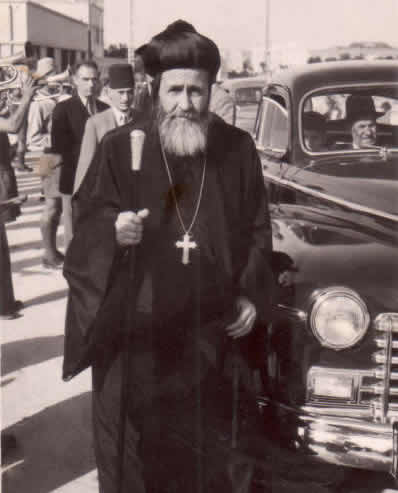



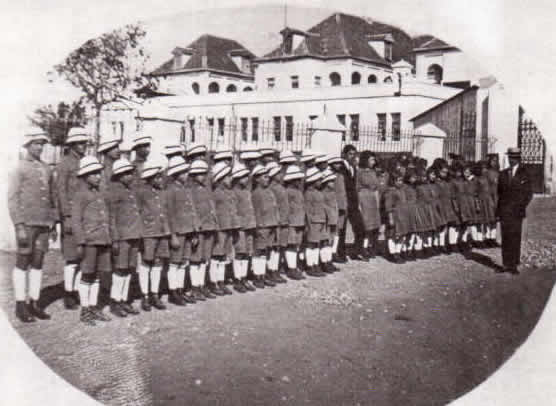
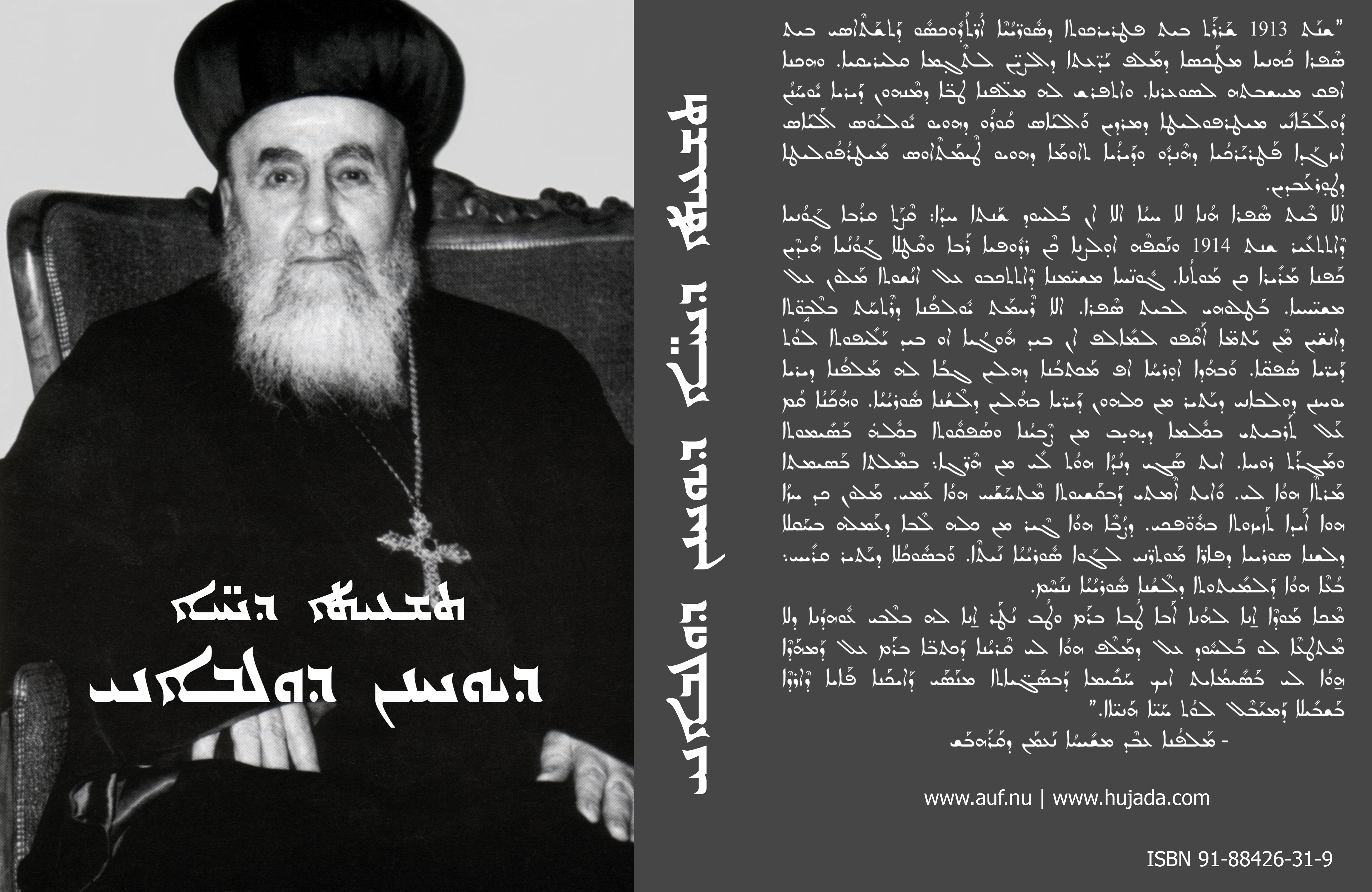

 IWPR correspondent Sahar al-Haideri was murdered in Mosul, her home city, in June. IWPR Middle East editor Tiare Rath and an IWPR correspondent who did not want to be identified contributed additional material to this report.