|
||||||||||||||||
Click on Blue Links in the left column to jump to that section within this issue. Most blue links are hyperlinked to other sections or URLs. |
||||||||||||||||
|
||||||||||||||||||||
|
||||||||||||||||||||||||||||||||||||||||||||||||
CRUEL INTENTIONS Last week, as four noted Assyrian scholars, politicians, and defenders of the rights were testifying before the U.S. Congress (see News Digest) a group of dangerous liaisons from California were speaking in the Parliament of the mullahs in Iran and having their photos taken under the pictures of modern-day architects of Islamic Sharia. How could two groups of Assyrians in the same week propose two completely different angles of mediation, to two governments so raucously antagonistic in their policies toward Iraq. What makes this comedy of judgment even more unbearable is that both groups were headed by Assyrian-Americans.
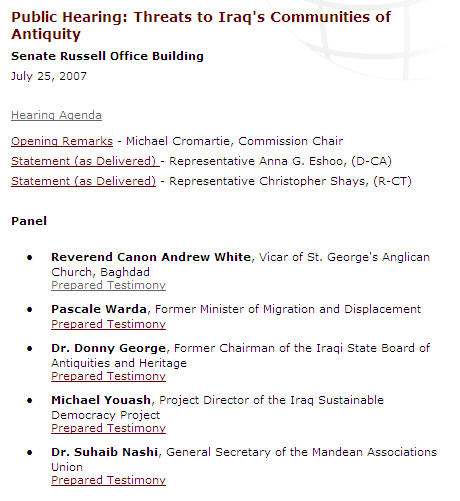
The first group consisted of Rep. Anna Eshoo, the only Assyrian representative in the U.S. Congress; Ms. Pascale Warda, the former Iraqi Minister of Immigration and Displacement; Dr. Donny George, former director of the Baghdad Museum and currently a professor of archeology in New York; Mr. Michael Yoash, director of the Iraq Sustainable Democracy Project. Each spoke eloquently about the immediate need for a humanitarian solution to the problems of mass exodus of Christians from Iraq, the anti-Christian attacks in Baghdad and Mosul, and the horrific treatment of the Assyrians in the hands of Massoud Barzani’s Kurdistan Democratic Party in the north. They spoke of illegal land and home seizures in the Kurdish areas and the Christian districts in the south. They reminded the Congressional panel and the American lawmakers of the lootings of Iraq’s past, the destruction of its museums, the rapes, the kidnappings and the beheadings. Back in Iran, in the same week that Iran's Foreign Minister, Manuchehr Mottaki, says to a group of reporters that his country has accepted holding talks with its "enemies" (meaning the U.S.) for the sake of Iraqi security and stability, a group of Assyrians led by the Assyrian representative in Iran's Majlis, Mr. Yonatan Bet-Kolia, attend a conference as a follow-up to the Ankawa Meeting held in Arbil, Iraq earlier this year. Just a little distance from the Majlis building, four Iranian-Americans are still detained in the notorious Evin prison. These are Kian Tajbakhsh, a consultant working for the Soros Society; Parnaz Azima, a journalist at the Radio Farda; Ali Shakeri, a peace activist from my alma mater - University of California at Irvine; and Dr. Haleh Esfandiari, an expert in the Middle East and the Director of the Middle East Program at the Woodrow Wilson International Center for Scholars in Washington, D.C. Iran is currently being pressured by the United Nations and the U.S. government to end its nuclear proliferation program. This Middle Eastern country is also alleged to finance and equip terrorism around the world, in particular in Iraq and in Lebanon where millions of Christians live. Iran’s President, Mahmoud Ahmadinejad, has provoked and made threats toward Israel and denies the Holocaust. Now Tehran is suspected of directly meddling in Iraq and providing weapons to the insurgents. The United States is also pressuring companies and individuals not to invest in companies that deal with Iran. Last week while Mr. Sargon Dadesho of the Assyrian National Congress was reading his statement under the picture of Ayatollah Khomeini and Misters Carlo Ganjeh and Youra Tarverdi of the Assyrian Universal Alliance were listening to the speeches in the Majlis, Shell Oil Company and Deutche Bank pulled their resources out of Iran. Other major institutions are to follow.
With all this background information why would a group of Assyrian “political leaders” fly to Iran and sit down with the Iranian Foreign Minister who later accused the U.S. and the West of mistreating the minorities. This comes from the representative of a country that does not permit career succession for Christians in the government positions and the academia. In fact there is perhaps no one working in the government of Iran, who is Christian and there is not even a single Christian in the Iranian military’s top echelon – unlike the days of the Pahlavis in Iran. Zinda Magazine has learned that the executive committee of the Assyrian Universal Alliance was split over the decision of a few of its members to travel to Iran. AUA has officially disenfranchised itself from the fiasco which took place in Tehran last week; however, the fact that the AUA secretaries of America and Asia were present at this meeting conveys a different message. Our leaders are sending mixed messages to the U.S. government, Ankara, Tehran, and Baghdad. We speak of the fatwas and insurgencies of the Islamic militants and hours later in Tehran some of us speak of the nobility of a theocratic Islamic government that pulls the strings in Iraq’s Shi’ai south.
Clearly the Assyrian public opinion is not in tune with these rogue political leaders traveling on such do-it-yourself diplomacy trips around the world. This is not the Iran of the pre-1979 Imperial Majesty; rather the Iran whose population of 250,000 Assyrians before Khomeini’s return in 1980 was reduced to less than 20,000. Why are we in Tehran thanking the Mullahs and anti-Americans? Indeed, those who spoke at the Majlis did not represent our views and did not speak on our behalf. If Iran truly cares about the Assyrians it should ask Ayatollah Sistani and Moqtada al-Sadr to stop sending their militias into Christian neighborhoods and forcing us to leave Iraq. But it won’t, because if Iran does intervene, then they will have to allow their own Christians build churches, the government to repair their schools, invest in the historic Assyrian sites in Urmia, and invite the Assyrian refugees in Iraq to come and temporarily live in Iran. Who are we kidding here? These Islamic militants have a different plan for the Mesiheen. (Click here - video ). Assyrians are predominantly a Christian people and we have for centuries cherished our religious identity in all its magnificent attributes, be it Jacobite (Syriac), Nestorian (Church of the East), Catholic (Chaldean), or Protestant. For our accepting the Message of the Son of God we have and will continue to suffer in the Middle East until more tolerant governments are elected and we are treated as equal citizens within our ancestral homes. Ahmadinejad’s Iran and Sistani and Sadr’s Iraq are not tolerant of a rise in Christian identity in their Shi’ai dominated countries. We simply have no business to be in their houses, speaking of their dignity and graciousness – when they force us to abandon ours. |
||||||
Zinda Magazine's List of Assyrian Graduates 2007 Congratulations Class of 2007 ! High School
UNIVERSITY
As Zinda receives more information from our readers more student names and information will be added to this list in the coming weeks. |
|||||||||||||||||||||||||||||||||||||||||||||||||||||||||||||||||||||||||||||||||
Kurdish Soldiers Kill Assyrian Boy in Drive-by Shooting Courtesy of the Assyrian International News Agency
On the evening of Wednesday, July 17th, Kurdistan Democratic Party Peshmarga Militia, under the auspices of the 'Iraqi Armed forces', shot and killed a teenage farmer in a random act of terrorism. Fadi Nazar Jarjis Habash was riding his farm tractor with his friend Ziyad Namroud Hasso on Wednesday afternoon when a dangerously speeding vehicle carrying the armed Peshmarga was heard approaching. As is known to local residents when faced with such incidents, Fadi quickly pulled the tractor to the side of the road and stopped, lest he face the consequences. Eyewitnesses confirmed that although the tractor was clearly out of the way, the Kurdish Peshmarga opened fire in the its direction. A hail of bullets struck Fadi and he was pronounced dead at 7 P.M. Ziyad miraculously escaped without injury. The attack continues the string of violence suffered by the Assyrian Christians of the area, ranging from sexual harassment and beatings of mostly young men and women to random firing of automatic rifles in the air at public areas. An Assyrian resident said "these KDP Peshmarga are making a mockery of the Iraqi Army. Their uniform is that of the Iraqi army but the flag on their shoulders is replaced with that of Kurdistan. They are clearly trying to assert their presence in the area so that they can annex these non-Kurdish areas to Kurdistan when the time is right" Although the murder occurred while the Kurdish Pehsmerga were officially on Iraq Army duty, the attackers came as part of a KDP delegation to the home of the victim to offer their condolences. Christians Arrested by Kurdish Authorities in Dohuk for Waving Iraqi Flag Courtesy of the Kurd Net (ZNDA: Nohadra) Kurdish Security forces in Duhok city (Assyrian Nohadra) in north Iraq arrested 50 people for waving the Iraqi flag to celebrate the victory of the Iraqi national football team on Monday. According to a police officer in Dohuk those arrested were predominantly Christians and Yezidi. Massoud Barzani, president of the Kurdish Regional Government had earlier ordered that the Kurdistan flag would replace the Iraqi one in all the cities of the autonomous region. Massoud Barzani said earlier, "the present flag is not the flag of Iraq, but of the Baath party and chemical strikes, drainage of the marshes, putting down uprisings and mass graves." On Sunday, the Iraqi national football team won the Asian Cup title for the first time in its history. Swedish Report: Kurdish Campaign Against Assyrian Women Courtesy of the Assyrian International News Agency
Margareta Viklund, chairwoman of The Swedish Committee for Assyrians, visited north Iraq from April 29 to May 7, 2007. Her mission was to assess the needs of Assyrian (also known as Chaldean and Syriac) woman in the Kurdish dominated areas of north Iraq. Ms. Viklund visited several Assyrian cities and villages. Her report (English, Swedish) reveals pervasive discrimination of Assyrians -- especially women -- by Kurds. In the city of Arbel, Kurdish authorities offered Assyrian women "higher salaries than they could have on the open labour market if they stayed at home and took care of their children themselves. In this way the biggest Kurdish party 'bought' votes ahead of the important elections." Similarly, in the town of Baghdede "the women are given a 'salary' which is often higher than what they would get if they went to work. They must sign a contract which says they bind themselves not to cooperate with any other organization than the one which gave them the salary, the KDP [Kurdistan Democratic Party]." Pressure to support the KDP also comes in the form of "study programs." The report says "[Assyrian women] told us of a study course organized by the opponents for women wanting to become nurses. The participants were persuaded during the entire course to leave the Assyrian women's organization and join theirs." A female resident of the Assyrian town of Bartilla says "The Kurds buy members, infiltrate, invade and they have a clear purpose. They give big amounts of money to individuals and organizations. Those who work with them can receive several millions. They know the ADM [Assyrian Democratic Movement] represents the Assyrian people and therefore they want to destroy the organization." The report concludes by saying "the aim of the largest Kurdish party, the KDP, with its strategy and double messages, puts an incredible strain on the people who are vulnerable both economically and in other ways." Iraq: Land of Martyrs Courtesy of the National Catholic Register
(ZNDA: Baghdad) Blind fanaticism is reaching unprecedented heights in this capital city, and for the Christians who live here and throughout Iraq it is turning into a nightmare. Persecution against Christians is being unleashed in many cities and neighborhoods where Christians and Muslims coexisted peacefully, if somewhat coldly, some years ago. In fact, the patriarch of the Chaldean Church in Iraq, Archbishop Emmanuel III Delly, called it “open persecution, as in the early centuries of the Church.” In Baghdad, especially in the neighborhood where Christians have their main Church buildings, the structures are being bombed, desecrated and looted, crosses torn down or broken and hosts trampled. Priests and deacons are being abducted, often ransomed, and sometimes killed. Families are being thrown out of their homes without notice or forced to abjure Christianity and embrace Islam. Businesses are being robbed, men abducted and killed — or released in exchange for a huge ransom that leaves families without any resource. There are also threats and intimidation designed to have young Christian women married off to Muslims, and extortion occurs in the form of forcing payment of the jizya (Islamic tax for non-Muslims). Four Chaldean Christians in Kirkuk kidnapped July 4 were released a week later through the mediation of the Chaldean Church and the sheiks of Kirkuk, according to AsiaNews. Outside Iraq, the refugee population is growing, especially among Christians. “We fled Iraq, my wife and I, two months ago,” said Nouri, who entered Lebanon illegally and insists on keeping his family name anonymous. Living in a small room in a Beirut suburb, the 50-year-old is still in shock. He lived in a cottage in Kut, south of Baghdad, and ran a liquor shop. After the collapse of Saddam Hussein’s regime in 2003 his shop was burned down. Holding on, Nouri decided to sell liquor from his house. But one day, two grenades were thrown at the house at an hour when the whole family was gathered. Nobody was hurt, and Nouri stayed in the neighborhood. Then one night masked men broke into the house and abducted his brother. Using his cell phone, they asked for a $40,000 ransom. Nouri sold some property and paid the ransom. But, mercilessly, the abductors managed to extort another $30,000 from his father. At last Nouri decided to quit, leaving behind his father and mother who still hope they will see their abducted son alive. Pope Benedict
The Christians of Iraq are experiencing an “authentic martyrdom” and must be supported materially and spiritually by the entire Church, Pope Benedict XVI said June 21 in a speech to representatives of the Catholic communities in the Middle East and to Catholic aid agencies that assist them. “Peace, so long implored and awaited, unfortunately is still largely being offended,” the Holy Father said, speaking just weeks after the June 3 murder of Chaldean Father Raghid Ganni, along with three sub-deacons. Those murders made the news, but similar stories do not. “A Syrian Orthodox priest was ‘returned’ in pieces to his family, head and limbs cut off, because the payment of the ransom had been delayed,” said Bishop Michael Kassarji, head of the Chaldean Diocese of Beirut, Lebanon. Behind every story of a priest released, there is an untold story of a ransom paid, said an ecclesiastical source who wishes to remain anonymous. For Bishop Gergis Kass, of the Syrian Orthodox Church, the ransom went up to $200,000. Some of the abducted men have even been sold to other abductors. Efforts to bring reason to the situation, by negotiating with authoritative Sunni and Shiite religious figures, have been in vain, said Auxiliary Bishop Shlemon Warduni, an assistant to Archbishop Delly. Prime Minister Nuri al-Maliki and Parliament have been solicited, to no avail, he added. As a matter of fact, the archbishop asked al-Maliki to launch the new security plan in Baghdad in the Christian neighborhoods first, “where terror walks the streets.” But the government and allied forces had a different agenda. “We even planned to negotiate with the gangs and groups that control the neighborhoods, but we were deterred from doing so,” said Bishop Warduni. “We were told they are not Iraqis, rivals to each other and impossible to reason with.” He also deplores the “absence of courage” of many a priest who has fled the terror, abandoning his flock, thus triggering new waves of departures among a population already reduced in number, disarrayed and frightened. Only three Chaldean priests are left in Baghdad, from the original 25 that were there. Smuggling Refugees The hard times are not due solely to hard-line Islamists, though. Chaldean Bishop Michel Kassarji of Beirut has just returned from Iraq, where he attended a synod of his Church. He recounts how Archbishop Delly protested against the unauthorized occupation by the U.S. Army of the Seminary of the Chaldean Church. Requests to the armed forces to leave the building were in vain. The issue here is not only a decision taken without consultation by the U.S. Army and an aggression against a cultural property, but also a behavior that endangers the Christians by letting Muslim groups conclude that the Chaldean Church is siding with the enemy by giving over the buildings, said Bishop Kassarji. “We had to wear helmets to come in and carry the boxes out,” recounted Bishop Warduni, who added he “took the risk, more than once, to go to the green zone” to talk with civil and military authorities about the problem. The American military command, he said, pointed out that if they leave after what had happened, they would not be held responsible for the looting that could follow. To this day, around two-thirds of the 2 million Christians of Iraq have fled their homes. Some found refuge in the northern province of Kurdistan where life conditions are precarious, but where at least they are distant from “Islamic” blackmail, threats and terror. The finance minister of Kurdistan, Sarkis Agajan, an Assyrian Christian, is earnestly trying to relocate and help refugees coming from Baghdad and southern Iraq. Whether one admits it or not, a massive shift in population, a “religious cleansing” is taking place, which will profoundly change Iraq’s demographics and ultimately its identity. “It’s nothing less than a human tsunami,” said Bishop Kassarji, who lives just outside Beirut. Aliens in Flight At a rate of two or three families a week, Chaldean Catholics are sneaking into Lebanon illegally, fueling a profitable underground business. “They are discreetly dropped around five in the morning, in front of our building,” said Bishop Kassarji.
Iraqi Christians have already flooded Jordan and Syria. Around 9,000 have illegally entered Lebanon since 2003. These are generally poor and desperate and do not wish to return home at all. They hope for United Nations help in getting into the United States, Canada or Scandinavia, but in the meantime, they do small jobs in Lebanon. They are threatened by abuse, though, and risk three months of prison if they are caught without papers. To get an Iraqi released, Bishop Kassarji’s contacts include the Lebanese president, ministers, security officers and Church figures as well as influential and wealthy figures close to the Iraqi government. He also has to take great care to check whether some criminal fleeing Iraq may be lurking behind an apparently meek refugee. He also struggles to house, feed and clothe these families and provide medical assistance, schooling and legal aid. Ultimately, in Lebanon, Iraqi refugees are victims of a “no-see” policy that keeps their problems hidden and managed through under-the-table interventions and contacts, since open acknowledgement would have political as well as legal consequences that the government cannot face. Some Lebanese Christians have advocated giving these refugees Lebanese nationality, since their numbers are so limited. Contacts have even been made with the Sant’Egidio Community in Rome to buy a piece of land for settlement purposes. But things are not that simple, not in Lebanon at least, an Arab exception where the question of the balance between Christians and Muslims is sensitive. Any way you look at it, the problem is complex. Sitting at his office in East Beirut, where the telephone is almost constantly ringing, Habib Efrem, president of the Syriac Orthodox League, an association aimed at promoting the legal rights of his community, doesn’t hide his alarm. In a country like Iraq, where Christians numbered around 2 million a few years ago, there are only 600,000 left. At the beginning of the 20th century, he said, there were around 1.5 million Christians in Aleppo, Syria. They are now 100,000. He is afraid the same process is eroding the Christian presence in the whole Middle East, the cradle of Christianity. Bleak Future for Nineveh Minorities Courtesy of the Institute for War & Peace Reporting (ZNDA: Mosul) The blood of Nasir Abdullah Khalil, 55, seeped into a pool of milk as it drained from his body. The walls of his dairy shop in Mosul's al-Darkazliyyah neighbourhood were spattered with blood, and yoghurt and milk had leaked all over the floor. According to the police report filed on his case, Khalil was shot to death on January 13, 2007, because he was from one of Iraq's smallest minority
"It is not only the Christians that are targeted; the Shabaks are as well," said Hamid Abdullah, who works in another al-Darkazliyyah dairy. "Hardly a week passes without a Shabak or two or even three being killed." Most of the country's ethnic and religious groups - including Sunni Arabs, Kurds, Yezidis, Turkomans, Assyrians, Shabaks, and Shia Arabs - are represented in the volatile Nineweh province of north-west Iraq, one of the most violent in the country. Once a Baathist stronghold and now a centre for extremist organisations such as al-Qaeda, Nineweh has experienced widespread sectarian bloodletting since 2003, with ethnic and religious minorities frequently targeted. IWPR has investigated the security and political problems facing three of Nineweh's minority groups - the Shabaks, Yezidis and Kurds. The origin of the Shabaks is unclear, but they are one of Iraq's smallest minority groups. Hunain al-Qaddo, who served as a Shabak representative in the Iraqi Transitional National Assembly in 2005, claims there are around 400,000 of them in Nineweh. Shabaks do not consider themselves Arab or Kurd, and their language - Shabaki - is a mixture of Kurdish, Arabic, Farsi and Turkish. Seventy per cent are Shia and the rest Sunni, according to al-Qaddo, although many researchers say that Shabaks have a unique religion that's largely based on Islam. Despite strained relations between Shabaks and the Kurdistan Democratic Party, KDP, in eastern Nineweh, near the border with Iraqi Kurdistan, the deteriorating security situation in Mosul has prompted some local Shabaks to call for the Kurdish Regional Government to administer areas where they live. "We asked the Kurdistan region to annex our areas and villages to protect us," said Mahmood Kadhim, a Shabak civil servant. "Officials in Mosul don't value human lives and Shabaks are deliberately killed." Annexation is not supported by all Shabaks, however. The KDP has been accused of trying to co-opt the community and other groups since 2003 in order to gain political power in Nineweh. Tensions between the KDP and the minority in the east of the region reached a pitch in 2005, when the party's security forces opened fire on demonstrators calling for separate political representation for Shabaks, injuring several of them. Moreover, Assyrian media reported that the KDP disenfranchised Shabaks, Assyrians, Turkoman and Yezidis during the 2005 elections by not providing enough ballot boxes in their areas. *** Kamal Khidir, 23, quit his studies at Mosul University and moved back to his home in Sinjar, after Islamic groups began circulating death threats against his religious sect, the Yezidis. "I don't want to lose my life at Mosul University, which is considered a den for the most dangerous Islamic groups," he said. Muslim extremists have acquired considerable power at Mosul University. The authorities have quietly sat by as minorities, including Yezidis, have been threatened at the campus. Wathiq Muhammed Abdul-Qadir al-Hemdani, the Neinewa police chief, said he was aware of the situation but would not interfere. "I have solid information on the terrorist organisations inside the university," he said. "However, I respect the university campus and therefore, I cannot arrest them." "I quit," said Atto Sa'ed, 45, a former lecturer at Mosul University and a Yezidi. "I'm going to get out of Iraq and go to any country where Yezidis are not killed. Here in Mosul, Yezidi blood is cheap and no one defends their rights." The Neinewa police authorities have records of a number of killings of Yezidis by extremist groups. The Yezidis are ethnic Kurds who practice a unique religion that incorporates elements of ancient faiths such as Zoroastrianism, as well as drawing on Islam and Christianity. Dismissed by some as "devil-worshippers", the community has coped with such misperceptions by keeping themselves to themselves, while seeking not to antagonise other communities. Nonetheless, they were persecuted under Saddam and are now targeted by Islamic groups. Yezidi-Sunni tensions rose earlier this year when a 17-year-old Yezidi girl was stoned to death by members of her own community after she reportedly converted to Islam and planned to marry a Muslim. Kurdish-Yezidi relations have also been strained. Many Kurdish leaders consider Yezidis Kurds and want to corral them into Kurdish political parties. Although they fought alongside Kurdish forces, many Yezidis insist that they have a unique identity and want separate representation. "Despite substantial Yezidi sacrifices in the Kurdistan liberation movement, which were no less significant than those of their Kurdish brothers, the [Kurdish] parties play with the Yezidis and their fate," "Unfortunately, when many of the [Kurdish] parties and even political [leaders] do something for the Yezidis, they consider it a favour - not a patriotic duty for their fellow citizens who suffered much injustice and persecution." Tensions between Kurds and Yezidis erupted in April when hundreds of Yezidi rioters attacked the KDP offices in the towns of Khana Sor and Jazira, west of Mosul, pulling down and burning the Kurdish flag. *** Khairiyyah Sa'ed, 51, wasn't intended to be the target. Extremists had planned to kill her husband, according to senior Mosul police officer Mahmood al-Jubouri. "The insurgents knocked at her door, thinking that her husband would come out as he usually did," said Jubouri. "But he unexpectedly went out earlier that day, so his wife was shot instead." Jubouri insists that her husband was targeted because he was a Kurd. As KDP power has grown in Nineweh since 2003, Kurdish citizens and officials have been threatened and systematically targeted for assassination. Leaflets demanding that Kurds leave have also been distributed in Kurdish neighbourhoods, such as Adan, Bakir, al-Zahra' The New York Times recently reported that about 70,000 Kurds have been driven out of the province, although a US military official said it was difficult to determine if they were Kurds or other ethnicities. Many Kurds from Nineweh have fled to Iraqi Kurdistan. Much hostility has been directed at local Kurds because Nineweh provincial council is Kurdish-dominated, in part because Sunni Arab politicians and voters have largely boycotted elections. The International Crisis Group warned in 2005 that "the formation of a Kurdish-dominated provincial council in Nineweh would entail minority rule and likely give rise to sectarian fighting". Arabs resent the KDP flexing its political muscle in the region and claim Kurdish officials are buying land with the aim of turning Mosul into a Kurdish city. "They consider Mosul their city, and we are guests in it," said Amir, a local Arab resident. "It's time that the leaflets [threatening Kurds] were stopped." Nineweh deputy governor Khasraw Goran, a Kurd, said the leaflets were a larger part of a campaign to drive Kurds out of Mosul. "These tactics do not scare us," he said.
Iraqi Christians Flee for Uncertain Future in Beirut Suburbs Courtesy of the Daily Star (ZNDA: Beirut) Reduced to sneaking in the night across borders to escape and then moonlighting to survive, most Iraqi Christian families are resigned to never returning to the land of their ancestors."Under Saddam we lived in safety. At least we had our dignity and a decent life," said Duleir Nuri Sleiman, father of three girls, referring to Iraq's executed dictator Saddam Hussein, who ruled with an iron fist. With his eyes on Europe or the United States for resettlement, Sleiman has reached the transit stop of Lebanon, filled with worries about health care, schooling and avoiding detention by immigration authorities. The Chaldean family of five lives in a Spartan room above a barber's shop in the Christian suburb of Jdeideh, relying on his modest income as a painter and decorator. Lubna, a mother of three young girls, told of their escape from blood-soaked Iraq through the relatively safe Kurdish north, then visa-free Syria and on to Lebanon across a river. She is too scared to give the family name. "We walked for two hours in silence, just whispering. We were very frightened. It was night. We were scared the girls would fall into the water. Lebanese border guards fired overhead," she said. The family paid $1,200 for the December 2004 crossing, during which Syrian guards escorted them on Syria's side of the frontier, and Lebanese on the other, communicating via mobile phones over a border river. The decision to abandon their church's centuries-old roots in Iraq that predate Islam was taken after husband Massud's policeman brother was killed by Al-Qaeda gunmen. "My mother told me: 'Take your family and seek your future elsewhere,'" said Massud, who works as the caretaker of two Jdeideh apartment blocks. "Now we want to move to a country where we can live in dignity," he said. But in their tiny basement room, with foam mattresses neatly stacked in a corner and Virgin Mary postcards on the wall, the heartbreak continues. "Iraq is in my heart - there is no more beautiful country than Iraq. The very earth is gold. But it will never be the same," sighed Lubna, the young mother from the northern city of Mosul, her eyes watering.
"We have our security now, but our dignity has gone," said her husband, whose family, like most other Iraqi Christian refugees, walks to a local church every Sunday. Even so, Jdeideh and other suburbs of mostly Christian East Beirut - where thousands of Chaldean, Assyrian, Armenian and Syriac fellow Christian refugees have flocked - are targeted by bombings linked to Lebanon's own crises. "We have no problem with anyone here, even if Lebanon has its own problems. We restrict our movements to a minimum," Massud added. Iraq's Christians, with the Catholic Chaldean rite making up by far the largest community, were said to number as many as 800,000. Their churches have been bombed, homes confiscated and the Baghdad district of Dora has been virtually emptied of Christians after a warning either to pay an Islamic tax on infidels, convert or stay and risk execution. Without their own militia to defend them, the community is believed to have shrunk to half its previous number, with more joining the exodus each day, although in far smaller numbers than the country's vast Muslim majority. "Even if the situation were suddenly to improve - a highly unlikely prospect - it is already too late to reverse the effects of the [Christian] hemorrhaging," Rayyan al-Shawaf wrote in a commentary for The Daily Star.
"Without their churches in Iraq, they will never go back," agreed former bank manager George Semaan, 67, a leader of Lebanon's own small Chaldean community. "There is nothing, no future for the Christians in Iraq. We want them to resettle here, but we don't have the means," he said from the Chaldean bishopric in the Hazmieh mountain suburb northeast of Beirut. On a hill near the bishopric, which hands out limited aid and has become a first stop for Christian families fleeing Iraq, the heavily guarded Iraqi embassy "does nothing to help them," said Semaan. Christian charities and Catholic institutions such as Opus Dei provide schooling for the children, while male heads of families take on low-paid menial jobs and wives work as housemaids - all illegally. Of an estimated 40,000 Iraqis in Lebanon, between 15-30 percent are believed to be Christians. Before the exodus began, they made up about 3 percent of Iraq's population. "The Christians, as well as Sunnis and Shiites, are attracted by the religious diversity of Lebanon," said Laure Chedrawi of the United Nations High Commissioner for Refugees (UNHCR). The agency provides those who register with refugee certificates. Although not officially recognized, the certificates do serve as proof of identity, thanks to an understanding between the UNHCR and the Lebanese authorities. The UNHCR registers about 20 new refugees per day at its Beirut office. Single Iraqis opt for the longer and more precarious Turkish route to Europe out of Iraq. "More people are being detained, but there have been no deportations so far," Chedrawi said. Lebanon is wary of accepting refugees for fear of upsetting its own fragile sectarian balance. It already has hundreds of thousands of Palestinian refugees and a sizeable Armenian Christian community from survivors of Ottoman Turkey. Semaan said the Chaldeans, especially those from outside Baghdad, often speak little Arabic on arrival. "They ask you: 'Do you speak Christian?'" he said, referring to Surath, a dialect of the Aramaic language of Jesus Christ. From their modest low-rent apartments in the Christian suburbs, the Iraqis take to the streets in the evening hours and mingle with Lebanese neighbors. Sarmat, a 12-year-old from Baghdad, could not hide his joy while hanging out with Lebanese and Syrian friends. "My family just got papers to go to Sweden," he said. "I hear it's great over there." |
COVERAGE OF LAST WEEK's TESTIMONIES BEFORE U.S. CONGRES
U.S. Commission Hears Testimonies on Christians in Iraq Courtesy of the Cathlolic News Service (ZNDA: Washington) Members of the U.S. Commission on International Religious Freedom heard testimony July 25 from witnesses regarding the persecution of the ancient, non-Muslim minority religions in Iraq. The witnesses mentioned their personal experiences as religious minorities as well as their professional experience working in Iraq. Commission chair Michael Cromartie said in his opening statement that Iraq was added to the commission's watch list this year for continued violations of religious freedom. He said the plight of Christian minorities in Iraq includes "the assassination of Christian religious leaders, the bombing and destruction of churches and violent threats intended to force Christians from their homes." More than 1.5 million refugees have fled religious persecution in Iraq since 2003, according to the U.N. High Commissioner for Refugees. Although Christians account for only 3 percent of the total Iraqi population, they make up 40 percent of the refugees now living in nearby countries, including Jordan, Syria, Egypt and Iran. Another 2 million people, many living in the northern Nineveh plain, are internally displaced. U.S. Rep. Anna G. Eshoo, D-Calif., the only Assyrian-American serving in Congress, testified briefly before the commission that her grandparents had left what was then the Ottoman Empire in the early part of the 20th century to escape persecution. She said she and 73 other members of the House of Representatives wrote to President George W. Bush in June to urge him to take seriously the message of Pope Benedict XVI regarding the Christian population in Iraq. "As the pope laid out to the president in clear and unequivocal terms, we are witnessing the emergence of an Iraq that simply does not tolerate Christians and religious minorities," she said in her statement. Commission members asked the witnesses about the cause of religious persecution, its nature and what the United States might do to help these vulnerable groups in Iraq. The hearing was the first of two intended to give the commission a better idea of the nature and scale of religious persecution in Iraq. The next is scheduled for September and will focus on Sunni-Shiite sectarian violence. The first witness to testify was the Rev. Andrew White, vicar of St. George's Anglican Church in Baghdad, Iraq, and president and CEO of the Foundation for Reconciliation and Reconstruction in the Middle East. Rev. White said that in one week 36 members of his congregation in Iraq were kidnapped. He said the Christians living in Iraq are in need of basic necessities, including food, water and physical protection, but no government has come forward to help. He said the United States has the potential to provide these services in Iraq, but as yet has not acted. "The United States can do a huge amount, but you have to do it, and not talk about it and write papers, and actually do something," he said. "Most Americans know absolutely nothing about what's going on on the ground in Iraq, but their position and their attitudes will influence exactly what happens in Iraq." Another witness, Pascale Warda, former minister of migration and displacement in Iraq and a Chaldean-Assyrian Catholic, delivered her statement through an interpreter. She said Christians in Iraq are targeted by violence because "they are identified as American allies and infidels, for the simple reason that they share a common faith with those in the Western world." Warda said she has survived four assassination attempts since 2004, including one in which all four of her Christian bodyguards were killed. Warda spoke of the situation for Chaldean-Assyrian Christians, the largest minority group in the region, the majority of whom are Catholic. She said members of minority religions in Iraq have three choices: convert to Islam; pay the "jizya," a tax imposed on non-Muslims; or leave the country with next to nothing. Many Christians have fled to northern Iraq seeking safety and have overwhelmed the Nineveh plain, an area with a large Christian population and Christian roots that go back 2,000 years to St. Thomas the Apostle. Those displaced in the Nineveh plain lack housing, jobs and schools for their children and need the support of the American and Iraqi governments if they are to stay in the region and not be forced from the country, she said. "Insecurity is limiting us, but do we continue to live? I think yes," she said in an interview with Catholic News Service. "Iraq is a very rich country. In one year it would change completely if security is there. So people need security." The Catholic Church is limited in how it can help the church in Iraq, Warda said. "Since it started, many priests were killed in a very bad way," she said. "Many churches were destroyed and targeted, so the bishops are in a situation that is not really easy ... but they didn't stop; they do as they can." The U.S. Commission on International Religious Freedom was created in 1998 to monitor religious freedom worldwide and make policy recommendations to the president, the secretary of state and Congress. Members of the commission are selected by the president and members of Congress from both parties on the basis of their knowledge and experience of international religious freedom. The commission's annual report covers select countries that have shown prolonged or extensive violations of religious rights. Other witnesses July 25 included Donny George, former chairman of the Iraqi State Board of Antiquities and Heritage, who left Iraq last year when the life of his 17-year-old son was threatened; Michael Youash, project director of the Iraq Sustainable Democracy Project; and Suhaib Nashi, the Iraqi-born secretary of the Mandaean Society of America. Iraqi Religious Minorities Suffer, Panel Told in Washington Courtesy of the Baptist Press (ZNDA: Washington) Conditions for religious minorities in Iraq "have deteriorated very considerably" in the last three to four months, the bipartisan U.S. Commission on International Religious Freedom (USCIRF) was told recently. The panel heard testimony July 25 about the plight of Chaldo-Assyrian Christians and other minorities in the first Washington hearing involving representatives of those communities. The Capitol Hill hearing demonstrated the situation for such religious minorities has not improved in the time since the American-led coalition deposed Saddam Hussein in 2003 and began seeking to rebuild the government. The witnesses' testimony also seemed to affirm the USCIRF decision in May to place Iraq on a "watch list" because of the "alarming and deteriorating situation for freedom of religion and belief," as described by the commission. The commission removed Iraq from its list of most severe violators of religious freedom after Hussein's regime was toppled. Andrew White, vicar of St. George's Anglican Church in Baghdad, told the commission his parishioners told him recently, "We've never had it so bad." Members of religious minorities have been kidnapped, tortured and killed, he said. When White visited with his Iraqi congregation two weeks before, he learned 36 of his parishioners had been kidnapped in the previous week, he testified. Witnesses provided the following estimates, some based on United Nations reports, on the extent of the persecution of Christians: -- As much as 50 percent of the Iraqi Christian population has fled the country. -- About 40 percent of the 2.2 million refugees from Iraq are Chaldo-Assyrian Christians. -- More than 30 churches have been destroyed. The persecution also affects such communities as the Sabean Mandaeans, who follow the teachings of John the Baptist; Yazidis, whose rituals include worship of a fallen angel who repented; and Jews. More than 80 percent of Mandaeans have left Iraq since 2003. White, who is from Great Britain, said he supported the war and the overthrow of Hussein, but he added, "And yet it causes me great sorrow to see that the international community, including my own nation and yours, has not really done anything to help these people. The fact is, they are suffering because of us. "The situation is more than desperate. [The American-led coalition] has failed the Christians. [It has] done nothing to support [them]. No government has understood their need." The United States still "can do a huge amount," White said in response to a question from USCIRF member Richard Land, president of the Southern Baptist Ethics & Religious Liberty Commission. A massive withdrawal of the U.S. military would result in "more blood flowing in the streets than we have already," White said. "[The military] can't just leave. If [troops] pull out, I dread to think of what will happen." Iraqi Christians need security, basic provisions -- such as food and water -- and engagement with other religious groups, White said. Iraq has been plagued by violence between Sunni and Shi'a Muslims, as well as attacks on non-Muslims. The Shi'a-dominated government has been guilty of failing to prevent attacks on religious minorities while also backing militias who have committed such crimes, the USCIRF has reported. The Iraqi government "probably" is playing a part in the "sectarian violence," White told the panel. "The government is the most corrupt government I've ever met." He trusts the prime minister, Nouri al-Maliki, but not most of the other ministers, White said. The Iraqi government is, "in theory, very helpful, but the fact is there is increasing influence from Iran on the Iraqi government, and the whole concept of Iraqi democracy has not really worked," he said. Pascale Warda, a Chaldo-Assyrian Christian and Iraqi minister for migration and displacement in 2004-05, told the commissioners through an interpreter Christians are "directly targeted" because they do not possess militias. "They are identified as American allies and infidels, for the simple reason that they share a common faith with those in the western world," she said. "The security situation is worsened for lack of any protection offered by the Iraqi local government.... It is the moral obligation of the Iraqi and American governments to help them achieve these objectives and to ensure the protection of these vulnerable ancient communities of Iraq." Michael Youash of the Iraq Sustainable Democracy Project told the panel the U.S. Congress can help by providing funds to assist Christians who have relocated to the northern part of the country, the Nineveh Plain and other areas. The ERLC's Land commended the witnesses, telling Baptist Press, "I applaud the courage of all of those who testified and the courage of those that they testified in behalf of in continuing to bear witness for their faith in the midst of a terrible and tragic situation. Hopefully, their testimony will help encourage our government to do more to ensure that the rights of all religious minorities will be protected in Iraq." Other witnesses included two members of the House of Representatives: Reps. Anna Eshoo, D.-Calif., the only Assyrian member of Congress, and Christopher Shays, R.-Conn. The USCIRF advises the White House and Congress on religious liberty conditions overseas. The president selects three members of the panel, while congressional leaders name the other six. The State Department's ambassador at large for international religious freedom serves as a non-voting member of the panel. Religious Minorities Hit From All Sides Courtesy of IPS & Ankawa.com
(ZNDA: Washington) In the months leading up to the U.S. invasion of Iraq in March 2003, scholars from around the world urged the war planners in Washington to take steps to protect Iraq's priceless archaeological heritage. But the widespread looting of museums and other cultural sites happened anyway. Now, warnings from minority communities in Iraq are also ringing clear: the U.S. must help protect Iraq's diverse religious heritage or these communities will be decimated in the country's internal power struggle. A movement among some of Iraq's minority groups is calling for U.S. support for a semi-autonomous province, with extra security, which would provide a safe haven near the Nineveh Plains northwest of Mosul. Four Iraqis and an Anglican priest testified before the U.S. Commission on International Religious Freedom last week that Iraqi Christians, Jews, Assyrians, Yazidis and Mandaeans face near extermination in their homeland as the violence in Iraq escalates. A tall man who walks with a cane and speaks with a distinctly British accent, Rev. Canon Andrew White heads the Foundation for Reconciliation and Reconstruction in the Middle East and is the vicar of St. George's Anglican Church in Baghdad, the last remaining Anglican Church in the Iraqi capital. He told the commission that in the past three to four months, things have deteriorated considerably for the minorities of Iraq. Canon wore a large cross around his neck and spoke with a passion that often made his voice tremble. He described how Assyrians are literally living on the floor of Assyrian churches in Baghdad and how 36 members of his congregation were kidnapped in a single week, with only one of them returned. These communities are specifically targeted by militias because they are seen as being particularly close to the occupying Coalition forces. Christians are perceived as practicing a Western religion and adhering to immoral traditions. "In Iraq there is no concept of the separation of church and state," White said.
Pascale Warda was the only other witness who currently lives in Iraq. A petite woman, she is a Chaldo-Assyrian Christian, the largest religious minority in Iraq. Originally comprising about four percent of the Iraqi population, Assyrians make up 40 percent of the Iraqis who are fleeing their homeland. Warda lives in Baghdad and serves as the president of the Iraqi Women's Centre for Development. Her testimony, read by an interpreter, described horror stories about the persecution faced by her fellow Christian women in Baghdad. "Over 30 churches have been destroyed, priests have been kidnapped, killed or beheaded," Warda said. "Christian women are forced under the Islamic hijab, a practice being rejected even by a large number of Muslim women as well." Iraqi Mandaeans, another religious minority, were also represented at the hearings. Dr. Suhiab Nashi is a Baghdad-born pediatrician living in the U.S. state of New Jersey who is an advocate for the dwindling Mandaean population in Iraq. Mandaeism is a pacifist faith that follows the teachings of John the Baptist. Adherents have lived in the region that is now Iraq for thousands of years, but these days face death squads that "kill people according to last names and religious affiliations," Nashi testified. "Mandeans are targeted by both sides," he said, referring to the warring Shia and Sunni Muslims in Iraq. Michael Youash is the project director for the Iraq Sustainable Democracy Project, an advocacy organisation based in Washington. Like his fellow witnesses, Youash said clearly that the U.S. is not doing enough to protect vulnerable populations. He described the State Department's latest annual report on religious freedom around the world as "almost willfully neglectful of the situation of the minorities," and referred to the violence against religious minorities as "soft ethnic cleansing". The ancient land of Mesopotamia that is now Iraq was the birthplace of the early civilisations of Sumer, Assyria and Babylon. It was a cultural epicentre for early Islam and the Ottoman Empire. Because of this rich past, Iraq's minorities once made up 14 percent of the country's population. Their traditions are one of the foundations of Iraqi society, the witnesses said. But now these groups now make up a disproportionate number of the victims and refugees both within the country and those spilling across its borders. A report last year from the U.N. High Commissioner for Refugees estimated that a third of the refugees fleeing Iraq are from minority populations. These include Yazidis, Baha'i and Shabaks, all of whom face violence and displacement that threaten their very existence. The tiny population of Jews that remains in Iraq was referenced by White more than once. One of world's oldest Jewish populations, their numbers have dwindled to fewer than 100 since 2003. "I know every single one of the Jews left," White said. Though this commission focused exclusively on the religious minorities in Iraq, there are thousands of other minority populations, like Palestinians, ethnic Turkmens, Armenians, Roma and Persians, who are also facing persecution in Iraq amidst the sectarian warfare that grips the country. The U.S. Commission on International Religious Freedom makes policy recommendations to the president, the secretary of state and Congress. Earlier this summer the Commission released its annual report on worldwide religious freedom. The report found that for the first time since the fall of Saddam Hussein, freedom of religious worship in Iraq is under threat. The report notes that most abuses are carried out by gangs and sectarian militias, but also pointed out that the Iraq government has been a party to some of the violations, ignoring attacks on Sunnis and other religious minorities. The hearing broached some of the controversial topics that surround the war in Iraq. Commissioner Richard Land, president of the Ethics and Religious Liberty Commission, the public policy arm of the Southern Baptist Convention, asked what would happen if there was a drawdown of U.S. forces in Iraq. "There would be more blood flowing in the streets," White said matter-of-factly, but "we also have to face the facts that the American military is doing barely anything to protect minorities." The testimony before the Committee proposing an autonomous province in the Nineveh Plains area follows a weeks-long campaign in the U.S. seeking support for the idea of a region that is a traditional homeland to many of Iraq's minorities and protected safe haven from the violence they face. But the idea is controversial in Iraq, with some groups arguing that it would only deepen the divisions within the country. "The problem is not between Christians and Muslims," Dr. Louis Sako, the Chaldean Archbishop of Kirkuk, told Britain's Daily Telegraph earlier this month. "The problem is fundamentalism which excludes others, annihilates them for religious or ethnic reasons. The solution is to encourage a culture of pluralism, help people acknowledge one another as humans and recognise in each other an absolute value." In June, the U.S. House of Representatives budgeted 10 million dollars to assist the religious minorities of the Nineveh Plains. The amendment's sponsor, Congressman Mark Kirk from Illinois, said specifically that he hopes the funding will help prevent the "de-Christianisation" of Iraq. The funding must be included in the Senate budget as well for the provision to pass.
AGC on Kurdification of Assyrian Lands & Dividing Iraq Press Release I 19 July 2007
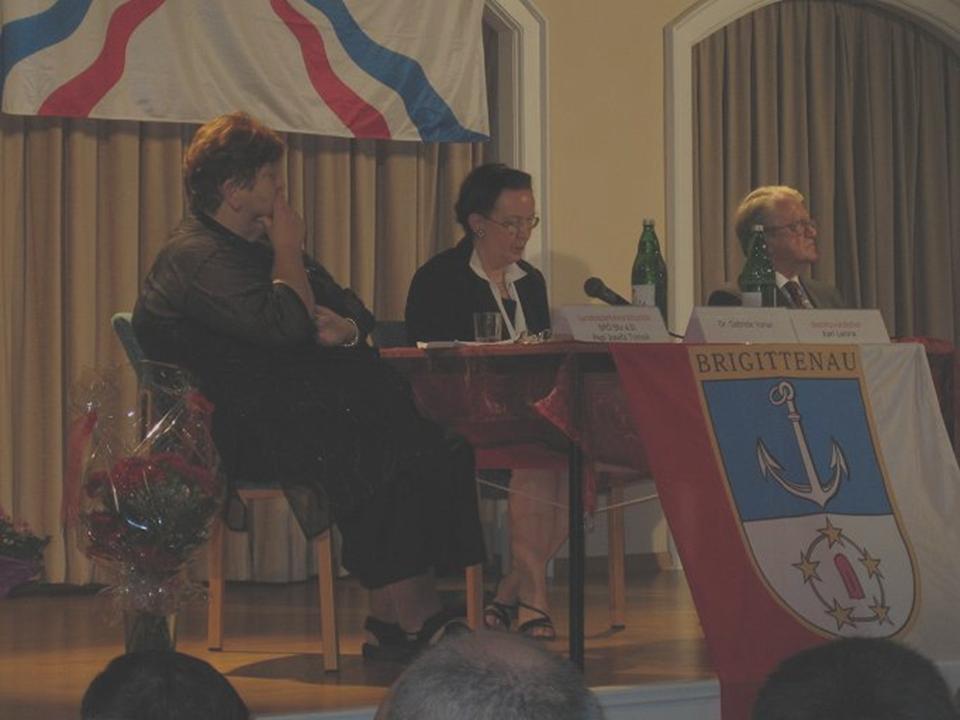
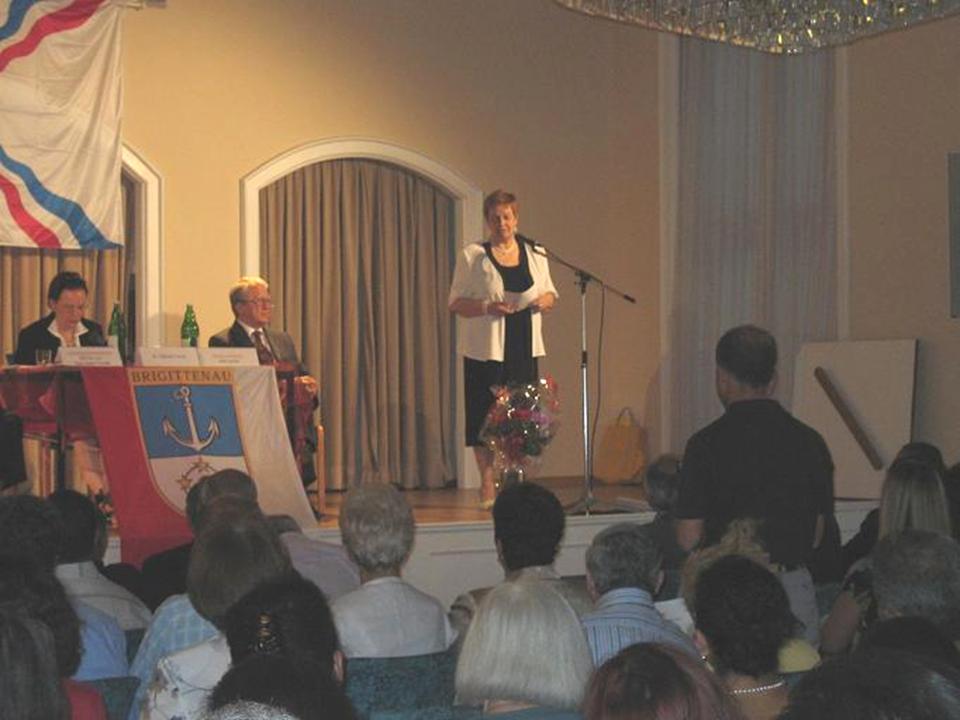
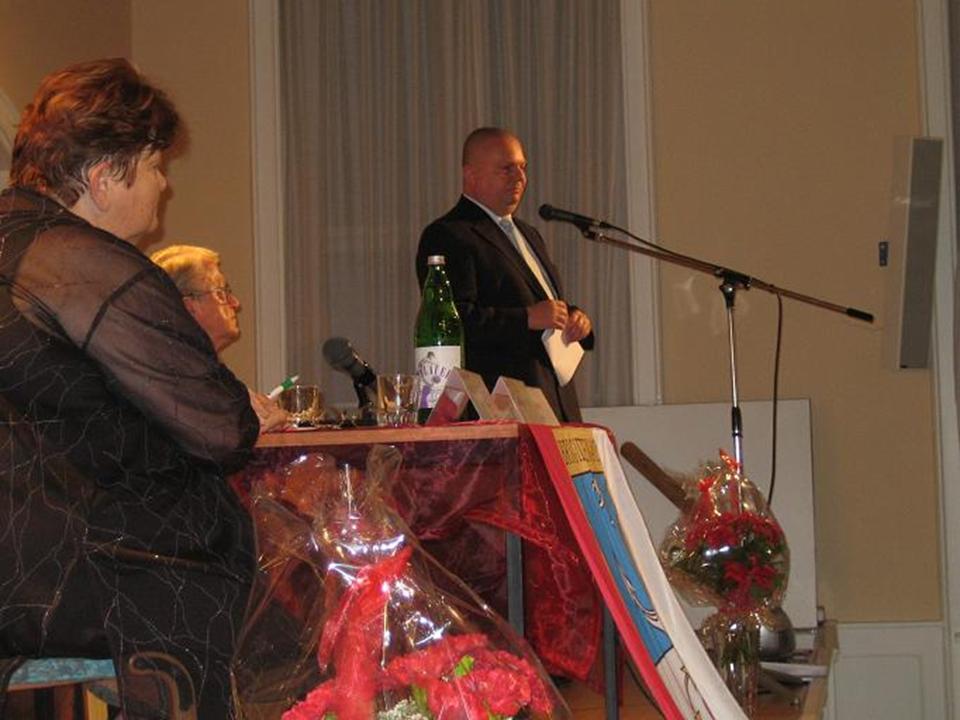
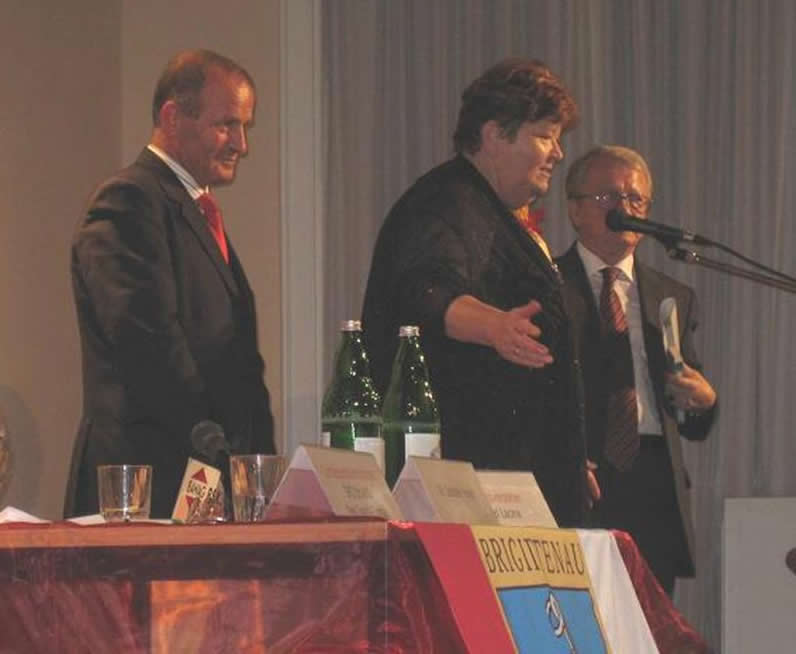
Namrood Shiba In the midst of crisis that Iraq and the Iraqi's are facing stemming from serious deterioration at all levels of government, and a clear weakness of the Iraqi government to deal with ethnic, sectarian, and religious problems. These issues and others including the ambitions of the separatist group are ravaging the Iraqi unity. It is surprising to find that they have announced their intention to bring Kurdish forces to Kirkuk in a pretext of protecting some of its installations. Press Release II 28 July 2007 It seems that the dominant political forces of the so-called political process in Iraq are still determined to rush towards sharing the spoils without the slightest consideration of the dangerous situation which should no longer be tolerated. One could infer from the scheduled meeting to be held between the dominant parties, since they have been given the governmental reins in Iraq under the abnormal circumstances known to the majority that accompanied the electoral process, are trying to tighten their ethnic, sectarian, partisan influence. They are dividing Iraq at the expense of the Iraqi people and threatening the unity of Iraq every day. Strong Solidarity Commitment by the Austrian Ruling Party for the Recognition of the Assyrian Genocide A Joint ADO/SPÖ Commemoration in Vienna By Abdulmesih BarAbraham reporting from Germany The Assyrians have received a strong commitment for support of their efforts for the recognition of the Assyrian Genocide. This commitment was expressed by high-ranking politicians of the Social Democratic Party of Austria (SPÖ) during a commemoration event held for the 5th year in Vienna Brigittenau on Saturday, 16 June 2007. The first event was organized back in 2002.This year’s invitation of the Assyrian Democratic Organization (ADO) attracted more than 200 people, among them high-ranking politicians of Austria and representative of numerous organizations. The importance of this event was that it stood under the agreed intent o prepare for a formal petition by the ADO to achieve the formal recognition of the Assyrian Genocide by the Austrian parliament. The commemoration ceremony was opened by a welcome message of the SPÖ district chairman Mr. Karl Lacina, who welcomed the numerous honor guests individually. Among those was the Vice President of the Upper House of Parliament of the Republic of Austria, Mrs. Anneli Haselbach. Friendly greetings were conveyed from the Federal State Parliament President of Vienna, Johann Hatzl and First Chairman of the Vienna local council Mr. Godwin Schuster as well as the national party secretary, state parliament delegate and local council member, Professor Harry Kopietz (SPÖ). Among the guests were also representatives of various organization.
Mr. Lacina welcomed Dr. Gebriele Yonan and praised her book The Forgotten Holocaust as a historical work of great importance - not only for the Assyrians but for all upright people, who support human rights. In context of the 50th anniversary of the ADO and its continuous engagement for the Assyrian people, he spoke of a double reason to convene in Vienna. He encouraged continuing and working along the committed path and not to give up despite challenges, until the acknowledgment of the Genocide against the Assyrians is accomplished by international bodies and states. The first speaker of the day was introduced by the moderator Mrs. Josefa Tomsik, former national vice-chairman of the SPÖ. The Vice President of the Upper House of Parliament of the Republic of Austria, Mrs. Anneli Haselbach took the stage and underlined the necessity for solidarity with people, who suffered terribly. She called the Genocide a horrible experience, saying that “one tries to understand, how this was possible and how it happens that humans crossed all thresholds to commit such a crime?”.“Is it a force of nature?”, she asked. Unfortunately, it is not, she asserted: Darfur, Red Kmer, Uganda and the Nazi Regime speak for that. She cited a Holocaust survivor who gave two reasons for what drives humans to commit crimes against the humanity. First, they are convinced that they are doing rightfully for their group, religion or community. In addition, they act correctly according to their conception of the world. Obviously, they do what fits into their limited conception of the world, added Mrs. Haselbach. Often such people would not recognize the extent of their criminal behavior. And if their acts become publicly known, they deceive themselves and many of them speak of performing their duties. She further cited Koffi Annan, former General-Secretary of the U.N who spoke on the occasion of the 60th anniversary of the liberation of Auschwitz: „The badness needs the silence of the masses“. And exactly this kind of silence we should not adopt, stressed Mrs. Haselbach, while she appealed for a civil courage and for human rights that must be high-held.
Subsequently, the chairman of the ADO, section Europe, Mr. Sabri Alkan spoke briefly about the establishment of the ADO, which was by any means coincidental, rather its was a result of historical reasons, tragedies like the Genocide of 1915, massacre in Semile in Iraq 1933. Persecution and discrimination were among the main motives. Mr. Alkan stressed ADO’s commitment for making the Genocide of 1915 public and recognized; he said that Turkey must admit committed injustice. A country who stands not to its history and does not confess committed acts, will have no friends in Europe and among democratic countries Chorepiscopos Dr. Emanuel Aydin spoke as representative of the Eastern Orthodox Christians (Syrian Orthodox, Armenian Apostolic, Coptic Orthodox) and outlined the historically difficult situation of the Christians in the Near East and expressed gratitude to the district chief Mr. Karl Lacina for the SPÖ opening Assyrians „a room in their heart “, in order to listen to us.
The state parliament delegates and local council Erich Valentin spoke strongly about solidarity and political evaluation of the historical events. According to him, the Genocide against the Assyrians and Armenians was accomplished based on a plan drawn 92 years ago by the Young Turks and resulted in approximately 3 million victims. The whole plan was strategically prepared with clear instructions to the army of that time. On the political dimension, so Mr. Valentine, it can be stated today that the Turkish government signals still no willingness to talk about it seriously. However, if already 24 sovereign countries have recognized the Armenian Genocide of 1915 by their democratic elected parliament bodies, than „we must ask ourselves “so Mr. Valentin, „if there is such a European standard - how must ourselves deal with the history?” “The conclusion of this meeting is, „that the Assyrian people like the Armenians demand justice and acknowledgment of history, nothing more! This is a fundamental right, which is demanded in particular from a state that is ante portas to the European Union”. “If the EU is not just a community of shareholders, but forms a community of values and standards, fixed in the Copenhagener Agreement, describing how one deals with one another, than these values are the minimum standards, which have to be expected from Turkey as well. Only then, Turkey can become equivalent moral partner within the EU,” Mr. Valentin stressed. He referred also to a conference on the Assyrian Genocide held on March 26, 2007 in the EU, which found broad support across party borders. He regretted that representatives of Turkey in the European Parliament demanded that the conference was not allowed to take place, since the title Genocide - from their view - would be a lie. Mr. Valentin assured that the government of Austria, the city of Vienna and their representatives, in particular the SPÖ, stand at the side of the Assyrians, fight with them, until their rights are acknowledged Dr. Dimitri Papas, representing the Eastern Christian Union in Vienna acknowledged Aslan Ergen’s effort as the ADO section leader in Austria organizing the event and honored the victims the Genocide. More than 20,000 eastern Christians live in Vienna with their 13 church communities. Dr. Papas referred also to the present difficult situation of the Christians in the Middle East and in particular in Iraq, where they are exposed to discriminations, pursuits and pogroms. They are victims, because they are convinced of things that naturally respected in the West: human rights and religious freedom. Dr. Gabriele Yonan started her speech with appreciation to the special interest of Austria in the Genocide of the Assyrians and the particular political support for the acknowledgment of this crime. Dr. Yonan was already in the year 2002 guest speaker at this event in Vienna, where she outlined her thesis of the events of the Genocide. She spoke about the fact that since the appearance of her book naturally numerous new developments took place, which hopefully will be documented in a further volume including new documents from archives, which were inaccessible before. Dr. Yonan further talked about the emergence of the previously mentioned UN convention of 1948 and its initiator Rafael Lemkin. Dr. Yonan described that the massacres of Semile 1933 in particular and its treatment by the Völkerbund (predecessor to the U.N.) served Lemkin as cause to formulate his Genocide convention proposal; the Holocaust during the Nazi regime made the whole overdue.
Dr. Yonan stated that the events of 1915, which took place under the cover of the war, were not Genocide against the Armenians only, but a Genocide against the Christians of the Ottoman Empire. The basis for that formed the call to the Jihad - the holy Islamic war. The sources, to which the Armenians refer are the same that reveal the suffering of the Assyrians as well. She quoted the title of an interview „Massacres, but not Genocide” from October 2006 in the Austrian magazine Profil with the Turkish Ambassador in Austria, which reflects the current stand of Turkey, The argumentation is that during the World War I civil war prevailed in Turkey and Armenians supported the Russians, although this does not apply to all provinces, Dr. Yonan added. Besides that, she said that we have to ask the question, why the Assyrian villages were depopulated in Hakkari and Tur Abdin, although the Assyrians were not politicized as parts of the Armenians? Dr. Yonan underlined that she is supportive that Turkey becomes tied-up closer with the EU, however only if the Cyprus question and the question of the Genocide is solved. At the end of her speech Dr. Yonan appreciated the efforts of the ADO in Austria and in particular the engagement of the ADO of representative Aslan Ergen, who keeps co-operation with the political class of Austria upright. Aslan Ergen expressed gratitude to the speakers and the audience for the strong interest for the event. He thanked the SPÖ friends for standing to the side of the Assyrians, and assist if necessary. He appealed that we must do everything, so that over 3 millions people did not die in vain. This is not about revenge, but acknowledgment of history. Turkey must do this step, before it can join into the EU.
Tariq Aziz Hospitalized Courtesy of Press TV
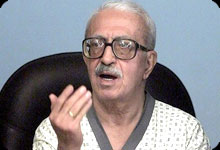
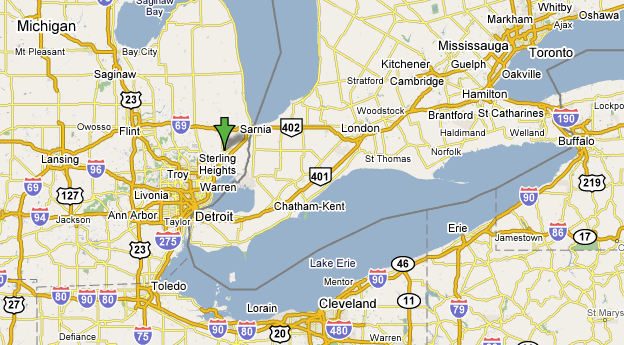
Informed sources say Iraqi deputy premier Tariq Aziz has been hospitalized after temporarily losing consciousness at a US detention facility. Tariq Aziz, Iraq's deputy prime minister under Saddam Hussein, was admitted to a U.S. military hospital after fainting in prison, his lawyer said Saturday. He was moved to a hospital in Balad for a brain scan after falling on Tuesday and sent back to prison on Thursday, the US military said. In a statement released to the BBC News website on Saturday, the US military said the 71-year-old ex-minister had fallen during a walk. "All studies came back normal for a person Mr Aziz's age... and [he] is currently in the same health and with the same functional status as he was prior to his fall," it added. His son Ziad Aziz said his father had told him by telephone that he was in "intensive care" while his lawyer, Badie Arif Ezzat, said that he had fainted repeatedly on Tuesday. The attorney says Iraqi officials are pressuring the US to quickly return Aziz to prison for questioning. Aziz reportedly could face charges of mass murder, allegedly committed in 1979 and 1991, and punishable by death. He denied any involvement, and his lawyers say he has never been formally charged. Aziz is from an Assyrian Christian family, born in the northern city of Mosul. He changed his given name, Michael Yukhanna, to Tareq Aziz which means "glorious past", in a nod toward his religious background. Detroit Prepares for Iraqi Refugees Courtesy of the Detroit News Officials say that number is clearly manageable. But state officials say the refugees could increase the cost of the state's income assistance program, and officials in Warren -- where many refugees are expected to settle -- expressed concern about the impact on the job market and school enrollments "The No. 1 goal is to get them self-sufficient and to get them on their feet financially," said Alvin Horn, the state refugee coordinator. "Since this is federal refugee assistance, almost everything is covered other than if there are a large number of families eligible for the Family Independence Program. We don't know how big of an impact that will be on the (state) budget." Among the federally funded initiatives in place in Metro Detroit for refugees: preventive health screenings, health care, education, language skills, cultural-adjustment services, supplemental income, employment support and training, translation and transportation services, rental assistance and more. The federal assistance to refugees does not cover additional local costs for school enrollments.
Refugees may help economy Overall, many officials and economists say the refugees eventually will benefit Michigan's flagging economy. "A couple of hundred people are not large enough in scale to affect the overall numbers in Metro Detroit," said Dana Johnson, the chief economist for Comerica Bank. "Even several thousand is easy to absorb. I just read a report the other day that says we just lost another 5,000 residents. This is a welcome inflow of people." The 100 individuals and 20 families expected perhaps by Oct. 1 represent a trickle of refugees from a war that has displaced 4 million Iraqis, including thousands of relatives of Metro area residents. Two million Iraqis, including many who helped the United States in the war effort, have fled Iraq for neighboring countries, and the Bush administration faces international criticism for not providing a haven for them. While many Iraqis are imperiled, Iraqi Christians -- including the Chaldeans, who live in Metro Detroit in significant numbers -- are without militias to defend themselves in Iraq. "My sister called me two weeks ago, crying and yelling that they had just kidnapped her husband," said Hoida Shamoon of Sterling Heights. "I hope that they can come here. I keep praying that they will." The State Department has established 7,000 special visas, and the Bush administration has informed relief agencies that the United States can handle as many as 25,000 after the fiscal year begins Oct. 1. Family, friends are sponsors Hundreds of local Chaldeans have signed up to sponsor family and friends among the refugees, according to relief groups. Chaldean leaders say that four years of organizational efforts have prepared the refugees for a smooth process of resettlement that will spare government resources. "We have been meeting with the agencies and our partners once a month to discuss all of the issues of how to prepare ourselves and how to receive these people, what to do for them and how to coordinate all of this," said Joseph Kassab, executive director of the Chaldean Federation of America. "We are ready, that is the bottom line." Lutheran Social Services of Michigan received a $300,000 federal contract for the effort this year. "How warm the welcome will be here for the Iraqis, we do not know," said Belmin Pinjic, director of refugee services for the agency. "But we know we won't have problems because the Arabic and Chaldean communities have existed here for years." Most of the early arrivals in Metro Detroit will stay in Macomb County because Chaldeans there have pledged to sponsor them, officials said. Officials of the Warren Consolidated School District say that they are prepared, but funding could become an issue. "We have programs throughout our schools to identify the needs and to provide supplemental services that may be required," said David Walsh, the associate superintendent for instruction. "On the funding side, as it would be for all kids, we receive full state aid on any resident who enrolls in our school district. But we also would be the first to say that state aid is not always fully adequate." Warren officials said they've been told that up to two-thirds of the 25,000 Iraqi refugees that the federal government agreed in April to accept could resettle in Warren and Sterling Heights. Warren Mayor Mark Steenbergh has criticized the refugee effort, saying he is concerned that "long-time residents of Warren" will face more competition for jobs. Despite criticism of the comments, Steenbergh maintained that the issue concerns him, especially in the current economy.
Martin Manna, president of the Chaldean-American Chamber of Commerce, scoffed at notions an influx of refugees fleeing war-torn Iraq would hamper Warren or squeeze the job market. "It's definitely blown out of proportion," Manna said of Steenbergh's remarks. "It's definitely more about (city) politics than anything else. It sounds like bigotry and sounds very anti-Catholic to me." Rep. Levin, a Democrat who represents most of Macomb County, also pointed out that the State Department said the priority for eligibility for refugee resettlement is not based on contacts with family or other people already living in a community, which means that is no basis for projecting specific allocation of refugees to a specific community. Warren, the third-most populated community in Michigan, has 136,824 residents -- a drop of 1,423 people from the 2000 U.S. Census, according to the Southeastern Michigan Council of Governments. From 1990 to 2000, Warren's population decreased by 4.6 percent. According to a recent Associated Press report, only 133 of the planned 7,000 Iraqi refugees were allowed into the United States during the past nine months, due to extensive background checks and interviews by the Homeland Security Department and the FBI because of fears that some seeking entry may be terrorists. Manna, of the Chaldean-American Chamber of Commerce, said members of his group would help support Iraqi refugees and may provide jobs. "They would not be a burden. The fact that we're losing population in Michigan, we should welcome them here," he said. The unemployment rate in Michigan rose to 7.2 percent in June, the highest point this year, the state announced Wednesday. The state jobless rate in May of 6.9 percent already was the highest in the country. Refugees' arrival delayed The refugees' arrival has been delayed this summer because of extensive security screenings. The latest National Intelligence Estimate said that al-Qaida terrorists would likely try to use Iraqi refugees to infiltrate the United States to carry out acts of terrorism. Federal officials have "interviewed more than 1,500 Iraqis in the region since March and have plans to interview 4,000 more by the end of September," said Janelle Hironimus, a spokeswoman for the state department. "The United States government expects the pace of Iraqi refugee arrivals to increase significantly." Welcome Mat Starting to Wear Out Iraqi Refugees in Sodertalje, Sweden Courtesy of the New Zealand Herald There's a new joke doing the rounds in the Swedish town of Sodertalje. An Iraqi father and son are walking down the street and come across a blond-haired blue-eyed man. "Wow! Look!" squeals the little boy, "here's a real-life Swedish person!"
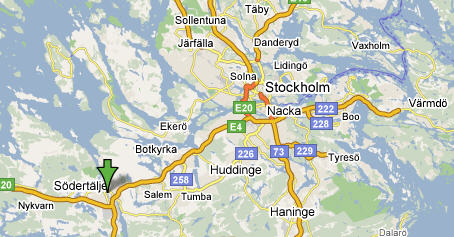
Lying just outside Stockholm, surrounded by tranquil lakes and slopes of fragrant pine trees, it might be marked on the map as Sodertalje, but many of its newest residents quip that it could easily be dubbed Mesopotalje. That's because last year, this unassuming, unremarkable Swedish town welcomed 1069 Iraqi refugees. That's twice as many as the entire United States and one in 20 of the Iraqis seeking asylum in Europe. Michael is one of the people who sold everything he owned to try to build a new life 3200km away. Even now, almost a year after arriving, he's so scared by the violence back home and the potential consequences for friends and family still there that he prefers to use a Western alias. "I was a Christian working for foreign companies, and as the extremists see it, I'm betraying my country twice over," he explains. First came the threatening emails. Then it was the heavy breathing phone calls. The final straw was an envelope delivered to his home in Baghdad. There was no letter, just a bullet. Michael sprang into action, selling off jewellery and hi-tech gadgets to buy his wife and five-year-old daughter one-way tickets out of the country. Four months later, he'd managed to sell the house and got on a plane to join them in Sweden. He now has a flat in Sodertalje, he's mastering the local lingo thanks to free Swedish lessons provided by the council, and his daughter is enrolled at school. It is this generous welfare system as well as the country's lack of involvement in the conflict raging back in Iraq that draws refugees to Sweden. What attracts them to Sodertalje in particular is a Middle Eastern migration route dating back to the late 1960s when Assyrian immigrants from Lebanon, Syria and Turkey put down roots here. And that means today's refugees find themselves feeling at home.
You can speak Arabic almost everywhere. You can stand on the terraces and cheer on Assyriska and Syrianska, two Assyrian football teams, at the local stadium. In neighbourhoods such as Ronna, it's almost like a "Little Baghdad" with Iraqi delicacies on offer in the local stores. And when it comes to religion, all the Christian denominations common in Iraq have churches in Sodertalje, so whether you're Chaldean Catholic, Syriac Orthodox or Syriac Catholic, there's a place to worship. At the Chaldean Catholic Church this month, families gathered for the baptism of three Iraqi babies. Celebrating the budding new lives was clearly a welcome relief from the incessant stream of death, whether a relative in the wrong place at the wrong time when a suicide bomber struck or a friend killed by insurgent hitmen. "More and more people are coming here because the situation in Iraq is so bad," said Soran Mansour Hanna, a member of the St John's congregation whose son Gabriel was one of the three baptised. "At Sunday mass, it's totally packed upstairs and we have to spill over downstairs. Christian people cannot stay in Iraq; if you're seen wearing a cross you could be killed." There was a stark reminder of that just last month when the Rev Ragheed Ganni, who used to work at the Sodertalje church, was gunned down in Mosul shortly after celebrating Mass.
Although his death might be commonplace in post-Saddam Iraq, in life he was a rarity for being one of the few trying to go back to Iraq. But there is a flood coming the other way and it is pushing Sodertalje to breaking point, said Mats Pertoft, the head of the council's integrations committee. "Right now the most frequent question from refugees is, 'When do we get a flat?' but it's difficult when housing is a real problem already in the Stockholm area. "Of course that's a source of conflict ... Sodertalje locals don't like to see the newcomers getting flats first." Although Sodertalje was the destination of choice for 12 per cent of Iraqi refugees who sought asylum in Sweden last year, the country as a whole casts a wide welcome mat. It received 9000 asylum applications from Iraqis in 2006, more than any other European country. However, a decision taken at the national level might be about to change the well-trodden path from Iraq to Sweden. On July 6, the Swedish migration board ruled that Iraqis seeking asylum must prove they face personal risk in their homeland to avoid being sent back. It based its decision on a court ruling earlier in the year that Iraq was not an armed conflict zone. In a decision widely seen as an abrupt change in Sweden's asylum rules, the migration board rejected the requests of an Iraqi from Baghdad and another from southern Iraq because they could not "point to any individual circumstances" to prove they were in more peril than others in their home areas. Hikmet Hussain, who heads the Federation of Iraqi Associations in Sweden, said many people had been in touch with him, worried about whether friends and relatives will be able to come and join them, worried about being sent back. "It's absurd to have to ... prove you are in danger in Iraq. We can't go to the insurgents and ask them for a certificate saying that they will kill us at such and such time," Hussain said. "I think the decision was Sweden's way to dissuade people in Iraq from turning up in greater droves on the doorstep." The Swedish government swiftly dismisses the accusations, keen to point out that the migration board is not a political entity and that the rejected asylum seekers have the right to appeal. Migration Minister Tobias Billstrom says that the situation is bad in some parts of Iraq but insists others are more stable and so people can stay in their homeland. But he admits Sweden is taking the strain when it comes to receiving Iraqi refugees. "More countries need to get involved ... I have constantly argued at the EU's Council of Ministers that we need to have burden-sharing." When his country takes over the rotating presidency of the European Union in the second half of 2009, it will lobby to establish a common asylum policy. Back in Sodertalje, Pertoft thinks the United States should be doing more for the victims of a civil conflict sparked by its invasion to topple Saddam Hussein. "The United States has to accept the moral and ethical consequences of their military actions, but as they are failing to, then Sweden must step in and foot the bill," he said. For those like Ali Rasoul Jaber, a former Baghdad University professor who got his residency permit at the end of last year, Sweden is a haven, free from the daily soundtrack of bombs, mortar rounds and gunfire. Others like Saaor Wafer, a mechanical engineer who arrived from the Iraqi capital three months ago, face an agonising wait for their papers to come through. Memories surface of his brother being kidnapped by insurgents and of the typed letter he received telling him he deserved to be killed because his firm had contracts with American companies. "I have a real case for coming here," he said, adding, "God bless the King and Queen of Sweden."
Assyrian Arrested on Cocain Trafficking in Australia (ZNDA: Sydney) Police authorities in Sydney, Australia have uncovered one of Australia's biggest drug syndicates, allegedly run by Luke "Fatboy" Sparos and his Assyrian partner, Alen "Fathead" Moradian. The New South Wales police in early March in a well-publicised raid discovered over $16 million worth of cash, luxury cars and 17 weapons, including a gold-plated large calibre pistol, army-style assault rifles, shotguns and even a homemade ballistics vest from the alleged sale of dozens of kilograms of highly pure cocaine.
Moradian's wife, Natasha Youkhana, allegedly chastened husband in an email, telling him to act more like TV mobster Tony Soprano - revealed the scope of the alleged operation. It included conversations straight out of a Quentin Tarantino movie, with one of the syndicate's drug dealers, Jimmy Youkhana, discussing a Glock pistol he keeps at his house. Jimmy, who had the Glock, a shotgun and rifle stored at the house he was living in, was recorded telling an unknown man that nobody fought with their fists anymore. "Everyone f---ing shoots or stabs today," he said. Police allege that Sparos and Moradian had leased two properties through a real estate agent known to the two. According to police an apartment in Homebush was leased by Alex Lazarus, 36, and another apartment in Newington was leased by Paul Abraham, 35. Neither men exist in any records in Australia, police state. It was via these two "safehouses" that Sparos's and Moradian's alleged business - selling large quantities of cocaine via associates - was run, and provided them with the luxurious lifestyles they enjoyed until being arrested this year. The facts also reveal the intricate operation police ran to nab the suspected cocaine kingpins, with extensive surveillance and undercover stings run to gather evidence. The investigation, operated jointly by the Middle Eastern Crime Squad and the NSW Crime Commission, began in December and gathered information on Sparos, Moradian, their wives and at least ten other men for about six months, culminating in raids in March and the arrest of Moradian and Natasha Youkhana last week. On February 1 police secretly raided the Newington safe house, discovering $10,000 in cash, a loaded Glock pistol, a shotgun, a military style rifle, seven phone SIM cards, various fake ID and drug paraphenalia. The pistol, shotgun and rifle were taken by police, rendered inoperable and then quietly returned to the house the following day. During that second raid officers also placed a hidden video camera in the apartment. Four days later Jimmy was filmed cutting up large quantities of powder and putting it into small plastic bags. A sting a few days later, in which an undercover police officer calling himself "Joe" bought cocaine off Jimmy, found the powder to be 72 per cent pure cocaine, police allege. At one point during the drug buy, Jimmy allegedly tells the officer: "For all I know you're a f----ing cop trying to f--- me." In another recorded conversation, Jimmy and Sparos allegedly discuss dealing drugs. Sparos: "It's a shame you gotta [indistinct] ... you're going to see some junkies today, all sweaty, yucky ones ... f---ing hell, what a scene." Jimmy: "I don't give a f--- as long as they're ringing me every day I don't care." Youkhana, 35, was charged with money laundering, making transactions to avoid financial reporting and goods in custody, arising from $1.5 million in cash found inside her car when she was arrested. Natasha Youkhana, represented by solicitor Benjamin Archbold and barrister Winston Terracini, SC, was bailed on a $350,000 surety. She was ordered to report to Fairfield police twice daily until her next court appearance, set for September 27 at Central Local Court. |
||||||||||||||||||||||||||||||||||||||||||||||||||
|
||||||||||||||||||||||||||||||||||||||||||||||||||
Assyrian Genocide Discussion in a California High School Rebecca Pirayou
My name is Rebecca Pirayou and I have just completed the 7th grade. I interviewed my brother, Michael Pirayou, about a project that he had to do for school about the Turkish and Assyrian Genocide. He did this project as a 15-year-old sophomore in high school. This project was assigned to him in his history class. Also, some Assyrian adults do not think that children and teenagers of our time do not care or think about Assyrian History. Well, the adults who think that, will feel better about the problem. In May, 2007, Michael’s history class was assigned a group project to make a poster and then present it to their class about genocide from a list of 10 genocides. The Turkish and Armenian Genocide was on the list but the Turkish and Assyrian Genocide was not on it. My brother thought that they did not list Turkish and Assyrian Genocide because Assyrians were not known as well as Armenians or as Michael liked to call it, ‘less popular.’ So he discussed it with his teacher that the Assyrian Genocide was not the same as the Armenian Genocide. His teacher then gave him an assignment to show how the two genocides were different. Then, his teacher received a 10 page email from Michael showing how they were different and how it affects the world today, for example: It is one of the reasons that Assyrians do not have a homeland. Another reason is that Turkey is not allowed in the European Union until they admit that they committed genocide. Also, some of the villages which were attacked by the Turkish authorities had no Armenian population. Only Assyrians lived in them. One such village was called 'Azakh'. Afterwards, she agreed to let Michael and his group do the Turkish and Assyrian Genocide. Michael chose to do his poster on this because he is Assyrian and he is proud of his heritage. He also wanted to inform his classmates and teacher. Now, the Turkish and Assyrian Genocide will be on the list for the years to come.
What Happened to the Christian Assyrians of Iraq? Dr. Fereidoun Es-Haq To: Voice of the Martyres My name is Fereidoun Es-Haq and I am the senior pastor of Bet -Eil Assyrian Church (a Conservative Baptist Church) in San Jose, California. I am also a receipient of your periodical magazine which (to my utter surprise and disbelief) has never mentioned anything about the plight of the Christian Assyrians of Middle East; particularly of Iraq. I made a call to your office yesterday to find the reason for this huge neglect from an organization which claims that IS the voice of (Christian) martyrs. Once more I was astonished when the the gentleman I converse with told me that you don't know about this persecution and if there be an official report expressing the persecution and the plight of our people, then you will consider it. Well so far I have forwarded 5 sites for your concideration and if you need additional proof all you need to do is to search for "Christian Assyrians". We Assyrians do not have any country or any government to support us. The least we expect is for our "Christian" brothers and sisters who are familiar with the dread of religious persecution to help and support us. Your cooperation in this matter will be appreciated. Thank you and God bless you.
Megalommatis Betrays His Anti-Assyrian Bias William Warda The following rebuttal was sent to the editor of www.americanchronicle.com where several articles by Dr Muhammad Shamsaddin Megalommatis have been published wherein he seems determent to devalue our Assyrian identity and replace it with Aramean. His articles are heralded on many Aramean web Sites as the ultimate truth. I hope you see it fit to publish this expose of Dr. Muhammad's ignorance:
Assyrians Walk for Hope to Cure Breast Cancer Helen Talia
Once again, October, the designated National Breast Cancer month is approaching. For the second consecutive year, the Assyrian community of Chicago will be joining thousands of City of Hope' marathoners. The location this year will be Illinois Science & Technology Park, 4901 Searle Parkway, Skokie, IL 60077. Please make a difference by joining Assyrians Walk for Hope ® to cure breast cancer (Click here). Remember to register as a team member. Last year our small team was able to raise $550, which went directly to City of Hope's Breast Cancer Research. Our goal this year will be $1,000. Registration Fee is $25 - Adults, and $15 - Children. *Children are 12 years and younger Sponsored by: www.INNANAmagazine.com Assyrians Walk for Hope ® is seeking sponsorship to help Breast Cancer Research. The Assyrian Community Makes Headlines in Skokie Helen Talia I am writing to share some very good news with you! During the past several weeks, I have been working with Frances Roehm from the Skokie Library, who graciously opened her arms to our community and created an exclusive Assyrian community page within the library’s online newspaper. Please share the good news with our community members. This is an encouragement to get our stories told, especially since Skokie is emerging as the headquarters for our families to connect. |
|
Mama's Arabian Fish
Where’s Cornel Wilde when you need him? The star of the Hollywood swashbucklers and noir thrillers of the 40s and the 50s, I mean. Wilde sported a crown of wavy black hair that magnified his dashing good looks. For a time in Tehran, the Cornel Wilde hairstyle became a rage among young men. The barber only needed to know “Monandeh Corneli” – “in Cornel Wilde’s style.” That simple. I wish it were that simple when I try to recreate one of my late mother’s culinary wonders from the years we lived in Tehran. She called it Arabian Fish. I loved every lavish morsel. Everyone who ate it did. All of Mom’s dishes exploded with flavor, from kipteh to riza khorush, shurva to buishala. Her Arabian Fish was an experience. I am blessed by having been raised in a family of master cooks. My grandmother and aunts were magicians in the kitchen, using recipes passed on through the centuries – a pinch of this, a handful of that, which is the way of Assyrian cooking. None in the family, however, challenged my mother’s stature in the exquisite food she created. Mom was culinary royalty, an artist with the rare genius to take a few ingredients and produce a masterpiece. She did in her Arabian Fish. Why she called it Arabian Fish I have no idea. My mother liked to name things to give them an identity, a habit she willed to me. I wrote my first novel “Will’s Music” on my first laptop computer. In the process the laptop took on the identity of the female protagonist in the book: Mariette. Subsequent laptops also have been Mariette. Nothing else fits. I once had a second-hand suitcase named Molly. Ah yes, Molly and I spent some good years together wandering. My old rusty ’57 Plymouth was named Nellie. Old Nellie was a museum of personalities, especially with its broken something or other that made it bump along the road like a peg-legged pirate. My present car is named Shireen – in Farsi a female name and a word meaning “sweet.” An Assyrian friend wonders what’s with all the female names? She calls it sexist and says that’s the trouble with men. “What,” I say, “you expect me to call my laptop Zaya, or Geewargis, or Odisho?” Fine Assyrian names those, but they don’t ring with the romance of Mariette (as in marionette). Some things in my life wear a sacred shroud. Like my Mariette. And my Mom’s Arabian Fish. Since my mother found the recipe in Baghdad, where she lived for a time and where I was born, I imagine that’s why she called it Arabian Fish. What else would she call her epicurean wonder, Tigris Fish? I suppose Assyrian Fish might have worked, but Arabian Fish must have been a better fit, I assume, because of the recipe’s Arabian origin. Thus Arabian Fish – Nuyted Arabayeh. I also think the name carries a certain romance, as in the wonderful Tales From the Arabian Nights. The love for the romantic and the lyrical is something else Mom and I shared. In Baghdad, I am told the fish was cooked with herbs and spices on an open flame in the eateries along the banks of the Tigris River. If I know my mother, she improvised on the original recipe by adding her own ingredients. That was my mother. Not only was she original in everything she created, Mom also had the beautiful gift for taking the standard and perfecting it. Making it glow. Making it hers by adding her signature. “The esthetic experience is the same in any art,” said the composer Robert Schumann. “Only the materials differ.” I think Mom and I would have agreed on that. We were a lot alike. Mom was an explorer, an adventuress who kept searching for new treasures. That, too, she willed to me, but compared to her I’m just a pilgrim. None of which reveals the secret of her Arabian Fish. What blend of spices she used to improvise on the original is a life’s mystery for me. Not the bouquet and the taste of her Arabian Fish, though, for they sparkle in my memory like the first smile from the first girl I fell in love with in my teens. I’ve had many a savory seafood dish since Mom’s Arabian Fish, particularly a salmon in a London restaurant that sent me howling along the River Thames like an Assyrian charioteer after a wild feast in Nineveh. Still, try comparing a tin can and a golden goblet. No comparison. No match for Mom’s art. What I clearly remember is that Mom sprinkled her Arabian Fish with chopped parsley and green onion, but that was just the beginning. What came after that I couldn’t begin to imagine. The wonder of it, of course, lay in the bouquet and the taste. I assume she used some type of white fish, and butterfly-ed it. Lemon wedge on the side. Rice. Bread and butter. Icy lemonade. Fruit and nazookeh afterward. Then I drift away under a tree along a quiet stream with a good book and a pipe – well, forgive me for imagining that part. On the occasions she prepared her Arabian Fish, the bouquet teased my nose like a fragrant feather of herbs and spices. The taste pampered my palate with the perfect harmony of seafood, vegetable and herbs, to be savored with leisure and curiosity. It was like the music from a string quartet – Mozart, Schubert, Beethoven – where the instruments blend into a unified sound to create a magnificent work of depth and beauty. Ah yes, Mom’s Arabian Fish still plays in my head. I can easily picture Mom on the Food Network with her program of Cooking Assyrian. Granted, we Assyrians don’t have the gilded culinary reputation as do the French, Italian or Chinese, but knowing Mom, she would have gone in front of the camera and whipped up a feast worthy of Ashurbanipal. The show would have had a romantic name, too – I don’t know, something like the Bet Nahrain Affair. Oh, how I’ve tried to recreate some of Mom’s magical renderings in the kitchen – and failed. Miserably so with her Arabian Fish. I might as well try to re-create Jane Austen or Ernest Hemingway. Or Degas. Or Modigliani. Impossible. Because how do you recreate a masterpiece? Where do you start? No books exist on the subject. Sure, on canvas the lines, shapes and brush strokes may come close. And colors. Not the artist’s spirit, though. Not the soul. How can you recreate an artist’s soul? What do a pinch and a handful of something really mean? Whose pinch and whose handful? Where do I search for Mom’s voice except within myself? Will I ever succeed with her Arabian Fish? Will the day come when I proclaim to myself, “That’s it,” and feel like a conqueror sweeping through the Ishtar Gate – Darwaza D’Ishtar? But then, is that what really matters? Will I have arrived then? But arrived where? To what point? I don’t think so. What does matter most, however, is my attempt at exploration, at trying to find Mom’s spirit and soul through her Arabian Fish, as I do with everything else she left me. We spend our lives looking for rainbows. For me, Mom’s version of the Arabian Fish is one such rainbow, because it is as much part of me as my Assyrian blood. As much as Mom is a part of me. So I will keep on shading a hand over my brow and searching the horizon with the hope that someday I might discover its secret. |
|
2007 Assyrian Youth Excellence Contest
Zeena Tawfik As part of the Assyrian American National Federation’s 74th National Convention, to be held in San Diego, California during the Labor Day Weekend (August 30th to September 3rd , 2007), the AANF Youth Initiative Program is organizing the 14th “Assyrian Youth Excellence Contest”. This is a program to promote and reward education, talent, and knowledge of the Assyrian language and history and good character among our youth.
Deadline August 1st, 2007 For More Information visit aanf.org Contestants will be provided with accommodations with other students for the 2 nights of YEC Phases. Participant’s Registration to Convention will be reimbursed. Come meet and network with other fellow Assyrian Students and form lasting friendships. A Searchable Syriac-English Dictionary for Your PDA Title: The Searchable and Bookmarked Syriac-English Dictionary
In the lamentable absence of an English-Syriac dictionary, this handy digital tool will be useful to Syriac scholars on the go. A pdf version of J. Payne-Smith’s Compendious Syriac Dictionary, fully bookmarked and searchable, this innovative tool will allow scholars to search all English words in the dictionary. While it does not function as a fully-operational English-Syriac dictionary, this electronic version will allow the scholar to find possible correspondences to English words. Not only can this pdf be uploaded to laptops, it will also work with smart phones, palms, and other portable electronic devices. Ideal for carrying into the library with you while on Syriac research, this worthwhile edition of the time-honored dictionary will be certain to find a host of applications for today’s Syriac scholar. George A. Kiraz is the founder and director of Beth Mardutho: The Syriac Institute, and the president of Gorgias Press. He earned an MSt in Syriac Studies from Oxford University, and an MPhil and PhD from Cambridge University. He has an extensive list of publications in Syriac studies. To order your dictionary: click here. To view Payne-Smith's Thesaurus syriacus (1879-1901) online click here. Other books by Gorgias Press:
|
Iraq’s Christian Exodus Rev. Dr. Keith Roderick The novelist Zora Neale Hurston described one of her characters as a rut in the road, with “plenty of life below the surface but it was beaten down by the wheels.” Since the fall of Saddam, the Christians of Iraq have been beaten down by every wheel in motion: violence, extortion, and murder. In desperation, Christian religious leaders are now openly criticizing the Iraqi government for failing to protect their flocks. Chaldean archbishop Louis Sako recently lamented in the AsiaNews, “In Iraq Christians are dying, the Church is disappearing under continued persecution, threats and violence [are] carried out by extremists who are leaving us no choice: conversion or exile.” Twenty years ago the Iraqi Christian population was estimated to be 1.4 million. The Department of State reported there were almost 1 million in early 2003. U.N. sources claim the figure to be 700,000. Two years after the overthrow of Saddam Hussein, it was estimated that 40 percent of the refugees fleeing Iraq were Christian, deliberately targeted in Iraq. There were 20,000 Christian families living in the Dora neighborhood of Baghdad before the liberation of Iraq. Today, there are only 3,000 families. Most are only partially intact, as members of those families were killed, displaced to other areas in Iraq or fled the country. One in four Christian families living in the major Iraqi cities has left. A religious cleansing is taking place as Muslim extremists either demand that Christians convert to Islam, and send daughters and sisters to convert and marry a Muslim man; or, worse, force families to leave or be killed. Carrying the Cross In Iraq Paul Kengor Christians in Iraq are today facing serious persecution, as detailed in a number of recent reports, including in this publication. Predictably, some of these accounts are filed by sources that were against the war in Iraq, dislike President Bush at a level bordering on hatred, and are more than happy to revel in another example of where they believe the White House has failed in Iraq. On the other hand, to be sure, many of the accounts come from fair-minded observers with no political agenda — such as this publication — not to mention the actual victims of the repression. One very alarming report by the Assyrian International News Agency cites hundreds of killings and an exodus of hundreds of thousands of Iraqi Christians. The most important challenge, of course, is to try to stop the violence, a task that the current Iraqi ambassador to the Holy See, Albert Yelda — himself a Christian — is dealing with on a daily basis. Yet, Yelda also deals with a question that analysts in the United States are struggling with, namely: Can we say for certain that the treatment of Christians in Iraq has worsened since the U.S. invasion and removal of Saddam Hussein in 2003? In other words, has there been a surge in the repression, an unintended consequence of the Bush administration’s intended liberation of the country? Yelda was asked this question by the Register not long after returning from a requiem Mass for Father Ragheed Ganni, a Catholic priest killed by jihadists in Iraq on June 3. Father Ganni is said to have predicted that Iraq would collapse into chaos if the United States invaded. The Register asked Yelda if Father Ganni’s dire warnings were now being vindicated. “No,” countered Yelda, “I don’t think that is the right description for what is actually happening in Iraq. In Iraq we had 35 years of dictatorship, of oppression, of a family controlling the masses with an iron fist, as well as the mass graves, people killed on a daily basis. But they went unreported.” Yelda’s remarks point to a crucial caveat for trying to assess the issue of the persecution of Iraqi Christians: It is extremely difficult to know if there has been a rise in violence against Christians in Iraq because only now, after Saddam, are Iraqi Christians free to report such things, and only now are they free to leave the country.
More, it will be easier for them to make their case to be accepted elsewhere as émigrés if they are rightly understood as victims of terrible treatment inside Iraq. This situation is somewhat reminiscent of Russians Jews after the collapse of dictatorship in the Soviet Union: Once the USSR imploded in 1991, there was a massive exodus of hundreds of thousands of long-repressed Russian Jews. There were also sudden reports of anti-Semitism within Russia, reported by a newly free press, even though the reality was that Jews had it far better under Boris Yeltsin than ever before in all of Soviet (or even Russian) history. They were finally able to talk. I recall this well, having done a series of published interviews in 1992 with a Russian Jew named Dmitri Starostin, who had the liberty to speak openly about anti-Semitism in his country. We could not have done those interviews a decade earlier. In another post-Soviet example, it was reported throughout the Western press in the early 1990s that Russia’s transition to a free-market economy was a disaster, with a sudden spike in homelessness and unemployment. In reality, the Soviet government had these problems prior to the transition — which is why the system imploded — but denied the fact, as official spokesmen falsely claimed 0% unemployment and homelessness under “utopian” communism. The point is that like the Russians of the early 1990s, Iraqis are only now free to speak the truth. So, this raises the question: What was life like for the roughly 1 million Iraqi Christians under Saddam? Not good, as was routinely documented by sources from our State Department to international human rights organizations. Under Saddam, the importation of Christian literature to Iraq was limited or halted altogether, as was evangelization. Christian schools were confiscated by the state. A Christian who married a Muslim was required to convert to Islam. Unofficial discrimination existed in employment practices. Like today, some Christians in Iraq had it worse in certain parts of the country, largely depending upon the relative concentration of extremist Muslim thugs. Christians in Basra, for example, throughout the 1990s complained of threats they would be raped, kidnapped, or killed for their faith. Some Christian minorities elsewhere faced forced relocation. As recently as 2002, the Iraqi government issued a law that placed all Christian clergy and churches under the control of the Ministry of Islamic Property. The extent to which Christians were killed for their faith by Saddam’s government has never been clear; if and when such killings did occur, the information was obviously never publicized. All along, of course, there were always fanatical Muslims out of the Iraqi government who killed Christians for their faith, as is the case throughout the Middle East. Further complicating the situation, there were actually high-level Christians who served in Saddam’s government (as there are in the Iraqi government today), such as Ambassador Nizar Hamdoon, a Catholic. Hamdoon did not like Saddam’s Iraq, and he was not free to leave. In fact, he tried to escape the country but was always kept under strict surveillance and was deeply fearful of what would happen to his wife and family. Saddam was forced out of Baghdad by U.S. troops, fleeing to a hole dug under a farmhouse near Tikrit. On April 20, 2003, shortly after Saddam fled, and as repressed Iraqi Shiites Muslims readied for a long obstructed pilgrimage to Karbala, Iraqi Catholics celebrated Easter freely for the first time in a generation. One such Christian was Selma Dawood, a 75-year-old widow who lived in a small farming town in northern Iraq called Qaraqosh. Residents claim that the ancient town is 99% Assyrian Christian. Its landscape is marked by two towering Assyrian Christian churches, one for Catholics and the other for Orthodox believers. Almost overnight in late April 2003, there were finally more churches in Qaraqosh than murals of Saddam, the latter of which townspeople rapidly removed as the “god-man” ran away from U.S. troops. Dawood, ironically, had a world-famous relative: She was the aunt of Iraqi Foreign Minister Tariq Aziz. He was the top Christian in Saddam’s government, and a shameful apologist who incessantly lied to the world about the man and his weapons. “Let them arrest him,” said Selma Dawood of her sister’s son. “It’s not important to me.” Asked if her nephew had ever lifted a finger to help Iraq’s Christians, she responded with a terse “No. Zero. Zero. He’s very, very bad.” Symptomatic of Saddam’s regime, Aziz did not protect Christians, and now his aunt saw no need to try to protect him. Aziz’ role in a “criminal regime,” according to Dawood, had not made the family proud. She had this to say about the American-led action: “Saddam is finished and we are okay. We are very happy and merciful to God and the Americans, our uncles. God bless America. God protect America.” Appraisals like these from the Iraqi side abounded in April 2003. As I compiled samples for a chapter in a book I was writing on George W. Bush, my editor made me choose a half-dozen or so examples among dozens at my disposal. In short, Iraqi Christians were not sad to see the end of the rule of Saddam, who was arguably the world’s most brutal dictator. Perhaps most important, even when not targeted for their faith, they were targeted for their mere humanity. Indeed, in the general sweep of things, Iraqi Christians were just as likely as Iraqi Muslims to have their children locked up in dog cages, to have their wives raped or beheaded or hung upside down in front of their family for hours as they menstruated (an actual interrogation technique under Saddam), to have their ears surgically amputated for refusing military conscription, to be subjected to chemical baths or the attachment of electrodes to their genitals, to be fed feet first into large industrial meat grinders, or to be lynched from lampposts or simply machine gunned. A surreal December 2003 Gallup poll asked Baghdad residents a bizarre, tragic survey question that could only have been possible in a country run by Saddam Hussein: had a member of their household been executed by Saddam’s regime? Amazingly, 6.6% said Yes. Based on that percentage, Gallup estimated that 61,000 individuals in Baghdad alone had been killed under Saddam. Execution, Gallup aptly noted, was Saddam’s chief weapon of mass destruction. For the record, various authorities, from the U.S. administrative authority in Iraq to human-rights groups like Amnesty International to the exiled Iraqi National Congress estimate that anywhere from 300,000 to 1,000,000 Iraqis were shot and shoveled into mass graves. The crimes then, too, went unreported. Here again, Iraqi Christians were victims, not so much as Christians in a Muslim majority nation, but as humans among other humans crushed under the jackboot of a bloodthirsty despot. Saddam Hussein was an equal opportunity torturer. So, all of this is a caution in today assessing a continuing bad situation for Iraq’s Christians — one for which American Christians who supported the war have a special obligation to not be silent and to not stick their head in the sand.
The Iraq that Our People Prayed For Years Ago Sargon Sapper It is time to start over in Iraq, time to put an end to corrupt government, the complete collapse of security, the chaos and confusion, the emboldening of terrorists, and the slaughtering of innocent Christians stuck helplessly in a sectarian civil war. It is time to declare martial law in our once proud country; so that our occupiers can finally create peace and stability. It is time for a new regime, one that can resolve its differences, as well as a National Assembly of freely elected representatives. It is time for a new constitution, one that recognizes the rights of minorities too. In short, it is time to create the Iraq that our people had prayed for four years ago. And when the country is stabilized and protected, the foreign forces should be shown the door, and asked to leave for good. So who is to be blamed for our present situation in Iraq? I believe, that after four years of occupation, the Americans know exactly who is to be blamed. Once considered our best chance to escape oppression, it feels as though they, too, have turned a blind eye to our cause. Even back in 2003, the Americans went into Iraq without an intimate understanding of the beliefs of the Iraqi people or the politics of the country. Specifically, they underestimated the scope of the sectarian dispute between the Shiia and Sanna, and its effect on the region at large. Even worse, the Americans did not understand, nor do they have any concept of now, what it is like to be a Christian in a Muslim country. Meanwhile, they feebly attempt to gain a strong hold on the worsening civil war, while Assyrians are left defending their very lives and wondering; what has become of our promise of a democratic state, freedom for all, and the protection and equal rights of minorities? Since the dawn of history, historians have acknowledged the significant role of the Assyrian nation in the building and advancement human civilization. Those who are familiar with our history know that our forefathers bravely defended their homeland from attack, protecting not only our country but our very presence as a people and the doctrine in which we believe. Today Assyrians, both as Christians and Iraqis, remain loyal devotees to our faith and country of Iraq. We remain trust-worthy patriots who wish for nothing more than the opportunity to live in peace with all sectors of the Iraqi people. Still, after nearly two thousand years of Christianity in Iraq, Assyrians struggle to avert extinction. Since the American invasion two-thirds of Iraqi Christians have left the country. And who would blame them? Islamic extremists from within Iraq, as well as those entering from foreign countries, intentions are nothing short of genocide. In parts of central and southern Iraq Assyrians are threatened by outlaws of armed militia and terrorist groups that they are in an Islamic state under Muslim rule. They are forced to comply or die. Caught in the cross-fire between the Sanna and Shiia, to who can our law-abiding, God-fearing people turn? Most of the sectarian groups number in the tens of thousands, and have solid connections to political parties represented in the Iraqi National Assembly and the Iraqi Government. So Christians are forced to leave their homes and belongings, or else convert to Islam, pay jizya, or die. Sadly, this takes place each and every day in Iraq, right before the eyes of a government that was supposed to be put in place to protect its citizens, Muslim or not. Thus, I say it is time for this sham government to be abolished, for our American occupiers to admit to their mistakes, and for Assyrians Christians to be openly recognized as victims in Iraq burdening the atrocious consequences of their failures. We, too, have a moral responsibility to be the voice of our people back home; to let the entire world know of the Assyrian genocide taking place while neither the Iraqi government nor occupying forces do anything to stop it. Let us remind those around the globe how deeply-rooted the history of Assyrian Christians is in the land we once called Mesopotamia. And, that this history is once again in grave jeopardy, urgently needing protection and salvation. With help from the Kurdistan Region Government, as well as the United Nations, a new patriotic Iraqi government is capable of instituting real change and altering the course of the future for Assyrian Christians living in Iraq. But make no mistake; an honest and complete solution must be instituted. Assyrians have unjustly endured this type of treatment in the past. We have sacrificed so much in our homeland, it is now time for our people to be protected, and for our rights to be acknowledged. Nothing short of a true autonomy in our homeland will suffice. We have earned that privilege, and paid for it in blood. With a Grain of Piquant Salt: Ancient Assyrians Alive! Bhaskar Dasgupta
I nearly fell out of my chair when I stumbled over a tiny piece of news about the fact that August 7th is declared as the Memorial Day for Assyrian Martyrs. Assyrians? Surely somebody is pulling my leg or its April fool's day. Assyrians as a people died out millennia ago, and for a press release coming out commemorating August 7th as Martyr's day for them sounded a total joke to me. After I had managed to drag my carcass up from the floor, collected my jaw and settle down my oculars, I went digging into this strange and interesting news-story which I thought I would share with you dear readers. Here is what I found out. There are approximately 1.8 million Assyrians scattered around the globe, but mainly in Iraq, USA and Syria. Previously inhabiting a swathe of territory ranging from Lebanon, Syria, Iraq, Iran and bits of the Caucuses, genocide and ethnic cleansing meant that a lot of them have emigrated to other countries. The link to the ancient Assyrians seems to be a bit weak and not very clear, but I suppose it is very difficult to establish it either way, even with DNA testing. What is interesting is that these modern day Assyrians have a different culture, language and religion to their Iraqi, Kurdish, Iranian and Syrian neighbours. The language spoken by the Assyrians is Aramaic. If one is a movie goer or
follows the tinsel-town news, one would know that Mel Gibson recently made a
film about Jesus and used Aramaic in this film. Historians posit that the
language of Jesus and the early Christians was Aramaic. Of course, any An interesting aside, the Assyrians literally believe in one passage in the Bible which says, "In that day there shall be a way from Egypt to the Assyrians, and the Assyrian shall enter into Egypt, and the Egyptian to the Assyrians, and the Egyptians shall serve the Assyrian. In that day shall Israel be the third to the Egyptian and the Assyrian: a blessing in the midst of the land, Which the Lord of hosts hath blessed, saying: "Blessed be my people of Egypt, and the work of my hands to the Assyrian: but Israel is my inheritance." (Isaiah 19:23-25)." This has been repeated in many Assyrian websites and mailing lists, it is an article of faith for them. Egypt is their promised land, and between Egypt and Israel, the Assyrians will be the lord and masters. Now the situation in the Middle East is difficult and convoluted enough to attempt to understand without bringing in more complexity like this. Imagine me writing an alternative history of the region, or a fantasy tract.
And then we have these Assyrians coming over the hills (or is that the Golan
Heights?) and sweeping the Israeli's and Egyptian border pickets and armies
away, the respective armies melting away, and a new Assyrian state is born But while these Assyrians, at least in this essay, have been portrayed as a
single ethnic group, the reality was different in the last century. Even
though they share the culture, history, language and religion, they had been
fragmented to a large degree over language dialects, religious differences, This group of people have a rather interestingly and well documented history
of being persecuted. A website I found notes the first persecution way back
to 107 A.D. when the Parthian king Xosroes murdered the second bishop of
Arbela (modern Arbil). In 448 A.D., King Yasdegerd II lead the Persians to
knock off more than hundred thousand Assyrians in and around Kirkuk in
modern day Northern Iraq or Kurdistan. And so on and so forth, being
persecuted by the Jews, Muslims, Parthians, Mongols, Kurds, you name it.
Between Iran, Iraq and Syria, the Kurds seems to have really got it in for This church seems to have grown and it pops up in the most amazing of
places. The South Indian church is linked to the Assyrians, where it is
known as the Chaldean Syrian Church. Kerala, the southern state, has had
long trading links with the Middle East and this is where it's believed (on When I started to research this and talking to my sister about it, it was
almost like being an internet Indiana Jones. Fascinating to dig around and
discuss this little nugget of information. But for these Assyrians, life is
not that easy. They are dissipated across a vast landscape, persecuted by
and in the states in the Middle East where they live, difficult language and
communication problems. It will indeed be a shame for this amazing cultural
and religious group to die out, but they will have to make extraordinary
efforts to create a self identity and grow into a confident part of the
greater comity of nations. The Assyrians should take the words of Irena
Klepfisz, a famous Jewish poetess and writer to heart. Irena said about her
people and language: "Yiddish acted as the cement that bound the Jewish All this to be taken with a grain of piquant salt! |
||||||||||||||||||||||||||
Christoph Baumer's Book Awarded BRIMES Runner-Up Prize
Dr. Christoph Baumer's book "The Church of the East: An Illustrated History of Assyrian Christianity" was awarded the Runner Up Prize by the BRISMS British-Kuwait Friendhsip Society Prize in Middle Eastern Studies. The British Society for Middle Eastern Studies (popularly known as BRISMES) was established in 1973 to encourage and promote the study of the Middle East in the United Kingdom. It brings together teachers, researchers, students, diplomats, journalists and others who deal professionally with the Middle East. Membership is open to all the above, regardless of nationality - indeed regardless of where in the world you are based. BRISMES writes: "Baumer... is a scholar to his fingertips... He combines in the most impressive way a solid knowledge of the complex past of the Nestorian church, sensitivity to its theological, spiritual and mystical heritage, and an inexhaustible fascination with how that heritage fares in today's world from Syria to India and from Cyprus to the USA... This is an inspired work of synthesis, but it also contains much original research." The judges' decision was based on originality, clarity and accessibility, and importance of the book to the field. This year two works were awarded a prize of £1000 each: The Church of the East: An Illustrated History of Assyrian Christianity by Christopher Baumer (I B Tauris) and Crime and Punishment in Islamic Law: Theory and Practice from the Sixteenth to the Twenty-first Century by Ruud Peters - published by Cambridge University Press. Christoph Baumer is a Fellow of the Royal Geographical Society, a Fellow of the Royal Asiatic Society, and a member of the Explorer's Club, New York.
|
||||||||||||||||||||||||||
|
||||||||||||||||||||||||||
|
||||||||||||||||||||||||||
ZINDA Magazine is published on Mondays. Views expressed in ZINDA do not necessarily represent those of the ZINDA editors, or any of our associated staff. This publication reserves the right, at its sole discretion, not to publish comments or articles previously printed in or submitted to other journals. ZINDA reserves the right to publish and republish your submission in any form or medium. All letters and messages require the name(s) of sender and/or author. All messages published in the SURFS UP! section must be in 500 words or less and bear the name of the author(s). Distribution of material featured in ZINDA is not restricted, but permission from ZINDA is required. This service is meant for the exchange of information, analyses and news. Any material published in Zinda Magazine will not be removed later at the request of the sender. For free subscription to Zinda Magazine, send e-mail with your name, address, telephone number to: zcrew@zindamagazine.com. ZINDA means "Spark of Fire" in modern Syriac (Assyrian); Zinda's Red Swoosh is a rendering of the seventh letter in the Assyrian alphabet, letter ZEN, and the first letter in the word "Zinda". For more information about the Assyrian culture and heritage write to Zinda Magazine. Zinda Magazine™ Copyright © Zinda Inc., 1994-2007 - All Rights Reserved - www.zindamagazine.com |

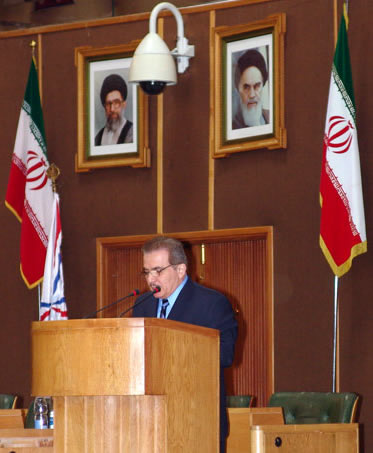



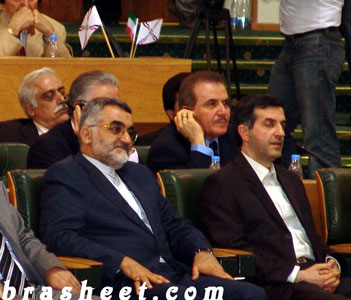
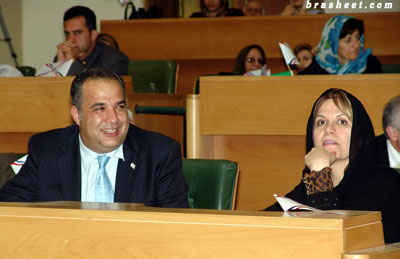
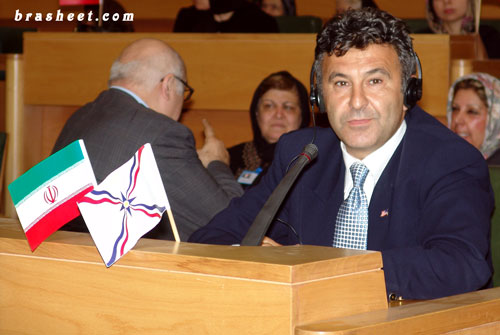


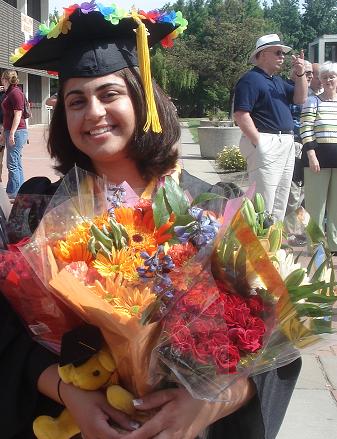 Jennifer is enrolled in the Multiple Subject Credential Program at CSU Stanislaus.




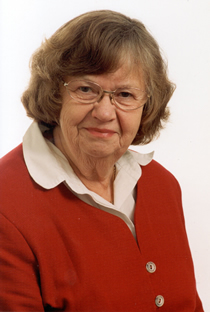
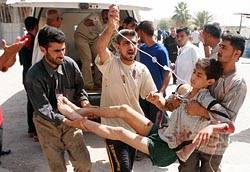

 IWPR reporter Sahar al-Haideri was murdered in Mosul in June 2007.