7 Khzeeran 6755
Volume XI

Issue 30

28 May 2005

ZINDA MAGAZINE

Office  202-349-1429         zcrew@zindamagazine.com           Fax 1-415-358-4778
1700 Pennsylvania Avenue. , NW     Suite 400     Washington, DC  20006  U.S.A.

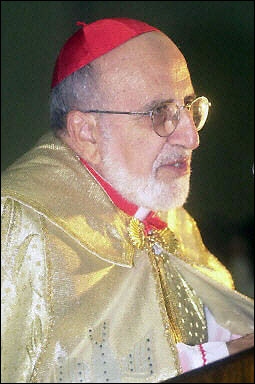
Mar Emmanuel Delly
Arrives in the U.S.

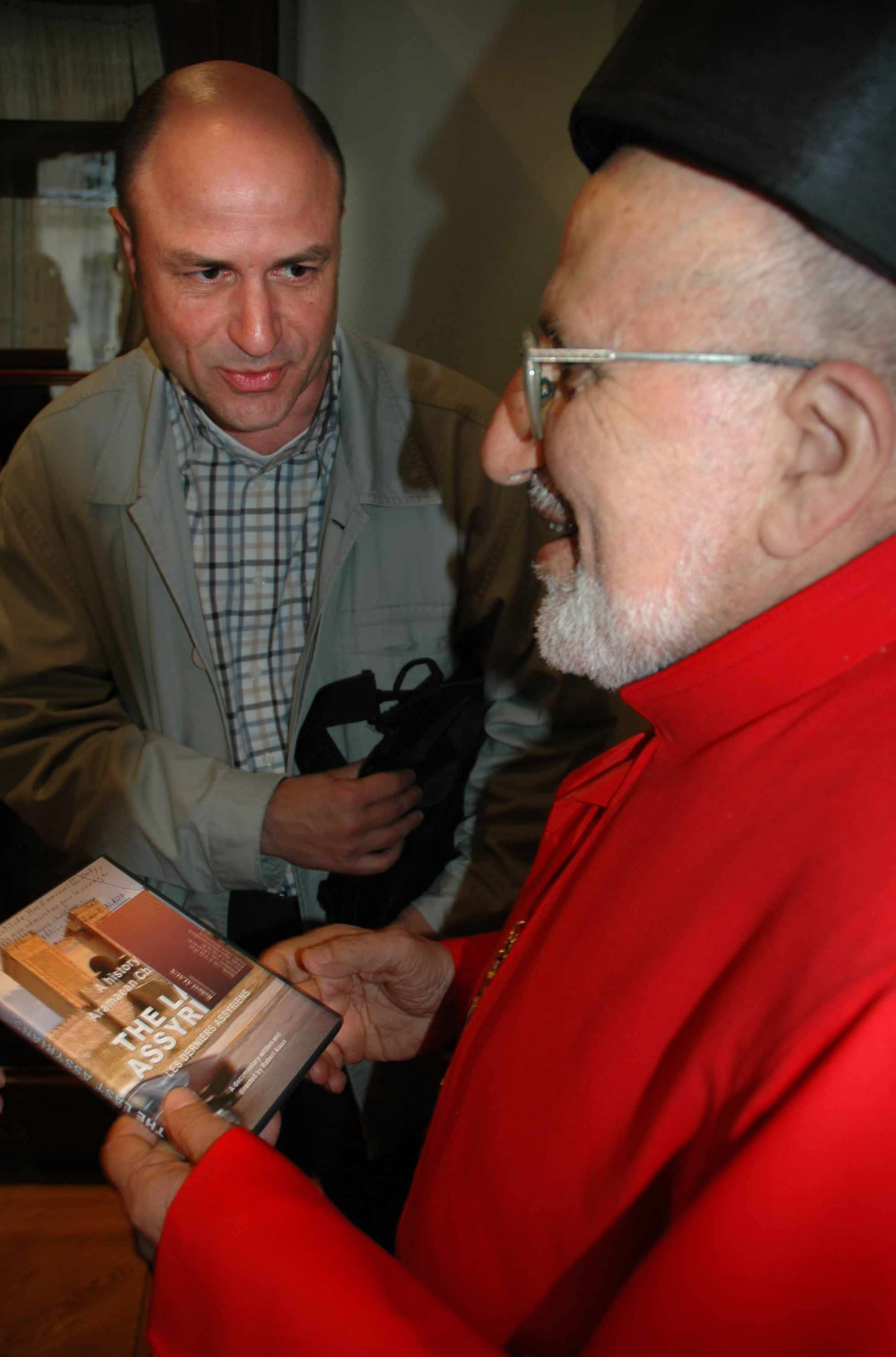
His Beatitude, shown here with Mr. Robert Alaux, receiving a copy of the French director's film "The Last Assyrians" is visiting the U.S. Chaldean parishes until mid-June.


This Week in Zinda

The Lighthouse
  Freedom and Iraq’s Political Transition:  Perm. Constitution U.S. Commission on International Religious Freedom
Good Morning Assyria
  U.S. Investigating Fate of Chicago Assyrian Missing in Iraq
Australia's Parliament Endorses Petition
Fleeing Iraqi Christians on Road to Damascus
Virgin Mary Church Opens Doors After 25 Years in Turkey
Assyrian Youth Society Organizes Election Campaigns
Solace for U.S. Soldiers in a Mosul Monastery
U.S. Soldiers Find Faith in the Face of Fire
Register for Zinda Notifications
Enter Your Email Address
& Click 'Sign up'

News Digest
  Mar Emmanuel Delly in the U.S.
UC Berkeley Students Display Assyrian Pride at Cal Day
Assyrian Youth Charged with Murder in Australia
Surfs Up!
 

Sargon Dadesho: For Better or Worse
The Saga of Sargon Dadesho: The Story of Patriots...
IRI:  Most Iraqis Want Assembly Seats for Minority Groups
Mar Delly, Be Fair!
Chicago Suntimes Stands Corrected!
Linda George's New Music


AAASC Students Kick Off Meeting
The First Family Conference of Malankara Church in Europe

Literatus
  ADO Speech at Deir-Azzor, Syria
Deir-Azzor Declaration
Constructive Co-Working vs. Criticism
Saddam Hussein's Rights?
Judaism's Worst Enemy is Within!
ADO- Syria
Bachir Saadi
The Christian Post
Rev. Ken Joseph Jr.
David Gavary
Columnist Corner
  Samuel Shimon's "An Iraqi in Paris" Ivan Kakovitch
Bravo
  Samuel Shimon's "An Iraqi in Paris" Kaelen Wilson-Goldie
Anna Battista
Fadhil al-Azzawi
Back to the Top

The Lighthouse
Feature Article


Freedom and Iraq’s Political Transition:
The Permanent Constitution

From the Annual Report of the United States Commission on International Religious Freedom

May 2005

U.S. Commission on International Religious Freedom
Washington, DC


From the TAL to Elections

Developing a robust understanding of freedom of religion or belief is particularly important in Iraq, a country with diverse and complex religious and ethnic identities. During the months before the adoption of the TAL, the Commission persistently engaged senior Administration officials, Members of Congress, and others on the need for the interim constitution to ensure explicit guarantees of the right to freedom of religion or belief for each individual, fully consistent with international standards. Following weeks of intensive negotiations between the Coalition Provision Authority and the Iraqi Governing Council, the
final TAL as adopted in March 2004 codified these principles, signaling an important step for the Iraqi people, and a clear break away from the egregious violations of religious freedom committed by Saddam Hussein’s regime. While the TAL holds the potential to serve as a model for the human rights provisions in Iraq’s permanent constitution, the commission has expressed concern that language in the TAL requiring that legislation not be contrary to the “universally agreed upon tenets of Islam” may be used by judges to abridge the internationally recognized human rights of political and social reformers, including those voicing criticism of abusive government policies.

Although the TAL enshrines human rights, including the right to freedom of religion or belief, for every Iraqi, continuing developments on the ground underscore the urgent need to further safeguard these rights in the country’s permanent constitution. Throughout the past year, a number of religiously motivated attacks specifically targeted Iraq’s religious communities:

  • Insurgents repeatedly bombed Shi’a mosques and targeted Sunni and Shi’a clerics for
    assassination. The largest such coordinated attack to date occurred in March 2004, resulting
    in the deaths of over 200 Shi’a pilgrims attending religious festivals in Karbala and Baghdad.
  • Insurgents launched simultaneous bombing campaigns against churches belonging to the
    indigenous Christian minority community, and bombed or otherwise closed down Christian-owned
    businesses.

The escalation of religious terror has had a particularly devastating effect on Iraq’s non- Muslim minorities, including the ChaldoAssyrians,[1] Mandaeans, and Yezidis. This has caused a push from some leaders of the ChaldoAssyrian community to establish a separate governorate in the Nineveh Province. In addition, the kidnapping epidemic in Iraq has disproportionately targeted Iraqi Christians. According to the Department of State, more than 30,000 Christian
families fled Iraq during the year,[2] raising concern about the very survival of these ancient communities.

In the Commission’s view, this string of violent attacks represents a concerted effort to instigate an inter-religious conflict among Muslims and between the Muslim and Christian communities in Iraq. In an August 2004 letter to U.S. Ambassador to Iraq John D. Negroponte, the Commission—while noting that many leading Muslim clerics and political leaders, including
Grand Ayatollah Ali al-Sistani, vociferously condemned the attacks against Iraq’s Christian minority—urged the Ambassador to encourage leaders of the Iraqi Interim Government to take a clear and public stand in affirmation of the TAL’s provisions on freedom of religion or belief.

According to the Commission’s letter, “The TAL provides a common touchstone for all Iraqis to uphold religious tolerance and coexistence; its public reaffirmation by the Interim Government would serve a stabilizing function and lend Iraqis committed to building a democratic society the confidence they need to bring this vision closer to reality.”

In addition to the threat posed by the insurgency, Iraqis also are being forced to contend with the unlawful imposition of Islamic laws and principles by grassroots vigilante groups, as well as the operation of extra-judicial Islamic courts that seek to impose an extremist version of Islamic law on all Iraqis, regardless of their beliefs. According to the Department of State 2004 Country Report on Human Rights Practices, “There were numerous incidents of violence against the Christian community…ranging from individual killings to intimidation and assaults on women for not wearing a headscarf (hijab).”[3]

Media sources have further reported several cases where personal choices are being imposed forcibly based on a particular interpretation of Islam.

Some of these cases include university campuses imposing separate entrances, classrooms, and campuses for women; barbershops being forcibly shut down for offering to shave beards or provide modern haircuts; and teachers and schoolchildren being threatened with beheading if they observed the Interim Government’s decision to extend the Friday weekend to include Saturday, a day associated by Islamic militants with the Jewish day of rest.

During this period, the Commission received reports that reconstruction funds from the United States earmarked for the governorate level were not reaching ChaldoAssyrian villages.

Given the lack of input by ChaldoAssyrian civic administrators and other appropriate bodies into the use of reconstruction funds, Christian communities have been uniquely unable to rebuild basic infrastructure in their villages, including water and electrical systems, school facilities, and housing.

In the face of these alarming and unlawful activities, the Commission, in a December 2004 letter to President George W. Bush, pointed to the fact that “Without the right to religious freedom, guaranteed in law and observed in fact, Iraqi non-Muslim minorities will be persecuted and driven out, and Iraqi Muslims, particularly women and dissident reformers, will be stifled
and suppressed.” Additionally, the Commission expressed its concern that the continuing exodus of Iraq’s indigenous Christian minority “would signal the demise of one of the world’s historic religious communities and also would diminish the country’s prospects for political and economic development,” noting that the “ChaldoAssyrians are an educated and skilled
community, who strongly support the formation in Iraq of a liberal democracy that protects the human rights of every individual.” In conclusion, the Commission stated that continuing religiously-motivated assaults on all faiths constituted “an egregious denial of fundamental human rights, and threatened the stability of a unified Iraqi state, as well as the ultimate success of U.S. policy objectives in the region.” In February 2005, the Commission met privately with President Bush to discuss firsthand its concerns and policy recommendations regarding the need to protect freedom of religion or belief for all Iraqis.

Efforts to Promote Freedom of Religion or Belief in Iraq’s Permanent Constitution Developments in Iraq underscore the critical need to ensure that the right of every Iraqi to freedom of religion or belief, regardless of religious affiliation, is guaranteed in the country’s permanent constitution. Throughout the past year, the Commission has continued to engage Administration officials, non-governmental organizations, and legal experts to ensure that this priority is understood and advanced at all levels. It should be noted that this effort does not reflect a desire to impose American values on the Iraqi people, since this right is recognized and entrenched in international law and moreover, is similarly provided for in several other constitutions in the Muslim and Arab world.

Predominantly Muslim countries classified by constitutional role for religion; either declared self as Islamic states, or declared Islam as the state religion, or declared themselves as a secular state, and finally have made no constitutional declaration.

Accordingly, at this critical juncture, the United States should not take a hands-off policy approach to Iraq’s permanent constitution. Rather, universal human rights standards should continually be invoked as a basis for dialogue and engagement with Iraqis, as a fundamental aspect of any constitution-related assistance programs, and finally, as a yardstick for measuring the success of Iraq’s constitutional process. Significantly, this message recently has been reflected in the statements of top U.S. officials. In March 2005, Secretary of State Condoleezza Rice publicly affirmed that “In places where religion has been used to separate people—places like Lebanon or places like Iraq—it is especially important that…the constitution recognize that the right to individual conscience is the key to democracy. Because people will never be truly
free if this most personal of decisions is imposed upon them.”[4]

The need for effective guarantees in the permanent constitution of the right of every person to freedom of thought, conscience, and religion or belief is not merely a theoretical concern, but the sine qua non of genuine democracy and peace. These guarantees protect those who question prevailing orthodoxies and seek to debate key issues facing their societies,
especially where law, politics, and religion intersect. These guarantees further protect those working through democratic means to promote respect for the human rights of their fellow citizens, and also help to inhibit those who would use religion as a weapon to obtain and hold power through undemocratic means, such as by stifling debate, impinging the efforts of political moderates and reformers, jailing opponents, and sowing fear.

Undoubtedly, the incorporation of individual human rights guarantees in Iraq’s permanent constitution, and especially the right to freedom of religion or belief, is critical. Such guarantees can serve to:

  • Protect against the doctrine of intolerance espoused by leaders of the ongoing insurgency and by elements within Iraqi society.
  • Promote stability among Iraq’s major ethnic and religious communities by ensuring that no single community’s interpretation of religion will be enforced on others, and that interference in religious affairs will not be used as a means of repression, decisively breaking with the past practice of Saddam Hussein’s regime.
  • Promote stability within Iraq’s internal political and social structures by providing open space for discussion and dissent within and among members of Iraq’s religious communities. Upholding freedom of religion in line with international standards will enable every individual to determine independently his or her relationship with religion, not only concerning worship and practice, but also debate and dissent. This right would extend to members of Iraq’s religious minorities, such as the ChaldoAssyrians, as well as to other Iraqis, including individual Sunni and Shi’a Muslims, who espouse views that may differ from the mainstream.
  • Promote moderation in Iraq’s legal regime. A constitution that enshrines freedom of religion or belief and associated human rights represents the foundation to a judicial system capable of counterbalancing potentially discriminatory legislation.
  • Promote stability in the region by reducing tension among the ethnic and religious communities which span Iraq’s borders, and by establishing a model of governance that affirms the ability of various religious and ethnic communities to live side by side peacefully within a democratic framework that respects universal human rights. The success of such a model also represents a stated objective of U.S. foreign policy. As President Bush observed in his 2005 State of the Union address: “victory of freedom in Iraq will…inspire democratic reformers from Damascus to Tehran, [and] bring more hope and progress to a troubled region.[5]

Commission Actions

In addition to meetings with the President and senior U.S. officials, the Commission has worked to develop and publish information useful to policymakers, experts, and others involved in Iraq’s constitutional process. In March 2005, the Commission released a comparative survey of the constitutions of predominantly Muslim countries, examining provisions relating to the role of Islam and guarantees of religious freedom and related human rights. This 100-page document, entitled The Religion-State Relationship and the Right to Freedom of Religion or Belief: A Comparative Textual Analysis of the Constitutions of Predominantly Muslim Countries, sets out the international human rights standards associated with freedom of thought, conscience, and religion or belief alongside the relevant constitutional provisions of 44 Muslim countries.

The survey found that no single model exists in Muslim countries, which range from declared Islamic states to declared secular states. Moreover, several countries examined, including those where Islam is the declared religion of the state, have constitutional provisions that favorably reflect a state’s international human rights obligations.[6]

To be certain, actual implementation of any constitutional provision is dependent on a number of diverse factors, including level of state control, system of government, independence of the judiciary, individual access to the courts, and enforcement of judicial remedies.

Constitutional text alone may not necessarily reflect what is done in practice, especially with regard to human rights. That said, a constitution remains important as an aspirational document and a statement of national principles. It can also provide the foundation for political, social, and legal reconstruction. Even if not fully implemented, constitutional text remains fixed as
fundamental law, and its guarantees and protections can be invoked by those seeking to protect human rights in the future.
The Commission’s comparative constitution survey serves a dual purpose. In the first instance, it is a valuable tool for policymakers to understand the constitutional landscape of the Muslim world with regard to the role of Islam and guarantees for freedom of religion and belief and other associated rights, by providing models of constitutional text that reflect international standards. The survey also has begun to serve as the basis for dialogue with Iraqis engaged in the unfolding constitutional process. At a March 2005 working session on the constitutional process convened in Jordan under the auspices of the American Bar Association’s Iraq Legal Development Program, Commission Chair Preeta D. Bansal briefed Iraqi civil society leaders on the survey’s findings. The ensuing discussion demonstrated a range of opinions concerning
issues related to freedom of religion, a willingness to explore questions in an open and frank manner, and significantly, a desire for more detailed comparative information. Accordingly, it is expected that the constitutional survey will be translated into Arabic. The Commission is also exploring additional opportunities to engage Iraqis, including members of the expected
constitutional drafting committee, with relevant information on international standards related to freedom of religion or belief and the constitutional experiences of other Muslim countries.

Commission Recommendations

Concerning the Permanent Constitution

In light of the current situation in Iraq, the Commission recommends that the U.S. government:

- direct all U.S. efforts to encourage the inclusion of human rights guarantees in the permanent constitution that are consistent with the obligations set forth in international instruments to which Iraq is a party, including the Universal Declaration on Human Rights (UDHR) and the International Covenant on Civil and Political Rights (ICCPR); Iraq’s permanent constitution should include explicit guarantees that:

  1. everyone has the right to freedom of thought, conscience, and religion,” as affirmed in article 18 of the UDHR and specified in article 18 of the ICCPR;
  2. coercion in all matters related to religion shall be prohibited, and no Iraqi shall be detained or arrested because of his or her religious beliefs;
  3. prohibit discrimination and protect the fundamental rights and freedoms of every Iraqi, regardless of religion or belief, without which the human rights of individuals, whether women or disfavored or non-conformist Muslims, will be at risk;
  4. Iraq shall abide by the international human rights treaties, conventions, and instruments to which it is a party, such as the ICCPR and the UDHR;
  5. the principles of democracy, pluralism, social justice, rule of law, and Iraq’s international
    obligations are fundamental sources of legislation;
  6. every woman and member of a religious minority shall have equal rights with every Iraqi
    citizen, shall have equal protection of the law, and shall be equal before the law; and
  7. no law shall be contrary to the rights expressed in the permanent constitution.

Guarantees of this kind form the basis of minimum human rights protections recognized under international law, and are found in the constitutions of other predominantly Muslim countries, as well as in Iraq’s TAL.

In addition, the Commission recommends that the U.S. government:

- urge Iraq’s transitional government and national assembly to include underrepresented religious minorities, i.e. Christians and Sunnis, in the constitutional drafting body;

- call on the United Nations and other allies to support actively and publicly the incorporation of individual human rights in line with international standards in Iraq’s permanent constitution;

- appoint a high-level U.S. human rights envoy to Iraq, reporting directly to the U.S. ambassador, to encourage the incorporation of human rights principles in Iraq’s permanent constitution, to serve as the point of contact for Iraqi human rights institutions and assist these institutions in consolidating their roles within the emerging political structure, to
facilitate access to American expertise and other assistance supporting Iraq’s effort to confront human rights challenges, and to advance human rights through U.S. reconstruction programs in Iraq; and

- fund workshops and training sessions on religion/state issues for Iraqi officials, policymakers, legal professionals, representatives of non-governmental organizations, religious leaders, and other members of key sectors of society who will have input on the permanent constitution.

Concerning Reconstruction Efforts

With regard to reconstruction efforts in Iraq, the Commission recommends that the U.S. government:

- promote and prioritize, in all reconstruction programs for Iraq and in contacts with Iraqis, coalition partners, and other potential donors including the United Nations, an Iraqi political system that respects freedom of religion and belief, endorses equality for women, and guarantees the universal human rights of all Iraqis, including members of religious minorities
and individual women;

- ensure that U.S. funding and other forms of support are not going to Iraqi political parties
and other organizations that advocate or condone policies at odds with recognized international human rights norms;

- publicly express at the highest level support for political parties and other Iraqi groups that demonstrate a genuine commitment to international human rights, including freedom of religion, and give clear directives to American officials and recipients of U.S. democracy building grants to assign priority to projects that seek to encourage the inclusion of effective
human rights guarantees for every Iraqi in the permanent constitution, in addition to projects that promote multi-religious and multi-ethnic efforts to meet human needs, religious tolerance and understanding, knowledge among Iraqis about international human rights standards, and discussion of values central to good governance and democracy [7]

- declare a proportional allocation of funds for ChaldoAssyrian communities, ensure that the use of these funds are determined by independent ChaldoAssyrian national and town representatives, and establish direct lines of input by such independent ChaldoAssyrian structures into the allocation process of the Iraqi central government in Baghdad, separate from the Kurdish Regional Government;

- support efforts to establish official Iraqi institutions, including the national human rights commission provided for in the TAL, that meet international standards and have the resources and mandates necessary to monitor, investigate, and take action to remedy human rights abuses, and that encourage Iraq’s judicial and human rights institutions to operate in accordance with international standards; and

- establish an Iraqi visitors program through the State Department to focus on exchange and education opportunities in the United States related to freedom of religion and religious tolerance.

Concerning Ongoing Abuses of Freedom of Religion

With regard to ongoing religious freedom abuses, the Commission recommends that the U.S. government:

- publicly condemn attacks having a religious character or motivation and encourage the
transitional government to capture and prosecute responsible parties;

- speak out at the highest level against violence against women and unlawful efforts to impose
extrajudicial religious and/or traditional law in violation of international human rights
standards;

- in cooperation with Iraqi law enforcement, prioritize locating and shutting down extrajudicial
courts unlawfully imposing an extremist version of Islamic law; and

- raise with the regional Kurdish authorities the issue of reports that ChaldoAssyrian property
is being expropriated and seek assurances that there will be no official discrimination
practiced against this or other minority communities.


References

  1. The term “ChaldoAssyrian” is used in the TAL, and refers to the indigenous Assyrian, Chaldean, and Syriac people of Iraq.
  2. U.S. Department of State, 2004 Country Reports on Human Rights Practices (http://www.state.gov/g/drl/rls/hrrpt/2004/41722.htm, accessed April 14, 2005).
  3. Ibid.
  4. Secretary of State Condoleezza Rice, “Remarks at Sophia University,” Tokyo, Japan, March 19, 2005.
  5. President George W. Bush, State of the Union, February 2, 2005.
  6. The study, in its entirety, is available on the Commission’s web site.
  7. The State Department’s current “Human Rights and Democratization Initiatives in Iraq” Request for Grant Proposals fails to prioritize proposals that promote the inclusion of international human rights standards or a bill of rights in the permanent constitution, or proposals that promote knowledge among Iraqis about international human rights standards.


Back to the Top

Good Morning Assyria
News From the Homeland


U.S. Investigating Fate of Chicago Assyrian Missing in Iraq

Courtesy of the Chicago Tribune
26 May 2005
By Sean D. Hamill & Jamie Francisco

(ZNDA: Chicago)  More than a week after an Iraqi-American businessman from Skokie (suburb of Chicago) disappeared in Baghdad, the U.S. State Department is still trying to find out whether he was executed or taken hostage, an official said Wednesday.

Neenus Y. Khoshaba, 56, an American citizen, was reported missing in Baghdad on May 17 after he left for what was described as a business meeting that may have been a trap, family members said.
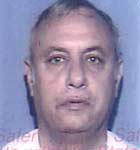
Mr. Neenus Khoshaba is still missing in Iraq after he was kidnapped on 17 May.

Iraq's al-Qaida frontman Abu Musab al-Zarqawi claimed his group executed an American pilot, but personal ID posted on the Internet indicates the terrorists may have mistaken a frequent-flier card for a flying license, according to an intelligence analyst.

The statement on the jihadi site, posted along with photos of the personal documents, showed the purported victim, Neenus Y. Khoshaba, is a U.S. national born in 1948, said Laura Mansfield of the Northeast Intelligence Network.

The terrorists' statement said: "Your brothers in al-Qaida in the Land of Two Rivers got their hands on a U.S. pilot who turned out to have bombarded several mosques and the Sheraton Hotel in Baghdad during the invasion of Iraq, as well as several civilian homes."

The identity cards shown were an Illinois driver's license, a health insurance card, a frequent-guest card for a hotel chain and a membership card for the Executive Club of British Airways, a frequent-flier program.

"Apparently the jihadis interpreted the frequent-flier card and the British Airways Club card as evidence that the hostage was a pilot," said Mansfield.

The Baghdad Bazaar website describes Khoshaba's company as "active in Wood Household Furniture, Upholstered; Hardwood Veneer And Plywood."

A high-ranking official with Iraq's Assyrian Democratic Movement told Agence France-Presse that Khoshaba is a U.S.-Iraqi businessman from an Assyrian family who was kidnapped last Wednesday.

"I can't confirm his death but I can identify the hostage," the official told AFP, speaking on condition of anonymity.

The official said Khoshaba was based in Chicago and moved back to Iraq in 2003.

"He was apparently tricked by a group of people posing as representatives from the oil ministry, who told him that they were looking for someone with a dual nationality and had business opportunities to offer him," the official said. "There had been no word from him since."

"The thing is we keep seeing a whole bunch of different reports that claim that he was killed, and other reports from other news media that he was being held hostage," said Steve Pike, a spokesman for the State Department in Washington. "But it's all very vague."

Officials have been unable to confirm the authenticity of a report posted on the Internet by a group claiming it kidnapped and executed Khoshaba for being a U.S. military pilot who helped bomb mosques and a Baghdad hotel. The group reportedly said it was Al Qaeda.

The State Department is working with Iraqi officials and with Khoshaba's family to find out what happened to the computer engineer, Pike said.

"He's not military," said Aladin Khamis, who spoke on behalf of a Chicago family describing themselves as third cousins of Khoshaba. "There's no way he would fly a plane."

Khamis said that Khoshaba, 56, actually was a consultant in the construction industry in Saudi Arabia who often traveled between there and the United States.

Khamis, who is president of the Assyrian American National Federation Inc., said he does not know if Khoshaba is alive.

At a gathering in a home on the 6400 block of North Artesian Avenue, Khamis said he got a phone call a week ago that Khoshaba had been kidnapped.

Khoshaba's brother-in-law, Calvin Albazi, said Khoshaba "went to a business meeting and never came back."

Khoshaba, who spent most of the last 20 years working in Saudi Arabia, still considered the Chicago area his home, relatives said.

Alexander Abraham, 69, a first cousin from Glenview, held out hope that the report of Khoshaba's death was false.

Abraham said that a group claiming to have kidnapped Khoshaba contacted Khoshaba's brother in Baghdad three times in the last week. "The group ... has not specified what they want," Abraham said.

There has been a rash of kidnappings in Iraq in the last year, sometimes for political reasons, but also for ransom.

Abraham said Khoshaba's brother also told him that two men Khoshaba was with the day he disappeared also are missing. One was a Muslim business partner, the other the brother of the Assyrian Christian bishop from Kirkuk, Abraham said.

The office of U.S. Rep. Jan Schakowsky (D-Ill.) has asked the State Department to investigate, according to a statement. Khoshaba's family are also Christian Assyrians, a religious minority in Iraq.

Khoshaba immigrated to the United States from Iraq when he was 18 and got a degree in computer engineering, relatives said.

His wife, Moona, to whom he was married for 21 years, was a Chicago native who died of leukemia two years ago.

Though he considered the Chicago area his home, Khoshaba has worked for a string of Saudi Arabian engineering companies for the last 20 years, relatives said. His wife was a successful interior designer in Saudi Arabia.

They would both spend most of each year in Saudi Arabia but return to Chicago for several months in the summer, where the sociable couple frequented Rush Street restaurants. Khoshaba liked a good cigar and following the Cubs and Bears.

When the Iraq war ended and the rebuilding began, he was a natural to help with the vast amount of engineering work that needed to be done, his relatives said, because he grew up in Baghdad and spoke both English and Arabic fluently, as well as Assyrian. He was staying with his older brother, Bolus, and their mother in Baghdad, but his family had expressed concern about him coming to work in the city because he was an American now.

"They didn't want him to be there because it is dangerous," said Calvin Albazi's brother, Martin, 51, also of Skokie. "But when you're Americanized, you think it won't happen to you."

Australia's Parliament Endorses Petition for Assyrian Administrative Area in Iraq

(ZNDA: Sydney)  On Monday, 23 May, Mr. Chris Bowen, a Labor party member in the Australian parliament moved a motion before the House of Representatives, circulated by the Australian Chapter of the Assyrian Universal Alliance.  The petition calls on the Australian government to urge the Iraqi government to create a "‘protected administrative area for the Assyrians‘.
Mr. Chris Bowen MP lodged this petition on Monday 14 March 2005 in the Federal Parliament of Australia. The petition was read as follows:

"The petition of certain citizens of Australia draws to the attention of the House: The need to develop an Australian foreign policy that calls on the Iraqi government to designate a geographic ‘Protected Administrative Area’ for the Christian Assyrians, Chaldeans, Syriacs and Mandeans in Iraq, in line with Article 53d of the Iraqi government’s Transitional Administrative law.

Your petitioners therefore ask that the House review the Australian Government’s policy in relation to Iraq and make a statement encouraging the Iraqi government to establish a ‘Protected Administrative Area’ for Christian Assyrians, Chaldeans, Syriacs and Mandeans.“

Immediately after the reading of the petition the following statement was released by the AUA to the offices of Zinda Magazine:

On behalf of the Assyrian Universal Alliance (AUA) we are pleased to announce that after a strong lobby which this chapter conducted with more than 15 Ministers and Senators of the governing Australian Liberal members with help from dedicated Assyrians Mr Poul Azzo and Mr Zaya Tooma, the Monday 23 May 2005 motion was successfully seconded and endorsed by the six speakers of the house. The whole debate lasted about 30 minutes. An audio CD will be available shortly for Assyrian political Organizations wish’s to view and keep for records.

A delegation representing the Assyrian Australian National Federation, the Assyrian Universal Alliance, and other prominent Assyrians were at the house during the debate. The delegation visited Mr. Chris Bowen, MP, in his Parliament office, to congratulate and thank him for his stand in defending the Human Rights of the Assyrian people of Iraq. The delegation also met with Ms Maria Vamvakinou, MP, Australian Labor Party in Victoria, representing the Assyrian community in her electorate of Calwell in Melbourne, who seconded the motion and spoke in its support, and with Mr. Kevin Rudd, MP, Shadow Minister for Foreign Affairs & International Security. The Assyrian delegation also had an opportunity to meet for 10 minutes with The Hon Kim Beazley, MP, Leader of the Opposition in Parliament, and with many other Senators.

Mr. Hemiz Shahen, AUA Secretary in Australia told Zinda Magazine:  "The next stage will be harder and will require much more effort toward implementing this motion and the suggestions that were raised from both the Labor MP’s and the Government representative.

The office of Mr. Chris Bowen M.P., Federal Member for Prospect, also released the following statement on 24 May:

MPs Join Chorus For End to Violence Against the Forgotten People of Iraq

Yesterday, the Federal Parliament heard of the plight of Iraqi’s ethnic minorities in Post-Hussein Iraq and the need for the international community and the Australian Government to act so as to avoid another humanitarian crisis.

Federal Member for Prospect, Chris Bowen moved a private members motion urging the Federal Government to make urgent representations to the Iraqi Government, concerning the plight of some of their ethnic, Christian minorities.

“There is another dimension to the unfolding Iraqi story which has received little attention,” said Mr Bowen during the debate.

“It is a story which has the potential to erupt into renewed violence and develop into a humanitarian crisis of the first order.

“It is the story of Iraq’s other minorities: the Assyrians, Chaldeans, Mandaeans and Syriacs.

“The challenge now for the Minister for Foreign Affairs and the Government is to build on the spirit of bipartisanship that was evident during the debate,” said Mr Bowen at the conclusion of the debate.

Government and Opposition Members supported Mr Bowen’s motion.

The Federal Government needs to make direct representations to the newly elected Iraqi Government to ensure their ethnic minorities are:

• constitutionally guaranteed the right to freely exercise their customs, religion, language and traditions;

• given the same protection by law enforcement and international security forces as other ethnic groups; and

• entitled to proper representation and participation in all levels of government.

“Anyone who believes that people should be able to follow the religion of their choice without fear of persecution has every reason to fear recent developments in Iraq.”

Today’s parliamentary debate comes on the back of numerous public statements and speeches by Chris, including the tabling of a petition by Chris in the Parliament with over 2,000 signatures, as well as an intensive lobbying effort by the Australian-Assyrian community.

Who Says A Website Can't Be Judged By its Cover?
JUNE 15
The ALL NEW ZINDA MAGAZINE


Fleeing Iraqi Christians on Road to Damascus

Courtesy of the St. Petersburg Times
23 May 2005
By Susan Taylor Martin

(ZNDA: Damascus)  When President Bush, a born-again Christian, launched the 2003 war against Iraq, he probably didn't expect one result - that Iraq, once a secular nation, would become especially dangerous for Christians.

Islamic extremists have bombed churches. They have burned liquor stores and killed their Christian owners. They harass Christian women who don't shroud themselves in black.

The president probably didn't expect another result - that Iraqi Christians would find refuge in Syria, a country that he often criticizes but that has a strong record of religious tolerance. In the past two years, Syria has taken in as many as 20,000 Christians fleeing violence and persecution in their native land.

Among them: Sabah Guryal.

"Christians in Iraq paid twice after coalition forces entered," says Guryal, until recently an executive of the Middle East Council of Churches in the northern city of Mosul.

"First, the Iraqi Muslims accused the Christians of supporting the coalition because we are Christians like the American soldiers. This is why they insult us, because we are "unbelievers.' And we pay the second time because the American forces consider us all Arabs, not Christians."
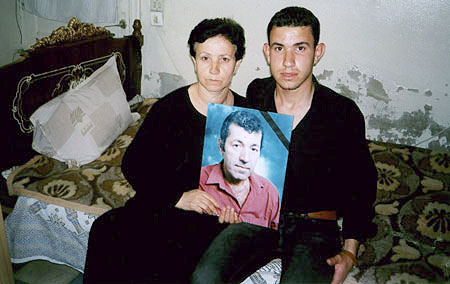
Iraqi Christians Jalila and son Rami hold a photo of Jalila's husband, Najeeb, victim of a gunman. She considers Syria a way station to the West.  Photo by Susan Taylor Martin.

Anonymous callers warned Guryal to stop working for the council or he would be killed. His 22-year-old son, an interpreter for coalition troops, twice escaped kidnapping by men with guns.

"There are hundreds of stories like this," Guryal says. "Hundreds of families have been threatened."

By last summer, he had enough. With nothing but their clothes, he, his wife and their four children took a taxi to Damascus, where they share two rooms in a modest area of the city that has become home to many other Iraqi Christians. Left behind: A car. A spacious house. A lifetime of achievement.

"We leave everything," Guryal says, "just to be alive."

Christians from Iraq have gone to other countries, but most choose Syria because of cultural similarities and ease of entry.

Unique in the region, Syria allows any citizen of an Arab nation to enter for up to six months without a visa. President Bush says this "porous" border makes it easy for insurgents to cross into Iraq from Syria, but it also makes it possible for Christians to flee the dangers that have swept their country since the United States occupied it.

"From the time of independence in 1946, Syria has always opened its doors for every refugee who comes - Armenians, Palestinians, Sudanese and now Iraqis," says Archbishop Isidore Battikha, patriarch of the Greek Catholic Church in Damascus.

"They are all welcome in Syria, and the government asks us to help them - we open our churches, our meeting rooms, our schools, and help by money or finding money."

Christians also feel more comfortable in Syria than in Iraq's other neighbors, the overwhelmingly Muslim countries of Jordan, Iran, Turkey, Kuwait and especially Saudi Arabia. There, "religious freedom does not exist," the U.S. State Department says.

By contrast, about 10 percent of Syria's 18-million people are Christians, who worship freely in an atmosphere rich in history and tolerance.

It was on the road to Damascus that St. Paul converted after his vision of Christ. It was in Syria that disciples were first called Christians. And it was here on a recent Sunday morning, not far from the magnificent Omayyad Mosque, that hundreds prayed for their new pope, Benedict XVI, under the soaring stone arches of a Greek Catholic church.

"Christians and Muslims have lived in this country for 1,500 years," says Father Toufic Eid. "Relations are very good in that people are used to living together."

As tourism grows, Syria proudly notes its wealth of Christian shrines, including St. Serge Church, site of the world's oldest altar in continuous use (more than 1,000 years); and St. Teckla's Monastery, named for one of the earliest saints. Both are in predominantly Christian villages in the mountains north of Damascus, where 18,000 people still speak Aramaic, the language of Jesus.

"We did not realize there were so many Christian places here," says Jamila, an engineer from Mosul who was visiting St. Teckla's grave, in a rocky grotto high on a mountainside.

She and her sister, an engineer, have remained in Iraq only because of their jobs. Last year, their brother Abdel, manager of a TV station, moved his family to Damascus after several churches were bombed in Mosul and Baghdad.

"Iraq is dangerous for Christians," says Abdel, who did not want his last name used because he fears for his relatives there. "Here, there is security and freedom."

Syria's constitution requires a Muslim to be president, but the ruling Baath Party was founded by a Christian who believed in secular government. Christians also benefit from the fact that Syria's most recent leaders, members of the minority Alawite sect, have embraced other minorities as a way of strengthening their power.

A similar situation existed in Iraq, where the Baath Party ruled until 2003. As a Baathist and a member of the Sunni minority, Saddam Hussein had a secular government that included Christians - among his best-known advisers was the Christian deputy prime minister, Tariq Aziz.

Like all Iraqis, the million or so Christians suffered under Hussein's tyrannical rule. They were forced to give their children Arab names. Spies attended church to see if priests were sermonizing against the regime. But Christians were generally tolerated and allowed to worship freely.

That changed after the invasion as the insurgency flared and Islamic fundamentalism grew stronger. Once unthinkable events became routine. A bishop in Mosul was held two days before his church paid a $40,000 ransom. A Christian woman had to disguise herself in black cloak and veil so she could safely flee the country after kidnappers killed her husband.

Iraq now has a democratic government, but Christians often feel like outcasts. The Kurds - America's closest Iraqi allies - are denying jobs to Christians unless they join a Kurdish party, according to Father Arkan Yako.

An Assyrian Christian, Yako recently gave an interview on CNN in which he complained that even under current Iraqi law, the sons of Christian women married to Muslim men automatically become Muslims themselves. His comments led to death threats that prompted Yako to temporarily leave Iraq; he is now in Damascus.

"We are third- or fourth-class citizens in our own country," he says.

Life in Syria is by no means idyllic for Iraq's self-exiled Christians. This is a poor nation with high unemployment. As "visitors," the Iraqis are not legally allowed to work here, though some find jobs in the underground economy as laborers and shop clerks.

Jalila, a small woman in black whose face looks forever drained of happiness, is one of many Iraqi Christians who regard Syria as a way station, hoping they can one day move to a country in the West.

Shortly after U.S. forces entered Baghdad in April 2003, Jalila's husband, a salesman, was killed by an unknown gunman. Two weeks ago, her brother was struck in the heart when he got caught in a crossfire between insurgents and soldiers.

Jalila blames both deaths on terrorists, not the Americans. She has adult children in many places - California, Turkey and Holland - and has applied for visas for her and her 19-year-old son to move to Australia.

Never again will she live in Iraq: "I'd like to go to any country, just as long as it's outside our country."

Iraq is not the only area of the Middle East where the Christian population is dwindling. Thousands left Bethlehem, the birthplace of Christ, during years of violence between Israelis and Palestinians. Tens of thousands more fled Lebanon during its 15-year civil war.

Battikha, the Greek Catholic archbishop, says Christians are increasingly divided about their future in this troubled part of the world.

Some feel that "God put us here; this is our land, and we have to continue our mission. Others feel they have only one time to live, so why lose their lives living with problems. They prefer to go where there is more dignity, more peace, more freedom, more opportunities."

Battikha understands the latter view but is saddened by the number of Iraqi Christians in Syria who want to move on. After 15 years in Rome, he realized that he felt happiest here, in the land of his birth.

Rome "didn't offer the kind of warm relationships between persons, so I don't accept it when somebody asks me for help to get a visa to go outside. I know we have economic and social problems, but we have a lifetime of experience between Islam and Christianity. I think the whole world needs this kind of experience."

Zinda:  Susan Taylor Martin can be reached at susan@sptimes.com.  We urge our readers to write directly to the western journalists and thank them for their courageous reporting of the Assyrian events, social and political dilemmas, and cultural heritage.


Virgin Mary Church Opens Doors After 25 Years in Turkey

Courtesy of the Turkish Daily News
25 May 2005

(ZNDA: Diyarbakir)  The 1,700-year-old Virgin Mary Assyrian Church in Diyarbakır, Turkey has reopened its doors after a major restoration.

Assyrians nationwide gathered for the first ceremony to be held in the church in 25 years, many of them weeping from the emotion.

Metropolitan Samuel Aktaş and Diyarbakır Deputy Governor Canan Hançer Baştürk officiated at the ceremony. Other attendees were Diyarbakır Mayor Osman Baydemir, Sur Mayor Abdullah Demirbaş, Kayapınar Mayor Zülküf Karatekin, Dicle University Theology Faculty Dean Abdülkerim Ünalan, Diyarbakır Mufti Muhittin Sarıkaya and nearly 250 Assyrians.

Baydemir delivered a speech and said his administration is ready to help migrant families return to their homelands in southeastern Anatolia.

Betül Hiçbezmez, who migrated from Diyarbakır 25 years ago, cried and said her father had served the church. "My childhood was here. I tried finding some neighbors and relatives but couldn't. I miss it here so much."

The participants enjoyed breakfast in the church garden.


Assyrian Youth Society Organizes Election Campaigns in Lebanon

(ZNDA: Beirut)  Candidates loyal to Lebanon's assassinated former prime minister have posted giant campaign billboards bearing his picture, hoping a wave of sympathy will bring them to power in Lebanon's first elections in decades that are free from Syrian domination.

The elections will take place in four stages beginning tomorrow (Sunday). Hariri's killing, which sparked mass protests that ultimately forced Syria to withdraw from Lebanon, appears to be the driving force in the vote.

Groups united in the vocal opposition to Syrian control seen after Hariri's killing in February are widely expected to win a majority in the next parliament. Syria was accused by the opposition of having a hand in the assassination, a charge Damascus has denied.

The Assyrian Youth Society in al-Suryan Quarters of Beirut, Lebanon's Ashrafiyya district, are organized a political rally for the four candidates on the slate of Rafiq al-Hariri in the Lebanese elections
Modern Assyrian Language Guide
Volume I

by
Tobia Giwargis
(209) 667-6697

88 Pages
U.S. $15.00

(add $2 per book for shipping in the U.S.)

To Order Your Copy Contact:
Assyrian Club of Urhai
Education Committee
P.O. box 577762
Modesto, CA 95357  USA

A large crowd welcomed the four candidates who will represent the first circuit in the Lebanese elections. The four candidates are Solanje al-Jmaiel, Mishal Fir'aon, Jibran Twayni, and Nabeel de Frej.

Mr. Ibrahim Saliba, President of the Assyrian Youth Society, welcomed the four candidates for the first circuit and praised their unity to save Lebanon. Ms. al-Jmaiel stated in her speech that "the al-Suryan Quarters is the quarter of love, resistance, and harmony."

Mr. Twayni saluted the community that did not withhold "when time for sacrifice and Lebanese resistance called upon them to protect Lebanon and keep it proud." He added: "We must vote so we could prove that we exist in al-Suryan quarters and in Beirut."

Mr. Fir'aon described the people of the al-Suryan Quarters as the "beating heart of al-Ashrafiyya" and "have sacrificed much of blood for Lebanon." He added that these elections are a gesture of loyalty to the late Prime Minister al-Hariri and another slain prime minister, Mr. Bashir al-Jmaiel.

Hariri loyalists are determined to carry out his agenda of opposing extremism and rebuilding the country. They also want to ensure a thorough investigation of his killing.

The former prime minister's son, Saad Hariri, 35, is leading a 19-member list of candidates named after his father in Beirut's three districts.

In urging Beirut's more than 400,000 eligible voters to turn out to show loyalty to his father, Saad Hariri billed the Beirut election as "the day of safeguarding Rafik Hariri's course (and) Rafik Hariri's blood."

Nine of his candidates have won uncontested seats and 10 others, including Saad Hariri, are competing for the remaining 10 seats in the capital. The competition is so lopsided that people are being urged to vote anyway if only to show Hariri's numerical dominance.

The election will be the first without foreign forces since the pre-civil war parliament was elected in 1972, three years before the 15-year conflict erupted.

Lebanon's democratic tradition, although manipulated during civil war and 29 years of Syrian control, dates back to the Arab country's independence from France in 1943 and sets the country apart from the rest of the mostly autocratic Arab world.

But unlike Western democracies, the issues in Lebanon have focused on the interests of the 18 diverse Muslim and Christian sects and how much each can carve for its own in attempts to protect its identity. Loyalties are to families, clans, the sect and - less often - to a political party.

Although the country is shackled by high debt, the economy barely swings the vote.

Outside Beirut, there is a wider array of candidates and alliances competing for the 128 legislative seats that are split equally between Muslims and Christians.

Even within the opposition, there are sharp differences as the factions forge electoral alliances.

Christian leader Michel Aoun split with Hariri and Druse leader Walid Jumblatt. Aoun, a staunch anti-Syrian who returned from 14 years' exile May 7, is joining pro-Syrians in some districts. The Hariri-Jumblatt ticket is also allied in Beirut with Hezbollah, the pro-Syrian Shiite Muslim militant guerrilla group.

Hariri, a Sunni Muslim, is expected to be the leading politician in the Sunni community countrywide. Jumblatt is expected to dominate his small Druse sect. Christians are splintered into several factions.

Hezbollah and the pro-Syrian Amal, Shiite rivals who have joined hands, expect to scoop the seats in their strongholds in southern and eastern Lebanon.

More than 100 foreign observers from the European Union and the United Nations will be watching the vote for irregularities, the first time Lebanon has permitted foreign scrutiny.


Solace for U.S. Soldiers in a Mosul Monastery

Courtesy of the News Tribune
By Matt Misterek
23 May 2005
Photo by Peter Haley
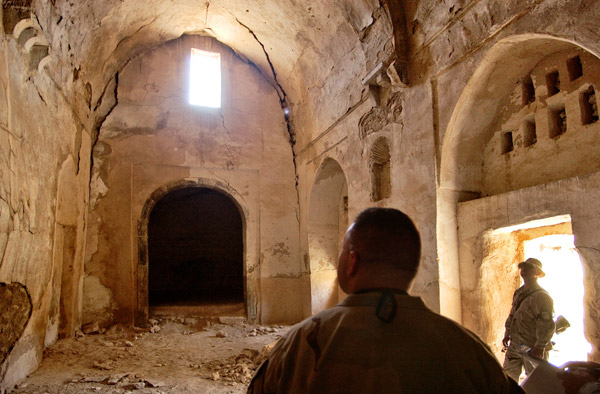
Capt. James Pennington, left, a Stryker Brigade chaplain, and Sgt. Michael Pena tour the 1,400-year-old Monastery of St. Elia, near Mosul, Iraq, on Sunday.

(ZNDA: Mosul)   When Spc. Jennifer Guay and Sgt. Noribelle Starck decided to re-enlist for five more years in the Army, they wanted to hold the ceremony in a special place – a location with some good karma.

The two Stryker Brigade medics chose the courtyard of a 1,400-year-old Christian monastery that lies on the south end of Forward Operating Base Marez.

“It’s a powerful spot, and doing it here shows respect for the country where we are serving,” said Guay, surrounded by fellow soldiers from the 25th Brigade Support Battalion on Sunday.

The Monastery of St. Elia is an architectural treasure that survives across the road from a graveyard of Saddam-era tanks, overlooking rolling hills where U.S. forces are slowly blowing up decades worth of unstable Iraqi Army explosives. It’s set apart from the developed part of the base, so soldiers and other visitors have to drive or hike to get here.

Capt. James Pennington, the chaplain of the support battalion, helped lead an Easter sunrise service here this year that drew nearly 200 people.

Pennington has researched the domed structure with crumbling outer walls and learned that it was founded by a Chaldean Christian monk during the reign of a Persian king in the late 6th century. It remained a thriving monastic community until the 18th century, when its inhabitants were wiped out by a Muslim warlord, he said.

Some restoration work was done in the last 100 years, including marble framing attached to the doorways of some of the inner chambers.

The presence of coalition forces has kept the compound free of looting and vandalism, except for a Screaming Eagle emblem that someone from the 101st Airborne Division painted when the unit took control of Mosul after the 2003 invasion. The wall has been sandblasted, but a discoloration remains.

Mosul is predominantly Muslim and Kurdish, but it also is the most Christian of Iraq’s large cities. That’s what makes the ancient monastery so meaningful to Pennington, a Southern Baptist preacher.

“To me, it’s a wonderful piece of history,” he said. “As Americans, we don’t think of this as a Christian part of the world, but it is. It predates Islam.

“It also reminds us how blessed we are as Americans to live in a place where we don’t have to fortify our churches.”

Zinda Magazine contacted Mr. Misterek on the historical accuracy of the point made regarding the 6th century Chaldean monks.  The Chaldean Catholic Church was formed in the second half of the 16th century.  The author graciously acknowledged the error.

U.S. Soldiers Find Faith in the Face of Fire

Courtesy of the News Tribune
By Matt Misterek
23 May 2005
Photo by Peter Haley

(ZNDA: Mosul)  Gathered together in the renovated shell of an old Iraqi Army pistol range, a few dozen Fort Lewis soldiers and civilian military workers joined in singing Hymn No. 212 from the Baptist Hymnal.
“Souls in danger, look above, Jesus completely saves.
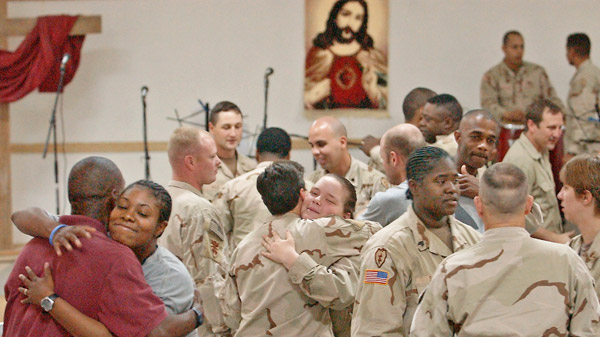
At a contemporary worship service at Forward Operating Base Marez in Mosul, Iraq, participants greet each other during “fellowship time” in the Transformation Chapel. Almost everyone is from the Stryker Brigade, which is also known as the 1st Brigade, 25th Infantry Division from Fort Lewis. The brigade is deployed here and at other bases around Mosul.

He will lift you by his love, out of the angry waves.

Love lifted me, love lifted me

When nothing else could help, love lifted me.”

It was a declaration of religious faith and an acknowledgement that they can’t go it alone. And on a day when they would learn two of their Stryker Brigade comrades had been killed overnight, they could use the lift they get each week at Transformation Chapel.

Sitting in church on Sunday morning provides a spiritual sanctuary but not a physical one for these men and women who deployed from Tacoma in October. Twice last fall, enemy mortar rounds struck near the chapel during services, peppering the side of the building with shrapnel and breaking eight window panes. Sheets of plywood with cutout crosses now cover those gaps.

Sgt. Anita Shaw is still amazed that no glass shards fell on worshippers inside. She says it was “God’s way of showing off.”

“You know he’s here to protect you,” said Shaw, who works in the 25th Brigade Support Battalion’s supply shop. “Even though you always have your buddy on your left and your buddy on your right, God gives you overall protection.”

Transformation is one of four chapels operated by Stryker Brigade ministry teams at Forward Operating Base Marez, the most populous U.S. installation in northern Iraq. Army chaplains and lay religious leaders seek to give comfort and spiritual counsel to soldiers, many of them young and confronting questions of life and death for the first time.

The 1st Battalion, 5th Infantry Regiment – the unit known as “The Bobcats” – has many soldiers who identify themselves as Christians. There are also two Jews, two Muslims and a handful of Wiccans among the battalion’s 700-some infantrymen. Then there is the vast middle ground.

“A huge chunk is ‘no preference’ – I’d say about 30 percent – which is what you’d expect with 18- to 20-year-olds who haven’t worked out their religious life yet,” said Capt. Donald Carrothers, the chaplain for the 1-5.

“I call them the superstitious ones,” he added. “They’ll come by and ask me for Celtic-style crosses. Some of the Stryker drivers really like carrying those. But you won’t see them at chapel.”

Officials with the 1st Brigade, 25th Infantry Division – Fort Lewis’ second Stryker brigade – have taken steps to accommodate the religious needs of soldiers outside of the mainline Protestant denominations.

A Catholic priest roves among the U.S. bases in Mosul and celebrates Mass at Marez on Saturdays and Sundays. A reconciliation booth, or confessional, is set up at Transformation Chapel, behind the stage where a contemporary praise band plays.

A group of Mormons meets on Sunday afternoons. And the support battalion recently converted a building into a place for Muslim soldiers to practice their beliefs, complete with prayer rugs.

Even so, Carrothers conceded that resources for many religions are lacking, and Islamic and Jewish faith leaders only pass through a few times a year.

“There are only about 5 or 6 Muslim chaplains in the whole Army,” said Carrothers, whose background is Southern Baptist. “The same with rabbis; they are in very short supply.”

Saihou Jobe, a 22-year-old Stryker mechanic, is believed to be the only devout Muslim in the 1-5 Infantry. He said that his superiors in the vehicle shop have been good about giving him the time he needs for his five-times-a-day prayers. In fact, sometimes they remind him to pray.

Jobe’s unit took part in the coalition offensive in Fallujah last fall, which coincided with the holy month of Ramadan. His bosses offered to give him downtime in his tent during the day so that he could observe the pre-sundown fast, but he chose to keep working because his colleagues needed him.

“I would wake up in the middle of the night to eat just so I would be strong the next day,” said Jobe, who was raised in the African nation of Gambia, where his grandfather was an imam.

Jobe carries his red prayer rug – the same one he’s had since basic training – in his CamelBak backpack. His Holy Quran is stored safely in a black zippered bag.

“This is where I go for answers,” he said, holding the book gently in the break room of the Stryker shop. “This is my guide.”

Many Christians on base are equally committed to practicing their beliefs in a combat zone. Spc. Edwin Gonzalez, 28, a supply specialist from Puerto Rico, even waited to come to Iraq to be baptized. Outside Transformation Chapel last fall, he and three other soldiers were immersed in a 3,000-gallon canvas bag used for storing water.

“I just have this feeling that Jesus walked somewhere around this part of the world,” Gonzalez explained Sunday morning, after packing up the bass guitar he plays in the praise band.

And with that, he put on his armor vest, picked up his rifle from the chapel gun rack and walked out into the morning sun.


Back to the Top
 

News Digest
News From Around the World


Mar Emmanuel Delly in the U.S.

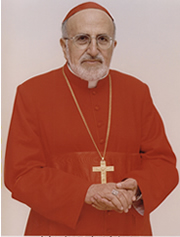
His Beatitude Mar Emmanuel Delly

(ZNDA: Detroit)  His Beatitude Mar Emmanuel Delly, Patriarch of the Chaldean Catholic Church is currently traveling Europe and the United States and will be visiting the Chaldean parishes in Detroit and Chicago in the next few weeks.  His Beatitude arrived in the U.S. last Tuesday and will be in Michigan and Chicago until 17 June.  No travel plans to California were provided to Zinda Magazine at press time.

Last week in Paris the head of Iraq's largest Christian community denounced American evangelical missionaries in his country on Thursday for what he said were attempts to convert poor Muslims by flashing money and smart cars.

The patriarch, who vigorously opposed the U.S.-led invasion of Iraq and met French President Jacques Chirac -- who also opposed it -- on Wednesday, declined to comment on Washington's policy there or whether he had contacts with U.S. authorities.

The following is a complete travel itinerary of His Beatitude in the U.S. courtesy of Our Lady of Chaldeans Cathedral in Southfield, Michigan and Father Manuel Boji :


His Beatitude Mar Emmanuel Delly 's Travel Plans in the U.S.
Date
Holy Mass & Gatherings
Time
Tuesday, May 24 Arrival of the His Beatitude to the Church of the Mother of God 06:00 p.m.
Sunday, May 29 Holy Mass at the Church of the Mother of God, Southfield 12:00 p.m.
Friday, June 3 Holy Mass at the Church of the Sacred Heart, Detroit 10:00 a.m.
Saturday, June 4 Holy Mass at the St. Joseph Church, Troy 05:00 p.m.
Sunday, June 5 Holy Mass at the St. Thomas Church, West Bloomfield 12:30 p.m.
Friday, June 10 St. Paul Assyrian Chaldean Church in North Hollywood, California TBA
Sunday, June 12 Holy Mass at the St. Addai, Oak Park 12:30 p.m.
Wednesday, June 15 Gathering with the youth at the Church of Mother of God 08:00 p.m.
Friday, June 17 Holy Mass at the Church of St. Mary, Chicago TBA
After June 17 To New Zealand & Australia TBA


All dates and events are subject to change.  Zinda Magazine will continue to update this itinerary table as more information is received in the near future.

UC Berkeley Students Display Assyrian Pride at Cal Day

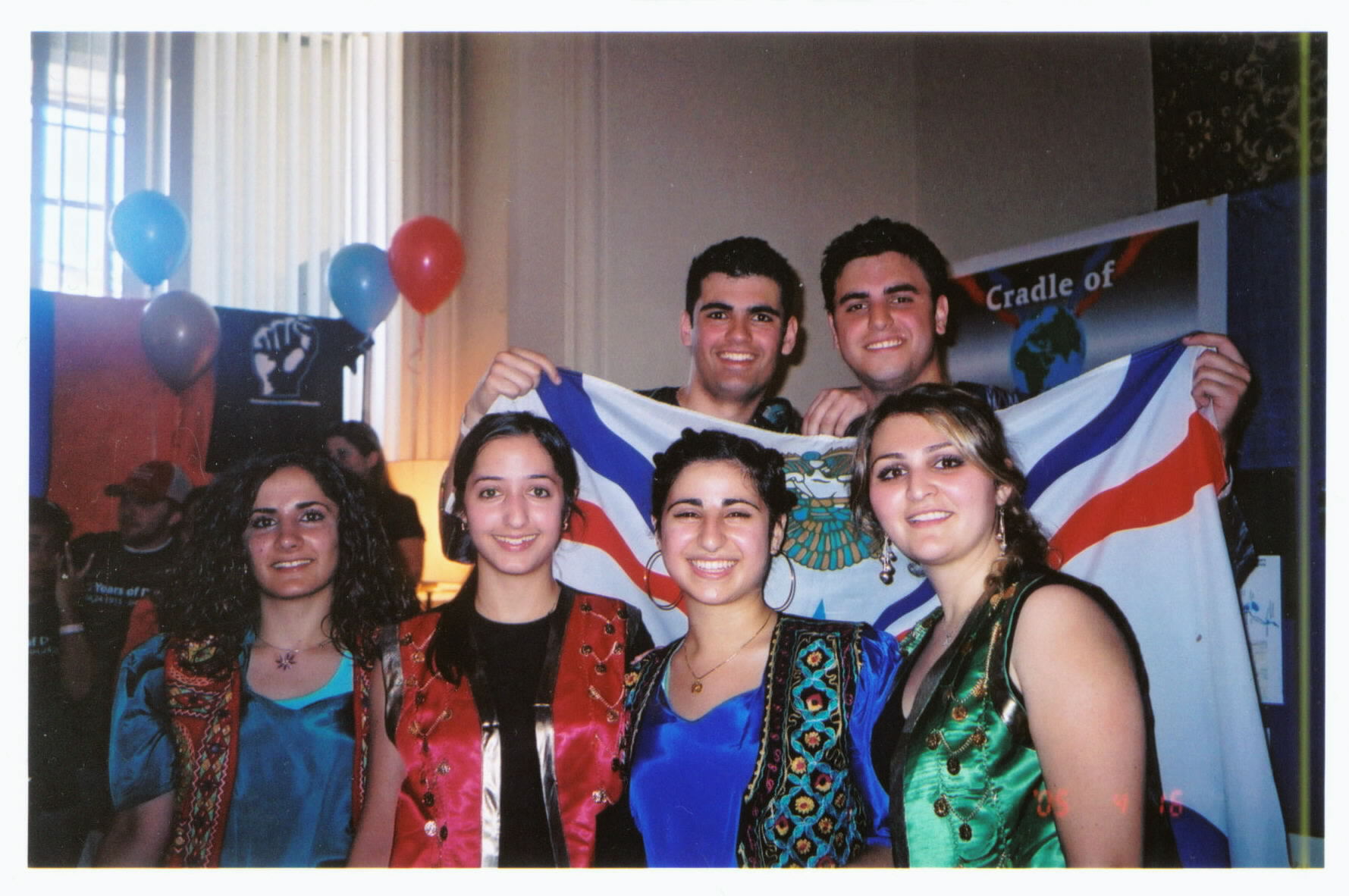
[I've reattached the two photos of our display that Mr. Daniels shared with you. I've also attached two pictures of the dancers that performed at the Spring Festival. All of us, with the exception of Sam who just graduated from San Jose State University, are Cal students and alums. The names are (top to bottom, left to right): Ramond Takhsh, Samson Khoubier, Hala Samow, Brateil Badal, Arbella Malik, and Linda Hormozi (picture 1). Here is, as requested, a short report on the event.]

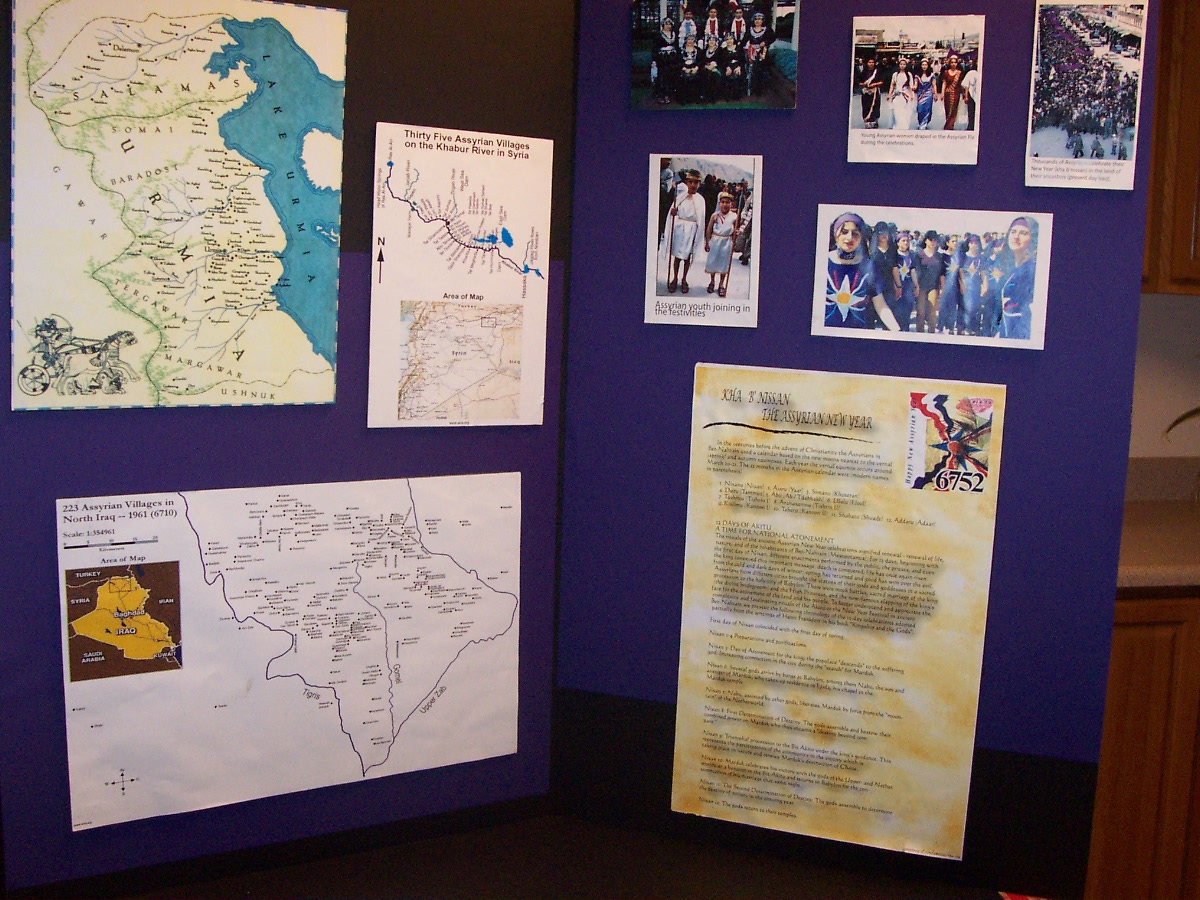
An ASA posterboard presenting the many facets of the Assyrian culture and geography in the Mid-East.

(ZNDA:  San Francisco)  Every year on the campus of the University of California at Berkeley (a city to the east of San Francisco) on Cal Day, the International House at UC Berkeley celebrates cultures at its Spring Festival. Cultures from around the world come together to display their traditions, foods, and festivities. The Assyrian Student Alliance (ASA), a group of eight current students and about 10 alumni, has been a participant in the festivities in the last four years.

This year, the ASA members home-cooked great-tasting, authentic food, like Dolma‘d Tarpeh (grape leaves), Qatleteh, and Kubeh.  For dessert, they served baklavah, which everyone enjoyed tasting. 

ASA presented two posterboards that informed the visitors about Assyrian history, demographics, and traditions. On exhibit were two maps of North Iraq and Northwest Iran, showing the detail and location of all the Assyrian villages. The Kha b' Neesan (Assyrian New Year) tradition and the Assyrian alphabet were also portrayed.  Art and artifacts, the 'Lamasu' (Assyrian Winged-Bull) and the Assyrian flag were on display at the table.

ASA dance performers at Cal Day (from top to bottom, left to right): Ramond Takhsh, Samson Khoubier, Hala Samow, Brateil Badal, Arbella Malik, and Linda Hormozi. 

For the first time this year, ASA also performed Assyrian dances. For weeks, six members had practiced a choreographed dance routine to a melody of four Assyrian dances—chobieh, tolamah, balati, and sheykhani. All dancers were dressed in traditional customs and performed an entertaining and energetic piece.

In the audience were also parents, grandparents, siblings, ASA alumni, and friends who were cheering on the dancers, shouting “Khayeetoon Atoorayeh!”.

The dance performance brought many to the ASA table asking about the Assyrian culture and people.   Mr. Ramin Daniels, of the Assyrian Aid Society and Mr. Fred Aprim, author of "Assyrians - the Continuous Saga" were on hand to answer any questions.

UC, Berkeley ranks first nationally in the number of graduate programs in the top 10 in their fields.  Last year 97% of Berkeley's programs made the top 10 list.  Berkeley ranks first nationally in the number of "distinguished" programs for the scholarship of the faculty [32 programs].  17 UC-Berkeley's professors and researchers have to date received Nobel Prizes in sciences, economics, and medicine.  7 of them are current instructors.

Among the world's distinguished Assyriologists and Near Eastern scholars currently teaching at UC-Berkeley are the following:

  • Wolfgang J. Heimpel (Emeritus), Professor of Mesopotamian and Sumerian cultures. Ph.D. University of Heidelberg
  • Anne D. Kilmer (Emeritus), Professor of Assyriology. Akkadian, Mesopotamian culture, literature and music. Ph.D. University of Pennsylvania
  • David B. Stronach (Emeritus) , Professor in the Graduate School (Near Eastern Archaeology). Near Eastern art and archaeology. M.A. Cambridge University
  • Marian Feldman, Assistant Professor in Near Eastern Art. Ancient Near Eastern art; Eastern Mediterranean interconnections; Bronze Age Aegean art and archaeology. Ph.D. Harvard University
  • Niek Veldhuis, Assistant Professor of Assyriology. Ancient Mesopotamian languages and cultures. Ph.D. University of Groningen, Netherlands
  • Sanjyot Mehendale, Lecturer in Near Eastern Archaeology. Near Eastern archaeology. Ph.D. University of California, Berkeley
  • Laurie Pearce, Lecturer in Akkadian. Assyriology, Akkadian, and Cuneiform. Ph.D. Yale University

Zinda:  Special thanks to Ms. Brateil Badal, ASA president & Mr. Ramin Daniels, Assyrian Aid Society - Santa Clara chapter Director.

Assyrian Youth Charged with Murder in Australia

Courtesy of the Herald Sun
By Shelley Hodgson
21 May 2005

(ZNDA: Melbourne)  Distraught friends of Parvieez Shaik, 24, say he was stabbed when he came to the aid of friends allegedly being attacked by several men.

Police has charged a 16-year-old youth with one count of murder and one of intentionally causing serious injury and assault.

He was expected to appear in a Children's Court last Monday.

The dead man's friend is not expected to regain full feeling in his left hand after he was allegedly stabbed with a 25cm blade.

The Herald Sun has been told the men yelled racial profanities before the attack.

Witnesses claimed that the attackers yelled, "You Aussie wankers", or words to that effect.

Witnesses told police the attack lasted 30 seconds before the attackers fled in several cars outside the fast food store in Somerton Rd, Roxburgh Park, about 10pm last Thursday.

Mr Shaik, an office furniture removalist who lived with his parents in Glenroy, was stabbed in the stomach and leg.

The injured man said Mr Shaik, who was planning his first trip overseas next month, had no enemies.

"He was an all-round nice guy," the man, from Gladstone Park, said from his hospital bed.

"He was everybody's friend, had no enemies."

"He was just in the wrong place at the wrong time."

A witness said he was walking along Somerton Rd when he saw a car pull into McDonald's.

"Three or four men converged on it and a fight broke out," the witness said.

"It went for about 30 seconds.

"People jumped in their cars and drove away, and then all of a sudden this bloke's just hit the deck."

The witness said a male and female customer from McDonald's performed CPR on Mr Shaik as he lay bleeding and fading in and out of consciousness.

Paramedics resuscitated him twice in their desperate fight to save his life but Mr Shaik died in hospital.

The injured man, soon to become a father, said he did not know the men and denied he and his friends were part of a gang.

"It's got nothing to do with gangs," he said.

Homicide squad detectives are continuing their investigations.

They are keen to speak to the driver of a 1980s model white Holden Commodore station wagon seen in the car park around the time of the incident.

Zinda Magazine has learned that t he 16-year-old charged with the alleged murder is an Assyrian youth from Melbourne, Australia. Zinda is saddened by the news of our youth in Australia involved in gang and criminal activities. We hope that the Assyrian community leaders in Australia and throughout the Western world will promptly address the neglection of our youth and act as worthy role models.


Back to the Top
Surfs Up!
Your Letters to the Editor


Sargon Dadesho:  For Better or Worse

Atour Khenanshoo
Iran

I am very sorry for your choice because this man has destroyed our political aim and he is an Assyrian enemy.

Zinda:  Mr. Khenanshoo is the former representative of the Assyrians and Chaldeans in the Iranian Majlis (parliament).  Mr. Khenanshoo recently met with His Holiness Mar Dinkha IV in Iran and accompanied by several other Assyrian dignitaries requested from His Holiness to assist in greater cooperation among all Assyrian churches, Chaldean Catholic and Syrian Orthodox in particular.


Joseph Bet-Shmuel
California

Including Sargon Dadeesho in the list of the man of the year was not appropriate. Also it was not in style of Zinda Magazine. Please do not bring down the level of Zinda magazine to tabloids. We respect this magazine.


Johny Yako
California

Why does Zinda Magazine promote Sargon Dadesho as person of the year? Sargon Dadesho has done the worst for our Nation. Why doesn't Zinda Magazine promote the better like the ADM Ashur TV in Baghdad and San Jose. ADM Zowaa is the only hope for our ChaldoAssyrian people in Iraq. So why doesn't Zinda Magazine look at the political view of the ADM, the ADM progress in maintain freedom and recognition for ChaldoAssyrians in Iraq.


Angie Toulakany
California

I was very disappointed of Zinda for such a poor taste of selecting the person of 6754.


Kamil Kunda
Australia

Will you cancel my subscription to your magazine as a protest for your decision to announce that the separatist Sargaon Dadeesho is the Assyrian of the Year. I strongly believe that he is making more damage to our Oumta [nation] than serving it by attacking Chaldeans and Zawaa [Assyrian Democratic Movement] without any real grounds.

Still I wish you all the best to serve our Oumta in a uniting direction that will benefit everyone.


Tony Kilaita
California

You might want to have another survey, as to who is the most effective person of the year in terms of destruction of the Assyrians and Chaldean/Christian UNITY in last January Iraqi elections.


Layth Jato
Canada

Please Remove me from your mailing list.

Anyone in his right mind to choose someone like Sargon Dadesho as man of the year or even the day does not have my voice of confidence.

His program has been a disgrace to the Assyrian nation with the poor quality which we have learnt to accept and get excited about, rather than push for improving it.

God Bless you and the Assyrian Nation.


Guiliana Younan
Chicago

This is to express my disappointment with your choice for Person of the Year.   Good luck

Zinda:  Mr. Younan is the current vice-president of the Assyrian American National Federation.


Dr. Younathan Youash
Texas

I used to think that Zinda was neutral and not politically oriented. I was wrong. It is your decision.


Roben Ganjeh
California

I am very disappointed of your choice for the person of the year.  Person of the year must be a good example for our nation.


Samuel Saro
New York

I have observed that there is a flaw in your voting software which makes it possible to vote more than once for Zinda’s weekly polls. I believe Sargon Dadesho’s cronies took advantage of this software flaw and performed multiple-votings to get their “Assyrian King in Diaspora” anointed as the person of the year.

An inquiry into “Dr.” Sargon Dadesho’s activities by the authorities is long overdue. A serious investigation by the Attorney General into the affairs of this charlatan and his dubious organizations will no doubt land him in jail for many years to come.

But then again, it might be that the feds are financing him to sow discord and confusion amongst us to render us dispirited and ineffective. You never know who your friends or foes are these days!


Emil Odisho
New Zealand

I was quite pleased to read your divulging article “6754 Person of the Year – Sargon Dadesho”. It’s not hidden that Mr. Dadesho is one of many reasons behind our nation’s division, which in turn is the main cause for its weakness. He must understand that, whether he likes it or not, Mr. Yonadam Kanna is the legitimate representative of our people in the Iraqi parliament just because our people voted for him!!

Mr. Dadesho’s bad-mannered statements, false accusations and deception neither serve his narrow-minded ambition nor do they unite our nation.

Thank you Zinda for continuing to stay our preferred magazine, which is devoted to our nation’s best interest.


The Saga of Sargon Dadesho: The Story of Patriots, Politicians and Parasites

Jonathan S. Davidson, M.D
California

This is a rebuttal to the Zinda editorial of May 21, 2005.

It has been the incompetence of Assyrian organizations in general which has produced the phenomenon that is Dadesho. Failure of Assyrian organizations over several decades to create meaningful educational programs for Assyrians allowed Dadesho to initially succeed with his Radio and TV programs.


Click Image to View New Issue

Bet Nahrain Inc. has over the years distinguished itself as a true educational and patriotic organization. While the neighboring club invested in vacant land and a motel which is allegedly used by prostitutes, Bet Nahrain, Inc. invested over $150,000 of it’s own money in a transmitter for a TV station, later known as KBSV.

The Assyrian National Congress has sought to reverse the ‘slashes’ in the 2000 census by taking legal action against the Commerce Department of US Government. This action put their Bingo and TV license and perhaps their livelihood at risk. This selfless act in itself qualifies the leadership of The Assyrian National Congress as ‘patriots’.

Further growth of the TV station has been achieved through creation of Assyria Sat, as described by Zinda : Assyria Sat now reaches Assyrian villages as far as Iran and Iraq.”
The Dadesho group has created a central nervous system for communication and exchange of ideas amongst Assyrians at a global level. The power of Assyria Sat has been selflessly used to raise funds for the Assyrian Church of The East in Turlock and in Iraq and for Assyrian children living in poverty and those residing in an orphanage in Turkey.

The Assyrian referendum created by Bet Nahrain, Inc is a direct response to the apathy of Assyrians in the last Iraqi election. The referendum will hopefully energize voters to vote and influence the Iraqi Government to sponsor additional voting sites for Assyrians in Diaspora.

The recent escalating attacks against Dadesho are in response to his increasing acceptance by Assyrians at an international level. Again Dadesho and his group fill the void of incompetence that is demonstrated by Assyrian national and international organization. Failure of the ‘union of our thirty or so organizations’ to create a program for voter registration in anticipation of the upcoming Iraqi election has allowed Dadesho to Check and Mate these organizations.

There is only one meaningful criticism of Dadesho that needs to be addressed. The programs that are cited for Anti Iranian propaganda are likely to have been imposed by powers that control the legal continuity Bet Nahrain, Inc. and cannot be opposed by Dadesho. Dadesho himself has exhibited dissatisfaction with the impact of these programs.

Zinda:  According to our reader the word parasite refers to TV personalities who engage in irrational attacks.

IRI Survey Says Most Iraqies Want Assembly Seats for Minority Groups

Walid Maalouf
Director
Public Diplomacy for Middle Eastern & MEPI Affairs
US Agency for International Development

The International Republican Institute (IRI) conducted a survey of Iraqi public opinion in April 11 -20, 2005. The results show that 66.80% of Iraqis think that Iraq is heading in the right direction; 47.30% think they are strongly identified by country rather than religion or ethnicity; 37.30% think that the new Iraqi transitional government is representative of the Iraqi people; 38.60% think the primary purpose of the constitution is to define and protect the rights of the people; 75.60% intend to vote in the constitutional referendum scheduled for October, 2005; 33.30% think that the mixed parliamentary / Presidential system would be the most appropriate for a future Iraqi government; 71.70% think that a national central government is best suited for Iraq; 45.90% think that religion and government should respect one another by not impeding on the rights; roles and responsibilities of the other.

On gender and minorities, 51.60% think that the 25 percent quota for women in the National Assembly should be kept in the new constitution; 62% think that the new constitution should reserve national assembly seats for Iraq’s minority group; and 44.30% think that Iraq’s minorities should be given the constitutional rights to reject certain legislation. For more information on the survey, you can contact IRI directly.

Mar Delly, Be Fair!

Mary Pourabadi
California

Klicken Sie bitte das Bild oben zu mehr Information

This letter to ZindaMagazine is in response to the recent statement by Mar Delly the Chaldean patriarch in regards to the presence of American Evangelical missions in Iraq. Mar Delly decries these missionaries as intruders in a land which is not their and as unwanted missionaries. He states that not only are they worsening the tension between Muslims and Christians, but they are also directly effecting the institutionalized Christian churches were already exist in Iraq. Mar Delly further decries these missionaries just for the mere fact that they are Americans, and it is well known that Delly was against the last US military intervention in Iraq.

As an Assyrian Presbyterian, I think that it is high time to denounce such two-facedness on the part of the Chaldean patriarch. He believes that these missionaries are entering in upon ‘territory’ claimed by the mainstream churches in Iraq—among them Assyrian, Chaldean and Syrian—and that there is no room for Evangelical and/or Baptist missionaries and their form of Christianity in Iraq. I can proudly say that although I am presently Presbyterian, in fact since my great grandparents converted to this church in Urmia in the early part of the twentieth century, my forefathers were undoubtedly members of the Church of the East. The circumstances of time and history caused them to pass over to the Presbyterian Church, as well as hundreds of other Nestorian Assyrian Christians during the period, but nevertheless I—and all of us Assyrian protestants—know very well what our roots are.

The fact that amazes me, and in fact disgusts me, is that the Chaldean patriarch does not mention the history of the Catholic missionaries among the so-called ‘Nestorian’ Christians in Iraq and Iran, which caused them not only to submit to the sovereignty of the pope but to change their own ethnic and national identity of their being Assyrians! The protestant Assyrians have sure changed their church affiliation, but by no means do we deny that we are Assyrians by blood and race. I think that Mar Delly is twisting history, indeed outright denying it, by decrying these missionaries. Are they not preaching the same Christ that the Catholic missionaries came to preach among the Assyrian Christians in order to convert them to popism (papayoota)? At least these missionaries in Iraq are not preaching to the Christians, rather they are braving the dangers of the present state of the country and are approaching Muslims in order to introduce them to Jesus Christ and eternal Salvati on.

I think that patriarch Delly needs to be fair and face the facts of history that the Catholic missionaries did much more damage to the Church of the East and the Assyrians in general than the Protestant missionaries did! For the Catholic missionaries, the most important thing was to accept the pope’s position of supremacy. The Protestants, however, preached the supremacy of Christ and his Gospel—what a far-reaching difference. Just listen to the latest words of bishop Jammo who says that the Assyrians of Iran should not mix themselves in the affairs of the Iraqi Assyrians because they are of a totally different cultural milieu. I think that bishop Jammo should really be ashamed of himself, and those Assyrian that blindly follow him should be ashamed all the more!!!

I call upon patriarch Delly to retract his words against the American missionaries in Iraq and to apologize for being so biased and deliberately twisting history. You should face the facts and admit that the Catholic church and missionaries have done much damage to the ancient church of our forefathers and our nation to the point that their followers have changed their very national identity and name. Shame on you patriarch Delly, and all those who have changed their identity and roots to follow the pope. At least if you would have done it for Christ rather than the pope, one might find some logic to your claims!

Chicago Suntimes Stands Corrected!

Martha Zodo
Chicago

In today's edition of the Suntimes newspaper, there is an article on Neenos Khoshaba's murder. There is a very large error in this article they call Mr. Khoshaba "an Iraqi man of Syrian descent" as we all know, he was Assyrian and not from Syria he was from Nematha. I have already written to the Suntimes about their mistake. However, I feel that others should write to the paper as well so that they not only correct the mistake but make sure not to make it again in the future. Please write or e-mail a letter to the editor of the Suntimes so that we can make a difference.

Zinda:  The Chicago Suntimes and most other media outlets have since corrected their initial misinformation regarding the identity of Mr. Khoshaba, thanks to our readers' immediate response.  Thank you!

Linda George's New Music Demonstrates the Strengths of Our Multi-Talented Assyrian Artists

James Darmo
LG Management
Jdarmo@lindageorgemusic.com

A series of outlandish remarks have been brought to the attention of Linda George Management Team in the United States about our beloved Assyrian artist's latest hit single, "Ana Hurra". It is appropriate that we take a few moments to clarify this misinformation and enlighten the readers of Zinda Magazine and Linda George's worldwide fans of such inaccuracies.

We suspect that the poignant rumors are not coming from Assyrians, as Ms. Linda George continues to enjoy a huge following among the Assyrian people who admire her music everywhere.

Ms. George began singing in her native language in the Church and at the Assyrian events. Through years she has written some of the most patriotic Assyrian songs, and was one of the first singers to write a song about Zowaa back in 1990, titled "Akhnan Ewakh Atorayee".

The only time Ms. George has performed in Atra (homeland) was at the invitation of the Assyrian Democratic Movement to celebrate Kha b'Neesan Assyrian New Year festivities in Atra. A portion of this performance is captured in the new documentary by the French director, Robert Alaux, titled "The Last Assyrians". Mr. Alaux selected Ms. George's performance to represent the best of the Assyrian artists. Furthermore, Ms. George did not perform for the Kurdish groups, neither was she invited by the Kurdish parties to Iraq. In fact, Ms. George and her management team categorically deny that Ms. George has ever used the phrase "Khaya Kurdistan" (Long Live Kurdistan) in private or during her public performances.

The song "Ana Hura" (I am Free!) is quickly becoming one of the most requested songs on the Arabic-language television channels around the world. It was aired for the first time on Ashur TV as a gift from Linda George Enterprise to our brothers and sisters in the homeland of Iraq. Ashur TV broadcast from Iraq is the most watched local channel in Baghdad. Ashur TV in Baghdad informed Linda George Management that their office had never received as many phone calls as they did the day "Ana Hurra" aired. The song, Ashur TV commented, had exalted our Assyrian Name among fellow Iraqis.

Linda George at the set of "Ana Hurra" video.

"Ana Hurra" has been performed live three times only in the past three months, in Toronto for the Valentine's day, in Arizona for Zowaa's Anniversary and in Sweden for Easter.

Many Arab newspapers and website are writing delightful comments about "Ana Hurra" and Linda George. May Elias, for example, in Elaph writes about the hope this song is giving Iraqis and the power in Linda's voice and music. In Egypt Ms. George's photo is displayed on the main page of http://arab-celebs.com. Dandana TV decided to sponsor "Ana Hurra" and asked Linda George Management Team for more of upcoming Assyrian videos and songs by Linda George.

Linda George was also interviewed by Reuters TV at Beverly Hills Hilton in Los Angeles last week and this interview will soon be made available to the major news channels in the world.

"Ana Hurra" is indeed about hope and unity for and among a