|
|||||
 |
101
San Fernando Street, Suite 552
San Jose, CA 95112 U.S. Voice (408) 918-9200 Fax (208) 723-1240 |
||||
|
|||||
|
|||||||||||
|
|

| The Father of Chaldeo-Assyrian Unity is No More On Monday, at 7:00 p.m. Beirut Time, His Beatitude Mar Raphael I Bidawid (b’Dawid), Catholicos Patriarch of the Chaldean Catholic Church, passed on to eternity in Beirut, Lebanon. His Beatitude was 81.
Mar Bidawid was born in 1922 in Mosul, Iraq, and entered a seminary at the age of 11. Three years later he was sent to Rome to study theology and philosophy. He was ordained in 1944 and in 1956 was appointed patriarchal vicar for the Diocese of Kirkuk. In 1957 he was elevated to Bishop of Amadiya at the age of 35 - the youngest in the world at the time. He was transferred to the Beirut Diocese in 1966. A synod of the Chaldean Church elected him patriarch in 1989, following the death of Mar Pulus II Chekho. Rightfully His Beatitude was a controversial leader. During a 1991 visit to the Vatican he accused the Gulf War allies of genocide. When every other Assyrian patriarch maintained an inexplicable silence during the economic embargo against the people of Iraq, His Beatitude courageously argued against the western powers and the United Nations and demanded the immediate end to the futile sanctions against the people of his native land. Every month over 5,000 Iraqi children under the age of five were dying due to malnourishment. In dealing with the disloyal bishops in Iraq and the United States, he drew more people back to the basic idea of unity in Christ and within his church. Mar Bidawid disliked the secessionist movement started by two of his bishops in the United States. He died a few days before a scheduled interview with Zinda Magazine in which His Beatitude was to address the issue of the Chaldean Catholic faith within the framework of the Assyrian nationality. One of Mar Bidawid’s culminating act in his work of spiritual reform was the regathering of the bishops of the Church of the East and the Chaldean Catholic Church and the signing of the “Joint Synodal Decree for Promoting Unity" on 15 August 1997. Three years earlier on 11 November 1994, Pope John Paul II and Patriarch Mar Dinkha IV of the Church of the East had signed the basic theological agreement between the Catholic Church and the Assyrian Church of the East or the "Common Christological Declaration” clearing the way for the Chaldean and the Assyrian Churches to initiate a process of dialogue and collaboration toward the goal of unity of the two Assyrian churches. Mar Bidawid never failed to be present at every prescribed ceremony, even when not feeling well. During his 14 years of patriarchy he consecrated 2 Chaldean archbishops and 6 Chaldean bishops. His Beatitude had been hospitalized in Beirut since the winter of 2002. During his final months he was undergoing several dialysis sessions due to the failure of his kidneys. In Lebanon his doctors asked him to seek rest and refreshment for his tired mind and ailing body. Yet His Beatitude never resigned to a dormant life and attentively followed the events in Iraq and abroad. To His Beatitude’s physical pains were added during
his last months a number of griefs, mainly caused by the
behaviour of two bishops in the United States, who threatened
the rupture of his Church with their secessionist ideas. On the last days of June, perhaps aware that his death was approaching, Mar Bidawid asked for an interview with Zinda Magazine. A list of candid questions were submitted to Lebanon and a meeting with a Zinda Magazine reporter was scheduled. The interview was soon postponed; however, Mar Bidawid offered his telephone number for an informal interview with the author of this editorial. His Beatitude died a few days before this interview. His Beatitude did not live long enough to witness the final achievement of all he had endeavored to do. He guided his flock during the most difficult days of Iraq’s modern existence, keeping the faith in a country troubled by economic sanctions and consumed by unjust dictators. According to the canons of the Chaldean Catholic Church, precisely thirty days after the laying of the Patriarch’s body to rest, a Synod of the Chaldean bishops will gather in Baghdad and elect one from among themselves to assume the Patriarchy of the Chaldean Catholic Church. If a decision is not reached, the Roman Catholic Church must intervene and appoint a bishop to this venerated position. The funeral for His Beatitude Mar Raphael I Bidawid will take place at the Malakha Raphael Chaldean Catholic Church in “Hazimmiya” outside of Beirut on Saturday, 4:00 PM (Beirut Time). Cardinal Ignace Moussa Daoud, prefect of the office for Eastern-rite churches, will represent the Vatican. In the next few issues, we will ponder the significance of the election of the next Chaldean patriarch. Today, we remain prayerful and solemn in remembering a revered Chaldean spiritual leader and an Assyrian nationalist. Zinda Magazine offers its deepest condolences to His Beatitude’s family, a mourning Assyrian nation and in particular the Chaldean Catholics around the world. Wilfred Bet-Alkhas
|

| CLASS OF 2003 ASSYRIAN GRADUATES This week, Zinda Magazine honors the Assyrian students who by the end of this academic year will have successfully completed their high school and college or university studies from an accredited educational institution. The Class of 2003 was born during the war between Iran and Iraq, the rise of Saddam Hussein to power, the height of the Cold War and the mass emigration of the Assyrian families from Iran, Iraq, Turkey, and Syria. Now they set off to an uncertain path to pursue a career in a U.S.-dominated world, bereft of the threat of communism, a free Iraq, and a very fast-growing Assyrian society in the Diaspora. In fact, for the first time there may be more Assyrians living in Europe, former Soviet Union republics, North America, and Australia than there are in Bet-Nahrain. The Class of 2003 is also a product of MTV and CNN, Eminem and X-Men, Gulf Wars and Star Wars, the Internet and the email. In the vocabulary of the Class of 1993 there appeared no such words and phrases as HTML, chat rooms, and Zinda Magazine. In less than 10 years, the Assyrian people living in more than 50 non-Middle Eastern countries were able to reunite their social fragments in cyberspace and re-establish a vibrant and growing global community. Each individual found personal power through the means of communication never conceived before. During their formative years of education, they witnessed a former terrorist awarded the Nobel Prize for Peace and a presidential candidate entering the White House with less votes than his opponent. It almost seems that all Newtonian laws of political and cultural mechanics have become obsolete and that which matters the most is the power of persuasion. If their parents persevered because of their determination to survive, the Class of 2003 will persist by means of marketing and lobbying their ideas. The Class of 2003 has thus acquired a new world view, a paradigm shift that is both empowering and concurrently unnerving to the Assyrian status quo. It goes something like this: the powerless can defeat the mighty if it can convince the hegemonic power- be it the United States government, the Vatican, the multi-national corporations, or the powerful political lobbies in Washington. After all in our MTV universe, image is more important than talent, present is more enduring than the past, and greater wealth is always a desired good. For the first time since 1903, our children believe that they can move mountains. Zinda Magazine is confident that every graduating student listed below can accomplish feats of extraordinary achievement. Each of them has the power to change our world for the better and meet the toughest challenge if given the opportunity. The challenge put forth to the Class of 2003 is this: How can we embrace the virtues of a communal life by strengthening personal power and a strong sense of morality within a de-centralized global Assyrian society? The Assyrian nation expects a great deal from this year’s graduating doctors, lawyers, artists, engineers, and teachers. Our graduates in the past recognized their personal power and were able to move mountains of hopelessness and dig through valleys of uncertainty. When forced to flee their homes and take a few worldly possessions, they carried only their books and the Assyrian pride from Nisibin to Jundi-Shapur, Urmia to Bakuba, Tiflis to Siberia, and Tel-Tamar to Stockholm. Once again it is time to convince the world of our worth and our historic significance. It is time to abandon our moribund arrangements and let the educated lead us to salvation. Congratulations to the Class of 2003 and to their proud parents, children and spouses. Zinda Magazine
|
|||||||||||||||||||||||||||||||||||||||||||||||||||||||||||||||||||||||||||||||||||||||||||||||||||||||||||||||||||||||||||||||||||||||||||||||||||||||

| HAKKARI & KANNA MEET BREMER, OTHER COALTION OFFICIALS (ZNDA: London) According to information received from the Assyrian National Congress Information Bureau, Mr. Romeo Nissan Hakkari, Secretary General of BNDP and Mr. Pnoel Hermis, President of Bet-Nahrain Democratic (BNDP) party and DR. William Ishaya, Secretary General and President of Bet-Nahrain Democratic (BNDP) party meet Mr. L. Paul Bremer in Iraq. The BNDP delegation presented the certain proposals and discussed matters related to the Assyrians in Iraq. On Wednesday 2 July the proposed Iraqi Political Council, which includes Mr. Yonadam Kanna, Secretary General of the Assyrian Democratic Movement (Zowaa), met with the Rt Hon Jack Straw, British Foreign Minister, Ambassador Paul Bremmer, U.S administrator to Iraq, Mr. Ryan Crocker, deputy assistant to the US Secretary of State for Near Eastern Affairs and Mr. John Sawers, Britain's top envoy to Iraq. Also in attendance were many other U.S. and U.K. officials. The lunch meeting took place at the "Presidential Palace Convention Centre" in Baghdad. Various issues including the current situation in Iraq and the
formation of the Iraqi transitional authority were discussed at
this meeting. An announcement is expected in the next few weeks
formally establishing the Iraqi Political Council. A JOINT COMMUNIQUÉ OF THE LEADERSHIP OF ADM & ADO (ZNDA: Baghdad) On 30 June, the Political Bureaus of the Assyrian Democratic Movement and the Assyrian Democratic Organization released a communique in which they agreed to a "Chaldean Syriac Assyrian National Congress" in Baghdad during the month of September under the banner "For the Sake of our Unity and our National and Ethnic Rights."
The ADM and ADO leadership met in Iraq between June 27 and 28 to address the current ethnic and national issues concerning the Assyrians in Iraq. The two sides stressed the importance of unity and directing their efforts through mutual national endeavors in order to secure and guarantee the legitimate ethnic rights of the Syriac-speaking groups in the new constitution of Iraq. This meeting materialized after several dialogues that took place with the various political groups, religious, cultural, and civic institutions representative of all Christian denominations in Iraq. The two groups decided to invite all political organizations, civic and religious institutions to the Congress. A preparatory committee will be sending out formal invitations that will be accompanied by a working agenda. The working agenda will include the center issues or axis of concern, which will be studied by the participants in order to form the final structure through the various committees that will emerge from the Congress. All participants will have the opportunity to express and convey their vision and thoughts according to the statement released. ADO - Political Bureau ASSYRIAN, IRAQI WOMEN HOLD FIRST WOMEN FORUM SINCE SADDAM Courtesy of the AFP (9 July); Ahmed Jarallah (ZNDA: Baghdad) Dozens of leading Iraqi women met this week in Baghdad to develop a collective voice for the half of society they say was deeply oppressed during the rule of ousted president Saddam Hussein. The first national women's conference since a US-led coalition brought down the curtain on Saddam's Baath Party regime gathered some 90 women here to plot strategies to increase their role in running a new Iraq. Officials from the US-led Coalition Provisional Authority (CPA) running Iraq said the session would break into workshops addressing human rights, judicial and legal issues, society, health, education, and the constitution. "This is the first step for women to regain their basic and fundamental rights, primarily concerning the decision-making in Iraq," said Pascale Isho, head of the Assyrian Women's Organization. Women's rights "were choked during the Baathist suppressive regime," she said. Other delegates said Iraqi women were ready to right the wrongs of previous governments. An expert close to the appointment process has said that the 25-member Iraqi National Council will include just four women and one Assyrian. Some women held key posts in government offices or ministries during Saddam's 24-year rule but only one, Baath Party regional command member Huda Salih Mahdi Ammash, brushed the top echelons of power. A CPA coordinator of the conference said recommendations put forward
would be submitted to various CPA advisory groups, city councils
of Baghdad and elsewhere, ministerial bodies, and Bremer himself.
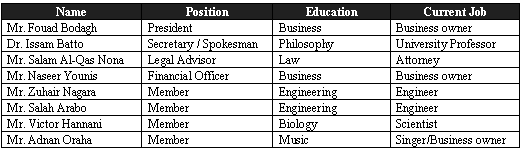
CHALDEAN NATIONAL CONGRESS NAMES IRAQI LEADERSHIP (ZNDA: Baghdad) According to information obtained from the Chaldean News Agency on 6 July the Baghdad-branch of the Chaldean National Congress has named the following eight officers to its leadership committee in the Iraqi capital:
|
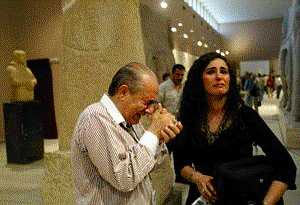
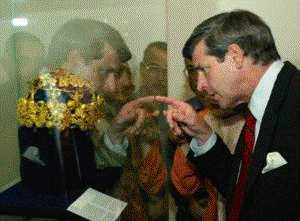
| BAGHDAD MUSEUM RE-OPENS, NIMROD TREASURE ON DISPLAY (ZNDA: Baghdad) On Thursday 3 July, the Iraqi National Museum in Baghdad was officially reopened by Ambassador Paul Bremmer, also in attendance were diplomats and officials from many countries. Mr. Yonadam Kanna, Secretary General of the Assyrian Democratic Movement took part in the reopening ceremony. Ambassador Bremmer stated that the Coalition Provisional Authority (CPA) is committed to protecting the museum and its priceless historical artifacts and restoring the missing pieces to the museum.
On display were the renowned Nimrud treasures. One of the most significant archaeological finds of the 20th century, the Nimrud treasures, excavated in the ancient Assyrian city of Nimrud near present day Mosul, was found safe and undamaged in a Baghdad bank vault last month. The Nimrud treasures date back to 900 BC consisting in gold artifacts and precious gems have not been seen since the early 1990's.
Last month, Mr. Beni Atoori, an Assyrian film producer, pledged a donation of one and half million U.S. dollars to the Iraqi National Museum in Baghdad. Mr. Atoori’s upcoming film, Gilgamesh, will be released in 2004.
Courtesy of the Kyodo News Service (4 July) (ZNDA: Paris) Last Thursday the U.N. Educational, Scientific and Cultural Organization or UNESCO added 23 sites to its World Heritage list in addition to the cultural landscape and archaeological remains of city of Ashur in Iraq. The additions bring the number of sites on the list to 754, of which 582 are cultural, 149 natural and 23 mixed. The decisions were made during the 27th session of the UNESCO World Heritage Committee that started June 30 at the organization's headquarters in Paris. The ruins of the ancient city Ashur are located on the Tigris River
in Iraq. The city dates back to the 3rd millennium B.C. It was the
first capital of the Assyrian empire from the 14th to the ninth centuries
B.C., and a city-state and trading center of international importance.
It also served as the religious capital for the Assyrians, and was
associated with the god Ashur. IRAQI ORPHANAGES FEELING POSTWAR TURMOIL Courtesy of Zenit News Ageny (4 July) (ZNDA: Vatican) Children living in Iraqi orphanages are now victims of drug traffickers and criminal bands, the Latin-rite archbishop of Baghdad, Jean Sleiman, said in statements published in L'Osservatore Romano. "There were many orphanages in the Iraqi capital. Of these, at least 12 are now totally empty. There are no children now," the Italian edition of the Vatican semiofficial newspaper reported today. Even children who have families live in fear. "Parents accompany their children to school personally, and get out of their cars armed with Kalashnikovs. All are afraid of the kidnappings," he said. For his part, Auxiliary Bishop Shlemon Warduni of the Chaldean Patriarchate of Baghdad has appealed for the re-establishment of sufficient security conditions to respond "rapidly" to the formation of a provisional government. "Above all what is lacking is security," he said. "It is the greatest concern of the Church in Iraq. Without security, no one can study or work. Medicines and electricity are also lacking. The situation in hospitals is precarious; some have been ransacked and burned."
Courtesy of the Reuters (9 July); by Jeremy Lovell (ZNDA: London) Donny George, a top Assyrian-Iraqi archaeologist says museum looters were stealing history and must be shot. Mr. George and many prominent Assyriologists are gathering this week in London at the annual Assyriology conference to discuss the history and impact of the city of Nineveh. "These people are stealing material from the whole of mankind. If they steal from mankind I would say it is fair they should be shot," says Mr. George, head of research at Iraq's Board of Antiquities and Heritage. Mr. George was recently appointed a representative of the Church of the East at the Chaldo-Assyrian National Committee. George said the systematic looting of the Baghdad Museum as the invading U.S. army entered the city in April had been a warning to beef up museum security. "Our tragedy has been a wake-up call for the rest of the world. Museums should be rearranged in a way that the buildings can defend themselves automatically," he said on the fringes of an international archaeology meeting at the British Museum. "There should be steel doors and shutters that close automatically if there is a break-in, not wooden doors like ours that the looters can simply break down," George added. The ransacking of Baghdad Museum, in which at least 13,000 items were stolen, had shown that many of the robbers had been heavily armed and well organised. "They had guards with heavy machine guns and mortars patrolling outside while the looters were at work inside the museum. It would have been no good walking up and asking them to stop. They would have killed you," he said. George said some of the looters had evidently been using inside information about the locations in the vaults of invaluable cylinder seals, of which some 5,000 had been stolen. Others had ignored lower value items and zeroed in on some of the most important pieces -- 32 of which were still missing. "They left the replicas. They had glass cutters and keys and were well prepared with very good knowledge," George said. About 1,500 pieces had been returned -- some by people who had taken them into safekeeping and others which had been seized from people trying to cross into Jordan and Syria. Indicating the international scope of the trade in illicit antiquities, pieces had also been found in New York and Rome. George said there was a well-established trail through Syria and Jordan to Switzerland and then on to England. "The major buyers are the Americans and Japanese -- who have the money -- and Israelis who have the history," he said. "Museums should lead the way and, like Britain, ban the trade in pieces without authentic documents. It will stop the dealers who are always looking for ways to get round the barriers. We have to find ways to stop them," George added. He said his battered faith in humanity had been restored by an Iraqi man who at the height of the looting had rescued several key pieces -- including the priceless statue of Assyrian King Shalmaneser III -- and later returned them. "I hugged him and kissed him on the forehead -- which is the
mark of highest respect for an Iraqi. We both started crying. If he
had sold the statue he and his family would have been millionaires
for generations," George said. HIGHWAY 99 SIGNS TO HONOR LATE ASSYRIAN BUSINESSMAN Courtesy of the Modesto Bee (2 July); by John Holland Ten miles of Highway 99 will become the Joash E. Paul Memorial Highway, honoring a longtime Assyrian businessman and Stanislaus County supervisor. Stanislaus County is in Central California and covers the cities of Turlock, Ceres, and Modesto. The California Senate voted 40-0 this week to put Paul's name on the stretch between Mitchell Road in Ceres and the south county line. The Assembly unanimously approved the proposal in April. Because it is a resolution, it does not need Gov. Davis' signature. Signs bearing Paul's name can go up once the backers raise about $5,000 for them from sources other than state government. "More than likely, he would be surprised," said his widow, Julia, "because he never let the light shine on himself." Joash Paul, who died in 2000 at 80, was a Turlock native and a rancher for 50 years. He also worked in real estate and for 25 years helped run a family business, Paul's Motel and Pixie Pancake House, along what was then Highway 99 through central Turlock. Paul served on the county Board of Supervisors from 1968 to 1980. He also was a board member and fund-raiser for county-owned Scenic General Hospital in Modesto, and an active member of the Assyrian-American Civic Club of Turlock, Sacred Heart Catholic Church and the Portuguese Union of the State of California. Assemblyman Greg Aghazarian, R-Stockton, whose district includes the Turlock area, introduced the resolution in February. "The amount of support is not surprising, considering the body of work and accomplishments of Mr. Paul, and I think it's a fitting tribute to his life," Aghazarian said. The requirement that nonstate money be used for memorial signs is common for this type of honor on state highways. Aghazarian said the California Department of Transportation will set up a fund for the Paul signs and will provide information on how people can donate. Turlock City Councilman John Lazar, a leader in the effort to honor Paul, said several people already have said they will help raise the money. "Knowing of the support and admiration he has had in this area over the years, I don't think that will be difficult at all," Lazar said. The backers plan a dedication ceremony once Caltrans installs the
signs.
|
|
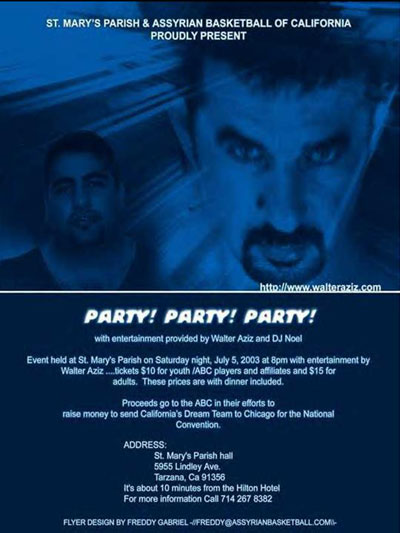
| POLITICAL DEBATE ON THE COMPOUND NAME IN CANADA Our nation is currently passing through a decisive stage in its contemporary history, in which our people are facing the issue of compound name that raises a lot of reactions among supporters and dissidents. Accordingly, our people are invited to share their thoughts in the political debate organized by the Assyrian Community Center in Canada. Participants of our debate are: 1. Mr. Hirmiz Aboona: Assyrian Historian and researcher. 2. Mr. Esho Dinkha Yakira: Former member of Central Committee of the Assyrian Liberation Alliance (Kheth Kheth Alap). 3. Mr. Cheldo Bet-Shmoel: Member of Central Committee and Director of the Assyrian Patriotic Party US and Canada. The debate will be moderated by Mr. Sam Shlimon and held in the United Assyrian Youth of Canada located: 3 Jody Ave. Unit # G The debate will start at 7:30 PM on Sunday 13 July 2003. Refreshments will be served during the break time. The Cultural Committee SIGN UP FOR THE YOUTH EXCELLENCE PAGEANT It is my great pleasure to inform you that we will be hosting
the 70th National Convention to be held in Rosemont, Illinois
during the Labor Day weekend, August 28, 2003 to September 1,
2003. http://aanf.org/convention70/Application%20Packet.pdf Do not hesitate to contact me if you have any questions. GILGAMESH ON HOLLYWOOD STOCK EXCHANGE We are very pleased to announce the listing of “Gilgamesh” on the very-popular Hollywood Stock Exchange (http://www.HSX.com) website. At HSX.com, visitors buy and sell virtual shares of celebrities, movies and music with a currency called the 'Hollywood Dollar'. This site is fun, free, and really feels like a stock exchange for the movie industry. Gilgamesh is now listed as a Movie Stock and is even presented on the HSX homepage as the IPO of The Day. We invite our friends and partners in the Assyrian community to visit and join the Hollywood Stock Exchange. Once you've completed the very simple registration process, you'll be able to purchase and trade virtual stocks of great film projects at various phases in development and production, including GILGAMESH. We want to thank you, our friends in the Assyrian community, so much for all of your support thus far. It is your support in spreading the word about our important project that will ultimately make this film a success. We hope all is well with you and have a good time trading stocks
on HSX.com.
|

| MAR GWEARGIS SLIWA’S LETTER TO JAY GARNER May 11, 2003 Mr. G. Garner, I am Gewargis Sliwa, Archbishop of the Church of the East in Iraq and the representative of our patriarch His Holiness Mar Dinkha V. As mentioned above, the name of our church is "Church of the East" and it is also called Assyrian Church of the East as the majority of its members in the last period of its long history are Assyrians. I myself prefer the first historical and geographical name. Taking it from its historical point of view and before the schisms
that took place in the church because of some theological theories
or whatever during the different periods of its long history, the
name "Church of the East" was the only name for this Apostolic
church which was founded in the second half of the first century
by the Apostles Saint Because of these schisms or divisions among the members of this church who knew themselves as Assyrians, there appeared two other names, "Syrians (for Syrian Orthodox of which some joined Roman Catholic and were called Syrian Catholic) and Chaldeans for those who joined the Roman Catholic in the 16th century. Let me give you a simple real and clear example of what I am about
concerning this certain point. We might find three members of one
family living in one of the Christian villages in the suburbs of
the ruins of Nineveh (Mosul today) which was the capital of the
Assyrian Empire. None of them had migrated from any far of or foreign
place. They So as mentioned in that Declaration of the Patriarchs and Bishops of Iraq, dated April 29, 2003, the names Assyrians as for the members of the Church of the East, Syrians for both members of the Syrian Orthodox Church and Syrian Catholic Church, and Chaldeans for the members of the Chaldean Church, are three different names standing for the people belonging to one Assyrian ancestry who played an important role in the ancient history of Iraq. For this reason also we must not be considered as a minority in Iraq. We are proud of being Iraqi Christian citizens, and we are proud of being Assyrians. We, as Christian communities together with other members of other Churches, mentioned in the Declaration, have been living with Moslems and other religious communities in peace in this blessed Cradle of Civilization, the Land Between the Two Rivers, Mesopotamia, Iraq of today. We want to keep this respectable and peaceful relationship even
within the new Iraqi government which will be soon elected by Iraqi
citizens. Concerning the political rights of the members of our Christian Iraqi communities, they should be achieved through and by their political parties or groups. As for the Assyrian or Syrian Chaldean political rights, they can be asked for and achieved through the Assyrian Democratic Movement mentioned and acknowledged with other Iraqi Movements in the Presidential Determination No. 2003-05, dated December 9, 2002 signed by George W. Bush, the President of the United States of America, of which a copy is attached with the declaration. Gewargis Sliwa
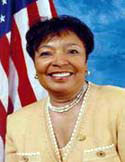
Courtesy of the Women’s eNews (9 July) As each day's tragic headlines make clear, post-Saddam Iraq is still plagued by major security issues and economic deprivation. And evidence is mounting that women's ability to fully enjoy human rights--indeed, even to demand such rights--is integrally linked to their economic empowerment. The lack of security is restricting women's mobility outside the home, reproductive-health services, education, jobs, prenatal care, social services, child care, and other gender issues must all be addressed. Inclusion of women in decision-making positions as well as their participation in the transitional government is critical to ensure that their needs are met. On June 12, 2003 on the same day that I joined my colleagues on the Congressional Human Rights Caucus and held a briefing on women survivors in postwar Iraq, I, as a member of the Congressional Black Caucus Foundation, was also honoring Shoshana Johnson, the first African American female prisoner of war. The confluence of those events brought home to me the dichotomies that women, in all their various roles, now face during and after war. Again, the same feeling I had two years ago--about the importance of women gaining a stronger voice and role in war-related issues--completely enveloped me.
Shortly after the horrific events of on September 11, a United States declaration of war became an ever-present possibility and media coverage of related atrocities was intense. In the midst of such a difficult time for our nation, my heart became heavy as I read a story of 12-year-olds being forced into combat and realized those children abroad were victims of terror and war, just as all Americans were. I thought about U.S. women who might have to watch their children go off to war and refused to accept that a woman could carry a child for nine months and experience the pain of childbirth, only for her son or daughter to be sent off to war and die on a battlefield. I thought to myself that this offends the world's sense of decency and the code of conduct of civilized nations. At that moment I decided it was incumbent upon me--not only as a member of Congress, but as a mother and grandmother--to take action. In March, 2002, I officially launched "A World of Women for World Peace." The program provides a unique opportunity for women from all over the world to discuss viable alternatives to war and violence and ways to get women more involved in every level of the peace process. Congressional Push to Involve Women in Peace Building My resolution also designates May, the month in which Mother's Day is traditionally celebrated in the United States, as an appropriate time to focus on women and peace. It was through Julia Ward Howe and Anna Jarvis, who organized Mother's Friendship Days as a way of healing the scars of the Civil War, that Mother's Day was eventually established as a holiday in 1914. To better promote international peace and increase women's participation in the process, I met with many distinguished peace advocates from all over the world. Among them were Maha Abu-Dayyeh Shamas, founder and executive director of the Women's Centre for Legal Aid and Counseling, which is dedicated to improving the social and legal status of Palestinian women, and Terry Greenblatt, director of the Israeli organization Bat Shalom (Daughter of Peace). They were the first to join me in a National Day of Dialogue. The National Day of Dialogue marked the gathering of scholars, Nobel laureates, government officials and Members of Congress with the single goal of discussing how women could have a greater voice in preventing and resolving national and international conflicts. International peace groups such as Women Waging Peace in Cambridge, Mass., Women's International League for Peace and Freedom, based in New York, Hague Appeal for Peace also based in New York, Women's EDGE, Seeds of Peace and others have signed on as key supporters of A World of Women for World Peace. Postwar Meetings with Female Iraqi Leaders To gain a clearer understanding of the challenges facing women in post-war Iraq, I met in April with 26 Iraqi women leaders in Washington, D.C. They included expatriates from the United States, Europe and the Middle East. Several women came directly from Iraq, including the female minister of reconstruction and development of Northern Iraq and the president of the Assyrian Women's Union in Iraq. About 60 other experts from key international and federal agencies also participated in this gathering that aroused just as many emotions as it did facts. Shortly after that meeting, I went on the first Congressional Delegation to visit the war-torn area. After returning from Iraq, Republican Congressman Dave Hobson of Ohio and I on May 22, 2003 introduced House Concurrent Resolution 196, which urges the federal government to provide assistance to the women of Iraq in order to strengthen and stabilize the emerging Iraqi democracy. Dangerous Time for Women in Iraq Given the human, financial and emotional costs of war, I was overwhelmed by the certainty that the burden of peacemaking and peace-building cannot be left to one institution, gender or political party. It must be a shared responsibility that encompasses all, regardless of race, class, gender or religion because every one of us pays for the human and economic costs of war. The military budget is projected to rise to an outrageous $480 billion annually, but damages can't merely be measured with statistics or dollars and cents. The human costs are torn and displaced communities, women suffering the ravages of rape and widowhood, children with missing limbs and orphans without the hope of education or healthcare. It is worth remembering what General Dwight D. Eisenhower once said: "Every gun that is made, every warship launched, every rocket fired, signifies in a final sense a theft from those who hunger and are not fed." To all those committed to real and lasting peace in the Middle East, I have only four words: "No women, no peace." Congresswoman Eddie B. Johnson [Z-info:
Congresswoman Johnson is serving her sixth term representing the
Thirtieth Congressional District of Texas. She was named by Ebony
Magazine as one of the Ten Most Powerful African American Women
of 2001. Since September 11, Dallas Congresswoman Johnson has pursued
the motto "no women, no peace," by introducing two resolutions
to bring more women into the peacemaking arena and forming an organization
to do the same.] AIRFIELD IN IRAQ WAS SITE OF WWII BATTLE Courtesy of the Associated Press (5 July); by Chris Tomlinson (ZNDA: Habaiyah) MiG-21 jets rust away where biplanes once stood ready, and American troops now patrol its grounds. But Habaniyah airfield has changed little since 1941, when it was the scene of a decisive battle for British control of the Middle East. U.S. soldiers sleep in the long, high-ceilinged barracks that once housed British aviators, the peeling paint and dust-filled window screens betraying years of neglect. The two-lane streets are lined with the eucalyptus and palm trees planted by the British when the base was finished in 1938, and a few of the original hibiscus, rose and oleander bushes remain. The base's name means ``of the oleander'' in Arabic. Habaniyah, a town as well as an airfield 35 miles west of Baghdad, has become an important base for U.S. troops in the Sunni heartland of Iraq. A flying school established there was a critical foothold for the British in April, 1941. A pro-German junta had taken control of Baghdad and the allies' oil supply was in danger of being cut. The British ambassador in Baghdad ordered several thousand British civilians to move to Habaniyah, while Prime Minister Winston Churchill rushed reinforcements to the British base and to another one in Basra. On April 30, junta leader Rashid Ali ordered 9,000 troops to surround Habaniyah and prepare to take it. The British troops were supported by Assyrian and local infantry, but were vastly outnumbered, according to the official Royal Air Force history. But by loading machine guns and bombs onto the training aircraft - mostly biplanes or twin engine training planes - the Royal Air Force flight instructors and student pilots defeated three Iraqi brigades with a few hundred troops and 96 aircraft. By the end of the battle, British bombers flying from Habaniyah had destroyed the entire Iraqi air force. The ground troops, aided by reinforcements, had launched a counterattack, taken control of Baghdad and reinstalled a friendly government. A late attempt by an Iraqi commander at Fallujah, the official history said, was ``met with disaster.'' The report could have easily described the U.S. advance on Baghdad in April. ``Some countries learn from their military history,'' said Capt. Mark Miller, commanding officer of A Company, 3rd Battalion, 7th Infantry Regiment. ``This one (Iraq) obviously didn't.'' In 1959 the British handed the base over to a new revolutionary government in Iraq. The Iraqi air force built a few modern buildings and installed flight simulators to train pilots on Soviet aircraft, but most of the British legacy remains. Now U.S. jets and helicopters prowl the skies over Habaniyah looking for Iraqi militants, while a tank and an infantry company use the base to launch patrols in the nearby towns. [Z-info:
For more information on the Royal Air Force history of the Battle
of Habaniyah visit: http://www.raf.mod.uk/history/opsrep.html
and see RAF Habaniyah Association website at http://www.habbaniya.freeserve.co.uk.
]
|
|
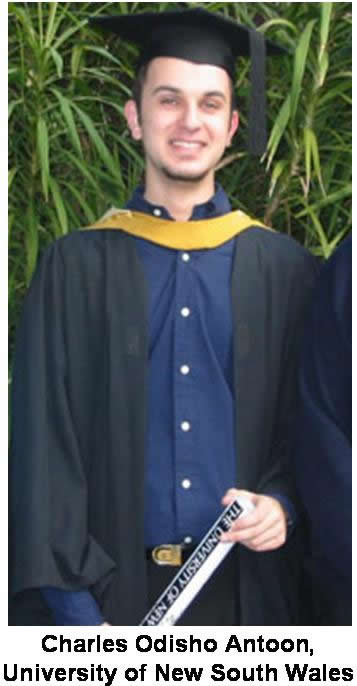
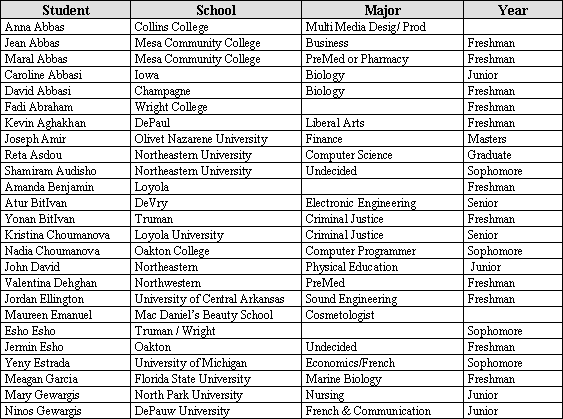
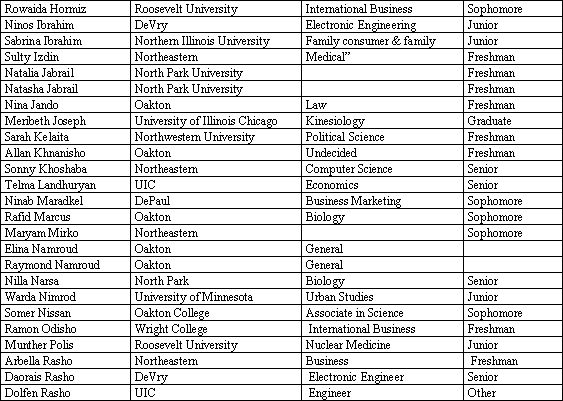
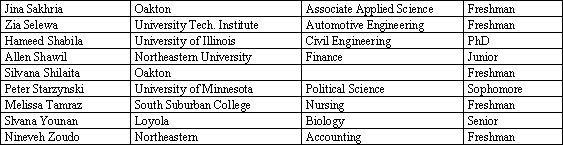
2003 AUAF SCHOLARSHIP AWARDS RECIPIENTS The following Assyrian students were awarded the Assyrian Universal
Alliance Foundation scholarships last week at a special ceremony.
This year’s total disbursement reached US$ 40,000:
(ZNDA: Washington D.C.) National Republican Congressional Committee Chairman Tom Reynolds announced today that Mr. Shimon Khamo of Modesto has been named to the 2003 Republican Chairman’s Honor Roll. Mr. Khamo is the Secretary General of the Bet-Nahrain National Alliance and serves as a co-chairman of the committee’s Business Advisory Council. He is being recognized for service and support in keeping the White House and Congress in Republican control. As a member of the Honor Roll, Mr. Khamo’s name will be on display at the Republican Headquarters building in Washington D.C. As a member of the Honor Roll, Mr. Khamo also qualifies to receive the Committee’s highest honor, the prestigious Republican Gold Medal to be presented at a special awards ceremony in the nation’s capital. Honorees will be announced later this year.
|
Visit the Zinda Magazine Calendar at http://www.zindamagazine.com/calendar
|
Zindamagazine would like to thank: Ninous Bebla |
ZINDA Magazine is published weekly. Views expressed in ZINDA do not necessarily represent those of the ZINDA editors, or any of our associated staff. This publication reserves the right, at its sole discretion, not to publish comments or articles previously printed in or submitted to other journals. ZINDA reserves the right to publish and republish your submission in any form or medium. All letters and messages require the name(s) of sender and/or author. All messages published in the SURFS UP! section must be in 500 words or less and bear the name of the author(s). Distribution of material featured in ZINDA is not restricted, but permission from ZINDA is required. This service is meant for the exchange of information, analyses and news. To subscribe, send e-mail to: z_info@zindamagazine.com.
Zinda Magazine™ Copyright © Zinda Inc., 2001-2003 - All Rights Reserved - http://www.zindamagazine.com


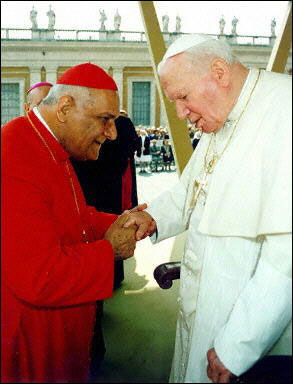 Throughout
his life Mar Bidawid maintained a constant desire to re-unite
the fragmented existence of his people’s spiritual
and temporal subsistence. During his service as the Patriarch
of the largest Assyrian church, he was a source of far-reaching
reforms to bring about the full communion of the two branches
of the Assyrian Church, the Church of the East and the
Chaldean Catholic Church.
Throughout
his life Mar Bidawid maintained a constant desire to re-unite
the fragmented existence of his people’s spiritual
and temporal subsistence. During his service as the Patriarch
of the largest Assyrian church, he was a source of far-reaching
reforms to bring about the full communion of the two branches
of the Assyrian Church, the Church of the East and the
Chaldean Catholic Church.