|
|||||
 |
101
San Fernando Street, Suite 552
San Jose, CA 95112 U.S. Voice (408) 918-9200 Fax (408) 918-9201 |
||||
|
|||||
|
|||||||||||
|

|
| The second Gulf War may be inevitable, but we can prevent aggression against the Christians of Iraq if we let the citizens of our adopted countries, our local governments and policymakers know who we are. Zinda Magazine sources in North Iraq indicate that there are no solid commitments given by non-Christian groups to protect the Assyrians against possible attacks. Furthermore, Assyrians may not even be fully recognized under the new constitution of the land as equal citizens of Iraq if the U.S. and her allies do not pressure the Moslem groups. This week several Assyrian organizations and churches are calling for public demonstrations in various cities across North America to demand equal rights for the Assyrians in a post-Saddam Iraq. Is your church or organization on this list? If not, then you should be calling your minister, club president, or local civic leaders and request a peaceful demonstration between this Friday, 14 March and Monday, 17 March. The city of San Jose, California for example expects a crowd of 1,000 demonstrators to march along the downtown area on Sunday, joined by many other Northern California groups. Assyrians must do everything to make these demonstrations the single biggest obstacle to possible aggression toward the Christians in Iraq. Select a busy location, a Federal building, a crowded park and hold up signs that express our resolve to rebuild a new Iraq- an Iraq that is free, democratic, and treats Assyians as equal citizens. If necessary do not go to school or work on Friday or next Monday. Change your plans for this weekend. Motivate your family members and friends to join you in these demonstrations. Don’t leave your children behind; take them with you to the demonstrations. Let them proudly wave the Assyrian flag and cheer: “Assyrians Exist”. Remember that over one million Assyrians along with 22 million other Iraqis are at this very moment living under the fear of the biggest war in recent history. It is our duty to do all we can to protect our fellow Assyrians from immediate violence that may ensue shortly after the March 17 deadline set by the U.S. and Great Britain.
Organize a group to hand out leaflets and flyers during your demonstrations. Briefly explain who Assyians are. Focus on the fact that Assyrians are the only indeginous people of Iraq and are predominantly Christian. Emphasize the phrase “Assyrian Christians of Iraq”. Take these flyers to your local non-Assyrian churches, friends, and work colleagues. Write to your local newspapers and make sure your letter gets published. Display the Assyrian flags and the flags of your adopted countries.
It matters not if you are for or against the war. What matters is
that Assyrians may not receive equal treatment after the removal of
Saddam Hussein and be subject to harrasment as they did after the
departure of the Russian and British troops in the last century. Zinda Magazine will begin publishing the names of the Assyrian organizations, ad hoc groups, and individuals who will be supporting these demonstratons within the next few days. Contact us and let us know who you are and where you will be converging for your demonstrations. Are you going to talk at a gathering? Let us know too. Do you need help for your press releases, signs, letter writing campaign, etc.? Rely on the Zinda Crew. We will gladly help you with your campaign. Finally we urge all Assyrians from every country around the world to participate at these worldwide demonstrations. Chicago, Sydney, Moscow, Amman, Stockholm, Assyrians from everywhere. Just walk out and let the world know that Assyrians exist! Z-Crew
|
THE ASSYRIANS OF NORTH BATTLEFORD,
CANADA
|
| ESAKAN SHABAZ | 1861-1936 | |
| ODISHAW SHABAZ | 1857-1932 | |
SAMUEL ROBIN |
1899-1939 | |
| MICHAEL GEORGE | 1850-1934 | (Shirin’s Father) |
| ABRAM ADAMS | 1865-1915 | |
| SARAH GEORGE BADAL | 1852-1918 | (Peter Badal’s wife) |
| AWEGAIL JACOB | 1893-1919 | |
ELISHAW JACOB |
1877–1931 | |
| MARY JACOB | 1891-1942 | (E. JACOB’S WIFE) |
| BENJAMIN GEORGE | 1886-1969 | |
| JOZAL ODISHAW | 1880-1945 | (J. ODISHAW’S WIFE) |
| JOSEPH ODISHAW | 1874-1950 | |
| MARY SHABAZ BACKUS | 1867-1942 | (SHIRIN’S MOTHER) |
| RACHEL GEORGE | 1863-1949 | |
SAMUEL LAZAR |
1891-1947 |
The First Homesteads
In 1902 land was already surveyed and quarter sections designated by number. The number was on a steel pole in front of each plot. A quarter section could be purchased at $10.00 and another quarter could be preempted for $3.00. The Assyrians filed for homesteads soon after their arrival. Dr. Adams purchased a quarter section where later the Saskatchewan Provincial Hospital was built. Michael’s homestead later became the Canadian Railway’s Right of way. On a current city map, Daniel Lazar’s homestead would be across the shopping mall.
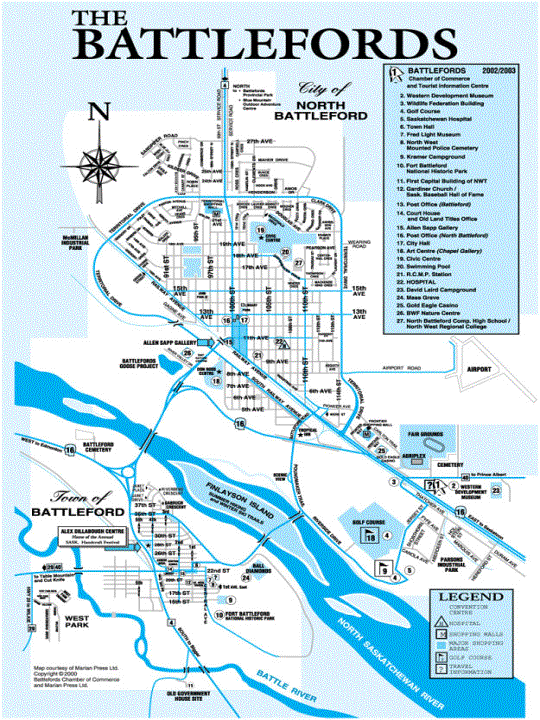
In 1903 there were very few farmers in the area. The closest town, Battleford, was some miles away from the Assyrian encampment. The town was experiencing a setback as the railway had bypassed it in favor of other cities. Movement of cargo constituted a problem and imported goods were very expensive due to the high freight rates. Farmers were therefore not attracted to the area because they could not market their produce if they settled there. The Assyrian colonists engaged in subsistence farming and for their source of cash they went to town for any jobs available in unskilled labor, an arrangement with which they were already familiar, as they had practiced it in the old country. The colony prospered in the first few years. The land was virgin and it produced much more than they had ever had in one season back home. Sarah Adams is quoted to have remarked that the cabbages grew so large that they did not fit within one person’s arms. Even work in town was much more remunerative compared to the old country.
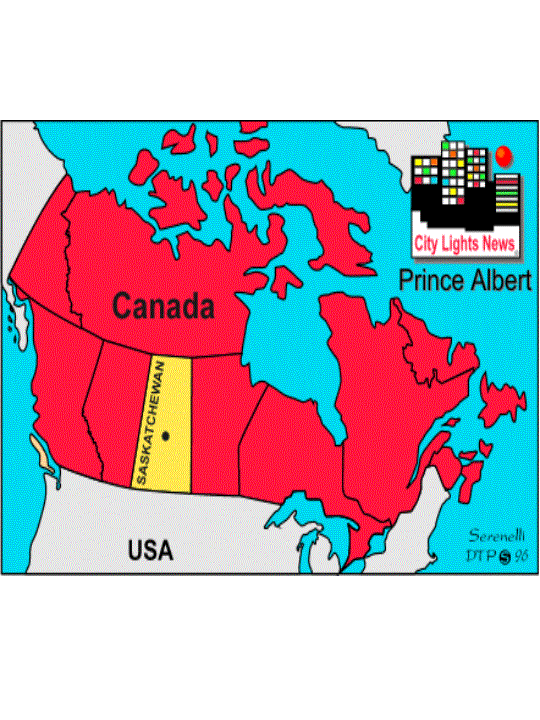
In the meantime the Canadian Northern Railway officialdom bought large
tracts of land around the Assyrian homesteads and to the utter dismay
of the inhabitants of the town of Battleford, decided to divert a
line, which was supposed to go through the town, to this area. In
a short time a settlement arose which within a year developed into
the prosperous town of “North Battleford”. New business
and people, mostly from England or British settlers from Eastern Canada,
poured in. In March of 1906, a year after the railroad reached the
area; the settlement acquired the status of a village. Four months
later the population had reached 565, and the village was officially
incorporated as a town. This gave the Assyrians plenty of opportunity
to find work. Some hauled bricks with a team of oxen; others laid
water and sewer lines, or found other types of work in the booming
construction market and on the railway. For example, Moses Backus
as a new immigrant worked in the construction of King Street School.
Later he hauled bricks with a team of oxen to build the Saskatchewan
Hospital, and laid water and sewer lines for the city of North Battleford.
Esakan Shabaz opened a candy store. He also invested in the building
of a billiard parlor. The three Adams brothers formed a small corporation.
They bought a “steamer” and a set of ploughs. Their plan
was to plough other farmers’ fields and work as “land
breakers”. Their very first attempt was a disaster. A British
farmer hired them, but the steamer failed to operate shortly after
the work had started. As they did not know how to repair the machine,
they were told to be gone. In the autumn they made a second attempt
and bought a separator (a winnowing machine which separates the wheat
from the straw) and instead of the steamer they used fourteen teams
of oxen. This failed too because, as a British informant put it, “It
was out of proportion to their experience and the farming situation
in the area where farming was still done on a small family scale.”
In 1906 the settlers had saved enough money that they were ready to send passage money and bring their relatives over from the old country.
Isaac Adams went to Persia in 1906, and in 1907 returned with another colony of 40 Assyrians. The new settlers purchased land in the White Wood area 7-8 miles N.E. of the town of North Battleford. This land proved to be of much better quality. It was flat, had excellent soil, and was free of rocks. The drawback was the crops on it were exposed to freezing. A few of the settlers who were exasperated with the rocks and the swarms of mosquitoes near the river plots of the 1903 settlement, abandoned their homesteads and relocated to the second site. But good land was not enough to ameliorate the situation for the Canadian farmer in those days. With the agricultural technology limited to human and animal power, it was not easy to break a sufficient amount of land for cultivation, particularly if the unit of labor was the family. Quarter-section farms were inadequate for dry farming. A half section would be viable, but then it needed more labor than one family could afford. The government expected to develop Western Canada into a farming region, but it was not prepared to subsidize the farmers. Consequently approximately 57% of (six out of ten) farmers failed and moved out to towns (McGinnis 1975). The Assyrians were no exception. Like most farmers they were part-time laborers, and as farmers they practiced mixed farming and livestock raising for subsistence. Year after year the crops failed; they were hit by frosts before the farmers had a chance to take them off the ground. Dr. Adams had to obtain relief for the hard hit families. By 1914 most Assyrians had moved out of farms and settled in a section of town that was called “Chism Town”.
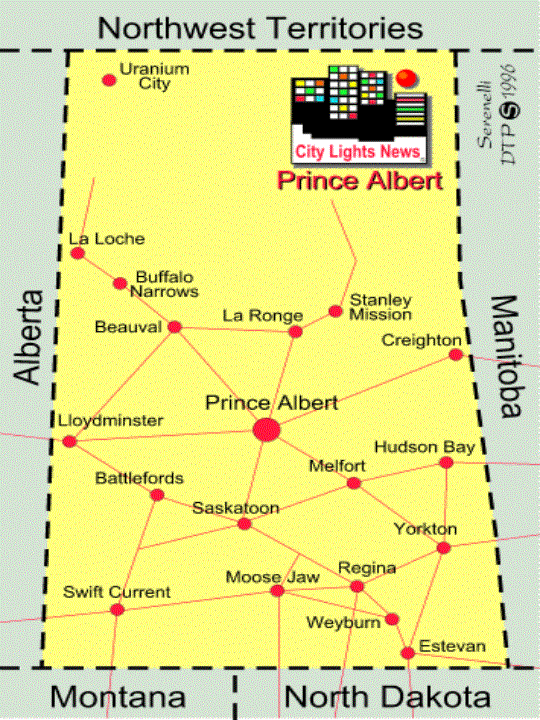
In 1910 the provincial government paid Dr. Adams a good price for
his homestead because his land was selected for a government project,
the Saskatchewan Provincial Hospital. He decided to move to California
and establish a new colony there. He urged the Assyrians of North
Battleford to join him. Only one of his brothers, Joseph, and Odishoo
Backus did. His two other brothers Abraham (Abram) and Jacob stayed
in North Battleford. Jacob was killed doing military service during
World War I. Abraham (Abram) died in a fire in 1915. Abraham had eight
children: two sons William and Paul, and six daughters. When Dr. Adams
got settled in Turlock, California he helped his nephew William to
relocate. William in turn moved his sisters to Turlock. Assyria got
married in Turlock and is buried in San Francisco. Abraham’s
other son Paul stayed in North Battleford and his offspring live in
various cities in Canada.
In subsequent years more Assyrians joined the colony in North Battleford
either on their own, or through the help of relatives already there.
In 1905 Joseph Odishaw moved from the United States to North Battleford
. In 1910 he helped bring his brother John, wife and three children
from the village of Gavilan. John could not find land close to the
other Assyrian settlers and his homestead was isolated; but he became
the only successful farmer “because his homestead was on a slope
and his crops escaped freezing.” In 1972 his son Michael and
his grandson Richard were among the most prosperous farmers in Western
Canada.
Samuel Robin had immigrated from Urmia to eastern United States in 1900 with three Assyrian priests. The four men homesteaded in partnership in Flint, Michigan. Samuel could not farm. He left for Ohio and worked there as a laborer for three years. Then he heard about the Assyrian colony in Canada and joined it in 1904. He homesteaded and in 1906 asked Dr. Adams to bring his wife Shirin from the old country. Later he also brought George, the son of his sister-in-law (his wife’s sister’s son) claiming that he was his own son so that the immigration authorities would allow the young man across the border. Samuel left farming and moved to the town and became a buggy driver.
Sam Esaw, one of the Assyrian refugees during the Kurdish pre-World War pillage of Gavar, had immigrated to Chicago with the help of the Red Cross. He joined the colony in 1912. Later he sent money to the old country and brought his wife Miriam and his brother Robert to Canada. Sam opened a confectionary store in N. Battleford; but went bankrupt and engaged in peddling for a while.
In 1923-24 twelve settlers came from Marseilles, France. They were all originally from the Urmia region, but during World War I they had fled and lived for several years in refugee camps, and then had gradually made their way from Baghdad to Marseilles, where there was a small refugee enclave at the time. These twelve individuals belonged to two families. One family consisted of David George, his wife and two children, and his niece Nina whom he raised as his own daughter after the death of her father, his brother. George had sent his younger brother Benjamin to Canada with the 1907 colony, and was now joining him. The second family consisted of the rest of Backus brothers. The history of the migration of the Backus family starts with the 1902 colony. There were six brothers in this family. The eldest brother Solomon had left Sangar with his uncle Esakan George with the first colony. In 1906 he had helped his younger brother Moses Backus to come to N. Battleford with the second colony. The two brothers homesteaded and sent money to their parents in the old country. As a consequence their father became so prosperous in Sangar that he was unwilling to immigrate to Canada. Instead, he asked his two sons to return to the old country. After the two brothers got their passports and were ready to return, World War I broke out in Europe and they could not travel. Following the uprooting of the Assyrians from their homes during the war, the Backus family lived in Baquba refugee camp. The two Backus brothers in Canada sent their parents passage money and helped them to relocate to Marseilles, France. In 1923 the parents were awaiting their visas to Canada. However, Peera, the father, had trachoma and was forbidden entrance into Canada. Since his wife Sonia refused to leave the old man behind, one of the brothers Robert, decided to stay in Marseilles and came to Canada after the parents passed away several years later. The other two brothers, Envia, and Eli who was married and had a small child, resumed their journey and reached N. Battleford in 1924. They also brought a young woman as a wife for Odishoo, whose wife had passed away in Turlock, California. The matchmaking was arranged by the parents of the girl and the Backus’ who had become friends while staying in Baquba refugee camp. In 1936 one of the Backus brothers who was unmarried, returned to Marseilles, and with the recommendation of his parents married a distant cousin and brought her with him to N. Battleford. It appears the Marseilles transit colony served as a bridal reservoir for the Assyrian bachelors in North America.
In 1937 Tom Yonan joined the colony from England. Tom was originally from the Assyrian Tyari tribe of the Hakkari Region in Turkey. He had served as a levy during the British occupation of Iraq, and was brought to England by his superior officer after the British pulled out of Iraq in 1933. He resided in England for two years and worked in the house of his former officer until the latter arranged a visa for him to immigrate to Canada. An Assyrian in Canada was needed to sponsor Tom before immigration authorities would allow him entrance into the country. Solomon who had helped many people, volunteered to do so for Tom too.
The latest addition to N. Battleford was a young man named Jack Ismail from the post-World War I Assyrian Settlement in Syria. He too was originally from the Tyari tribe and related to Tom. They were clan cousins. He came as a visitor in 1972 and stayed at Tom’s for some time. He was determined not to return to the Assyrian settlement on the Khabour, in Syria. However, the immigration regulations made it virtually impossible for him to obtain a visa. His efforts to stay with the help of the Assyrians in Canada failed. Then he met and married a charming Canadian girl and was able to stay.
Many more Assyrians came to N. Battleford. But the rate of emigration from this city was much higher than that of immigration into it. Most of the Assyrian families applied for immigration visas to the United States and left to join their relatives there. Those who chose to stay permanently in N. Battleford were either prosperous enough not to want to relocate, or their immigration applications to the United States had been rejected. The Assyrians who made North Battleford their hometown proved to be exemplary citizens.
They worked hard but with determination and perseverance; they farmed, established businesses and educated their children so that they could enrich the fiber and strength of their adopted homeland.”(Nordstrom, Inez. “People and Places”. The Battleford News Optimist)
In 1972 there were 46 Assyrian men, women and children left in N. Battleford. Of these 26 were full Assyrian. None of the 1902 settlers remained in the city. They had either out migrated or had passed away. Of the 1907 colony only Shirin George Robin was alive.
Community Profile
“An unusual group of people often referred to as ‘Presbyterian’ began arriving in North Battleford in 1903 from Iran.” (The Battlefords News Optimist, Sept. 25, 2002)
The Assyrians, with Rev. Dr. Adams as their minister, were the first Presbyterians in the region. When Dr. Adams left for Turlock California, they brought a new minister, Rev. Eshoo who continued providing them service in their own language until 1940’s. (See group picture.) Then they joined the St. Andrews Church and remained its backbone throughout. They served in various capacities as treasurers, ushers, and elders of the church. The church choir was full of Assyrian youth and the Assyrian women were very active in charity work as members of the church ladies auxiliary. Their handicraft and baked goods had eager takers. In a special ceremony at St. Andrews Presbyterian church on the 80th anniversary of the arrival of Assyrians to North Battleford, Lieutenant Governor C. Irwin McIntosh remarked: “It is a matter of record today that almost half of the elders of St. Andrews are descendants of those first settlers. They have made a contribution to our city and to our country which belies their numbers.” (The Battlefords News-Optimist, 1983)
Assyrian Businesses
“The candy industry in Canada is a big business but how many are aware that a few short years ago North Battleford had its own candy manufacturing industry?” (Nordstrom, Inez. The Battlefords News-Optimist)
The founder of the candy industry in North Battleford was no other
than Esakan Shabaz who opened the Olympia Candy Store where he made
his own candies. He was a skilled candy maker and his recipes include
such varieties of confectionery as sugar cream, caramels, assorted
toffee, marshmallows, chocolates, buttercups, tutti-frutti, and peanut
brittle. When Esakan passed away, his nephew Bob Shabaz inherited
the business. Then Solomon Backus married Mary, the widow of Esakan,
and the candy store as well as the billiard parlor passed into the
hands of Backus family. In 1959 Sandy Backus turned it into Sandy’s
Coffee Shop, a modern day version with soda fountain and marble topped
ice cream tables.
There were other businesses owned and operated by the Assyrians of
North Battleford. Among them are:
Madison Billiards Owner: Moses Backus later passed on to sons Joseph
and Donald
Picadily Grill Owner: Eli Backus
Bob’s Barber Shop Owner: Robert Backus
Patricia Confectionary Owner: Sam Esaw
Lazar Dry Cleaning and Tailor Shop Owners: Daniel and Sulton Lazar
North Battlejford Tannery Owner: Fred Lazar
Beaver Billiards Owner: Tom Yonan
Modern Billiards Owner Bob Shabaz
Battleford Furniture Owners: Richard and Chris Odishaw
People’s Cab Owners: William and Albert George
J.R.’s Distributors, Dispensing and Catering Owner: Robert Odishaw
Korner Store Owner: Shirley LeCore (Robins)
Capital Grocery Owners: John and Thirza Odishaw
Various individuals among the Assyrians of North Battleford obtained prominent positions in the community and in the country. Johnny Esaw was the vice president of sports for the CTV television network. Moe and Jeep George coached and managed some of the most successful hockey teams in the community’s history, and along the way, helped many residents have successful hockey careers. Mike Odishaw, one of the many Assyrian- descended elders of St. Andrews Presbytrian Church in North Battleford, was reeve of the RM of North Battleford for many years. Dick Robin was a member of the North Battleford Public School Board for many years. In 2002 Chris Odishaw was not only the owner of a successful furniture business in the Northwest, he was in his second turn as president of the Battlefords Chamber of Commerce. David Odishaw operated a successful jewelry store for many years and also was a Chamber director.(The Battlefords News-Optimist Dec. 18, 02)
“To forget one’s ancestors is to be a brook without a surce, a tree without root.”
The inscription above is on one of the four plaques that the Assyrians
dedicated to depict their history in North Battleford. This was done
on the occasion of the 80th anniversary of the settlement of the colony
in this region. “The plaques, housed at the Western Development
Museum, are dedicated to the memory of the first Assyrian settlers
in Saskatchewan and to their beliefs in religious freedom which led
them here. The contributor of the historical material, Mrs. Margaret
Stewart of the North Battleford, is the granddaughter of Michael George,
one of the settlers who arrived in the area in 1903.” (Battleford
Telegraph August 24, 1984).
The descendents of the pioneer generation of Assyrians who still live
in North Battleford are:
Robert, Don , and Lydia Backus, Margaret George Beach, Richard Odishaw,
Tom and Tim Yonan. These were full Assyrian. Part-Assyrians were:
Chris Odishaw, Sandra High Backus, Bob Odishaw, David and Don George,
Kathy Beach (Margaret’s daughter), David Odishaw, Candice and
Mark Odishaw (Richard’s children).
The Assyrians have remained zealous about their ethnic identity, even though assimilation and geographical dispersion has eroded many Assyrian customs that remained alive in the community until 1940’s. Few spoke Assyrian at the turn of the 21st century. Nevertheless they have preserved their ethnic identity at the same time that they have remained dedicated Canadians.
Dr. Arianne Ishaya
California
An Invitation to All Assyrians
The Assyrians of North Battleford invite all Assyrian-Americans and particularly the descendents of the pioneer generation who now live in the United States, to participate in this historical centennial celebration in North Battleford. In this group belong the descendents of Isaac, Joseph, and Abraham Adams, the descendents of Odishoo Backus, Michael George, and S. Robin family; the descendents of the Lazar, and the Tamraz families; as well as Shabaz and Jacob families.
The descendents of George and Robin family now live in Connecticut,
Ohio, Atlanta and Tennessee. The rest live in Los Angeles, San Francisco,
and other cities in the Bay area.


| DOMINICANS PLAN TO OPEN NOVITIATE IN IRAQ Courtesy of the Zenit News Agency (10 March) (ZNDA: Rome) At a time when the wary are leaving Iraq, the Dominicans are hoping to step up their presence there. This decision is reflected in a report by Dominican Father Jean-Jacques Perennes, vicar for the Arab world, on his recent trip to Iraq and the programs the Dominicans are sponsoring in the country. Among the projects is the opening of a novitiate in the city of Mosul within the next two years and, if possible, the constitution of a student body in Baghdad. The Dominicans direct a theological center in the capital, which attracts hundreds of Christians every week. They publish a periodical called Christian Thought and carry out pastoral activities. An audiovisual center and permanent exhibition were inaugurated in Mosul, in connection with their activities for the poor and for catechetical endeavors. Work is not wanting," Father Perennes explained. "The bishops offered us other apostolic activities and the monks are not lacking projects." As a show of solidarity with Iraq's long-suffering people,
the Dominican monks and women religious said that they will
not leave the country even if war breaks out. SYRIAC CATHOLIC PATRIARCH CALLS HIS FOLLOWERS ‘ARAB’ Courtesy of the Daily Star (10 March) (ZNDA: Beirut) Syriac Catholic Patriarch Agnatios Butros VIII Abdel-Ahad led prayers Sunday for peace in Iraq and for sharing the heavy burden of the Iraqi people, two days before an expected visit to Baghdad to support peace. “We, as an Arab people, pray with our Iraqi brothers
so that God keeps war away,” said Abdel-Ahad in his sermon. Mass was attended by Environment Minister Michel Musa representing
President Emile Lahoud, Beirut MP Nabil de Freij representing
Speaker Nabih Berri, and State Minister Michel Pharaon representing
Prime Minister Rafik Hariri. Deputy Premier Issam Fares was
represented by his adviser Christian Oussi. ECOLOGISTS TO HELP RESTORE MARSHLANDS OF BET-NAHRAIN Courtesy of the Gainesville Sun (10 March); article by Greg Bruno (ZNDA: Florida) As the Pentagon pushes ahead with plans for war in the Middle East, a group of international scientists, including a University of Florida ecologist, are gearing up for an unorthodox environmental project: restoration of Iraq's "Garden of Eden." Bordered by the Tigris and Euphrates rivers, the Mesopotamian Marshlands once covered 3,500 square miles in southern Iraq and Iran -- interconnected marshes, wetlands, and lakes that supported endangered birds, abundant fish stocks and an ancient wetlands-dependent indigenous population known as the "Ma'dan." Regarded by biblical scholars as a possible site of the ancient "Eden," the marshlands' historical roots run deep. The Sumerian civilization, authors of the first alphabet and early epics, are thought to have inhabited the marshes around 3500 B.C., and in recent years, nearly 400,000 Ma'dan, or marsh Arabs, called the area home. But following the end of the Gulf War in 1991, Saddam Hussein ordered the widespread drainage and diversion of water entering the wetlands from the north, leading to a near 90 percent reduction in total acreage, according to a 2001 United Nations Environment Programme report. Now, a multibillion dollar effort, funded in part by the State Department and overseen by the Iraq Foundation, a U.S.-based Iraqi opposition group, aims to reverse Saddam's damage. "We're starting off with the basics," said Thomas Crisman, director of the Howard T. Odum Center for Wetlands at UF and one of about 15 scientists studying restoration plans. "We're trying to figure out, `Can we restore the ecology, and can we restore the culture of the people who lived in these marshes?' " Since August 2001, international members of the "Eden Again" task force, as the project is known, have worked to develop a restoration framework, outlining strategies and identifying challenges in returning the wetlands to their pristine state. In February, members of the advisory committee, including Crisman, met in Los Angeles to discuss the restoration hurdles, such as how to meet the needs of the area's indigenous people and methods to reduce threats from high salinity. Once launched, the international team will seek to consult with local stakeholders, scientists and support staff, facilitating efforts to return the wetland's ecosystem to a point of ecologic functionality. "Our project is not to do the restoration -- it needs to be done by the people of the region," said Suzie Alwash, a professor of geology at El Camino College in Torrance, Calif., and director of the project. "Our job is to promote the project." Projects organizers said the status of the restoration is not dependent on U.S. war efforts, and would continue regardless of an American-led invasion. Alwash said she has already met with scientists in Iran and Kuwait to discuss the plans. Final costs estimates are not available, and the level of State Department participation is classified. But based on square-mileage estimates alone, returning the area to its historical state is expected to be pricey. "If you take the southern third of Florida, dry it up and burn it, use it for military activities, that's what we have here," Alwash said. Comparing the project to the state's $7.8 billion Comprehensive Everglades Restoration Plan, she added: "Maybe in a couple of years we will be able to get Mesopotamian Marshlands as good as the Everglades are now. But to get it back to a truly good condition could take longer -maybe decades." |
IN A LETTER TO PRES. BUSH AUA SUPPORTS U.S. ACTION IN IRAQMarch 7, 2003 Dear Mr. President; Thank you for the excellent press conference of last evening. Your presentation was impressive and your message that Saddam is a threat to the United States and that he is a threat to the Iraqi people is accurate. Your stance is a reassurance to our fellow Americans that our President has put our safety as his first priority. I believe that the future will show that your actions in the case of Iraq will have resulted in the saving of millions of lives including those of Americans. For a change America is standing for something in the beginning and demonstrating leadership as a super power of the world. I know it is not easy but don't let them compromise your rightful position on disarming Iraq. Thank you for giving the Christians of Iraq (Assyrians) hope that they will be included as equal citizens in the future government of Iraq. Assyrians are the indigenous people of Iraq. They have been persecuted and discriminated against because they are Christians, because they are considered to be pro-western and finally because they are pro-American. This is valid because it was proven in WWI that they were the smallest ally of the West. In WWII the British Levi (Assyrians) saved Baghdad from being taken over by the Germans. They were betrayed and did not receive their promised independence at the Paris Conference. Assyrians were forgotten when Iraq was created and ignored their promised rights by the new Iraq government. You have shown that you are a moral God fearing man and I thank you for telling the world that you pray for peace in Iraq. I might ask if you and the White House family will join with us on Sunday March 9, 2003 in the Worldwide Day of Prayer for Christians of Iraq. I have included the announcement for your information. We have received hundreds of e-mails from around the world stating that they would join us in prayer for the Christians of Iraq. My only disappointment was that you mentioned the Sunni, Shiites and Kurds and did not mention the Assyrians as you had done previously. When we get mentioned the world takes notice and Assyrians are encouraged and know that you will stand behind your statement that "Christians and Jews must remain in Asia and Africa." Our Assyrian Nation in Iraq and those around the world will continue to pray for your Presidency, your safety and your family. Respectfully, Sen. John J. Nimrod, Ret. OXFORD GRADUATE, MONK BECOMES SYRIAC ARCHBISHOP Based on an article by Nismettin Kaplan in Mardin, Turkey; translated for Zinda Magazine from Turkish by Isa Nahroyo
In Turkey the followers of the Syrian Orthodox Church have increased in number and now have three Archbishops serving their communities. The Assyrians in Turkey have been inhabiting this land for over five thousand years. The Syrian Orthodox Church also enjoys a substantial membership in Syria, Iraq, Lebanon, Jordon, Israel, India, the U.S. and various European countries. In turkey, Assyrians mainly live in the cities of Mardin, Diyarbakir, Hatay, and Istanbul. Until now there were only two archbishops serving the Istanbul and Midyat (a province of Mardin). Archbishop Özmen will also be serving the Mardin district. After the death of Archbishop Mor Hanna Dölapünü in 1969 the Archdiocese of Mardin had become vacant. Archbishop Nuri Saliba Özmen is a graduate of Oxford University and has a Masters Degree in Semitic Languages. The Syrian Orthodox Church representatives together with the clergies
corresponded with twenty two religious representative worldwide requesting
the consecration of Monk Saliba Özmen as archbishop. Following
the arrival of the religious leaders in Damascus, His holiness Patriarch
Zakka 1 Iwas conducted the religious ceremony and After 34 years Archbishop Özmen has become the first archbishop to be appointed to the head of the historical monastery where he had received his religious education in earlier in life. After the ceremony in Syria, on his return to the monastery in Turkey Archbishop Özmen was met with the welcoming of the Assyrians who had come from several cities and towns to meet their new religious leader. In the monastery he preached to the people the message of peace and called on his flock to unite in peace and love. Archbishop Özmen was congratulated by Turabdin Archbishop Mor
Samuel Aktas and other community members who had come to greet him
with a kiss on the the cross in his hand. ASSYRIANS FIGHT TO BE NOTICED Courtesy of the Chicago Tribune (10 March);
article by Sean D. Hamill Many Chicago-area Assyrians also hoped Sunday's global effort would
illuminate a basic fact about them. Thousands attended similar services, lighting prayer candles and attending meatless and dairy-free Lent breakfasts afterward, in the four other Chicago-area churches, which together make up the largest concentration of Assyrians in the United States. Everyone interviewed at St. George's, 7201 N. Ashland Ave., expressed the hope that Saddam Hussein is removed from power. Nearly everyone with Iraqi origins had a story to illustrate Hussein's brutality. "Even our [Assyrian] flag, you were not allowed to put it in your house," said Eilen Sommo, 39, of Chicago, who left Iraq 12 years ago. "If you did, they'd arrest the men in the house." Her son, Gilbert, 13, was born in Iraq, but he was too young to remember anything of it. Still, he talks with his relatives who still live there and has an opinion on what should happen next. "The thing is, I want them to attack to get rid of Saddam," he said after attending an Aramaic language class at St. George's on Sunday. "I was born there, but I've never been back, and I want to go back some day." For now, that's impossible, his mother said. "Maybe someday," she said, "when Saddam is gone." As Christians, Assyrians are an ethnic and religious minority in the Middle East, where more than 2,000 years ago the Assyrian state controlled the region. They are quick to point out that they are neither Muslim nor Arab, and the language they speak is a modern relative of the ancient Aramaic that, scholars say, Jesus spoke. But Assyrian-Americans have battled not only cultural suffocation in Iraq, where they can't teach their language, but confusion once they have settled in the United States. "My name is Christina, but [after people look at me] everyone
always asks if I'm Muslim," said Christina Abraham, 22, a political
science student at DePaul University. Since Sept. 11, 2001, the confusion has been dangerous and pervasive. Leaders of another Chicago Assyrian church, St. John's, 1421 W. Lawrence Ave., believe that an arson there less than two weeks after Sept. 11 was a hate crime directed at them because someone thought the congregation was Islamic, despite the Christian cross that stands in front of the church. "We had notes left at the church before the fire saying `Are
you with US or them?'" said Rev. Charles Klutz, St. John's pastor.
"Even the policewoman who responded [to take the fire report]
called us a Muslim mosque." IRAQI EXILES TO HELP LIBERATE HOMELAND Courtesy of the Arizona Republic (5 March); article by Daniel González (ZNDA: Phoenix) They live comfortable lives in the United States, playing soccer on the weekends and working at good jobs. They haven't forgotten, though, about the plight of their countrymen still living in Iraq or their own memories of terror and persecution under Saddam Hussein. So when the United States sent out a call for Iraqi volunteers to help the American military liberate their homeland, at least a dozen Iraqi exiles living in the Valley were among the first to sign up. As many as 3,000 Iraqi exiles nationally will be trained at a military base in Hungary to work as mediators, translators and guides both during a possible war and its aftermath, according to a Defense Department official. "I told my wife, 'If something like this happens, I'm going to be the first one to sign up and help America,' " said Biton Biton, 38, an Iraqi exile in Glendale. "We are all happy about it. . . . This is the happiest moment because for us it means the beginning of the end." During an interview last month, Biton and five other Iraqi exiles who have signed up to assist the U.S. military spoke excitedly about the prospect of helping overthrow Saddam, even though it will mean leaving behind their wives and children, their jobs, and, in some cases, their businesses. "If we are going to die or not, we don't care," said Iraqi exile Paul Odisho, 36, of Glendale, who owns a swimming-pool and repair business. "We are living a beautiful life in America. We want the same freedom for the people of Iraq." Odisho and the other Iraqi exiles are Christian Assyrians, a minority group within Iraq, a predominantly Arab nation. All said they are naturalized U.S. citizens. An estimated 8,000 to 10,000 Assyrian Americans live in the Valley, home to the nation's fastest-growing Assyrian population. In September, the U.S. official recognized the Assyrian Democratic Movement, one of six major Iraqi opposition groups. It began recruiting locally for volunteers to assist the U.S. military. Sam Darmo, the group's Phoenix representative, said he knows of a dozen Assyrians from the Phoenix area who have signed up. "There are volunteers from Phoenix who have left already and are getting training somewhere. It's undisclosed," said Darmo, a 47-year-old Phoenix real estate agent. Adam Benjamin, a member of the Assyrian Democratic Movement in Chicago, did not want to discuss details of the call-up to protect Assyrians still living in Iraq. "As Americans, as Iraqis and as Assyrians we are backing President Bush 100 percent," Benjamin said. "We need to get rid of the regime of Iraq because Saddam Hussein is a ruthless president that killed thousands of Iraqi people without reason." Several Muslim Iraqi refugees have also signed up or want to sign up to assist the U.S. military, said Jabir Algarawi, president of the Arizona Refugee Community Center, a social service agency in Phoenix that primarily serves Iraqi refugees. "Believe it or not, I received a call from a woman. She has four kids, but she wants to be part of the liberation," Algarawi said. American officials have reportedly ruled out the possibility of using the exiles in combat, but some may accompany ground forces in Iraq. The exiles said they understand the dangers and are willing to fight. "If that's what it takes, we are willing to do that," said Zaya Zowaa, 41, of Glendale, who received word recently that he has been selected for the training and to report on March 15. The actual training has begun, and the recruits were told to expect to be gone six months to a year. The call-up of recruits begins the largest known U.S. effort to train Saddam's enemies since passage of the 1998 Iraq Liberation Act, which called for his overthrow and designated $97 million to train and equip his opponents. Biton says he is motivated to assist because he said the Iraqi dictator killed his father in 1982. As a teenager, Biton said he played soccer for the Iraqi national team but he was kicked off after he refused to join Iraq's ruling Baath Party. Fearing reprisals, Biton and a brother fled to Turkey and eventually to the United States. "The government started asking my father questions," Biton said. "Where are your two sons? They came and took him away. He never returned. They said it was a heart attack. But my aunt says they injected him with something in the arm." Odisho said he traveled to northern Iraq, a region outside the control of Saddam's regime, to visit relatives he hadn't seen since 1982. Two sisters living in Baghdad met him there. Odisho said he was appalled by the poverty they described in Iraq, where war, sanctions and mismanagement have destroyed the economy. Zowaa said he left Iraq in 1978 at age 16 because he feared he would be forced to join the Iraqi army. An uncle was jailed under Saddam's regime for 10 years for not joining, he said. Zowaa, father of four children ranging in age from 3 to 12, said he hopes he has the opportunity to return to Iraq as part of a U.S.-led liberation force. "It's a dream," said Zowaa, who drives trucks for a living. "We lived there. We know what these people are going through. We want to see Iraq free." [Z-info:
Zinda readers can reach the reporter at daniel.gonzalez@arizonarepublic.com
or (602)444-8312.] ASSYRIANS KEEPING THEIR CULTURE ALIVE Courtesy of the Chicago Tribune (9 March); article by Deborah Horan (ZNDA: Chicago) With the unsteady hand of a 6-year-old boy, Sargon Hermez is learning to trace the sharp angled letters of his ancestors' ancient alphabet onto wide-lined paper at a North Side church. The script is one of the last vestiges of the Assyrian empire, which covered much of the modern Middle East more than two millenniums ago, produced epics and invented one of the world's earliest writing systems. Like many other Assyrian parents, Sargon's mother wants to make sure her son can read the language, a modern relative of the ancient Aramaic that scholars say Jesus spoke. Fearing that their culture will disappear from Iraq, the seat of ancient Assyrian power, they are determined to preserve their traditions in exile. Many find hope in the Bush administration's drive to oust Saddam Hussein from power, even if it means going to war, because it offers Assyrians a better chance at survival in their homeland. A minority in Muslim Iraq, Assyrians are Christian--among the first peoples to accept the faith--and do not consider themselves Arab. Massacred by Turks and Kurds in the early 20th Century and forbidden from teaching their language by Hussein's regime, about 1.5 million Assyrians live in Iraq today. On Sunday the Assyrian community--including an estimated 80,000 in the Chicago area, more than in any other American city--is planning a worldwide day of prayer to bring attention to their plight. If war does bring a change of regime, leaders say, the United States must help guarantee that any new government in Baghdad safeguards the region's religious and ethnic minorities. Otherwise, they say, Iraq's Assyrians--the largest concentration in the world--may be in danger of vanishing through forced assimilation. "We need to make sure that whatever government comes after Saddam is democratic," said Ronald Michael, president of the Assyrian American League in Chicago. "If we don't, we will have no way to protect our rights." Already, Assyrian history and contributions to Iraq have been erased from school textbooks, community leaders say. The Assyrian language is a dying tongue. Iraqi censuses do not count Assyrians as a category, because the government does not consider them a separate ethnicity. "You do not have the right to call yourself Assyrian in Iraq," said Aprim Rasho, who produces a weekly Assyrian-language television program. Many Assyrians are not granted Iraqi citizenship, particularly if they refuse to join the ruling Baath party, but also for lesser infractions, such as taking a traditional Assyrian name. "Sometimes, when they wanted to get rid of us, they would put us on the Iranian border and say, `Now you are Iranian,'" said Rasho. "They forced us to move to Baghdad and encouraged Arabs to live in our villages." While they wait and hope for change in Iraq, Assyrians abroad cling to their culture. In Chicago, Assyrians first began settling north of the Loop in the 1860s, when their homeland was governed by the Ottoman Turks. Later generations moved to the suburbs of Skokie, Niles, Roselle and other areas as they joined the middle class. Over the years Assyrians have kept a strong sense of identity centered on churches, where women wear colorful veils and prepare feasts of stuffed bread and dolma, or stuffed cabbage and grape leaves. Chicago is also home to the patriarch of the Assyrian Church of the East, Mar Dinkha IV. Elders teach youngsters how to write the ancient Assyrian language in twice-weekly classes held at four of the five Assyrian churches in the Chicago area. The script looks like a cross between Hebrew and Arabic and probably derived from an ancestor alphabet common to all three languages, according to John Huehnergard, a linguist at Harvard University. In addition to the classes, Assyrians in Chicago produce two television programs, Rasho's "Ashur TV" and "Assyrians Around the World," which feature Assyrian-language plays and comedies, sports, entertainment and news, from the Middle East and from Assyrian communities in 40 countries. Other community members print textbooks in Assyrian, and priests use the language when they recite the liturgy. Most Assyrians speak it at home, so their children grow up bilingual. "If we don't use it, it's going to vanish," said Christina Yousif, a kindergarten teacher at Boone Elementary School and one of a half-dozen adults who teach Assyrian to children at St. George's Church, 7201 N. Ashland Ave. Their diminishing numbers in Iraq, and Iraqi government attempts to "Arabize" them, have made Assyrians sensitive to how they are identified by outsiders. Most Assyrians prefer to count among their ranks other Christian groups whose ancestors came from ancient Mesopotamia, including Chaldeans and Syriacs. Some Chaldeans, however, consider themselves a distinct group whose ancestors split from the Assyrian Church of the East in 1552. Although such divisions have strained relations, the groups have been working to create a united front, hoping their combined strength will allow them a voice in any future Iraqi government. Some talk of joining forces with Yazidis and Turkmens, two other minorities in Iraq, to increase their political power. "We would like to see both branches of this one nation unite since all their requests are the same," said Glenn Younan, founder of an Assyrian-Chaldean organization called Bet Nahrain in Chicago. "They both want their villages and churches [to remain]. They both want autonomy." To that end, several Assyrians have been working with the State Department's Future of Iraq Project to create a blueprint for a post-Hussein democracy that they hope will safeguard Christian rights in Iraq. After years spent feeling invisible, even to other American Christians, and neglected by more powerful Iraqi opposition groups, Assyrians were heartened in October when President Bush mentioned them by name during a speech in Cincinnati. "We're raising awareness about the plight of Assyrians," said former Illinois state Sen. John Nimrod, secretary general of the Assyrian Universal Alliance. Assyrians have little patience for anti-war protests, which they find insulting to the Iraqi people. "Those people demonstrate because they have not tasted the brutality of Saddam's dictatorship," said Edward Odisho, a professor of teacher education at Northeastern Illinois University who sits on the education committee of the Future of Iraq Project. "Believe me, none of those demonstrators are Iraqis." Rasho agreed. "The Iraqi people are sitting in their windows waiting for the American soldiers to come," he said. Since the U.S. began protecting the Kurdish enclave in northern Iraq following the 1991 Persian Gulf War, the roughly 50,000 Assyrians in that area have fared relatively well compared with others in Iraq, Assyrians say. With help from Assyrians in the United States, they have opened 44 schools in the north, some of which teach entirely in their language, Odisho said. Assyrians here hope these freedoms will survive the political upheaval a war may cause. Meanwhile, they will continue to teach the Assyrian language. At St. George on a recent Sunday, two dozen children listened attentively while Yousif pronounced the sounds of the letters she drew on a chalkboard. Dozens of other children and a few adults sat in different classrooms separated by white partitions in the church basement. Jackie Coma, 30, attended one of the adult classes "to refresh my memory," she said. Her two children, Maryann, 8, and Peter, 7, practiced writing in a third-year class nearby. "It's my language. It's my parents' language. It's the language
Jesus spoke," Coma said. "I don't want it to die with me.
I want it to live on." ASSYRIAN-AMERICAN CIVIC CLUB OF TURLOCK
REGAINS BINGO LICENCE (ZNDA: Turlock) The Assyrian-American Civic Club has a bingo permit once again, but when the games will resume is unclear. The Turlock Police Department had suspended an earlier permit in August 2001 because the club did not have the required nonprofit status. That status has since been obtained, and the department issued the new permit last week, police spokeswoman Rosemary Howser said. "They have met all of the requirements to get the bingo permit," she said. A recorded message at the club, on North Golden State Boulevard, said the bingo games "will soon reopen." The new permit puts the club under revised rules that the City Council adopted in November for all bingo operations in Turlock. The new rules require monthly financial reports to the city, annual audits of bingo records and maintenance of separate bank accounts for bingo revenue. Also, armed guards hired for the games cannot be affiliated with the operators. Meanwhile, the Stanislaus County district attorney's office continues
to look into the Assyrian-American club's bingo operation. Authorities
have not disclosed the nature of the case. ANTI-WAR ARTISTS HONOR ANCIENT ASSYRIAN RELIEFS Courtesy of the Dartmouth (7 March); article by Holly Shaffer (ZNDA: New Hampshire) As part of a nationwide demonstration by artists against war in Iraq and its potential effects on ancient artwork, Elizabeth Mayor -- a New England-based artist -- organized other local artists to bring their protest to the Hood Museum at Dartmouth College in New Hampshire last Wednesday afternoon. The event allowed artists to sketch the Assyrian reliefs on show temporarily at the Hood Museum. Taken from what is today northern Iraq, the reliefs are an example of the type of art that would be devastated by a bombing campaign in the region.
Similar conscience-raising events, in which artists sketched art from Iraq, have recently taken place across the country. The largest protest so far was held at the Metropolitan Museum in New York. Joyce Kozloff, a painter who has also worked in mosaic and ceramic tile, organized the event in New York before attempting a national commemoration of the history of Mesopotamia and present-day Iraq. The Hood Museum visit was one of the national stops. Iraq contains a vast amount of ancient art, much of it still under excavation. The reliefs in the Hood, originally from the 8th century B.C. palace of King Ashurnasirpal II, are an example of such work. The six reliefs in the collection are taken from four rooms of his palace and show a variety of events glorifying the king's life. Among the themes reflected in the reliefs are fertility, hunting and the association of the king with genies.
|

|

AKITU FESTIVAL CELEBRATION IN SOUTHERN CALIFORNIAYou and your guest are cordially invited to attend the 2nd Annual Akitu Festival, the 12-Day celebration of the Assyrian New Year 6753 Come and meet Marodeen at the Museum Store located at 1452 West 9th Street #B in Upland, California. Thursday March 20th to Monday 31st 35% off on all artifacts and wearables in stock. If you can’t make it, you may fax your order at 909.931.7788 or email it at arodeen@hotmail.com Check out our NEW web sit on March 20th at www.wawallap.com DON’T MISS THIS ANNUAL EVENT Walter Ebrahimzadeh
SUMMER INTERNSHIP PROGRAM IN WASHINGTON, DC Why a Summer Internship for Assyrian Students in DC? Internship programs are recognized as a good way to gain work experience. Many college students engage in summer internships in their home communities or in other settings. Public minded non profit organizations, knowing how important it is to give young people an opportunity to learn in a work setting, began providing funding for these positions about a decade ago in the belief that students who need to earn money during their school years can be included in the intern concept if they are offered stipends. Thus, the office in which the student interns gains the services of an energetic young person for summer work, while the student get funds from the donor. The Assyrian community in the United States began promoting internships among young As! syrians in Washington.DC as a result of the successful experience of a few Assyrians who have gone on into fields such as legislative work and law. Through these Assyrians our community understands better federal government functioning. Internships definitely makes a difference in helping young people succeed in competitive jobs that allow them to work directly within the dynamic system of American politics. How to Enter This Program Eligibility: The internship program is open to full time Assyrian students (undergraduate or graduate). Eligible students receive help finding an internship in a Congressional office, government agency, or within the Executive branch. Preference is given to those majoring in political science, international affairs and other social sciences and humanities. Graduating seniors and graduate students in these fields may also apply. The number of paid internships is limited. Please apply early. Stipend amounts: Most Washington in! tern-ships are unpaid positions. But to make up for the loss of summer wages, Assyrians who are accepted as interns in Washington, D.C. will be offered from $3 to $4 K for the summer. This stipend will help cover living expenses, transportation, meals, as well as leave some extra cash. The student is responsible for his/her own medical insurance, travel, food, and any other things such as taxes (or returns) and the like. To Apply: All information must be received by March 31, 2003. E-mail to Lynnette Farhadian at lfarhadian@hotmail.com.) Administration of the Program The Assyrian Internship Program in Washington, DC., established on the suggestion of a former intern and current Assyrian activist, is administered by the Washington, DC. Chapter of the Assyrian Academic Society. A committee within this Chapter helps with fund raising, internship selection and placement, hospitality, mentoring and other aid that a student will need to become settled in Washington for this temporary stay. How to Sponsor an Assyrian Intern in Washington, DC Assyrian organizations may become part of this effort to build the careers of our young Assyrians by pledging to provide $3000 or $4000 for each internship. All of this money will go to the students. All administration is provided on a volunteer basis and no administrative funds are requested or needed. Assyrian Internship Program
|
IRAQI CHRISTIANS' PATH OF PERSECUTIONWhile the winds of an Iraq war are gusting ominously, peace advocates from across the religious and ethnic spectrum are joining forces. Pope John Paul II turned more than a few heads on Valentine's Day by hosting Iraqi Deputy Prime Minister Tariq Aziz at the Vatican and asking God to bless Iraq. But these two men share more than just a desire to avoid war: Aziz is a baptized Chaldean Catholic—Iraq's branch of Roman Catholicism. Given the ruthless and bloody history of Iraq's Ba'athist regime, critics have questioned Aziz's Christian credentials. Still, the high profile of a Catholic in Saddam Hussein's overwhelmingly Sunni Muslim government has become a source of intrigue and curiosity. And it raises the larger question: How has Christianity fared in the history of Iraq—the geographic area that was once Mesopotamia? A few weeks ago we examined the origins of Iraq's Christian minority from Pentecost until Constantine's conversion in A.D. 312. Now we pick up their history from there. Despite severe Persian Empire persecution, the ancient Mesopotamian Church blossomed during the fourth century while allied with Antioch, which was a major early hub of Christianity in the Roman Empire. In A.D. 410, at the Council of Seleucia, the Persian church declared its separation from Antioch. Soon after, these Persian Christians fell under the influence of Nestorian teachings. Nestorius (d. 451), a patriarch of Constantinople, was condemned as a heretic by the Roman Church for leading his followers to question Jesus' dual nature as fully God and fully man. Many scholars of theology now believe poor Nestorius was more misguided than mischievous. He did not intend to separate the divine and human natures of Christ into distinct persons. But in his zeal to distinguish between those natures, he used unguarded language that led to his banishment and the persecution of his followers, who began fleeing the Roman Empire in the fifth century to seek refuge in Persia and Mesopotamia. Over the next 600 years, the Nestorian Church developed into one of the most successful missionary-sending churches in all Christendom. Active in international trade, Nestorians spread as far as northern China. Their influence waned only when Islam gained regional dominance around A.D. 1000. Islam first appeared on the Mesopotamian scene in the seventh century. Ironically, it got its first and biggest boost from a Christian. At the time, the Persian Empire still exerted considerable influence. Persian ruler Chosroes II conquered Constantinople in 605 and by 615 and possessed every major city in the formerly Roman-controlled Middle East. But thanks to their leader's unquenchable lust for women, the Persians' Empire began crumbling by the mid-seventh century. Despite his harem of three thousand wives and twelve thousand female slaves, Chosroes II demanded to have a woman named Hadiqah, the daughter of a Christian Arab named Na'aman. Na'aman stood up to Chosroes II because he wouldn't allow his daughter to marry a Zoroastrian. Chosroes II, enraged, trampled him with an elephant. Infuriated and emboldened after hearing the story, Arabs rose up and thoroughly defeated Chosroes II. The victory marked the beginning of a period of Arab assertiveness that culminated in the later Islamic conquests. By 1000, an entrenched and powerful Islam had greatly curtailed the Christian influence in Persia and Mesopotamia. Already suffering from Islam's territorial and religious gains, the Nestorian Church was further weakened by internal dissent and corrupt church leadership. But what really pushed Mesopotamian Christians into irrelevance was the thirteenth-century Mongol invasion of Genghis Khan. Khan had a Christian wife and was tolerant of Christianity. The Nestorians even tried to forge an alliance between European Christians and the Mongols against Islam that would open all of Asia to Christianity. But in the end the Mongols chose Muslim allies, and the Church in Mesopotamia and Persia faded from sight. The Christians who had once moved freely in Central Asia were now suppressed, indeed utterly exterminated east of the Kurdish mountains. Roman Catholic missionaries did somehow reach Mesopotamia and Persia in the thirteenth century. These missionaries labored among the Nestorian Church remnant to restore doctrinal harmony. Finally, by 1553, facing new problems in Europe with the Protestants, the Latin Church gained new strength in the region by reconciling to itself some Nestorians. Thus was the Chaldean Catholic Church formed. Based in Baghdad, the Chaldeans are today the largest Christian group in Iraq, with about 240,000 adherents as of 1995. The old Nestorian Church, now called the Assyrian Church of the East, claims about 60,000. The nation's two largest evangelical Protestant churches claim about 13,500 adherents. By David Barrett's estimate, many believers in the older churches have also been touched by the rapid spread of the Pentecostal/charismatic renewal. All of these numbers would doubtless be much higher were it not for the bloody twentieth century. After World War I, Mesopotamian Christians initially benefited from the British Mandate by receiving special privileges. But when the League of Nations created an independent Iraq in 1932, Assyrian cities were burned and Christians killed for their ties with the former Western rulers. In the 35 years since Hussein brought the Ba'ath Party into power, he has denied the separate religious identity of Iraqi Christians in an effort to construct a secular Arab nationalist state. He has tried to stamp out their Syriac language by banning it from many of the schools. In an effort to boost his Islamic credibility, Hussein has forced Christians to learn the Koran. And he has often lumped them in the same ethnic category as the Kurds, knowing the groups don't get along because of disputed land holdings in oil-rich northern Iraq. With a history of world isolation, Iraqi Christians don't maintain much tolerance for traitors. So there's a reason the highest-ranking Christian in the anti-Hussein Iraqi National Congress calls Aziz the most hated man among Iraq's beleaguered Christians. Collin Hansen
THE SUFFERING OF ASSYRIANS UNDER ISLAM The history of the Christians of the Middle East is shrouded in obscurity as if a conspiratorial silence is determined to rivet the last nail in a coffin that the West has put to rest. Flourishing on this amnesia, we now see new histories taking over the achievements of their predecessors, strutting about with pretentious, gleaming vestments of civilizations looted through jihad usurpation. In Tabari – the renowned 10th century Muslim scholars – we read that before the Islamic conquest, Iraq was inhabited by the two Peoples of the Book. In Islamic parlance it designates Jews and Christians. Jews have lived in Iraq-Assyria – which constituted a province of the Persian Empire – since their exile there by Nebuchadnezzar (586 BC). Christianity spread among the inhabitants through those ancient Jewish communities. They lived side by side in the same villages. Today there are hardly any Jews left from the numerous diaspora of antique lineage. As for Assyrian Christianity, it has declined considerably from the time of Arab-Islamic invasion, and particularly in the past half century. It is this history of a long agony, interrupted temporarily by brilliant and peaceful periods, that Frederick P. Isaac, an Assyrian himself, has tried to recapture. His endeavour is not without difficulties as the frequent destruction of monasteries and churches – those reliquaries of libraries and history – of massacres, looting and exiles of Assyrian villagers have spread a silence of death over the centuries. Isaac is an heir of this ancient Assyrian history, which he recounts in a simple and clear language. He also assesses his personal experience, which he decided to record at his son’s request. The Assyrian diaspora is now questioned by their second and third generation anxious to discover its roots abandoned by the hasty flight of the persecuted, and forgotten in the tribulation of exile. Isaac’s book exposes the religious apartheid condition of Jews and Christians under shari’a, the traditional Islamic law. He deplores the collusion, after World War I, of the Western colonial Powers with Muslim authorities against the indigenous religious minorities. The latter were betrayed and abandoned by England and France, the Mandate powers. "Thus – he writes – Assyria was dismembered and its Christian people described as aliens, groups of different sects of unidentified nationalities.....The aim of the key power brokers was to deny the Assyrians statehood."(p.130). Though their country has been appropriated, he writes, the Assyrians are a nation in their own right. In early 1922 the French and British colonial powers abolished the Assyrian Resettlement Project in their northern region of Mesopotamia. The rehabilitation program for the Assyrians was cancelled as well as its relief work and humanitarian assistance. The Christians were scattered without compensation, protection and shelter, they were robbed of their homes and treated mercilessly. England parcelled out Assyria and "sold it to the highest bidder of the four neighbouring Islamic countries." Isaac’s book is a vibrant call to remind the world of an ancient Christian people, sacrificed to the West’s policy of Islamic appeasement. "The international community has a moral obligation to relieve the Assyrians from this intolerable situation." The Mandate powers had dispossessed and fragmented a small nation, a crime that must be redressed. Since the two World Wars, the desire of the Assyrians has always been to live free from Islamic rule, in their own homeland. But "the West dashed their expectation for independence from the Islamic domineering rulers." To comply with Muslim policy, Western nations never considered the Assyrians a separate people, says Isaac, rather they robbed them of their homeland and delivered them to their traditional enemies. This policy of duplicity still continues today by the silence of Western governments, the media, and intellectuals regarding the fact that indigenous minorities in the Islamic lands "are subjected to continuous oppression and humiliation. They live in total anxiety. The are in constant fear of losing their jobs, their properties and their lives." In his conclusion, the author describes how Iraq "distorts the truth and falsifies textbooks of history and ocial studies about the Assyrians....as a part of its policy of the educational curricula that it teaches in schools." (p.176). This policy is general in all the lands Islamized by jihad. The same denial of Jewish and Christian history that preceded Islam is constantly enforced. It is epitomized by the Arab-Israeli conflict where Israel is called a colonial and usurper people in its own land, a dismissal of the whole Biblical and post-Biblical history on which Christianity rests. Europe’s collusion with the PLO and its replacement policy fits well the duplicity described by Isaac concerning the Christians – but in the case of Israel, this duplicity which is consonant with the Islamic refusal of the Bible, destroys Christianity itself. Bat Ye’or "Indigenous Peoples Under The Rule of Islam" by Frederick
P. Isaac [Z-info: Bat Ye’or is the author of three books on Jihad and Dhimmitude (www.dhimmitude.org and www.dhimmi.org). Her latest study is Islam and Dhimmitude. Where Civilizations Collide (2002); see her “Eurabia: The Road to Munich.” National Review Online, October 9, 2002.] NEGOTIATING NATIONHOOD ON THE NET: THE CASE OF THE TURCOMANS AND ASSYRIANS OF IRAQ Introduction A central argument that has swirled around the contours of the Iraqi nation from its inception in the 1920s has migrated to the Internet. The argument pits the legitimacy of Iraq as a nation-state against that of a whole host of different “national” communities settled within the modern state. The claim has been made that Iraq has never cohered into a nation because successive governments have prevented the assimilation and integration of "the multiple histories of Iraqis" into "a single narrative of state power".1 The argument is more a Western construct than an indigenous formulation. State-centered ideology is not monolithic and has its ebbs and flows: in certain periods (such as under the monarchy), Iraqis did indeed forge solid ties of marriage, commercial partnerships, and social relationships across ethnic and sectarian lines.2 Moreover, Iraqi nationalism appeals to certain groups more than others. Various observers have noted that, over the last eighty years, some of the Kurds and some of the Shi’a have been somewhat more ambivalent about their Iraqi identity than others in the country. Recently, different ways in which social groups both inside and outside of Iraq are currently reformulating their ties to Iraq and notions of "Iraq" have appeared on the Internet at the same time that the country passes through one of the severest tests in its history. Re-affiliation or re-identification with Iraq is apparent on the World Wide Web, where a significant renegotiating of history, ethnicity and religion is visibly gathering momentum on dozens of “Iraqi” sites. There, particularist interpretations of history, culture and politics intersect with projections of national and “pre-national”groups, all of which have their own websites. This article is concerned with the sites of two important social groupings in Iraq, the Turcomans and Assyrians. One of the meta-issues in the debate is how best to make use of a particular community’s history in the battle to re-envision a collectivity’s “place” on the national agenda, even as that agenda is constantly shifting due to forces outside of the country’s control. Perhaps most interesting is the way that these communities seek to relinquish their formal ties with Iraq the state as presently constituted, while at the same time attempting to reinsinuate themselves in the ongoing dialogue to remake the Iraqi nation of the future. Interpretations of the past, Benedict Anderson’s Imagined Communities makes clear,[3] may also be used to justify a minority group’s vision of inclusion/exclusion in a reformulated Iraqi state. Presuming that “identity and community are to a significant degree constructed and subject to invention and reimagination,”[4] I am interested in finding out how self-identified Turcomans and Assyrians are attempting to overcome political marginalization by means of the rational representation of their past and future. Dirk Hoerder points that nations or cultural groups “assert special group rights against other groups which define themselves as nations, [but] the democratic state…is theorized as neutral and thus as treating each and every person as equal, regardless of culture, ethnicity, religion, color of skin, gender, class or position in the life cycle.”[5] How then are the Turcomans and Assyrians actively reshaping their national identities by manipulating history, ethnicity and information? And how are they confronting the reality of an undemocratic state? Finally, since the Internet is not available to everyone, it is important to ask where Iraqi sites are located in the “real” world. With the exception of several Kurdish sites operating from the “safe haven” of northern Iraq, and some Iraqi government sites relayed through Jordanian servers, the majority of cyber groups online emerge in the greater Iraqi diaspora. A large proportion of these are situated in north America and represent exiles, refugees and political dissidents whose broader agendas include social justice, political freedom, greater cultural rights and more representative government. The Turcoman and Assyrian web sites reviewed in this article are most definitely the expression of the Iraqi diaspora; none that I have looked at are situated in Iraq proper or Iraqi Kurdistan. Ethnicity and Sectarian Affiliation in Iraqi Sites on the Web Among the more sophisticated sites on Iraq on the Internet are several that refuse to openly call themselves Iraqi. Because of their tortuous relations with the Iraqi state, particularly the Baath regime of the last thirty-two years, as well as a direct consequence of the political fallout from the Gulf war, most Assyrian web sites marginalize their national connections to Iraq, and promote a quasi-separatist agenda that bypasses the state, but accentuate the long cultural and historic roots of the community in the region. On the other hand, most Turcoman sites are adamant about their Iraqi-ness, but equally ambivalent about their connections to the Iraqi state. While the web has allowed both communities infinite freedom to actualize their national potential (if only in the virtual world), certain constraints inhibit both communities’ attempts at further self-actualization online. Because Iraq still harbors a sizeable Turcoman and Assyrian population caught between government strategies and US designs, a clear realization seems to prevail among activists on the web that neither community is entirely free to redesign its national agenda; certain limitations most definitely take over when co-religionists or co-ethnics are leading precarious lives in the home country. Coupled with a genuine feeling that Iraq is indeed one of the national homes of both Turcomans and Assyrians, this residual connection to an idea of Iraq inevitably colors the interpretation of their community’s history, and paradoxically reinforces their Iraqi identity in the process. Of the many “northern” Iraqi communities that have contributed their share to the makeup of the country, two of the most significant in size, cultural involvement and socio-political longevity are the Turcomans and Assyrians. Ties of cooperation, as well as a history of conflict may well intrude on their associations with each other, and yet there is a certain symmetry in viewing these two communities as a unity. One of the most interesting facets that characterizes these groups is their transnational reach coupled with their local focus. For instance, the wider Turcoman “nation” spreads out from Iraq into Syria, Azerbayjan and Turkey, while Assyrians are to be found in Iraq, Syria, Turkey, Iran and Lebanon. Both communities are the self-proclaimed heirs of two remarkably important civilizations that left their imprint on the region for centuries to come, of which their descendants are justifiably proud. On the other hand, there is a specificity to the Turcoman and Assyrian experience in Iraq that is directly related to their long affinity with the country. This is why any analysis of the negotiation strategies of these communities with the Iraqi state entails a reexamination of the way transregionalism affects particularist identity in each specific case. [6] Turkomans in Cyberspace Most Turcoman (or Turkmen) sites are in the Turkish language, whether hosted by Iraqi, Syrian, Azeri or Turkish groups on the net (although a few have Arabic and English sections as well). With respect to Iraqi Turcomans, it is clear that the connection with Turkey shapes the community’s historical view of the world, and nowhere more so than on the web. Virtually all the Turcoman sites I surveyed dated the community’s origin to the ninth century AD when one of the Abbasid Caliphs in Baghdad recruited Turkish soldiers to staff his army. Eventually these same troops became the force behind the throne, and even overthrew one Caliph and replaced him with another. The web site of the Turkmen Peoples’ Party (www.angelfire.com/tn/halk/), one of the Iraqi Turcoman political groupings, is particularly interesting in the way it Turkifies every invasion force, occupation army and government after the Turkic-speaking Mongols ransacked Iraq in the thirteenth century. This Turco-centric angle is so pervasive that the Turkish soldiery of the Persian Shah are given more importance than the Persian occupation of Baghdad itself, while the Ottoman Empire’s reconquest and control of Iraq are subsumed into the wider narrative of “Turkish” expansion without a thought given to the multi-ethnic plurality and diversity that made up the Ottoman experience. Finally, more astounding still, and completely unsupported by historical facts, is the claim that, “The Turks have ruled Iraq from 833 to 1924.” The Iraqi Turcomans’ focus on Turkey is conditioned by Turkey’s “big brother” role in northern Iraq after the Gulf war and the reality of regional politics. In the wake of Iraq’s defeat in the Gulf war of 1991, the Turkish Republic has been re-energizing its support for Iraqi Turcoman groups, trying to stave off the specter of a potential Kurdish state and bolstering Iraq’s territorial integrity in the face of Turkey’s rival in the region, Iran (see www.foreignpolicy.org.tr/ing/books/oguzlu_09.html). The Iraqi Turcomans’ emphasis on Turkey’s position in northern Iraq is also complemented by the realization that regional alliances, both of a formal and informal kind, must be initiated among the many Turkish-language groups in neighboring countries, such as in Syria, Iran, Armenia, Azerbayjan and Turkey itself, in order to provide a counterweight to the Iraqi Turcomans’ political isolation. It is the Iraqi Turcomans’ attempt to strike an equitable balance between these regional proclivities and their community’s wholesale identification with Iraq as their country of origin that provides a dilemma that has yet to be solved satisfactorily. For while all the Turcoman websites I looked at unequivocally back a unified Iraq, characterized by democracy, human rights, freedom and a multi-parliamentary system, these same sites also refer back to the historical injustices committed against the Turcomans from as early as 1936 onwards. The ambivalence towards the Iraqi state is manifested in a number of ways. For instance, the community historically assimilated faster than other minorities in the country, in part because most of its members were Sunni Muslim and Turcophile, two assets that allowed Turcomans easy access, and integration into the post-Ottoman Sunni elite. As early as 1921 and definitely by 1947, Iraqi Turcomans had begun moving to Baghdad and other cities in Iraq, and begun the process of acculturating into an Arab environment.[7] And yet most websites skirt the issue of voluntary assimilation altogether (perhaps because it dilutes a Turcoman political platform?); their ire is reserved for Iraqi government attempts to forcibly deport Turcomans from their ancestral homeland in the north of the country to locations further south at an accelerated pace from about 1970 onwards (See www.turkmencephesi.org/english.htm). The Iraqi government is also criticized for defaulting on language and cultural rights, political assassinations of prominent Turcoman politicians and army officers, and favoritism to other minorities in Iraq. And yet there is hope that in a post-Saddam Hussein era, the three-million strong (by their count) Turcoman community will once again regain its position in society. This is apparent from the relations its members have forged with other non-Arab minorities in the north such as the Kurds. For despite fierce contestation over Kirkuk, the city claimed by Turcomans as well as Kurds, the Turcomans have moved towards acceptance of a future federal arrangement for Iraq, in which indigenous communities have a chance to preserve their autonomy in a decentralized state system (see www.kurdishobserver.com/2000/11/26/hab01.html). The interesting thing to note about the Turcomans is that, as the most assimilated minority in northern Iraq, they seem to feel that they have no other agenda but to stay where they are and to defend themselves against the encroachment of the Iraqi state. Short of a Turkish invasion of northern Iraq that might set off a chain of events in which the Iraqi Turcomans would then revert to the “mother” country, (at present a remote possibility), the Turcomans have no intention of declaring independence from Iraq. As their websites make very clear, the Turcomans have a long history of attachment to the country that goes well beyond a resigned acceptance of their socio-political situation in a dictatorial state. The Turcomans value the fact that Iraq as a whole, and especially the northern part of the country, is the established homeland from which their fathers and forefathers spread out all over the country, and they are justifiably proud of their achievements in the making of the country, and its traditions. Were it not for the depradations visited upon them by Iraqi governments of the past as well as the present, the Turcomans quite conceivably would have no qualms about returning to Iraq, to live side by side with other minorities in a state that guaranteed their civic, socio-cultural, political and economic rights. And while all diasporic communities subscribe to the myth of “return,” the Turcomans may be the one Iraqi group that will actually fulfill it. Assyrians on the Net In comparison to the paucity of Turcoman sites on the web, there is a veritable plethora of Assyrian cyber communities, quite a number of which are hosted by various Assyrian groups in North America, Europe and Australia. Indeed, the San Jose Mercury News reported in its September 2, 2001 edition(http://www.assyria.ninevah.com), that “persecuted and displaced from their ancestral home in the Middle East, Assyrians are finding a virtual homeland in cyberspace.” A typical website is that of the Assyrian International News Agency, which sets down the Assyrian credo, in all of its bold simplicity, in this way: “Assyrians are not Arabs. Assyrians, including Chaldeans and Syriacs [of which Maronites are a branch], are the indigenous Christian people of Mesopotamia and have a history, spanning seven thousand years, that predates the Arab conquest of the region”(www.aina.org). While this is the view held by the majority of Assyrians around the world, it is nonetheless the equivalent of throwing down the gauntlet to non-Assyrian Iraqis. By not equating themselves with an Arab civilization that “Arabized” the majority of Iraq’s native population, and by pointedly referring to Iraq as Mesopotamia even after eighty-odd years of its establishment as a nation-state, most non-Assyrian Iraqi Arabs would consider AINA’s views as somewhat anachronistic, if not apolitical and narrowly nationalistic. Paradoxically, AINA’s portrayal of Assyrian “civilization [as] the foundation of Arab civilization” rings true with many Assyrians today, even as it continues to rankle Arabs wherever they are. Indeed, the fall-out from the Assyrians’ insistence that they are just who they say they are took on such grave dimensions that on October 5, 2001 AINA lodged an online protest against the Arab American Institute, the Chicago Tribune and several other groups in the US, categorically rejecting the labeling of Assyrians as “Arab.” [8] This theme is picked up by other Assyrian websites. One site that tries to bypass polemics and offer a perspective on the current situation of Assyrian Iraqis is that of the Assyrian Democratic Movement, or Zowaa, a highly interesting mix of political activism, historical narrative and visionary pragmatics (www.atour.com/adm/docs/history.htm). As the premier site of Iraqi Assyrians, it focuses on the development of Assyrian activism in the country, and relates the history of oppression, assassinations, deportation and exile familiar to most Assyrian Iraqis. But as Zowaa’s representative in the US and Canada, Dr. Lincoln Malik, makes clear these massacres represent only part of [Assyrian] history, albeit its most painful part. We must look at history comprehensively and with purpose. Selective renditions of history may help win an argument in a coffee-shop, but are not useful for serious political deliberations. To be relevant, the discussion must focus on the ideas and strategies offered our people in the current historical era. Abstract discussions of what may have been, or ought to be, will not deliver our people from their current national dilemma. Always speaking for ADM, or Zowaa, Dr. Malik asserts that Assyrians are the indigenous people of Iraq, and not a national or ethnic, religious or linguistic minority. As such, their rights in Bet-Nahren, the Assyrian homeland (most of which is in northern Iraq, but also extends to Syria, Iran and Turkey) are guaranteed by the UN Declaration of Rights of Indigenous Peoples and have the full weight of international law behind them. Assyrians refuse assimilation and will never accept forced “Arabization” by the regime, and yet they are “loyal Iraqis…who love their country, and will join the struggle to save it from the hated dictatorship. In this [the Assyrians] are allied with the broad masses of the Iraqi people from the Kurdish north to the Shia Arab south.” Therefore, everything must be done to protect and preserve the Assyrian community still in Iraq, “under the banner of democracy in Iraq, and affirmation of [the Assyrian] national existence in [their] homeland.” ADM’s insistence that cultural rights cannot stand alone, and must be buttressed by political and civil liberties finds wide echo among other Assyrian political parties. One of these, the Assyrian Democratic Organization or Mtakasta, claims a deeper affinity with Assyrians in Syria (www.atour.com). Ironically, the ADO has developed a wide rift with the ADM, which it accuses of highhandedness, excessive secrecy and ill-advised political alliances with various Iraqi Kurdish factions. But both the ADO and ADM are adamant that a political solution to Assyrian rights must be found within the greater Iraqi [or, in ADO’s case, Syrian] nation. The vision of a supra-Assyrian nation endowed with cultural, religious and linguistic privileges and functioning as a collective standard to which all Assyrians should aspire is a useful panacea for the Assyrian diaspora, but untenable as a realistic alternative. Finally, among the most interesting sites on the web is that of the Journal of Assyrian Academic Studies, the only scholarly publication devoted entirely to “serious research about the culture of the Assyrians, from and after the time it survived the demise of empire” (www.jaas.org). The premise of the journal is itself intriguing, and speaks to the dispersal of Assyrian communities all over the world. Briefly stated, JAAS believes that it is high time for scholars to move away from the study of Assyrian civilization in Antiquity, and the legends of the “fall,” to a study of Assyrians in the modern world, especially in the diaspora. As a leading Assyrian specialist states on the front page of JAAS, “confusion [exists] between the annihilation of the Assyrian political system [i.e Assyria in Antiquity] and the annihilation of the Assyrian people,” by which the Professor is of course referring to the history of oppression of the Assyrian people by various regimes, Iraqi, Iranian and Turkish from the beginning of the early twentieth century onwards. In two fascinating reviews of the Saudi anthropologist Madawi Al-Rasheed’s book, Iraqi Assyrian Christians in London: The Construction of Ethnicity in a recent issue of JAAS, a number of additional points are made with respect to the realities of Assyrian diasporic existence in the UK and elsewhere. While one reviewer gently takes her to task for daring to question the idea that present-day Assyrians are the direct descendants of Assyrians of old, and launches into a physiognomic investigation that ends up in the Assyrian section of the Louvre Museum in Paris (!), another criticizes her for conflating the five recognized “Assyrian” denominations with the Church of the East (the Assyrian National Church). Throughout the reviews, the reader is continually made aware of the “ever-morphing spectacle” of Assyrians forgetting parts of their historical existence and over-inflating others, and including some Assyrian denominations while forgetting others. Finally in view of the strong statements made by Assyrian political parties on the web, it is interesting to note the scholarly consensus on present-day Assyrians in London as being virtually apolitical, and so conservative as to be reclusive in all matters except religion and language. The Use (and Abuse) of History. I have already referred to Turcoman claims of a continuous Turkish political presence in the whole of Iraq “from 833 to 1924,” an assertion far too metaphorical to be historically accurate. A similar reinterpretation of history is made by other groups in the region. In its official letter to the Arab-American Institute, asking it to stop identifying Assyrians and Maronites as Arabs, the Coalition of American Assyrians and Maronites (CAM) lays stress on several issues, all of them relating to the distinctive histories claimed by different peoples in the Arab/Middle East region. CAM asserts that Assyrians and Maronites are ethnically distinct from Arabs while the Assyrians also are different on the linguistic front; that both the Assyrians and Maronites diverge from the rest of the native peoples in the region by virtue of their Christianity; that Assyrians are the indigenous peoples of northern Iraq, southeast Turkey, northeast Syria and northwest Iran while Maronites are the indigenous peoples of Lebanon, and finally, and this is the clincher, “that Assyrians and their civilizations, and the Phoenicians of Lebanon, span seven thousand years and predate the Arab conquest of the region” (www.aina.org). Both the Turcoman and Assyrian visions of religious-linguistic-cultural differences and sweeping historical pretensions are matertially assisted by the freedom and, to a certain extent, the anonymity of the net. But freedom and anonymity quite often function as ancillaries to the larger Turcoman and Assyrian projects of regaining a political foothold in Iraq on more equitable terms than before. While recourse to the greater Assyrian Empire or pan-Turkism is a necessary marker in identity politics, making possible the further in-gathering of diasporic communities in cyberspace around a central ideology of cultural inclusiveness and pride of place, the more pragmatic Turcoman and Assyrian political leadership do not accord history as privileged a position as political survival or, indeed, national regeneration. For instance, Mr. Ninos Gaboro, the head of the Assyrian Democratic Organization is on record as supporting the following positions: That [the Assyrian leadership] concentrate on minimizing dispersion of our peoples, especially in the Middle East [and] that [the leadership] actively involve the educated segment of our society in the decision-making process and every other political and economic aspect of our lives. In order to do so, ADO or the name it goes by in wider Assyrian circles, Mtakasto, believes that the most urgent objectives in Syria, Iraq and wherever Assyrians are settled, are to Secure [Assyrians’] national existence, Similarly, the Assyrian Democratic Movement, (Zowaa for Assyrians) is for the strict enforcement of human rights for Assyrians in Iraq because “Assyrians…do not have an ancestral homeland outside of Iraq.” Thus in both parties’ appeal for a reliable survival mechanism to protect Assyrians, whether in Iraq or Syria, the notion of a wider Assyrian nation independent of, and oblivious to, any successor regime that came after “the fall,” is circumscribed out of necessity and pragmatic consideration. Conclusion Eleven years after the Gulf war and the relentless caricature of Iraqis as a compound of Sunnis, Shi’is and Kurds, the view Iraq as another Yugoslavia ready to break up into ethnic or sectarian enclaves continues to have a solid constituency of inveterate Iraq-bashers in the US government and media. Inevitably, this construction relegates other Iraqi ethnic and religious communities,of whom it is are barely aware, to an obscurity which they most certainly do not deserve. Perhaps because neither the Turcomans nor the Assyrians fit readily into the US’s strategic vision for Iraq (unlike the Kurds and the Shi’a), both groups must fight for their existence using uncommon tools. Of these, the Internet is the most versatile. At once virtual meeting place, ethnicity index, cultural club and political barometer, the Internet brings diasporic communities together and shakes them up into a heady mixture. What emerges is a field of dreams that achieves its greatest actualization on the World Wide Web.By allowing the convergence of dozens of sites on greater Turkmenistan and Assyria to project the histories of indigenous peoples, and their collective visions of the future, the Internet makes possible the renegotiation of identities and nationalities that had long been relegated to the backwaters of exile. Unlike the facile generalizations in the “illegitimacy” thesis that present Iraqi nationalism as a brittle phenomenon held together by state coercion, Turcoman and Assyrian websites are fully agreed on their Iraqi-ness, but seek to define it on their own terms. Because both communities view Iraq as their homeland par excellence, and the Turcoman and Assyrian populations still settled in the country as tangible proof of their civilazational heritage as well as their future promise, neither community thinks of questioning their Iraqi nationhood. Nonetheless, by means of their online agendas for cultural and political regeneration, and their re-imbued visions of citizenship in Iraq, Turcoman and Assyrian activists online are putting the world, and especially Iraq, on notice of their programs and intentions, and so beginning a vital and necessary dialogue to reopen the question of their long-awaited “return” to the homeland. Hala Fattah [Z-info: the above article was prepared for Going Native on the Net: Indigenous Cyberactivism and Virtual Diasporas over the World Wide Web, edited by Kyra Landzelius (Routledge), 2001.] Notes 1 Charles Tripp. A History of Iraq. Cambridge: Cambridge University Press, 2000. 2 Hanna Batatu. The Old Social Classes and the New Revolutionary Movements of Iraq. Princeton: Princeton University Press, 1978, pp.47-50 [3] Benedict Anderson. Imagined Communities: Reflections on the Origins and Spread of Nationalism. London: Verso, 1991, pp.1-7 [4] Michael C. Hudson, “Creative Destruction”: Information Technology and the Political Culture Revolution in the Arab World, revised version of a paper presented at the Conference on Transnationalism, sponsored by the Royal Institute for Inter-Faith Studies,Amman, Jordan, June 19-21,2000. (nmit.georgetown.edu/papers/mchudson.htm). [5] Dirk Hoerder, “Negotiating Nations: Exclusions, Networks, Inclusions.” Histoire Sociale/Social History Vol.XXXIII, November 2000, p.226 [6] Jon Alterman, “Transnational Media and Regionalism,” Transnational Broadcasting Studies No.1, Fall 1998.(www.Tbsjournal.com/Archives/Fall98/Articles 1/JA1/jal.html). [7] Stephen Helmsley Longrigg. Iraq, 1900 to 1950. London, New York and Toronto: Oxford University Press, 1953, p.9 and p.381 [8] At a conference on Iraq at Villanova University,
Pa., in 1988, which I was fortunate to attend, an Assyrian clergyman
made the comment that Assyrians were “Iraqis, not Arabs.”
An Egyptian Professor in the audience immediately got up from his
seat to challenge the assertion, but failed to make headway with
the clergyman. |
|
IRAQI WOMEN SPEAK OUT ABOUT LIFE UNDER SADDAM’S REGIME Courtesy of the International Alliance for Justice (6 March); Brussels Iraqi women from various parts of the country testified on 5 March at a roundtable event about how they have witnessed the killings and other atrocities resulting from three decades of Saddam Hussein’s dictatorship. Together the women have lost more than 200 family members. The women gathered not to mourn their losses, but to talk about rebuilding Iraq’s civil society and to identify solutions which would lead to freedom and democracy in Iraq. They were members of a panel at a seminar called "The Unheard Voices of Iraqi Women", organised by the International Alliance for Justice (AIJ), with Baroness Emma Nicholson of Winterbourne, Vice-Chair of the European Parliament’s Foreign Affairs Committee. The AIJ delegation also met with officials from the European Commission’s Directorate Generale for External Relations and from the Commissioner Chris Patten’s cabinet. "The European Union should understand that 95 per cent of Iraqi people are against the Iraqi regime. The women requested the EU members to ask for the Saddam Hussein’s resignation, and to declare his regime as ’outlaw’," said Aida Ussayran, member of the executive committee of the Union of Iraqi Democrats. "We call on all the EU bodies, regardless of their position towards military enforcement of UNSC Resolution 1441, to fully support establishing an international tribunal for holding Saddam Hussein’s regime to account for the crimes it has committed against human rights and issue concrete political statements to that effect," said another delegation member. AIJ calls on the European Union to invest in its relationship with the Iraqi people -- and not Baghdad’s dictator -- to support the creation of an international inquiry on missing people as well as support the rehabilitation of Iraq’s Marshlands. There are four million refugees and 900 000 internally displaced persons in Iraq. EU should support a democratic future for Iraq, the rule of law, a new family code respectful of women’s rights and a real participation of women in the decision-making process. The Iraqi women, who have shared great suffering, also share the same aspiration: they want their country to be freed from the repression of Saddam Hussein’s regime. They hope that their testimonies will help the international community understand the pain and mistreatments that Saddam Hussein has inflicted on the Iraqi people. "For three decades, the Iraqi women have lived under an extraordinary brutal regime. Since October 2000, more than 150 women were decapitated under the pretext of prostitution", said Pascale Isho, delegation participant and president of the Assyrian Women’s Union. According to Safia Al Souhail, AIJ advocacy director for Middle East, "Iraq has become a land of agony, dismay and fear; a country where people are ethnically cleansed. Iraq under Saddam has become a hell." [Z-info: For further
information contact Françoise Brié at 33-1-48-00-03-20
or aij@noos.fr
|
Visit the Zinda Magazine Calendar at http://www.zindamagazine.com/calendar
|
Zindamagazine would like to thank: Sharokin Bet-Givargiz Ramin Daniels Carlo Ganjeh Tomas Isik Denise Jarjosa Marc Mar-Yohana Fred Rustam Konstantin Sabo Atorina Zomaya |

ZINDA Magazine is published weekly. Views expressed in ZINDA do not necessarily represent those of the ZINDA editors, or any of our associated staff. This publication reserves the right, at its sole discretion, not to publish comments or articles previously printed in or submitted to other journals. ZINDA reserves the right to publish and republish your submission in any form or medium. All letters and messages require the name(s) of sender and/or author. All messages published in the SURFS UP! section must be in 500 words or less and bear the name of the author(s). Distribution of material featured in ZINDA is not restricted, but permission from ZINDA is required. This service is meant for the exchange of information, analyses and news. To subscribe, send e-mail to: z_info@zindamagazine.com.
Zinda Magazine™ Copyright © Zinda Inc., 2001-2002 - All Rights Reserved - http://www.zindamagazine.com
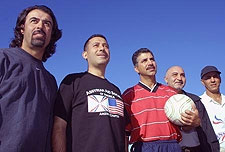

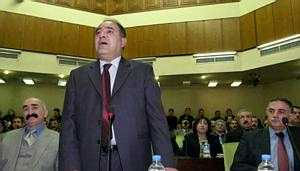
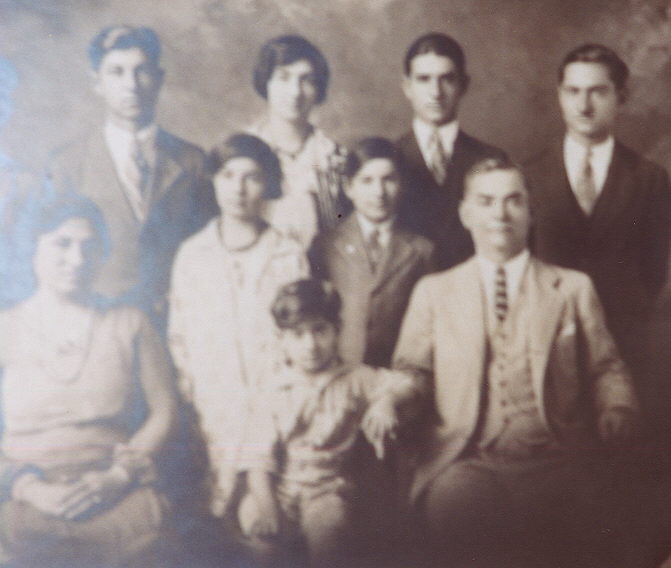
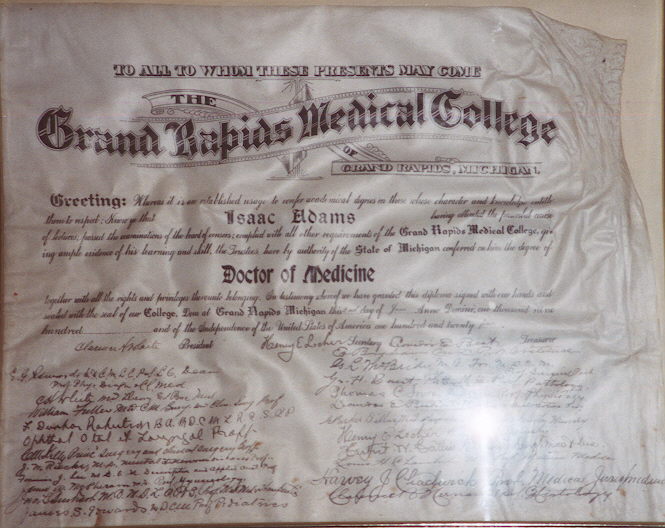
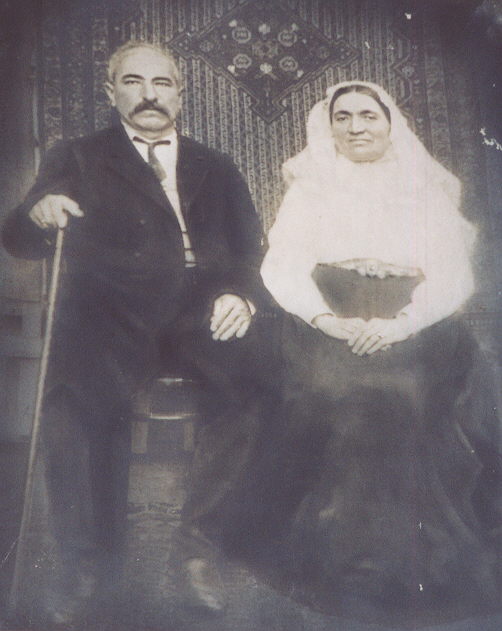
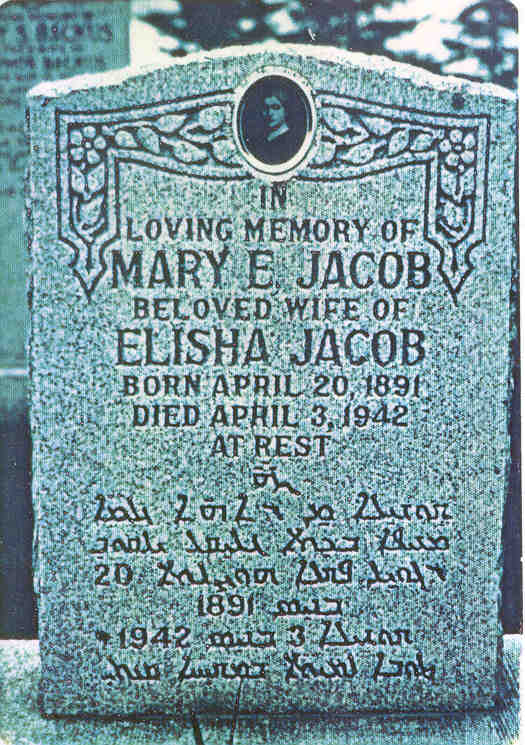
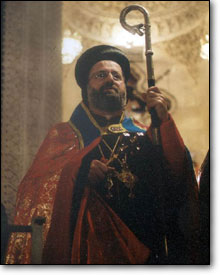 (ZNDA: Mardin) Oxford
University graduate Nuri Saliba Özmen, with the approval of 22
religious leader world wide, in the Syrian capital Damascus, was ordained
an Archbishop of the Syrian Orthodox Church. Özmen’s ordination
was celebrated with with chanting of hymns and songs.
(ZNDA: Mardin) Oxford
University graduate Nuri Saliba Özmen, with the approval of 22
religious leader world wide, in the Syrian capital Damascus, was ordained
an Archbishop of the Syrian Orthodox Church. Özmen’s ordination
was celebrated with with chanting of hymns and songs.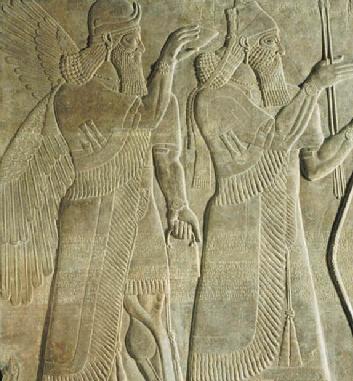 Although
very large, the works are often overlooked at museums, Mayor noted.
Although
very large, the works are often overlooked at museums, Mayor noted.