|
|||||
 |
101
San Fernando Street, Suite 552
San Jose, CA 95112 U.S. Voice (408) 918-9200 Fax (408) 918-9201 |
||||
|
|||||
|
|||||||||||
|

|
CHALDEAN CATHOLIC CHURCH & NATIONAL POLITICSThe main characteristics, boundaries and the name of the Chaldean Catholic Church were officially reconciled and legally defined in the middle of the 19th century, in December 1847 to be exact. For the first time the Vatican granted Mar Yousif Oudo the title of "Chaldean Patriarch in Babylon". His Church, consequently, was recognized by the Ottoman authorities and included within the denominational decree of the "Millet", an organizing relationship between the ruling Muslims and submissive Non-Muslims. Since then, the Church has remained always and continuously loyal to the local and central authorities and never was involved in politics or demanded any political or nationalistic rights or claimed a specific and exclusive ethnicity, separate from followers of the other branches of the Church of the East, in particular her mother Church, the Nestorian. Since the emerging period of nationalism, the official Catholic Church had severely opposed such ideology and fought all nationalistic movements. In 1894, a Synod of 35 Catholic bishops was held in Vienna, Austria to discuss nationalism and national liberation, the principles which demanded dismantling of empires and establishing national states based on language, culture, etc. The bishops initiated their meeting by giving thanks to Franz Joseph (1830 - 1916) the Emperor of Austria and Hungary, "who received from heaven the message of managing, strengthening and uniting all peoples in one Empire". In their conclusion, they declared that "the difference of people in languages, which is the fundamental basis of nationalism, is a consequence of sin and aberration and it is evidence of the Mighty God's fury upon human being".
It was expected of the Chaldean Catholic Church to be affected by such a stand toward nationalism, limiting her interests, claims and activities within denominational boundaries. However, by the time 'nationalism' and other principles of liberation & self-determination reached the Ottoman Empire, the situation of the peoples and the Catholic Church began changing, yet the Chaldean Catholic Church and her clergies never altered their position. In spite of the Turks' proclamation of "Jihad" or Holly War against Christians and the participation of France - the defender of the Catholic minorities in the Ottoman Empire - against the Turks, the Chaldean Church remained the same and very loyal to the collapsing Turkish authority. Moreover, the Church stood against the few followers who were involved in Assyrian nationalistic movement and promoted the ideology of nationalism. This attitude gave Turkey a good opportunity to exploit and use the growing Assyrian national movement led by the Patriarch of the Assyrian 'Nestorian' Church of the East. In March 1918, Patriarch Mar Benyamin Shimon was assassinated by the Kurdish Agha Simko Shikaki, and subsequently succeeded by his brother Mar Polous Shimon. The Turkish authorities tried to exploit this tragic situation by using the Chaldean Patriarch Mar Emmanuel Yousef in convincing Mar Polous Shimon to accept Turkish offer and submit to the authorities. All efforts and attempts were without success. In 1920 when Mar Polous passed away, his followers, lacking a church building in Baghdad, approached Mar Emanuel for his permission to perform the burial ceremonial and bury Mar Polous' body in a Chaldean church. The Chaldean Patriarch rejected their request. Their Armenian counterparts accepted the request however. After WWI, the whole world changed their views on nationalism, yet the Chaldean Church did not. The Ottoman Empire vanished. New national movements emerged in the region, including those of the Arabs, Jews, Assyrians, Armenians and Kurdish. The modern Turkish state was founded and other nation-states were established. New Arab countries were created and officially, the main part of Mesopotamia was announced as a new state of Iraq and accordingly the Assyrian national movement was shaped. The hurricane of WWI and its consequences never swung Chaldeans' doctrine of avoiding politics, or adopting a nationalist posture or claiming ethnical or national rights. On the contrary, the Church and her clergies continued affirming their loyalty to the dominant authorities, practicing St. Mathew's Chapter "Give to Caesar what is Caesar's, and to God what is God's" - (Mathew 22:21), and following St Paul's preaching at Rome "Everybody must submit himself to the governing authorities, for there is no authority except that which God has established. The authorities that exist have been established by God. Consequently, he who rebels against the authority is rebelling against what God has instituted, and those who do so will bring judgment on themselves …" (Romans 13). Everywhere and at any period, the Chaldean Church as a great church and her clergies as the most educated believers of the Church of the East, were following God's words in perfect manner. During the direct British administration of Iraq (1917-1921), the office of the British Civil Commissioner conducted a referendum on the type of the expected political systems in Iraq (See Self Determination in Iraq, Office of Civil Commissioner 1914-1917, British Library Document ST.48/14), and the Chaldean Church and community opinion was as follow: "We the community of Chaldean Catholic greet the Empire of Great Britain which has freed us from the bondage of the Turks, and delivered us from the trails under which we laboured. We entreat your Excellency to endeavor to ensure that we remain under the shade of the British Empire. Thus, we shall be able like other nations, to live in a state of progress, achievement and prosperity, and to pray ever for his Majesty King George V now happily upon the throne" (Singed by the Chaldean Patriarch and some 30 of the most prominent members of the Chaldean Catholic community in Mosul). It is not necessary to compare the Chaldean Catholic Church's stand on being involved in the national politics, or her claims for specific rights with that of the other branch of the Church of the East, namely the Assyrian 'Nestorian' Church. This is well detailed in many resources. However, it is very important and unique to compare that with the Syriac Orthodox Church. In the same document, the opinion of the Syriac clergies and their followers was as follows: "We the entire nation of the Old Syrians, known under the name of Jacobites, join with the Protestant community in offering our thanks to God. He has delivered us from the bondage of the Turks by the entrance of the victorious British forces into our city - Mosul, and these forces have won us our freedom after we had haled to the condition of slaves - the same freedom of which Great Britain entered the war and which one has made such efforts to attain. We who belong to the Assyrian race are among the delivered. Our primary need is a government to direct our business, instruct our youth, bring up our children, place us in the rank of civilized nations, assure security in our land and set straight our circumstances. These blessings we cannot obtain but by the aid of capable men to take in hand the management of our affairs. Seeing that our community has no capable men to undertake so vital services and that for the present we cannot govern ourselves, we earnestly beg the British Empire itself to deign to govern our Assyrian community dwelling throughout the Vilayet of Mosul until such time as we can govern ourselves. For this favor, we offer our thanks to Great Britain. Trusting in this we have signed and presented this declaration in the city of Mosul and the villages around. We beg your King George V. (Signed by the Jacobite Archbishop of Mosul and some 30 of the leading men of his community, and few Protestant representatives). In 1921 the Iraqi civil government was established, the British Mandate was lifted, Iraq was announced as independent country and in 1932 entered the League of Nations without binding the new and inexperienced country with any guarantee and liabilities on minorities protection. The case of Assyrians was the most burning problem at the time. The Simel Massacre was committed in 1933 against the Assyrian Nestorians. The old-new fascist method used by the Ottomans revived by the Iraqi Generals and Pashas who practiced it on the Assyrian population. All these tragic developments greatly affected other Christian minorities. Fears and servility continued dominating their state of mind and feelings toward the Muslim rulers. Eventually this led the Chaldeans to reaffirm their loyalty to the new government and remained more disassociated from the national politics or any claim for specific ethnicity or national rights. After WWII a mass migration of the Chaldeans from their villages and towns, in particular from those around Mosul, to the big cities ensued. In Baghdad they established private businesses, and entered civil services and government employment. The Chaldean Patriarch Mar Yousef Ghanima (1947-1958) moved his Patriarchal See from Mosul to Baghdad. A new and obvious era of harmonization, integration and the melting of Chaldeans within the Iraqi society began in the big cities and has continued until today. During the era of the Ba'ath control of Iraq (1968-present) the Chaldean Church and Chaldeans, desirously or forcible, became more faithful to the authority and more cautious toward national politics. It is needless to detail this current and contemporary period, well known to many Zinda readers. But it is worth mentioning an event which occurred in summer of 1977. Mr. Hashim Shabeb, the Director General of the Iraqi Media and an Iraqi Intelligence service personnel, who was designated by the Ba'ath party leadership to deal with the Assyrian case in Iraq and Diaspora, led a delegation of the Syriac speaking organizations to the United States and England where they met with the Iraqi Assyrians from both Churches. Laudatory rallies were conducted, speeches and parties were organized in order to promote Ba'ath ideology and Iraqi policies. The Chaldean communities warmly welcomed them, while Assyrians insulted them. On their return to Baghdad Mr. Shabeb wrote in his report to the high Ba'ath authority: "The Chaldeans will remain always faithful to the government, loyal to Ba'ath party, trustful & dependable in implementing our strategy toward our Christian minorities in Diaspora, while Assyrians will remain always traitorous and unfaithful to the Iraqi government and the Ba'ath party". It was Mr. Shabeb's secretary, an Assyrian fellow by the name of Zaya, who relayed the content of this report when we met abroad. Certainly, avoiding politics, disclaiming specific ethnicity or national rights and continuing allegiance to the government authorities would be of great benefits to the non-political groups within a society - namely, the Church that remains well established in Baghdad & other big cities. A great progress was made on many levels, in particular during His Holiness Mar Paulis Shekho (1958-1988)'s long service as Patriarch. A big number of church buildings were built; many new priests and bishops were consecrated and gained high education. Catholic schools were the best in Iraq and the number increased and modern ecclesiastical institutions were established. On the secular level, Chaldeans made the greatest progress among the Iraqi people. They became the most educated people in Iraq; eminent professors, lawyers, doctors, distinguished journalists and famous authors & historians. It is worth mentioning that the first Iraqi girl who entered the School of Medicine at the Baghdad University and became the first woman-doctor was Chaldean. On business and economic levels, the Chaldeans have greatly contributed
to the Iraqi economy. They are everywhere: banks, government offices,
industry, trade and private business. They monopolize the hotel and
tourism industry, and have brought new style of life into the Iraqi
society. On the social scene, they established the famous social clubs
in Baghdad namely the Alwiyah, Hindiyah, Al Mashraq and Al Anwar -
high class and VIP clubs, without any cultural activities related
to the Chaldeans. The Chaldeans were Arab by language and culture,
Chaldean by denomination. However, against this enormous progress made by the Chaldeans, there was a price, a great price, to be paid on their ethnicity and nationalist identity. They gradually began to vanish especially among the Chaldeans living in the larger cities. Language, history, culture and customs, which are the fundamentals of a shared ethnicity with the followers of the other branch of the Church of the East, namely Assyrians, became meaningless. To them Chaldean was only a Church or a Christian denomination and any other given significance on Chaldean ethnicity and shared national identity with the Nestorian Assyrians was unfavorable and had harmful consequences. To Chaldeans, Assyrian means politics, and it is a historic Chaldean custom to avoid national politics. Today, many high ranking Chaldean clergies believe that the unification procedures between the two churches, Chaldean and Assyrian, will be unsuccessful; because the Assyrian Church is a nationalist and political church while Chaldean is not. Any unification between both branches will drag Chaldeans into unwanted problems of politics, they believe. Therefore, disassociating such a name as 'Assyrian' from their denomination or Church was very important to avoid Iraqi authorities' fury, and to maintain the progress made by them, and to protect their advanced status in Iraq from ruin. Moreover, for the second and third generations of Chaldeans living in the big cities, in particular, among high social classes, Chaldean is no longer an identity. They prefer Christian or Catholic or Christian Arab, rather than Chaldean. This was the basis for the Christian Arab concept, lately used by the Ba'ath Party in its fascist ideology toward all sects of the Assyrians. The 1977 census in Iraq is a practical example. It is the same in the Kurdish administrated northern region of Iraq, where Kurds copied Ba'ath policy toward the minorities. The majority of Chaldeans stood against teaching of the Syriac language alleging that teaching in Kurdish or Arabic languages is more prudent for their children's future than Syriac. This encouraged the Kurds to allege that the Chaldeans are Christian Kurds. At the present time, if an Arab asked a Chaldean in Baghdad or Basrah or Mosul about his identity, he will say he is Massehe (Christian) or "Moslawi" (from Mosul). He will either deny, or feel ashamed, or be afraid to say that he is from Telkeep or Tel Sqoof or Bittnayi or any other great Chaldean Assyrian villages. To them the great Aramaic-Syriac language of the Lord Jesus has become just a "Flehee language" (the language of the peasants), the lowest and discarded social class in the Iraqi mentality. From the above very brief history of the Chadian Catholic Church and the Chaldeans' view toward nationalist politics and nationalism, we can firmly conclude that the Church stayed genuine, very faithful to its principles, sincerely instructing its believers in the very true and correct way of separating the church from politics. The Church never became involved in politics or nationalism or claimed for a separate ethnicity or specific or exclusive national or ethnical rights, simply because it is a Church, the Chaldean Catholic Church which honestly and perfectly was and is still representing the Chaldeans and their ecclesiastic interests. As such, there was no need whatsoever for the Chaldeans to establish their own political parties or exclusive nationalistic organizations as long as their identity and general interests were identified by a denomination and the Church was perfectly performing such duties. However, for the politically conscious followers of the Chaldean Church it was very normal to have nationalist and political aspirations. They joined the Assyrian nationalistic movement in its early stage and lately the Assyrian Universal Alliance or the Assyrian Democratic Movement (ADM). Others joined the most revolutionary organizations in Iraq, which adopted armed struggle against Iraqi central governments, as the Iraqi Communist Party (ICP) and Kurdistan Democratic Party (KDP). It is a fallacy to say that the Chaldeans did not establish their own political parties or ethnic organizations due to continuous absolutism of the Iraqi governments. Kurds, Turkomans, Nestorian & Syriac Assyrians even Armenians were more persecuted in Iraq than Chaldeans but they established their own nationalist political organizations. Each is a separate and specific ethnic group, while Chaldean is a denomination and as so they are represented by the Chaldean Church. It is odd that few Chaldeans allege that "Chaldeans shied away from creating their own nationalist political groups and instead opted for securing their rights by joining or establishing other Iraqi political groups". It is true that many Chaldeans joined these groups, as ADM, ICP and KDP and ascended their leaderships. Few of them played a heroic role in their struggle against the Iraqi dictatorial regimes. They did that because these groups were representing and securing their nationalist interests (as with ADM), Iraqi common interests (as with ICP) and regional interests (as with KDP), but not as Chaldean interests. They joined these organizations as Assyrians, Iraqi and Kurdistani. It is nonsense and imperceptible that Chaldeans, who were under continuous persecution of the Iraqi regimes, avoided creating their own nationalist group, meanwhile they joined and created the most revolutionary groups in Iraq, which were continually pursued and tyrannized by the Iraqi regimes. Now it appears that after more than a decade, a bishop in the Diaspora and his Chaldean followers have found Moses' Stick, and by just one magical stroke are able to create a five thousand year old nation --"The Chaldean Nation"-- a nation separate from the Assyrians. The "Chaldean Renaissance" a novelty of Bishop Mar Sarhad Jammo is not only a historical sophism, but a flagrant contradiction with the facts and reality. Indeed it is a real heresy with respect to the Chaldean Catholic Church. It is a violation to the Chaldean heritage and to its sincere message. In short, such heresy is the beginning of spoiling and distortion of the great Church of the Chaldeans, and even more, it is an attempt to destroy the positive trends and steps of unification between the two churches, Chaldean and Assyrian. If Mar Jammo's notion of the "Chaldean nation" was not well received among Chaldeans in Detroit and resulted without any conclusive support, then we can imagine what will happen to him if he stood on stage of Al Mashraq club in Baghdad and delivered his ideas to the Chaldean who "are 3.5% of the Iraqi population". It is well known that all the Chaldeans bishops are well educated in history of their nation & church. They are well aware of their Assyrian background and heritage. They know that the Chaldeans who inhabited the plains and mountains of Ashur, geographically and objectively are Assyrians more than the inhabitants of Hakkari, but denominationalism, and sometimes their traditional faithfulness to their Church, has covered up this fact. The issue of Chaldean nationalist identity has existed since early days of the Assyrian nationalism, which emerged in the late years of the 19th century. A single nationalist name for all denominations of the Church of the East was the main problem in particular among clergies who were the major determiners and players. Many Chaldeans and Syriac Orthodoxies joined in, led and wrote on Assyrian nationalism but did not solve the problem which has been inherited and continues until today. In spite of that, no one, ecclesiastical or secular, dared to call for a specific Chaldean nation separate from the Assyrians. No doubt, some of the Chaldean writers, mainly clergies, called Syriac language as Chaldean or referred to Chaldean as people but all these given definitions were within denominational understanding, not nationalistic. Now, there is a question full of skepticism on reasons for raising this separatist and devastating issue today. We are the most desperate nation when it comes to unity and solidarity. Based on historical facts and today's reality, I can attribute such destructive behavior to one or more of the following reasons: 1 - The contemporary history of the Assyrians shows that there is a direct relation between nationalism and denominationalism in their society. The more nationalism develops and progresses the more denominationalism becomes agitated and excited. The successful nationalist policy and consequently the great achievements made by the Assyrian Democratic Movement (ADM) are unlimited to be described. Teaching Syriac language, surpasses the denominational borders & ascends many Chaldeans leadership and ministerial posts. United State's recent recognition of the ADM as a democratic organization entitled for financial and political support is another. All are of great progress and of ever first-time achievements in our modern history. In Diaspora, the Assyrian name is everywhere, through political parties, social & cultural organization, Radio, TV & Satellite channels, websites and in international conferences and meetings. All this has agitated apprehensions of the denominationalists and considered as real threat to their personal and denominational interests. The allegations of the "Chaldean nation" and "Chaldean renaissance" are denominationalists' reaction to the progress made through Assyrian nationalism. The distorted and ridiculous idea that any Chaldean or Syriac joining an Assyrian political party or organization, or declaring oneself as Assyrian would be deemed as an apostate from his Chaldean or Syriac Church still controls many clergies and denominationalists, leading to dire consequences. 2 - The United States' Act of Iraq Liberation and its US $ 97 million financial support to the Iraqi opposition groups is unique and a constructive move. When President Bush recognized the ADM as a democratic organization and entitled it for financial support, most Assyrians and genuine Chaldeans were more than happy for such accomplishment. A first of its kind in the Assyrian history. On the other side, for some denominationalists of Chaldean community this was a disappointing move adding to the previous disappointment when the Iraqi opposition groups in their meeting in London last October 2002 mentioned Assyrian rights only without referring to the Chaldeans. Now, the "Chaldean renaissance", Chaldean National Congress, creations of new Chaldean nation and etc, all come as reaction to such disappointments and an act to "get a piece of the cake" and prevent ADM from obtaining "the Chaldean share." While any visitor to Garbia (North Iraq) can observe that ADM's nationalist policies cover and include all Assyrians without any denominational regards. 3 - In politics, there is no permanent friend or enemy, as Winston Churchill said. Politics eventually is interests. Political experiences show that it is not necessary to be friends in order to meet interests of both parties. There might be mutual interests without friendship or accord or signed agreements. During WWI, the interests of the two rivals, Britain and France, met in defeating the Ottoman Empire. The same happened during WWII; the mutual interests of the United States and the European democratic countries were the same as the communist state of the Soviet Union in defeating Nazism and Fascism. Today there are many examples confirming this "national interests' theory. Hence, everyone knows that one of the main strategies of the Iraqi Ba'ath regime is the elimination of the Assyrian nation through denominationalism. The current Ba'ath regime had inherited the Iraqi mentality toward Assyrians and ideologically and politically has put it in practice. The Ba'ath's apprehensions of the Assyrian name reached to a degree that can be named as "Assyrian Phobia". Assyrians in Iraq are neither a sizeable community, nor a financially and politically influential group. They are the most indigenous people of Iraq with magnificent history and obvious nationalist constituents; therefore, any logic and practical Assyrian claim will easily be legitimized and acceptable by the international community. Moreover Assyrians in Diaspora are very active and are the "loud voice" of the Assyrian case in particular through their web sites and Internets, the Mighty God's Blessing to Assyrians. These immunities did incite Iraqi regime to avoid as much as possible the physical persecution and to compel to measurements that are more "peaceful" such as encouraging denominationalism among Assyrians and crumbling them into smaller sectarian fractions, which will be much easier to be consumed in the "Christian Arab" melting pot. The "Chaldean Renaissance" allegation and other denominationalists' calls are in agreement with the same Ba'ath policy and serve the same purpose in dismantling the Assyrian nation into small denominations. This agreement in purpose does not mean that the Chaldean propagandists are in agreement with Ba'ath party or are their agents. There is no such thing to be proven and is not our intention to do so, but they should know that they are carrying out the mission on behalf of Ba'ath party in Iraq. This favor could be appreciated by Ba'ath party and probably will turn their eyes away from involving the Chaldean clergies in politics as long as it can serve the Ba'ath strategy in destroying the Assyrian nation. On the contrary, in Garbia the propagandists for "Chaldeanism" are in full agreement with the Kurds and with the Kurdistan Democratic Party. For instance the founder of so-called "Chaldean Democratic Union Party" is a well-known senior member of the KDP, a real puppet for Barazani and a denominational tool in the hands of his Kurdish party to destroy the Assyrian unity, to contain ADM's role and to repulse its successful achievements and progress. Such ill representation by a disreputable person is an abuse to Chaldean community more than to the whole of the Assyrian nation. 4 - The experience of the last couple of years of negotiations between the Chaldean and Assyrian churches had proven that there is an imbalance of ecclesiastical capability and nationalistic consciences between both churches and communities. The Chaldean Church institutionally, financially and administratively has improved. Her clergies are well educated and obtained high degrees. The Assyrian church is still following the traditional and out of date systems, in particular with regard to educating the clergies. Sending young Assyrians to Rome for study in Catholic institutions in order to become bishops for future is a means of reducing the gap, a good move indeed. On the nationalist side, the followers of the Assyrian Church have more developed and well-established political and ethnic organizations and extensive experience, while the Chaldeans are in general farthest away from national politics & ethnic affairs and without organizations with national identity. The godfathers of the unification of the two Churches believe that a combination of Assyro-Chaldean or Chaldo-Assyrian name is a fundamental base for a successful unity of the two Churches in one church without any consideration to the nationalistic name whether it be a single name or a combination of two or more. In order to successfully build up such a combinatory title and bring it to life, the Chaldeans should have the same nationalistic organizations and upgrade their denominational status to an ethnic level same as the Assyrians. Such upgrading needs clubs against clubs, websites against websites, Chaldean News agency against Assyrian News agency, federation against federation, flag against flag, Chaldean National Congress against Assyrian National Congress, Chaldean Cultural Center against Assyrian Cultural Center, Chaldean Democratic Union Party against Assyrian Democratic Movement and so on. In short, Chaldeans need to be a nation as long as the Assyrians are a nation, so that nation-to-nation will make an equal and balanced combination of Chaldo-Assyrian, a good and satisfactory name for a "New Nation and a New Church" and will solve the problem of the identity and name of the Church and the Nation. In principle, the idea of upgrading Chaldean national status is worthwhile, but it is absolutely on the wrong direction. Chaldean as a denomination cannot be put on the same denominational track and be call nationalistic. This will lead to nowhere but the destruction of our Nation and Churches. The real Chaldeans need to correct the direction and place their community on the real and objective nationalist track otherwise the hoped balance of unification will never occur. The slashing combinations of Assyrian/Chaldean/Syriac during the USA census of year 2000 had given a negative result to all sects of the nation. I am sure that attempts of upgrading Chaldeans from denominational status to a nationalist level without using the right measurements will definitely result in more separation and destruction of our nation and eventually of our churches. It is nonsense to argue with the propagandists of the "Chaldean nation" on the right nationalist track of their community, which is Assyrian because they know this fact much more than any other non-Chaldean. As long as this fact is closely related to politics, denominational mentality and personal interests will continue decaying our nation's entity including our churches. However, the excuse that the Chaldeans used to identify their collective identity by such name for so many years and they cannot easily relinquish and replace it by something different is acceptable and respectable. But, at the same time, Chaldean as a church and denomination should not mix it with nationalism and confuse the ordinary people. Assyrian is not a replacement for Chaldean. They are two different worlds, spiritual and national, soul and material, completing one another but never replacing each other. National identity is not a man-made name; it is not fabrication of intellectuals meeting or nationalistic conference or a conclusion of a professor's article or lecture. It is the Mighty God's blessing to a people. It is an outcome of very long historical procedures, which are beyond man's control. It is non-adoptable, changeable, or replaceable. It is a matter of life and death to a people who are willing to sacrifice their lives for the sake of their identity. Look at the Assyrian name; from the early time of the world and human creation, from the biblical time until today's time, the Assyrian name is still surviving through very long and bloody processes. How can we expect that Assyrians, after paying the greatest price in maintaining their name, will accept a change or modification of their identity? It is a divine miracle that Assyrian name has survived for such a long time! Aprim Shapera [Z-info: Mr. Shapera, a political scientist living in London and a regular contributor to Zinda Magazine, writes and lectures extensively on the current Assyrian political affairs.]
|

ATRA PROJECT REPORTS SUCCESSFUL FIRST TWO MONTHS(ZNDA: Dohuk) Zinda Magazine is in receipt of a report from Dr. Ashour Moradkhan, Director of the Atra Project in North Iraq. In his statement released last week, Dr. Moradkhan explains that since his return to North Iraq in late December 2002 the Atra Project staff has been able to plant 85,000 new fruit trees, of which only 2 percent have been damaged. "The trees are healthy, growing fast and strongly…This year our children and families will have enough apples. But not enough to go to market. Hopefully in the coming year we will go to the market with full hands", says Dr. Moradkhan. According to the statement, the current demand exceeds 100,000 apple and 50,000 peach trees. Dr. Moradkhan explains that his staff and the villagers will have planted all 150,000 trees by the end of this year: "because they are our soldiers of peace, they will guard our lands from the vultures". Dr. Moradkhan is planning for the introduction of nuts, almonds and pistachios in 2004. The Atra Project's agricultural success is already facing enforceable challenges. For one, the value of dollar against the Iraqi dinnar is dropping almost daily. The possible war in Iraq is another issue of concern to the project sponsors. The local currency -- the 1991 Iraqi "Swiss-print" dinar -- is trading at 7.6 to the dollar, up from 15 just last June. The currency is disappearing from circulation, bringing the market and much-needed U.N. reconstruction projects to a standstill. In addition to planting trees, Dr. Moradkhan is investigating the ability, susceptibility and readiness of each village to learn what can be done to increase each Assyrian family's income. Building tree nurseries and fish farms are already underway. With the money donated from the Bet-Eil Assyrian Church, for example, a fish farm is currently under construction. It will be named the Bet-Eil (House of God) Fish Farm. Plans for a nursery farm in the village of Sicrini are also underway.
Rice fields, water dams, deep wells, honey farms are but a few projects that expect to raise the Assyrian families' income in the coming years. Once picked from the trees, the fruit require storage and transport. Atra Project has plans for the building of storage facilities and equipment, according to the statement. If enough contributions are received from the Assyrians living outside of Iraq, Dr. Moradkhan explains that many new Assyrian university graduates can be employed in Atra Project's offices and manufacturing sites. [For more information on Atra Project contact your local Assyrian Aid Society offices: in the U.S. visit http://assyrianaid.org/chapters.html]
|
|

|

NINEVEH UNIVERSITY OPENS ITS DOOR ON THE INTERNETWe proudly present the first website serving the Assyrian students community around the world. In early 2002, a group of us realized that lack of a strong international union of Assyrian university students was delaying the progress of our student activities. Nineveh University, sponsored by Zinda Magazine, was created to bind together the disparate bands of Assyrian youth throughout the world. Our goal is to promote the academic and social education of Assyrians in the Diaspora and the homeland. Nineveh University was founded on the basis of three principles: 1. To Network Assyrian Students Meet new people who share similar backgrounds, goals, and experiences in an environment that is conducive to Assyrians. Share academic experiences and personal observations. Advise and motivate others in their pursuit of personal and community goals. Pursue these objectives toward the cohesion of different Assyrian student groups. 2. To Assist and Encourage Assyrians to Pursue Higher Education Our goal is to provide the necessary information to students so that they are adequately prepared for university exams and applications. This also means that we will provide scholarships and information on financial assistance to interested students. We would like to guide and encourage students to pursue education within the context of their interests, be it a professional degree or liberal arts studies. 3. Bring Social and Community Awareness to Assyrian Youth Since Assyrians constantly face multiple and challenging issues in an increasingly complex world, we want to bring social and political issues to the forefront of student thought and action. Eligibility Nineveh University is open to motivated and interested individuals of Assyrian ancestry - regardless of denomination or religious affiliation. Unity is the key to our future. Nineveh University is geared towards University students in undergraduate and graduate studies. However, we realize the importance of educating high school students on meeting college requirements, understanding college applications, applying for grants and scholarships, and asking for general advice on anything and everything. That is why a good deal of our website contains specific information for those students. Our Hope We are starting this community with a student directory (available to all) and a discussion forum that is intended for members (coming soon). In the near future, we are hoping to expand our services depending on student interest - the future of this community lies in the desire and ideas of its members. Nineveh University Team ASSYRIAN NEW YEAR CONVENTION IN EUROPEA new millennium stands for a new time, and a new time means developing and coming up with new ideas. Therefore the Assyrian Democratic Organization (ADO), in cooperation with the Federation Tur Abdin (FTN), linked unions and the Assyrian Youth federation, would like to start the new year 6753 with a major Assyrian New year's Convention. This Assyrian (Suryoye) New Year's Convention will last three days and will take place on April 18/19/20 2003. The program contains a variety of activities. A few examples of these activities are an exposition of four artists, two of who are from Syria. An international volleyball tournament takes place on Friday April 18. Saturday April 19 an international folklore-tournament and a poetry-competition will be organized. The choir will perform that same night with classical Assyrian church music. Finally the day will be closed by a wide cultural festival, in which we can enjoy the performance of Juliana Jendo. The final day, Sunday April 20, a seminar about the Assyrian (Suryoye) Genocide of 1915 will take place. A political (round table) discussion will follow afterwards. This evening a play will be performed by the theatre-group Gilgamesj from Germany, in the Rabotheater. There will also be a solo performance by the famous 'Ud' player Elias Mousake. You will yet receive the more detailed and final schedule. Participation in this convention will improve the unity and cooperation. You can contribute in various ways. We would appreciate it if you could inform us of your participation as soon as possible. Through your participation we will elevate the Assyrian (Suryoyo) fulhono in Europe to a higher stage. Therefore we hope to welcome you on this event. The Assyrian New Years's Convention is being organized in cooperation with the following organizations: Centre for Information and Documentation Assyria (CIDA) Shukri Aziz
|
SHOULD TURKEY BE ACCEPTED IN THE EUROPEAN UNION?Human Rights Without Frontiers Int. urges the new Turkish government to recognise the 1915-1919 Genocide Would the European Union have accepted the membership of Germany if this country had denied the existence of the genocide perpetrated by the Nazis against the Jews? Certainly not. More than 80 years after the so-called Armenian genocide, Turkey persists in denying it has ever taken place. In the aftermath of the move initiated by the recent recognition of this genocide by France and Sweden, it would be worth making Turkey's adhesion to the EU conditional to its recognition of the genocide committed not only against the Armenians but also against all other Christian minorities (1) (Assyrians, Chaldeans, Greek Orthodox, Catholic and Orthodox Syriacs) by the Ottoman Empire with the complicity of the Kurds, between 1915 and 1919. (2) The first genocide of the 20th century took place in Turkey between 1915 and 1919. About two million people lost their lives in mass-scale massacres which had been masterminded by the "Young Turks", Enver Bey and Minister of Interior Talat Pasha. Most of the victims were Armenian Christians, thereby giving it the name of the Armenian genocide. There are, however, other Christian groups which have been forgotten in that tragedy: Greek Orthodox, Assyrians, Chaldeans, Orthodox and Catholic Syriacs. It was also forgotten that the killings against Christian minorities had already started decades earlier, a fact about which no one had cared. This first genocide was announcing the Holocaust that was perpetrated on the occasion of WW II. In 1940-1945, a specific group was also targeted all over Europe under Nazi yoke, the Jews, but people seemed to forget that other minorities, such as Jehovah's Witnesses, Romas, homosexuals and others, had also shared their tragic fate. The persecution of these minority groups had already started before WW II in the general international indifference and passivity. That page of WW II is now being rewritten. The page on the so-called Armenian genocide should, therefore, also be rewritten. Two wars, two genocides but one and the same pattern. Ignoring the first genocide paved the way for the second one because no lesson had been drawn from history. Before planning the Holocaust, Hitler said to the leaders of his party "Who now still remembers the Armenian genocide?" The Genocide, A Taboo Issue In Turkey, the genocide is still a taboo issue almost 90 years after it took place and there is no sign of change in sight. Those who want to combat revisionist and negationist theses and who want to rewrite history risk to lose their freedom and even their lives in Turkey. In 2000, Father Yusuf Akbulut, a Syriac Orthodox priest, was arrested, jailed and prosecuted on the grounds of treason because he had told a journalist that the "Armenian genocide" was a reality but that other Christian minorities had also been massacred. On 4 October 2000, the newspaper "Hurryiet" entitled the interview "A traitor among us". Two days later, Turkish military security agents arrested the priest. The position of the successive Turkish governments has always been that during WW I Armenians and other Christian minorities were displaced because they were traitors who had taken sides with the enemies of the Ottoman Empire: Russia, France and UK. The Armenian thesis, shared and supported by many independent historians and academics, is that the so-called war deportations were only a pretext for some nationalistic masterminds in Istanbul to plan the extermination and the systematic execution of the Armenian people, and more widely of the Christian populations living in the eastern provinces, so as to achieve an ethnically homogeneous Turkish state. Genocide In International Law The word genocide is sometimes abused in media language and does not always correspond to the reality of the facts. So, what is a genocide? The United Nations answered that question in 1948 in the Convention on the Prevention and Punishment of the Crime of Genocide, art. 2: "In the present Convention, genocide means any of the following acts committed with intent to destroy, in whole or in part, a national, ethnical, racial or religious group, such as: (a) Killing members of the group; Numerous experts have abundantly illustrated the aforementioned criteria with concrete examples (3). There is no doubt that the mass-scale massacre of Christian minorities was a genocide. Moral Recognition of the 1915-1919 Genocide Of course, the U.N. Convention cannot be applied retroactively although Turkey has signed it and ratified it. But Turkey could recognise the genocide, point at its masterminds, condemn them at least morally, apologise for it and pay damages under one form or another to the minority groups that have been exterminated. One form of compensation could be to recognise those groups as national minorities and to grant them rights that are enshrined in the Framework Convention on National Minorities which Turkey has, up to now, failed to sign and to ratify. 'Cultural' Genocide Unfortunately, in the last decades, Ankara has chosen another way and has pursued its policy of extinction of the Christian communities in the south-east of the country through means of a cultural genocide. The war against the Kurds was a good pretext to put the Christian minorities under pressure, to make their lives unbearable and to push them to emigration. In the last 20 years, 90% of the Christians have emigrated from Turkey. All the methods listed in the U.N. definition of the genocide were used against them. Villages were burnt down and evacuated. Fields and vineyards were damaged and rendered useless for cultivation. Graveyards and houses were destroyed. A number of Christians were deprived of their Turkish citizenship. Young girls were abducted and forcibly married to Muslims while others were released in exchange for a ransom. Christians were arrested on the ground of alleged collaboration with the Kurdish fighters; others disappeared, were killed or are still missing. Churches and monasteries became derelict and beyond repair. Everything was done in order to prevent the survival of their language and their culture. The Turkish state either carried out that cultural genocide or turned a blind eye to the exactions committed by the Kurdish Muslims against the Christian populations. Framework Convention on National Minorities The only way the current Turkish government can repair the damage caused by the Ottoman Empire is to sign, ratify and implement the Framework Convention on National Minorities and to implement it without any restrictions. Considering the aforementioned facts, Human Rights Without Frontiers recommends to the Turkish state - to recognize the genocide perpetrated against the Christian minorities
in 1915-1919; By doing this, the present-day Turkish government would show its
willingness to make up for the damages and losses inflicted to a
number of its minorities under previous rules, and would improve
its moral profile on the international scene thereby further removing
a major obstacle to EU membership…
|
3 ASSYRIAN ARTISTS EXHIBIT THEIR WORK IN HOLLAND(ZNDA: Amsterdam) Three Assyrian artists, Mushe Malkey, Yacob Ibrahim and Youssef Abdelke, all three from Syria will have their work on display in the Netherlands. The exhibition sponsored by the East-West Foundation is called "Syria Nu" and will run between 26 January to 10 March in Galerie Amber, and Caro Art Gellery in Leiden, The Netherlands. Four other non-Assyrian Syrian artists will also be featured. The exhibition will then move to Enschede, the Netherlands, where it will be open to public between 3 May to 27 June at Publikescentrum Beeldende Kunst. For more information visit: www.eastwestfoundation.org
|
Visit the Zinda Magazine Calendar at http://www.zindamagazine.com/calendar
|
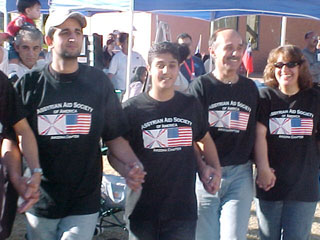
Members of AAS-Arizona enjoy khigga at a recent international
cultural program .
Zindamagazine would like to thank: Naures Atto Jacklin Bejan Michael S. Benjamin Nahrain Kamber Youkie Khaninia Petr Kubalek Emil Soleyman-Zomalan |

ZINDA Magazine is published weekly. Views expressed in ZINDA do not necessarily represent those of the ZINDA editors, or any of our associated staff. This publication reserves the right, at its sole discretion, not to publish comments or articles previously printed in or submitted to other journals. ZINDA reserves the right to publish and republish your submission in any form or medium. All letters and messages require the name(s) of sender and/or author. All messages published in the SURFS UP! section must be in 500 words or less and bear the name of the author(s). Distribution of material featured in ZINDA is not restricted, but permission from ZINDA is required. This service is meant for the exchange of information, analyses and news. To subscribe, send e-mail to: z_info@zindamagazine.com.
Zinda Magazine™ Copyright © Zinda Inc., 2001-2002 - All Rights Reserved - http://www.zindamagazine.com




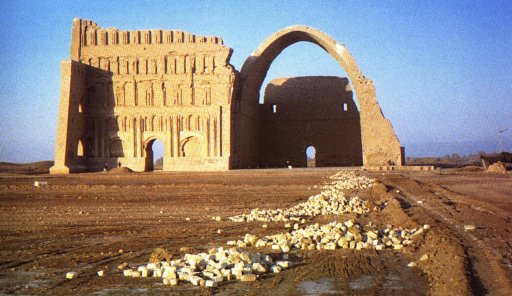 (ZNDA:
Sydney) As the American juggernaut rumbles toward Baghdad, rival groups
of academics, curators and collectors are scrambling to influence
the cultural agenda of a post-war, post-sanctions Iraq. Leaders of
US organizations representing archaeologists and other Near East scholars
on one hand, and museum directors and collectors on the other are
lobbying State Department and Pentagon officials. Their mission is
to minimize destruction and looting of cultural property in the event
of war, and with the White House sounding more bellicose by the hour
these efforts have gained urgency.
(ZNDA:
Sydney) As the American juggernaut rumbles toward Baghdad, rival groups
of academics, curators and collectors are scrambling to influence
the cultural agenda of a post-war, post-sanctions Iraq. Leaders of
US organizations representing archaeologists and other Near East scholars
on one hand, and museum directors and collectors on the other are
lobbying State Department and Pentagon officials. Their mission is
to minimize destruction and looting of cultural property in the event
of war, and with the White House sounding more bellicose by the hour
these efforts have gained urgency.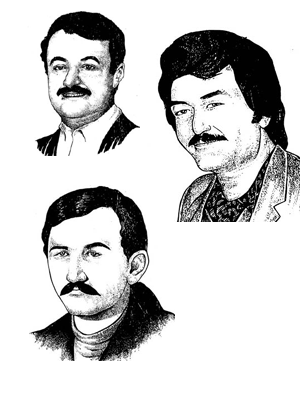 The
Iraqi regimes ruled the Assyrians with repression and through the
iron grip. Its policies included the control on the press, where any
printed word was submitted for pre-censorship. Assyrian newspapers
and periodicals were to function only as mouthpieces of government.
History curriculums were corrupted and they emphasized only on the
Islamic and Arab side of the Iraqi glorious history. Representations
of Assyrians in central and local governments were always absent unless
the individuals were government-backed puppets. The Iraqi Constitution
did not recognize the Assyrians as an ethnic group. In the north,
meanwhile, the Kurds referred to the Christian Assyrians as Christian
Kurds.
The
Iraqi regimes ruled the Assyrians with repression and through the
iron grip. Its policies included the control on the press, where any
printed word was submitted for pre-censorship. Assyrian newspapers
and periodicals were to function only as mouthpieces of government.
History curriculums were corrupted and they emphasized only on the
Islamic and Arab side of the Iraqi glorious history. Representations
of Assyrians in central and local governments were always absent unless
the individuals were government-backed puppets. The Iraqi Constitution
did not recognize the Assyrians as an ethnic group. In the north,
meanwhile, the Kurds referred to the Christian Assyrians as Christian
Kurds.