|
|||||
 |
101
San Fernando Street, Suite 505
San Jose, CA 95112 U.S. Voice (408) 918-9200 Fax (408) 918-9201 |
||||
|
|||||
|
|||||||||||
|
|

ASSYRIAN DELEGATION TO JOIN THE CONFERENCE IN BELGIUMThe Iraqi groups opposed to Saddam Hussein, including the Assyrians, will hold an important conference in Belgium at the end of October to discuss post-Saddam Iraq. Mr. Yonadam Kanna, Secretary General of the Assyrian Democratic Movement, has been asked to compile the list of the Assyrian delegation for this meeting. In an interview with Zinda Magazine Mr. Kanna indicated that at press time only 3 percent of the entire assembly can consist of the Assyrian representation. Mr. Kanna explained that no names other than his are yet secured for this list and further talks and negotiations will be needed to produce such a list. It is expected that one hundred to two hundred and fifty opposition members (hence 3 to 7 Assyrian delegates) will be conferring at the meeting in Belgium.
Zinda Magazine urges the Assyrian Universal Alliance or the Assyrian National Congress to call a meeting of all major Assyrian political parties from around the world to assemble within the next two weeks (October 4 – 18), preferably in Washington D.C. The purpose of this meeting shall be two folds: a) To determine now and to put forth at the Belgium Conference the demands of the Assyrian people during and after the post-Saddam transition government in Baghdad and of the regional government in North Iraq; b) To determine the names of the Assyrian delegates to the Belgium Conference. It is Zinda Magazine’s recommendation that the Assyrian delegation comprise the moderate elements of the Assyrian political spectrum, namely the Assyrian National Coalition (Awyoota) represented by Dr. Emannuel Kamber (AUA) (see the Lighthouse) and the Assyrian National Congress represented by Mr. Sargon Dadesho (ANC). It is important that each delegate fulfill the following five requirements in order to participate at the Belgium Conference:
All past differences must be set aside during these crucial times of change in Bet-Nahrain and all efforts be focused on a new future for the Assyrian people. Rabbie Yonadam Kanna, Dr. Sargon Dadesho, and Dr. Emmanuel Kamber fulfill all the above requirements and will jointly form a strong voice for Assyrian unity at the Belgium Conference. Other qualified candidates should augment this list upon an increase in the number of all Iraqi attendees to the Belgium Conference.
ASSYRIANS ARE MISREPRESENTED IN THE NEWLY PROPOSED CONSTITUTION Between 18-23 September, the Kurdistan Democratic Party (KDP) and the Patriotic Union of Kurdistan (PUK) reviewed the final text of a draft constitution, which was first prepared by the KDP. The two parties will soon ask the Regional Parliament to vote on and approve the text of the draft constitution during its meeting in the northern Iraqi city of Arbil on October 4. The "regional parliament" has not been able to convene since 1996, when the rival KDP and the PUK forces clashed again. The parliament comprises 51 members from the KDP, 48 members from the PUK, and five Assyrians. Under the draft constitution, Iraq is divided into Kurdish and Arabic sections and minority rights are vaguely guaranteed by the constitution in both sections of the federation (see Mr Fred Aprim’s article in the Lighthouse section). The "Federal Kurdish Region" includes such northern Iraqi cities as Duhok, Arbil, Suleymaniye and Kirkuk, the last three being cities with a dense Turkoman population. Sincar, Sehan, Zumar, Mandili, Kanakin, Gelavla and Mikdadiye regions are also envisaged to be within the Kurdish section of the proposed federation. The existing structure of the political system will be preserved in the "Federal Kurdish Region", under the draft constitution, and the power sharing with the central government in Baghdad will be made on the basis of the size of the Kurdish population in the country. The establishment of a democratic system in Iraq will mean the fulfillment of the objectives and aspirations of all ethnic groups, regardless of size and economic power. The guarantees for the rights of the minority populations in Iraq must be well defined in the new Iraqi constitution with clear reference to each ethnicity and religious group.
MR. LETHAL WEAPON TO PRODUCE JESUS FILM IN ARAMAIC Last week Zinda Magazine was informed that the popular Hollywood star, Mr. Mel Gibson, is making a film in Latin and are you ready? – ARAMAIC language. Mr. Gibson is spending his own money into “The Passion” which tells the story of Jesus Christ’s last 12 hours on earth. So far he has been unable to find a single distributor for the film which started shooting in Italy last week. Why? Mr. Gibson plans not to have subtitles for his film. Zinda Magazine did not like Mr. Gibson’s comment: “No body wants to touch a film in two dead languages.” So we contacted Mr. Gibson’s agency in Los Angeles and spoke with his public relations manager to learn more about the motives behind the filming of the Passion in Aramaic. We also enlightened them upon the fact that millions of Christians around the world indeed speak Aramaic or a newer form of this living language. Old Aramaic as spoken by Jesus and his contemporaries survives only in Eastern Syria in the town of Malula. Zinda Magazine explained that "authentic" speech in the film should be cast from Syriac, a modern form of Old Aramaic. Mr. Gibson is said to be a Catholic faithful and believes that
his film will be a great success story. Zinda Magazine offered
its support and recommended the names of a few Assyrian and non-Assyrian
Aramaic and Syriac scholars as technical advisors for the film.
Mr. Gibson’s agency and public relations manager were astonished
to find that there may be so many Aramaic speakers around the
world who may not require the subtitles after all. |
THE UMBRELLA SYNDROMEIt is an established scientific fact that all human beings are created equal. It is also a fact of life that certain races possess physical characteristics that are unique to their nature. These characteristics do not necessarily mean that those who possess them are either superior or inferior to the rest of the human beings. The variety of color of skin or eyes is a good example to illustrate the difference in physical features. There is another area where certain aberrations seem to concentrate themselves within a certain breed of people. Sickle-cell anemia seems to be restricted to the blacks and Tay-Sachs disease to the Jews. The scientific world has researched and written extensively on these topics. I am sure there are other characteristics that are unique to certain races, but no need to exhaust the readers’ patience in a detailed mundane list of these deficiencies. Sadly not much research has been done to study an aberration that
appears exclusively among Assyrians. We certainly can see why this
negligence by the scientific world. Since present day Assyrians do
not possess a country of their own which has natural resources like
oil, gold or a strategic position., there is not much interest in
them. After all, if the rest Having determined that no research has been done on this unique Assyrian aberration, I ventured to study it to the best of my limited resources. Admittedly, I do not qualify as a scientist or have access to some elaborate laboratory where research and experimentation can take place in a scientific manner. Albeit that I consider myself fairly qualified to look at this aberration in a qualitative approach. As a geologist I have a good knowledge of evolution and study of fossils; as an engineer, I have the expertise to design and build things; and as a manager, I know how to plan and execute projects. From the unique symptoms that characterize this particular Assyrian aberration, I have identified it as the “Umbrella Syndrome”. This aberration is not physical in nature.. I mean you cannot find it in the body or blood of the Assyrians. Actually it is a behavioral abnormality and of recent evolution. It manifests itself more clearly among those individuals who aspire to the national leadership. The aspiration by itself is an abnormal inclination as we have had no legitimate national leadership for almost 2500 years. At any rate we will assume that there is a legitimate need for this aspiration in the souls or psyche of these people. Psychiatrists state that a sudden or traumatic experience does impact individuals and change their behavior. On that basis and the fact that this syndrome is of recent development, I have concluded that the trauma of the First World War is the culprit in our situation. Having lost almost half of our population and being terrorized and eventually driven out of our own country is certainly adequate to qualify our experience during the First World War as traumatic. Those who are afflicted with this syndrome seem to be driven to making umbrellas, not the kind that protect people from rain or heat. These are very unique umbrellas; they exist only in the cerebral segments of their makers. These invisible umbrellas are designed to protect the Assyrians in accordance with their makers’ specifications. The first documented case of this syndrome is that of Rev. Joel Warda, an Assyrian Presbyterian minister and a patriot and writer of renown fame. He constructed the first regional umbrella using the then existing organizations representing various villages of Urmia as the ribs of his umbrella. Lacking other reliable materials of construction, he used himself as the central shaft to hold these ribs together and his genius as the fabric to gather under it the scattered Assyrian settlers in the United States. With the passing of time and the shifting political winds, the various ribs bent and eventually broke piercing the fabric and leaving the whole umbrella in tatters. In the early 1930’s when Assyrians experienced another trauma (Simel Massacre), a new group of umbrella makers got together and built a national umbrella to shelter the traumatized Assyrians. They had high hopes. After all, they had managed to find stronger ribs made from superior substance. Unquestionably, the ribs were more in numbers and somewhat stronger than their predecessors, but the handle, central shaft holding these ribs together, and the fabric proved to be much weaker than that of Rev Warda’s. While the umbrella still exists in the minds of many, it is totally perforated and wobbles back and forth giving protection to no one except to those who take turn in grabbing the handle and pretending that they have finally steadied the trembling umbrella. With the passing of time a new generation of umbrella makers appeared on the scene. These people appeared to be more ambitious and determined to finally build the one universal umbrella that would shelter the Assyrians for good. They were ambitious, positive and projected a magnanimous outlook. They offered shelter not only to those without umbrellas, but also to the existing national umbrella. The name “universal” implied clearly how encompassing was the stretch of the new umbrella. All Assyrians were invited to come and seek shelter under this unique umbrella. Alas, the universal umbrella proved to be much weaker than its predecessors. It had absolutely no structural integrity. It soon was shredded to pieces, leaving each rib with a piece of fabric attached to it. Now in place of one universal umbrella, we have a multitude of ribs each claiming the title to the vital components of the umbrella, the central shaft and the handle. Some of the original makers of the universal umbrella are now seeking shelter in anonymity and isolation. With the collapse of this huge umbrella, the field was wide open to all types of umbrella makers, big and small. Now Assyrians are cursed with this behavioral abnormality, the umbrella syndrome. We have so many umbrellas, that we are totally confused as to the ranking of these umbrellas and the areas they encompass. Rumors have it that symptoms of this aberration have been detected among Assyrians in Western Europe, Russia and even as far away as Australia. We have researched the scientific literature extensively and have not found a single medication in either tablet or liquid form to cure this syndrome. However, in the annals of behavioral sciences there are suggested cures. Though not guaranteed, but are highly recommended on the basis that these cures have worked for other syndromes. We strongly recommend this suggested cure. It may work and prove that the aspiration to national leadership is not necessarily an aberration. The suggested cure may be summarized as follows: Gather all umbrella makers together, collectively evaluate each component of construction and select those ribs that still possess structural integrity and are not contaminated with foreign substances, cut and patch together remnants of the fabric, melt down the various shafts and handles and cast a new strong central shaft and a well formed handle that can be easily held and passed on to others. The suggested cure has a serious warning: Proceed with caution or you may be shafted. Youel
A Baaba
A CALL FOR A NEW AUA SECRETARY GENERAL Undoubtedly the Assyrian Universal Alliance (AUA) is an important international organization and its creation in April 10, 1968 was a very significant moment in the contemporary Assyrian national and political history. AUA’s establishment was based on facts, which spurred the founders to deal with unprecedented challenges that confronted the Assyrians in early1960s, in particular in the Middle Eastern countries and specifically in Iraq. It was here that the Kurdish rebellion began in the heart of Assyria, and the eruption of armed conflict between Kurds and the Iraqi government led to a great exodus of the Assyrians away from their historic land. Thinking rationally, the founders of the AUA recognized that no single Assyrian organization could represent the entire Assyrian nation and confront the new challenges especially in a time when our people were facing more persecution in the homeland and continued to be scattered throughout the world. The only answer available to them was that of creating an international federal alliance, in effect an umbrella for all Assyrian political and national organizations which was seen as the reasonable approach to the development of one voice for one nation. However, we should keep in mind that the ideal principles and their implementation in reality are not the same. Principles without mechanism of implementation are no more than absolute thoughts and remain imperceptible in practical life. In politics, principles without praxis are utopist. Principles form strategy, which is generally distinguished by steadiness and affirmation, and is related to identity or destiny of a certain group of people. Tactic guides praxis, which is flexible, changeable and deals with current situations and day-to-day issues. Without tactic, strategy cannot be implemented. Unfortunately, the history of the last three decades proved that AUA was, and still is, unable to implement its principles representing our people as a single Assyrian voice, in particular with regard to the concept of the “national umbrella”. No doubt, there were many effective factors and harsh circumstances, which resulted in such a failure. They were beyond the AUA capabilities and out of the control of the Assyrians in general. In a personal contact with a founder and ex-Secretary General of AUA, he likened AUA’s failure to a student who has been in to examination before preparing his lessons. He said “We gathered in Pau - France in 1968 with an extraordinary enthusiasm and full of nationalistic thoughts of uniting our nation but we were unequipped with instruments of implementation and unprepared to answer the question of how we can practically implement our principles in political arena”. In other word, AUA established an ideal and perfect strategy for our nation but its was unaware of the significance of tactic to fulfill this strategy or was, and still, incapable of adopting an appropriate and practical policy for a certain situation. This dilemma is obvious on many aspects of AUA’s futile performance; the most significant of which is that of its current Secretary General, the subject of the last issue of Zinda Magazine, which needs to be dealt in details. Before that, I would like to discuss the following actuality about our nation, which is closely related to the main subject: Strategically and in principle, there is no any doubt that we are Assyrians and we are so wherever we go and live around the world. On the other hand, practically we are not one society or a single community, as long as we are living in our homeland and Diaspora which both of them compromised of many different states. Therefore, we are exposed and subject to different political, legal and cultural atmospheres within each country that we reside. Our adopted countries identify our citizenship, our rights and obligations. In view of that, we are Iraqi Assyrians, Turkish Assyrians, Iranian Assyrians, Russian Assyrians, American Assyrians, Swedish Assyrians, Australian Assyrians and so on. In case of taking into account the extreme differences between the states in the Diaspora and those of the Middle East we will soon discover that the mentality of the Assyrian communities are clearly affected and shaped accordingly. Such mentality is capable to migrate with the Assyrian immigrants to the West and will control and guide, positively or negatively, their behavior and form a panoramic focus for all aspects of their lives in the Diaspora. Sometimes such behavior is embodies through settling down in a region or a city or establishing a club or organization and even a political party. In short, there are several Assyrian societies in a certain country in the Diaspora. For instance, in the United States where the largest community of Assyrians in the Diaspora reside, they are legally framed by a single citizenship and equal rights and commitments, but have societies based on different cultural mentalities, memories, emotions and even life styles. These variations originate from the difference brought from their prospective homeland. These are Assyrian by ethnicity, American by citizenship and Iraqis, Iranians, Syrians or Turkish by origin. They have a common ethnicity and citizenship, but are different by country of origin. We can assimilate Assyrian societies as the case of many brothers and cousins with different forenames, but with one surname and same father or grandfather, each has his own family and properties. This is very normal with human being and as well as with the Assyrian nation in the present time. Our idealism in nationalism is unfortunately misleading us towards ignoring the fact of regionalism and consequently we are missing the possibility of using it as a tactic in our national and political performance. The dissimilarity or diversity of Assyrians with regard to the country of origin, whether we agree with or not, presently is a fact of our historic homeland (Assyria) and the core subject of our national claim. It is still the crucial factor of bracing the Assyrian identity in the Diaspora. It is a living and the only existing channel of communication with the national roots and the main feeder of our national identity. The fathers of the AUA were well aware of this fact that Assyrians as a nation are divided by tribal and denominational considerations. This status led them to adopt the famous four unionist slogans and concluded in the constitution. However, I doubt that they were aware of the effectiveness of regionalism, which is dividing Assyrians by political borders of the Middle Eastern countries and those of the Diaspora. The absolute idealism of the AUA in nationalism resulted in failure of achieving any of its unionist objectives. The current situation is confirming that such accomplishment is far from reach even during the near future. Ignoring regionalism or regional politics has resulted in the failure of adopting an appropriate tactical policy to implement a strategy towards Assyrians of a certain country and eventually all Assyrians. From day one, the instability of Iraq and the extreme suffering of Iraqi Assyrians were the main topic on AUA’s agenda. Many policies, stances and actions have been taken in order to tackle this problem but without success. Reading the history of the AUA will show that the major reason for such failure was the destitution in Iraqi affairs; political system, dominating powers, ruling classes, their attitudes, Iraqi mentality with regard to politics and dealing with question of religious and national minorities. Moreover, none of the AUA founders or key members and the Secretaries General, in the past or present, have enough experience with Iraqi government or lived with Assyrian sufferance in Iraq. As such that some members of the AUA’s delegation to Iraq in the early 1970s were easily trapped in swamp of corruptions, bribes and deceptions, set up by the Iraqi fascist regime and eventually damaged AUA’s reputation and aroused many questions among Assyrians on this organization’s credibility. It is needless to mention in detail the naivety of the AUA executive committee when invited Iraqi Assyrians, who were all of them Ba’ath party members or agents for Iraqi regime, to participate in AUA conference in Sydney in 1978, and the dramatic plot of poisoning the other Assyrian delegates. Today, the issue of Iraq and shaping its political future is boiling.
The destiny of Iraqi Assyrians is concerning all Assyrians around
the world, specifically their political parties, and the AUA stands
at the front. AUA’s vigor with regard to this issue is obvious
in the shuttle movements of the present Secretary General Senator
John Nimrod between State Department of the USA and the Iraqi opposition
groups, struggling to be the single voice for Iraqi Assyrians and
representing them at the Iraqi, regional and international levels.
Everyone is aware of the complexity of the current situation, the
harshest circumstances and serious physical, political and national
threats facing Assyrians in Iraq. Yet, as is usually the case in Assyrian
politics, AUA has not learned from past experiences. The Secretary Then how we can expect that the Iraqi opposition groups will deal positively and seriously with the Secretary General who claims that he or his organization are representative of the Iraqi Assyrians? How will the State Department, other governmental offices and non- governmental & international organizations listen to him or rely on someone who is actually not a part of the question? For that reason all his efforts for the Assyrian case in Iraq will be rendered futile, and the Assyrian representation with the Iraqi opposition groups and the State Department will remain uncertain. This would seem as if Assyrian are aliens from another planet, not the indigenous people of Iraq, or at the best they are anonymous and referred to as “others”. AUA is wedging herself among other Assyrian political groups in order to gain a role on the Iraqi political theater or to find a link with the Iraqi Assyrians question. This action has diverted AUA from its main principle of being a national umbrella for all Assyrian organizations. AUA is not a political faction similar to the other typical Assyrian political groups, competing with some and gathering with others under an umbrella of the “Assyrian National Coalition”. Ironically, it seems that the AUA’s umbrella has been blown away by the current windstorm and compelled to shelter under another one. However, these critiques should never reduce our basic and firm faith in the importance of the AUA and her crucial role for the Assyrians. With regard to the current Secretary General, I highly respect Senator John Nimrod and truly, I admire his manners and attitudes, in particular his wide spirit in accepting criticism and trying to understand the differences with others. Personally, I had perceived his great and endless love for his nation, his tireless efforts to serve Assyrians regardless of his health and age. Therefore, I can decorate him with honorable medal by saying that he is the eldest Assyrian nationalists involved in such wide rang of national politics, and as such he deserves respect of all Assyrians round the world. Nevertheless, it is regrettable to say that he is not the right Secretary General for AUA to deal with the current issue on hand. Therefore, the urgency of the current situation demands a new tactical policy to be adopted through the election of a new Secretary General. Without introductions and equivocation I straightforwardly recommend Dr. Emanuel Kamber for the post of Secretary General. Someone could allege and accuse me by favoritism because he is a friend of mine. It is true that I know him for a long time; otherwise, I would not recommend him. I know him not as a normal friend or relative or sharing the same kinship or tribe or denomination but as a true and energetic nationalist. He has been a comrade for our national struggle during the hardest times and most despotic circumstances in Iraq. These were the times when involvement in politics was a serious threat to life and not easy and comfortable as it is in the free and democratic West. Allow me to elaborate:
Assyrians during the last century lost many golden opportunities to determine their national destiny. We turned away our eyes from the sins, committed by our leaders and we started accusing Great Britain and condemning her of the betrayal of the Assyrian case. It is time to learn from the past, to recognize that politics is a struggle for national interests. Human rights or minority protection principles are actually meaningless and nonsensical for a certain state if they are in clash with a people’s national interests. Today, USA is the only Great Power and her national interests have already expanded into all corners of the globe including Iraq and the Garbia. The keys of our national destiny may be in her hands. Now it seems there is another golden opportunity approaching Assyrians. To make use of it, it is very important to be aware that we should not expect any real support from USA or any state unless our case is at the crossroad of her policies and it is not in clash with her national interests. Therefore, in this time of globalization we need a strong and well-structured national organization with international bases as is the Assyrian Universal Alliance. This global organization must also be headed by an individual characterized by the triple combination of Assyrian/American/Iraqi identity as is Dr. Emanuel Kamber. Aprim
Shapera
THE
PROPOSED KURDISH CONSTITUTION The proposed modifications to the constitution of the Federal Republic of Iraq and the regional northern Iraq by the Kurdish groups needs to be carefully studied and analyzed. Moreover, an alternate solutions to anything that is in conflict with Assyrians’ national aspirations must be presented and disputed. The Kurdish Proposal comes short in many aspects; a few points brought up by the Kurds are touched upon below. There are more issues that need to be addressed later: I. The Proposed Kurdish Modifications to the Constitution of the Federal Republic of Iraq.
Section II. The Proposed Constitution of the Iraqi Kurdistan Region
The Section on “The Formation of the UNION” Section I Article 4 states that the nation of Iraq consists of two main ethnic groups: Arab and Kurdish. This constitution affirms the ethnic rights of the Kurdish nation and its activities in Kurdistan region on the basis of a Federal system. It also affirms the legal ethnic rights for the minorities within the framework of the Federal Republic of Iraq. The word minorities should be defined clearly and appropriately, ethnic or religious, and they should be mentioned as Assyrians, Turkomen, Yezidis, Mandaeans, Bahaiis, Armenians, and so forth. Article 6 states that the Federal Republic of Iraq is to have a special flag, emblem, and national anthem, all of which must include the symbol of unity between Arabs and Kurds, and that to be regulated through a law. This unity is not only between Arabs and Kurds. Assyrians, Turkomen and all others must be part of these symbols since they make the fabric of the Iraqi society. Rights and Primary Duties Section II Article 21 gives the State and the two regions the rights for issuing all matters related to Deeds of Trust and regulate all laws that apply here. All unresolved matters should be finally resolved and all those who no longer possess the deeds of trust to their lands or homes, whether they were lost or were taken away from them through whatever reasons, be compensated fairly or their properties be returned to them or to their surviving family relatives. Union Authorities Section III – Chapter I, The House of Representatives (National Assembly) Article 29 states that the ways and means of the elections be defined including the percentage of the representation and its dates through a law. We need to see these ways and means defined clearly. Union Authorities Section III – Chapter II, The Executive Authority of the Union Article 47 states that the Cabinet consists of the Prime Minister, deputies, and a number of ministers who represent the two united regions, i.e. Arab and Kurdish regions, and according to the percentage of their populations. The Assyrians in Iraq have suffered greatly through the continuous policies of persecution by both the Arabs and the Kurds since 1921. Many Assyrians have been forced to evacuate their lands, homes and villages, or their villages were simply destroyed. The figures today do injustice to the the Assyrian Christians; therefore, special accommodations must be applied to the Assyrians and all figures of population must be predated to include the 1921 figures when the Republic of Iraq was established. Interestingly, the British Civil Administration after the occupation of Iraq in 1918 and afterwards by Mandated Iraq showed that the population of the non-Moslems in Iraq, mainly present in north of Iraq and comprising mainly of Christians (Nestorians, Chaldeans, Jacobites, Syrians), Yezidis, and Jews, was 400,000 while the Kurds’ population was 800,000. Regions’ Constitutional Structure Section IV Article 61 states that the people of any of the two regions will elect their representatives in the Regional Assembly (House of the Representatives of each region) through the direct, free, general, and secret ballot. A special law will define the ways and means, percentage of representations, and the time of such elections. It is vital to address these matters ahead of time and such guidelines should be defined clearly taking into consideration all the points addressed earlier. The Assyrians must be allowed to elect their own representatives in accordance to their population through separate elections because of what Arabs and Kurds have inflicted upon them throughout the last 80 years. It is obvious that when certain villages were completely and purely Assyrian, today and because of such policies, have turned into Kurdish villages. This is unacceptable since the Assyrians cannot have a fair representation under such circumstances. Article 66 states that the Cabinet consists of Prime Minister, deputies, and a number of ministers, which is administered under the region’s president. The Article should indicate the representation of Assyrians and Turkomen in the Cabinet.
Section VI Article 79 states that all traces of Arabization and forced immigration, which took place in parts of Kurdistan, must be removed. Those Kurds who were forced to re-locate from Kirkuk, Makhmor, Sinjar, Zammar, Shaikhan, Khanaqin, Mandily and other localities be returned to their former residential areas. In addition, all the Arabs who were brought by the authorities to these areas must be returned to their 1957 former residences. Simply said, whatever is requested by the Kurds should be applied to the Assyrians also. Tens of thousands of Assyrians have lost their original homes and their villages were destroyed. While the Kurds have faced unfair Iraqi government policies, the Assyrians have faced double tragedies, from both the Iraqi central government and the Kurds. Therefore, all displaced Assyrians must be allowed to return to their original homes and their villages be returned to them in a manner that ensures demographic homogeneity of the Assyrians. The rulings and recommendations of the Sub-Committee of the League of Nations must be respected in this regard. Finally, the point must be stressed that none of these amendments
to the Proposed Constitution are to be made as a favor to the Assyrians
of Iraq, as each and every Assyrian member of the greater Iraqi society
deserves the equal and just treatment under the law. UNTIL WHEN? - THE ASSYRIAN ETHNICITY PERSECUTED AND MARGINALIZED IN ITS OWN HOMELAND In general, the Iraqi people see that it's time to get rid of Saddam's regime and replace it with another, which will bring Iraq to its prosperity, and deals with all the Iraqi people no matter what their ethnicity or religious creeds may be in accordance with international protocols. As such, intensive meetings of the Iraqi opposition groups were held abroad whereby many ideas were noted on the part of some Iraqi brethren while a question lingered; "Where are the Assyrians in the political agenda of the Iraqi opposition"?? It is important here to remind again of the Assyrian ethnicity whose history stretches for thousands of years and whose descendants lived in their historical, ancestral homeland "Assyria"(today's Iraq). They suffered throughout history of calamities and massacres either because of their religious or ethnic backgrounds. Thus, some peoples got during the twentieth century more than they deserved while the Assyrians paid the highest price in comparison to their number, and didn't claim in the process other than ethnic marginalization and forced migration from their historical homeland, so because of all this a remainder of about 1 million Assyrians live in the homeland forming number wise the third ethnic group. All hopes are turning towards the Assyrians in the homeland to strengthen the Assyrian ethnic existence in Assyria despite the many difficulties surrounding them. What matters to the Assyrians under the present circumstances is their fate after thousands of years, as a minority rejected to be recognized as an ethnicity by the surrounding currents, because those Assyrians living in Iraq, are divided in between two areas under two different regimes Arab and Kurdish. In what is called "Iraqi Kurdistan", the Assyrians found that they got rid of Baghdad’s Arabization to face the "Kurdisation" policy. Also, as the different Islamic Kurdish currents are increasingly active in what's called "Iraqi Kurdistan", and the increase of problems between the islamists and non-islamists as " political Islam" entered Assyria, in addition to the assassination of Assyrian clergy in Baghdad (1), one can't but wonder about the reasons behind all this and the disaster that may occur following the confusion which will befall Iraq in the event that the demands of any of the Iraqi people remain un addressed. It's important to have a simple historical representation before looking into solutions, for the Assyrian Cause has a historical background which makes the Assyrians, and very frankly till today, always cautious of the other ethnicities surrounding them, especially with the continuous persecution, of the "De Facto Powers" which are dominating the homeland, of the Assyrian demands. As an example, the Iraqi regime, treated the Assyrians as second class citizens or foreigners in Iraq in addition to intimidating actions to force their migration, such as destroying their villages and Churches which go back to the first centuries A.D.. Also, the detentions and executions in all Iraqi areas and prohibiting the use of the "Assyrian" name in all domains except at universities where it's mentioned in the subject of an arabized history (for they were not able to omit the Assyrian name from history). They would also detain the families of Assyrian politicians living abroad while torturing them in Baghdad's prisons to force their return to Iraq and giving themselves up. Also the detention in 1978 of more than 500 Assyrians members of the Bible Study Committee. The Assyrians paid a high price due to Saddam's foreign policy and his war with Iran where the numbers of Assyrian victims reached to about 60000 between those killed, detained, and missing in action. The Assyrian town of Baghdida (so called Qaraqosh) alone, gave about 6000 martyrs. Because of the regime’s internal policy the Assyrians also suffered a great deal during Saddam's war with the Kurds, especially after the Iraqi - Iranian war when Saddam decided to punish the Kurds who supported the Iranians, thus came the famous " Anfal" operation where he destroyed a large number of Assyrian villages causing more than 40000 Assyrians to flee their villages along with the Kurds to neighboring countries. Those who remained were subjected to killings and abductions where hundreds of them are still missing till today with their wives and children (lists of names are available), all that to have revenge because the Assyrians refused to register as "Arabs" or "Kurds" in the 1987 Census... (2) With every battle the Assyrians are bewildered for they fear the Kurdish anger if they don't stand by their side for they will consider them as " Saddam's collaborators", on the other hand they fear Saddam's wrath if they side by the Kurds for he will consider them as "Kurds’ collaborators"... In addition to all this, tens of thousands were left homeless in 1991 after Saddam's strikes against the Kurds. Thus the Assyrian people always pay the price for others' wars on its own land when its fate clings to the struggles of others, while no one in the world would take notice of Assyrian victims, rather they would be either considered Arabs or Kurds, and this was confirmed during a visit of some Assyrians to meet with those who had fled to Turkey in 1991. All this as a result of Baghdad and Kurdish obscuring towards the Assyrian identity. Following the invasion of Kuwait, the economic, defense ... and other important Iraqi elements were destroyed because of the Iraqi regime’s idiocy on one hand and the American-Israeli plan on the other which aims at striking back any forces which may threaten Israel in the Middle East. This is when taking advantage of the weak Iraqi regime, the Kurds announced what seemed to be a sort of independence in the North of Iraq with the help of the allied forces which destroyed Iraq, where this chaotic area of Kurdish rule is known as " Kurdistan Region" and is ruled by Kurds in a tribal manner. For centuries the Kurdish tribes neighbored the Assyrians. The Kurdish historian; the prince Sharaf Khan al-Badlisi (16th century) mentioned that Kurds came to the area with the Mongol tyrant Tamerlane, and he says that the inhabitants of the area where known as "Asuri" i.e. Assyrian ... Relationships were established between the two peoples during which the Assyrians had already fulfilled the requirements of present day states (Land, authority, and population). Then it was the huge massacre in the middle of the 19th century when tens of thousands of Assyrians fell victims at the hands of the Kurdish leader Bedrkhan followed by WWI massacres which spread from Urmia in the West of Iran to Urfa (Urhai or Edessa) and Maraash in the south-east of Turkey. In these massacres two thirds of the Assyrian population perished and His Holiness Patriarch Mar Benyamin Shimmoun was assassinated in a treacherous attempt at the hands of Ismail Simko leader of the Kurdish Shikak tribes ... These events are still very painful to the Assyrians, this in turn has affected the Kurdish movement in present times as it is mentioned by Jalal Talabani the leader of the Patriotic Union of Kurdistan (3). Kurdish population can be found today in high density in the Assyrian homeland and they very much believe in their ethnic belonging, they are a rebellious, brave people who were able to impose their existence on neighboring countries and they repeatedly forced hostile regimes to negotiate with them despite the Saad-Abad treaty which was signed between Iraq, Iran and Turkey in 1937 which stipulated the subduing of Kurdish rebellions in those countries. Kurds stood against this treaty and rebelled for decades against the three countries and that drew the attention of the West, which used them as a pressuring card on these countries whenever it was possible. In turn the three countries took advantage of the Kurdish tribes using them as a pressuring card whenever conflicts arose between the three countries, and this is obvious when the Shah of Iran supported Mustafa Barazani against Iraq but suddenly withdrew his support following the Algerian treaty in regards to Shat el-Arab (Persian Gulf) signed between Iraq and Iran in 1975, resulting in Barazani instructing his fighters to give themselves up to the Iraqi authorities because he was bewildered how to deal with the situation, this caused a turn down in his popularity, and the Algerian treaty was amongst the main reasons for the failure of the Kurdish State project. In spite of all that the Kurds committed against the Assyrians trough history, yet some Assyrian contributed very bravely and sincerely to the 20th century’s Kurdish movement under Mustafa Barazani. One of the main reasons for some Assyrians joining foreign currents was that they saw in the Kurdish movement a way to freedom from the Baghdad regime, in the absence of Assyrian Parties during that period on the Iraqi scene and this is considered as a short sightedness on the part of Assyrian organizations abroad because the Assyrians in northern Iraq didn't find any other option to be freed of the Iraqi regime other than joining either the Kurdish movement or Iraqi Communist Party, and the two became as a refuge for Assyrian nationalists where many of them were able to hold the highest ranks within the Iraqi Communist Party, and within the Kurdish movement, which brought perdition to many of them, and in some military divisions Assyrians constituted about 15% (4). And the Assyrians remained sincere to the Kurdish movement well into the seventies of this century when the late Patriarch Mar Ishai Chamoun was invited by the Iraqi president Ahmad Hassan al-Bakir in April 1970, then the Assyrian leader Yakou Malek Ismael (one of the Assyrian National liberation symbols in the 20th century) who was invited in February 1973 and the Iraqi government proposed to both leaders forming an Assyrian force to strike the Kudish movement in exchange for acknowledging some Assyrian rights, but both leaders refused that proposal. In April 1979 the Assyrian Democratic Movement was established which changed the situation to be somewhat better as to preserving the Assyrian existence in Assyria as much as possible keeping at the same time the good relations with the Kurds to face together the common challenges in a spirit of sincerity and co-operation. However, the Kurdish treatment towards the Assyrians during the last decade wasn't as well as it was expected to be. The area which is under Kurdish rule has several religious minorities( Christians, Yizids, and Muslims) distributed into several ethnicities (Assyrian, Kurds, Turkman) ... In this mosaic tapestry the Kurds tried to gain trust in the way they ran their region in accordance with international norms in preparation of announcing a Kurdish state whenever circumstances permitted. Thus the Assyrians and Turkmans participated in the Parliament of what's called "Kurdistan" and Assyrian establishments were allowed to build schools in an attempt to gain foreign support and nothing more. The Kurds are well aware that the Assyrian demands are well within the same geographical area which they consider as " Kurdistan", and the Kurds will never accept the founding of another national existence whether be it Assyrian or another in that area, Kurds however look at all the other different parties who live in Assyria, as "Kurdistani citizens" hoping that one day they would turn into "Kurdish citizens". This is obvious to those who are aware of the events taking place due to the following facts:
Thus the "De Facto Forces" proved again without any doubt, their failure dealing with minorities living under their rule, in accordance with international norms within the political, humanitarian and moral standards, especially that Amnesty International confirms every year the fore mentioned. Thus, we should wonder as to the fate of the Assyrian people under the domination of these forces, and what can be the best solution for the Iraqi people in general and the Assyrian minority in particular. The forced migration of the Assyrian people from their ancestral homeland reflected a rise in a more advanced national awareness beginning with a recognizable media and cultural movements abroad, which are at a high point now to accompany the present era and support the one third of all Assyrians around the word, living in their ancestral homeland, to help them face the developments which will bring radical changes to Iraq where there's a mix of both domineering and deprived ethnicities. Like other deprived peoples, the Assyrians notice today that the international political situation after September 11 may provide them with what they've been deprived of for long centuries. Therefore, Assyrian organizations mobilized in a noticeable manner which made many American officials take notice in directing the White House's attention to the Assyrian suffering under the rule of Kurdish tribes. On October 26, 1999 three American congressmen presented a petition to President Bush to take into consideration the situation of the Assyrian ethnic minority in the event of changes in Iraq. And on March 15, 2002, nineteen congressmen followed with yet another letter to President Bush in regards to this matter. On April 25th, 2002, Chairman of the International Relations Committee in the Congress Senator Henry Hyde in a letter addressed to Mr. William Burns [assistant secretary of state for near eastern affairs], explained the persecutions of the Assyrian people in Iraq, and wondered about their rights, then followed that by another letter to Secretary of State Colin Powell on August 18th, 2002 protesting the exclusion of Assyrians from the Iraqi opposition meetings... In spite of this negligence on the part of the Iraqi opposition, and because the Iraqi people in general are suffering of economical and social problems and as the minorities are suffering of marginalization, persecution, and of harassment to their politicians, taking all this into consideration, the Assyrians still share the Iraqi opposition in their concerns and support their demands because they feel that they are a part of that human fabric which constitutes the Iraqi people - builder of the future Iraq. The Assyrian national movement is neither an enemy of the Kurds, nor is against Arabs as the Iraqi regimes have misled the people who are hopeless. Also the Assyrian national movement isn't against the State of Iraq having its own specific convocations in its relations whether military or economical co-operation with its region (as a state), but is against the " Arabization" & " Kurdisation" of Assyrians. History has proven that it's impossible to eliminate the national feeling of the Assyrians ... The Assyrians will always call for a democratic and free Iraq where justice would be for all its ethnic and religious groups and it's the duty of the forthcoming Iraqi leadership to work on the following:
This is some of what the Assyrians want in a unified Iraq, in the event that the present regime changes, it's better for a unified State of Iraq to continue on the basis of a direct central governing, but in the case that any Kurdish entity might be established whether under federalism or political and governmental decentralization in a form of a self governing rule, then with reservation regarding the obscurity which surrounds Turkey's strong opposition towards the Kurdish case, plus the obscurity in both the positions of the American administration and the Iraqi opposition in regards to the future of Iraq, then it's not logically acceptable for Assyrians to live under the mercy of any other group for they deserve to have their own particular entity equal to other ethnicities according to what follows :
The Assyrians have to impede any solution that doesn't equalize them along side with the rest of the groups within the Iraqi people; on the other hand every thing remains to be seen under the obscure American plan. And the Turkey's declaration on the 20th of August 2002 that Mosul and Kirkuk are historically Turkish lands arises a question mark around the future of north of Iraq. What's odd and sad at the same time is the struggle of foreigners and their race for many years to seize the Assyrian land. For the Kurds it's Kurdish, for the Turks it's Turkish, and for the Arabs it's Arab ... While the Assyrians, the real owners of the land, exhausted of the calamities which befell them, await the mercy of the international community. The Assyrians' only ammunition today is their historical and human right, however, justice remains hanging on the Iraqi conscience in particular and the International conscience in general. And as long as there are voices rising after 2614 years of the fall of Nineveh, then there’s' no doubt that the Assyrians will continue to demand what is rightfully theirs until they completely obtain it. Ashor Giwargis [This article was first published in the published in Arabic in the "An-Nahar" newspaper - Lebanon, 1 October 2002. Translation from Arabic to English by "Mary.C"] Notes: 1 - Father Philip Hilay was found choked to death
in May 2002 and Sister Cecilia Hanna Moshe who was found stabbed several
times and beheaded at the Monastery of The Sacred Heart in Baghdad
on 15/08/2002, the day of St. Mary's Commemoration. |

|
THREE
MEN ARRESTED IN STABBING DEATH OF ASSYRIAN NUN Ra'ad Hashem Saleh, 23, Mushtaq Shawaqi, 23 and Mazin Nouri Qadir confessed
to killing sister Celia Mushi Hanna, 71, on August 15-16, al-Iraq newspaper
reported, quoting a statement by the General Security Apparatus. It wasn't clear when the arrests were made. In an interview aired by Al-Shabab television, owned by Saddam's eldest son Odai, Bishop Shlemon Wardoni of the Chaldean Church described the killing as an ordinary crime with no religious motive "contrary to false information spread recently." He was referring to rumors the murder was part of a scheme to force Iraqi Christians to leave the country. "We, Muslims and Christians, want to live peacefully in our country under the leadership of our president, Saddam Hussein," Wardoni said. Assyrian-Chaldean Christians comprise about 5 percent of Iraq's 23 million population. The country is predominantly Muslim, but officially secular.
The Syrian Orthodox, or Jacobite, community, whose liturgy still uses
the Aramaic language spoken by Christ, counts only some 20,000 members
throughout the country. In 1995, the community petitioned Turkey's prime minister and president to allow it to open a school to keep its culture alive. But Ergun said it never received an answer. "This sort of thing shouldn't happen in a Turkey, which is looking to joining the European Union," he said. In August, the government managed to push through a series of democracy reforms, including education and broadcast rights for its large Kurdish minority, to help meet EU norms. But the Syrian Orthodox community says it continues to be ignored while other communities, such as the Jews, the Greek Orthodox and Armenians, have been given official minority status that allows them certain association and property rights. "We're a minority, but we're not recognized as such," said Hanna Cilli, a 63-year-old jeweler working in Mardin's bazaar. He sees the problem as partly one of size -- his tiny Syrian Orthodox community, he said, does not have the clout enjoyed by communities with outside homelands like Greece for the Greek Orthodox or Israel for the Jews. "We've been living here for 5,000 years and we live in peace," he added. Since a rebellion by the Turkey's main Kurdish rebel group, the Kurdish Workers' Party (PKK), petered out two years ago in the wake of the jailing of its leader Abdullah Ocalan, tourists have began to return to the region. A key site is the monastery, whose name means "saffron" in Arabic and whose ochre color is said to come from adding the spice to building materials at this stop on the old Silk Road trade route. Jacobite metropolitans had their See in Mardin from 1186 to 1933. And some 7,000 Syrian Orthodox families lived in the region less than a century ago. Many, spurred by economic necessity or fear brought on by Kurdish civil unrest, left for Istanbul, western Europe or the United States. Though NATO-member Turkey has been pressing the EU to set a date for accession talks at an EU summit in Copenhagen in December, this is far from certain. Turkey remains the laggard among 13 EU hopefuls, not only over its record on minorities and human rights but also over still- divided Cyprus -- whose northern part was invaded by Turkey in 1974 - - and the role of Turkey's powerful military in national politics. Though the 15-member bloc hailed the democracy reforms adopted in August, it made it clear it would closely monitor their implementation -- a development that could keep the Syrian Orthodox here waiting a bit longer.
AP CALLS MARDIN HOME OF ASSYRIAN CHRISTIANS Courtesy of Associated Press (22 September) & Mr. Salim Abraham, AP Reporter in Damascus (ZNDA: Damascus) Last week the Associated Press reported that a 30-year-old Turkish man was killed in a land mine explosion in Turkey's Tur-Abdin region (southeast), according to the Anatolia news agency. The report specified the location as Mardin where fighting between the Turkish military and Kurdish rebels, who waged a 15-year war for autonomy in the mainly Kurdish southeast. Some 37,000 people have been killed as a result of the fighting. Turkey announced earlier this year that it had indefinitely banned mines and would sign a global treaty outlawing them. The significance of this report is the extraordinary citing of the city of Mardin by the Associated Press as “the traditional home of Turkey's Assyrian Christian in an ethnically mixed Kurdish, Turkish, and Arab province.”
ASSYRIANS JOIN IRAQI-DEMOCRATS-NET (ZNDA: Arbil) The Iraq Institute for Democracy hosted human rights
and democracy organizations, newspapers and activists at a workshop
discussion over the weekend to create "Iraqi-Democrats-Net"
so that the Iraqi Democratic reformers inside the country can help and
push for democratic change in Iraq, the Institute reported in a press
release. The secretariat will start contacting Iraqi Human Rights and Democracy organizations in North America, EU countries and elsewhere to create a bridge between Iraqi Democrats inside and outside the country, the Institute said. It stressed, "This should help to develop a popular movement for democratic change in Iraq." The Institute said this network is for the Iraqi democrats regardless
of their ethnic, religious or political backgrounds. "This network
will support civil society, minority rights, women's rights, freedom
of press and equal rights for all Iraqis," it declared. |
|
CAR ACCIDENT INJURES 16 AT SAN DIEGO’S CHALDEAN CHURCH Courtesy of the San Diego Union-Tribune (Sept 23); article by Irene McCormack Jackson (ZNDA: El Cajon) At least 16 people were injured when a woman driving to church lost control of her car in the parking lot last Sunday morning and careened into a crowd of parishioners gathered for refreshments outside St. Peter Chaldean Catholic Church in El Cajon, California. Twelve people, four of them children, were taken to hospitals in
a half-dozen ambulances, suffering from serious to moderate injuries,
James Marugg, a San Miguel Fire District paramedic/ firefighter, said.
Paramedics set up a triage area on the church steps to assess patients. "We had a couple of patients who had injuries to the head," and needed to be seen by trauma doctors, he said. One child suffered a serious break in his lower left leg, which also required specialized medical treatment. Marugg said none of the injuries appeared to be life- threatening. The accident was a shock to the Chaldean community, which buried three members of a well-known family who died in a car crash Sept. 13, less than a mile from the church. A memorial service for the Ballo family was scheduled to be held after church services yesterday, said Manal Naoom, a church volunteer. The accident occurred at 10:45 a.m. just 15 minutes after the 9:30 a.m. Mass ended and 15 minutes before the 11 a.m. Mass. California Highway Patrol officer Brian Allen said it will take days to figure out what happened and who is at fault because of the number of witnesses investigators will need to interview. Alcohol or drugs are not suspected in the case. And the driver, described only as a middle-aged woman, was not hurt. Naoom said the woman seemed to be "out of it" and felt very badly about what happened. Allen said the driver hit another car while entering the driveway and then hit a pedestrian. Worshipers leaving Mass were walking to their parked cars, he said. The woman then veered her Ford Escort up the one-way drive and headed for the front of the church. It plowed into a group of people, hitting at least a dozen and throwing them in every direction before slamming into a steel beam supporting an awning over the front doors. Sam Marcos, who was just leaving Mass said he yelled for people to get out of the way. "When I see the car as it was coming over there, I said, `Watch out, watch out, watch out!' " Marcos said as he watched a tow-truck driver load the battered car onto a flatbed truck. "I see two or three people as she hit them . . . and they went up in the air," he said. "Then she hit the pole. If not this, she would have kept going." Marcos said the car just missed him as it drove not more than a foot away from the walls of the church in a path toward the church entrance. "I see her as she tried to turn her steering wheel. She was close to me and I jumped down the steps to get away." When the vehicle stopped, pandemonium broke out. Relatives and friends rushed to aid the injured. Several pulled people out from under the car. Marcos dialed 911 on his cell phone, as many others did. Other church volunteers tried to direct traffic to keep a path open for the firetrucks and ambulances arriving at the Jamacha Way church. The priest started Mass shortly after 11 a.m., as paramedics treated the injured outside. CHP's Allen said the driver was cooperative but not very helpful while being interviewed. "She said she turned the car to the right. As for a why she did or a how she did, she's just real vague on those details," he said.
Courtesy of the San Diego
Union-Tribune (Sept 19) Shamoon Ballo, 63, his wife, Samria, 56, and their 18-year-old daughter,
Rita, were remembered as generous people who devoted their lives to
their church and their family. "They helped every person possible as much as they could," said their son Tommy, 33. "Sometimes they gave more than they could afford to help other people." Tommy Ballo and members of his family were headed to another relative's house Friday when their Honda Accord was hit by a van at Jamacha and Sundale roads. Tommy Ballo, the driver and the only person wearing a seat belt, suffered shoulder injuries in the crash. Shamoon, Samria and Rita Ballo were killed instantly. Daughter-in-law Linda Ballo is recovering in a hospital. The cause of the crash is still under investigation, said Lt. Tim Lepper of the California Highway Patrol. About 1,000 people filled St. Peter Chaldean Catholic Church on Wednesday morning for a funeral service. It was conducted by Father Michael Bazzi. Family members said the service was the largest ever held in San Diego's Chaldean community. Caroline Zaya, 18, who taught catechism classes at the church with Rita Ballo, remembered her friend as a beautiful and intelligent person. "I keep telling myself you're in a better place," Zaya said in a poem she read at the service. "But what I wouldn't give to see your face." Tommy Ballo said his mother viewed Rita as a gift because she prayed to have a girl after giving birth to three sons in Iraq. Like her parents, Rita was devoted to her faith, he said. Gabe Barno, a friend of the Ballos, said he helped them come to the United States after he arrived here. The Ballos' home in Spring Valley was a frequent gathering spot for members of the Chaldean community. "He was a peacemaker," Barno said of Shamoon Ballo. "He never held anything in his heart against anybody. Whenever he heard about fights between families, he tried to correct it." After the funeral service, several hundred mourners drove to Holy Cross Cemetery for a graveside service.
(ZNDA: San Jose) Over the past weekend three separate fundraisers in the San Francisco Bay Area amassed a total of $53,000 (fifty three thousand U.S. dollars) for three different Assyrian humanitarian, cultural, and political organizations. On Sunday, Sept 29, through the auctioning of rare Assyrian books and art pieces, $15,000 were collected for the Nisibin Scholarship Award program of the Assyrian American Association of San Jose. During the following evening’s political rally at the Church of the East hall to benefit of the Assyrian Democratic Movement in San Jose, a total of $7,200 were donated. The main speaker of the rally was the Secretary General of the Assyrian Democratic Movement, Mr. Yonadam Kanna. Earlier that day, Mr. Yonadam Kanna confirmed the collection of nearly $30,000 through the fundraising efforts of Mr. Narsi David of the Assyrian Aid Society of America for Ms. Lena Nissan’s medical treatments. Ms. Nissan is a 16-year-old Assyrian and has been diagnosed with Myeloid Leukemia.
PROFESSOR KAMBER HELPING PLAN FOR A POST-SADDAM IRAQ Courtesy of the Kalamazoo Gazette (1 Oct); article by Anthony Shadid (ZNDA: Detroit) Emanuel Kamber (see the Lighthouse) is convinced a U.S. military intervention or outright war against Iraq is the action to take, and now. Kamber, a professor of physics at Western Michigan University, says he is in a position to know: Born in Iraq, he is part of a coalition of Iraqi exiles working with the U.S. State Department to pave the way for a new government when and if Saddam Hussein is deposed. "We would like to see a regime change," the 52-year-old Kamber said, sitting in his small office on WMU's campus. "We want him (Saddam Hussein) to get the message that the people do not like him anymore. He needs to leave to let Iraqis live in peace with people throughout the world." Kamber is among the scores of Iraqi exiles who are quietly planning the future of their homeland after Saddam Hussein -- planning for everything from war-crimes trials and a transitional ruling council to specific projects like rejuvenating the marshes in the south that are home to a fading, 5,000-year-old culture. The State Department has funded the exiles' work, which began in the spring and intensified last month amid the flurry of activity signaling Washington's determination to oust Hussein. U.S. officials acknowledge that the planning is designed in part to avoid past mistakes in places like Afghanistan and the Balkans, where U.S. military preparation outpaced civilian efforts. Iraqi participants say they are trying to wrap up initial work by the end of October, when a broad meeting of the Iraqi opposition is planned in Europe. Kamber is not sure yet whether he will be attending that meeting. The effort, which will eventually cost $5 million, is an attempt to address fears that a post-Hussein aftermath could be messy, and that the administration has done too little to plan for it. Meetings already have taken place in Washington, D.C., and Surrey, England, and another gathering is set for later this week in Italy. The State Department believes the six Iraqi working groups can lay the groundwork for everything from humanitarian and environmental issues to potentially explosive questions such as amnesty for members of the current government. The groups also are working on the legitimacy of a transitional government and the outlines of a decentralized, federal government -- a principle the majority of the Iraqi opposition has already embraced. More than 80 Iraqis are taking part in the planning. They include academics, physicians, former members of the Iraqi military and leaders of different opposition groups, some of whom could play leadership roles in a future Iraqi government. Kamber said he is the only person from Kalamazoo on the committee, which includes other Iraqi-exiles, primarily from the Detroit and Chicago areas. "A large number of Iraqis, they would like to see a democratic system in Iraq that guarantees human rights and equality of all citizens," Kamber said. "A lot of people, when they get the chance to leave Iraq, they join the opposition." Kamber's work with the committee involves drafting a guideline for what he calls a future "Iraq Bill of Rights,'' based on the U.S. model. The bill of rights would provide protection for people from illegal detentions and death sentences without the benefit of a fair trial, and ensure rights for all citizens, particularly those from such minority groups as the Assyrians, to which Kamber belongs. The Assyrians, also known as Chaldeans and Syriacs, make up about 5 percent of the Iraqi population, which is about 80 percent Arab and around 15 percent Kurd. Kamber said a large majority of American citizens of Iraqi descent -- about 300,000 people -- are of Assyrian ancestry. Kamber says it is critical that Hussein follow human-rights guidelines as established by United Nations Resolution 668 after the Persian Gulf War. The average Iraqi does not want Hussein in power because his regime frequently commits civil rights abuses, he said. "I think it's very important that the American (public) should learn about this," Kamber said. He last visited his homeland in 1980. He moved to Europe before coming to the United States in 1985, settling in Kalamazoo four years later. He lives here with his wife and two children. Kamber said the group of Iraqi exiles, who have been known to each other for a while, has been working for years to have Hussein removed.
SAM ANDREWS, THE CONTRAVERSIAL AUA LEADER, DIES AT 71 Sam Andrews, a Korean War Veteran, 71, formerly of Chicago, passed away on September 19, in Modesto, California, after a lengthy illness. He is survived by his daughter Diane (Ashur) Joseph, Andy (Stephanie) Andrews, John (Shannon) Andrews and Sargon (Wendy) Andrews; Nellie Erskine and her children Michelle, Robert and Ronald; grandchildren Jonathan, Lauren, Michael, Melanie, Seth, Megan and Katie; a sister Atour (Mary) Odishoo, Dr. Sargon (Wilma) Odishoo and the late Ninos and Joel Andrews. Mr. Andrews was the Secretary General of the Assyrian Universal Alliance between 1979 and 1982 and the Chairman of Executive Board of the AUA from 1982 until the present. His involvement with this organization during the 1970’s was marred with accusations made against him on unofficial transactions made with the government of Iraq. Messrs. Sam Andrews and Zaia Malek Ismail, members of an AUA Mission to Iraq, were accused of receiving illegal money from the Baghdad regime on several occasions. Mr. William Younan, Secretary General of the A.U.A. in 1975 published a letter in the March-April issue of the Assyrian Star, explaining that such accusations made by another colleague, Mr. Odishoo Gendo, were unfounded. According to such accusations, Iraqi agents in Paris, France, on 20 February1973 met with Mr. Andrews and Mr. Ismail where they were given $4,000 in cash. Mr. Andrews explained that this money was used to cover their expenses to Baghdad. Mr. Odishoo Gendo also accused Mr. Andrews and Mr. Ismail of receiving 10,000 Iraqi Dinars, ($30,000) in cash, on 1 April 1973, and a monthly salary from the Iraqi regime in Baghdad. He explained that the two AUA officers were expected to promote pro-Iraqi propaganda in the United States through the Assyrian media. The accused explained that they received only 6,000 Iraqi Dinars ($18,000). Ten thousand went to Mr. Ismail, and 7,500 to Mr. Andrews, and they denied receiving any monthly salary. Mr. Odishoo Gendo also presented a letter written by Zaia Ismail dated 2 November 1973 in which Mr. Ismail requested that the Iraqi government to transfer his monthly salary of $3,000 to the Iraqi embassy in Ottawa, Canada, and further stated that Sam Andrews be offered the same courtesy. Mr. Ismail admitted to receiving three-month salary forwarded to the Iraqi embassy in Ottawa around 27 November 1973. When Malik Chikko, chairman of the High Committee of Christian Affairs of Kurdistan, Northern Iraq, visited the United States, Mr. Andrews and Mr. Ismail collected information on him and handed it to the Iraqi United Nations representative in New York, according to similar accusations. The accused admitted collecting data and delivering it to the Iraqi agents in the United Nations. Mr. Sam Andrews and Mr. Zaia Ismail had also proposed the creation of an Assyrian Military Unit in Iraq, consisting of the Assyrian refugees who had escaped the Kurdo-Iraqi battles in the North. The Assyrian unit was expected to be used in protecting the Assyrian autonomous state in the North. A Service was held for Mr. Andrews on Thursday, 26 September at 5:00 p.m. at Allen Mortuary in Turlock, California. A memorial service was also held at the Assyrian American Civic Club of Turlock where Mr.Andrews had served as a financial officer and director of the bingo games for the past few years.
NEW CHRISTIAN SATELLITE TV SERVICE TO IRAN Courtesy of BBC Monitoring
(25 September) "Many of these, including priests and Christian ministers, are desperately in need of the encouragement and support that such a service can provide," says SAT-7's British-born CEO, Terence Ascott. 'The Christians of Iran have waited a long time for such a service to start.' SAT-7 exists to strengthen the life and witness of Christians throughout the Middle East and North Africa. As one viewer told SAT-7: "Your broadcasts are the only means available to help us learn more about our faith." Despite strict censorship of TV and a government ban on satellite dishes, some 20 million Iranians are believed to have access to satellite TV. The new Farsi service can also be picked up beyond Iran, where 25 million understand the language. These include potential viewers in Afghanistan, where sales of satellite dishes are growing fast. The Farsi service will only transmit programs that are appropriate for the cultural, religious and political climate in Iran. Half the population of the country is under the age of 20, so the service will initially target viewers ages 12-22. SAT-7 broadcasts in Farsi twice over the Iranian weekend, which is Thursday and Friday. The one hour transmissions beam out at 12.30 and again at 8pm. The service is also available to viewers in Europe at 10am and 5.30pm (CET) [0800 and 1530 gmt] on the same days. As funds become available over the next few years SAT-7 hopes to expand the Farsi service to run on a daily basis. The Farsi language programs are being broadcast under the separate channel identity of ICB (Iranian Christian Broadcasting). They can be picked up on Eutelsat Hot Bird 3 at 13 degrees East (digital service from 12.379GHz, vertical polarity, 27500 symbol/sec, FEC 3/4).
The order was reserved by the Bench comprising the Chief Justice
B. N. Srikrishna and Justice C. N. Ramachandran after conclusion of
the arguments. It was contended on Friday by the counsel for the Orthodox
faction that the Syrian Orthodox Patriarch (referred by the Indian
media as Jacobite) had accepted the validity of the revival of the
Catholicate and the 1934 constitution. The Constitution governed the affairs of the parishes and also the spiritual, temporal and communal affairs of the Malankara Syrian Church community. The Supreme Court verdict holding that the 1934 constitution shall cast an obligation on the parish churches. The obligation could not be wished away. Even the status of Catholicos had been decided by the Supreme Court. Counsel for the Jacobite faction contended that the Apex Court judgment was not binding over the parishes owing allegiance to the Jacobite faction. The Orthodox faction could exercise the option of filing an execution petition to implement the Apex Court judgment. Besides, if the Supreme Court had not adjudicated the issue, suit could be moved before civil courts. In fact, the petitioners were laying a claim to the property of the parish churches. Such rights could be enforced only after taking evidence before the trial courts. There was no material before the High Court to decide the issue. The counsel contended that Article 19(1)(c) guaranteed the right to form association. Besides, those who voluntarily joined the association had equal and inherent rights to dissociate from the Association on its own. The Malankara Association was a voluntary association of parish churches formed in 1876 at the Mulanthuruthy Synod.
GERMAN
TEAM UNCOVERS 3,400-YEAR-OLD TABLETS IN SYRIA Qatana was a major trading centre and the capital of a kingdom between around 1800 and 1400 BC. Cuneiform was a writing system made up of wedge-shaped elements and
used by the ancient Assyrians. |

|

| AUA PRESENTATION AT THE RELIGIOUS DISCRIMINATION AGAINST MINORITIES FORUM IN AUSTRALIA The Assyrian Universal Alliance Australian Chapter, attended a forum on "Religious Discrimination Against South and Central Asian Minorities," organised by Amnesty International NSW branch- Religious Network on Friday, 13 September 2002 at the Fairfield Community Centre in Sydney, Australia. There were representative from Fairfield City Council , Immigration Office and the Media. The document below is the presentation made by Mr. Shmoel Shalalo on behalf of the Assyrians. Hermiz
Shahen
Organised by Amnesty International - NSW Branch Religious Network Friday, September 13, 2002 at 6:30 pm Distinguished Guests, It was in Assyria, also known as Mesopotamia or the land between the two rivers Tigris and Euphrates that the first civilization began, and generated a wholesome intellectual concept that helped build a scientific as well as religious basis for all cultures. We Assyrians know that we are the remnants of Assyria, but the world has not accepted this fact. Therefore, it presents us with the problem of recognition, even though our nation has been in existence for the past 6752 years. If we were to look deeply into the culture of Assyria, we would find that the Assyrians were the first to believe in the ‘Oneness’ of God, the unseen and the greatest of all gods, but under a different name in every period. We find the Sumerian “Enlil” who killed the dragon of the seas in order to bring about peace to the world. Then we find “Mardukh” in Babylon and “Ashur” in Nineveh. Later the idea was passed to neighbouring peoples like the Phoenicians, where goddess “Anat” the lover of Baal killed the dragon in the Canaanite Epic of Creation, even the Hebrews' “Yahweh or Jehovah” is the hero that killed the dragon in the Torah's legend (Isaiah 27:1 - 51:9) and (Psalms 74:11-13 and 89:11). All the gods that killed the dragon of evil in the legends were to represent the "Greatest" god, which would take on a different name in each period culminating in the word "Alla" at a later time after Christ from the term “El”, whose strength would slay the dragon at the hands of St.George. It is well known in the course of written history, that Christian Assyrians (also known as Syriacs or Chaldeans) were killed, wounded, plundered and oppressed by the nations who intended to establish sovereignty over the Mesopotamian territories in which they were settled. In that region, innumerable incidents occurred. A large number of partial or impartial written works have been documented concerning these incidents. However, in most of these books the inhumane atrocities that Arabs, Kurds and Turks have perpetrated against the Christian nations have either been ignored or discussed superficially. It is a fact that this attitude is closely related with the political interests. Mesopotamia, which the political Kurdish movement calls by the misnomer "Kurdistan", is essentially a geographic location that has been adopted as a homeland in the course of the history by the Assyrian people and it is the homeland of these people. Arabs, Kurds, Turks and others came to this area later and settled there. It is also known that an Assyrian Kingdom, the capital of which was the province of Urfa in today’s Turkey, existed from 192 BC to 244 AD, or for 436 years. It is also documented in historic sources that in the previous periods, the Assyrians established sovereignty in Mesopotamia and Eastern and Southeast Anatolia. For example, Turkish historian Prof. Dr. Osman Turan states that Syriac people were in majority in Urfa even at the beginning of 13th century: "When the Muslim Arabs came to the Near East, they met a national church called "Church of the East", which included all the Syriac speaking people except a small minority… The sword of Islam led the conquest of the Muslim Arabs in the Near East … The Assyrian people who forcibly accepted Islam were losing their national characteristics, using Arabic rather than Syriac and breaking off their relations with the Syriac culture. The Assyrian intellectuals began to be effective again trying to save the Christian faith and culture, by reverting to old Syriac sources. The movement improved and spread with the works of history, politics and religion. The history books and encyclopaedias and populist chronicles were written. Many written works were produced in political and religious fields. This cultural movement affected the whole society and provided it with a great momentum. However, this atmosphere of cultural development would not last long. As a result of the Mongol raids, all the peoples living in the Near East would be massacred in a short while. As a result of the military campaigns Tamer lane (1336-1405) conducted in the Near East at the end of 14th century and at the beginning of 15th century, the Eastern Assyrian people living in the southern areas of Upper Mesopotamia fled to inaccessible mountains and lived on these mountains until 16th century. The Western Assyrian people experienced much harm by these raids. The people were massacred and the monasteries and churches were destroyed. All the Assyrian people bore sufferings for more than one century. Then a new power emerged in the region: the Ottoman conquest. The systematic threats, pressures, even the inhumane actions of the local Kurdish rulers and feudal lords perpetrated by the Ottomans reached the level of massacre. Their attitudes that considered the seizure of properties and possessions "permissible" and even "lawful" and "booty" were inviting a catastrophe for the Mesopotamian Christians. Naturally this situation was affecting the whole Christian population as well. This situation continued until the turn of the last century when the big Genocide of Christians took place. In 1910, about 4.5 million Christians lived in Turkey, whose total population was estimated at around 13 million people consisted mostly of Armenians, Greeks and Assyrians who lived in the West side of Turkey. Today, out of 65 million people living in Turkey, there are only 50,000 Christians. If we take into consideration the same level of birth rate, the number of Christians should be around 34 millions. Ottoman army, led by the ‘Young Turks’ in 1914, began its attacks on all the cities that were inhabited by the Armenian, Greek and Assyrian people. This slaughter continued until 2.5 million Christians were killed. The remaining 2 millions fled in masses to the neighbouring countries, even to Russia. A large number was forced to become Muslims. For the last one hundred and fifty years in the Middle East, we have had opportunities and promises to be recognised as a people and a nation. We failed to gain recognition and be accepted as first class citizens or be identified as a minority or as the indigenous people of Iraq. Instead, friend and foe alike dealt us broken promises, genocides, massacres, and persecution for our loyalty. The countries of Iraq, Iran, Turkey and Syria recognised us only as a Christian minority or Arab Christians. These governments followed with population transfers of Assyrians to urban areas and continued in their efforts to Arabize the Assyrian Christians, which forced many of them to flee the countries of the Middle East abandoning the homeland, leaving behind treasures of Assyrian culture and heritage. This is very evident when looking at western Turkey in the Mardin and Tur-Abdien region and in Urmia in northwestern Iran and along the Khabour river villages of Syria and the Christian mountain areas of Lebanon. This trend has continued over these many years leaving behind thousands of stateless Assyrians and refugees around the globe. Such is the case for Assyrians, also called today by names such as Chaldean, Syriac, Jacobite, etc. As a result of keeping our faith and Christian principals, it has caused us to be persecuted for the past hundred or more years by the Middle East rulers and governments. We now find that having kept our faith and language, that these two items are the very vehicles that open the door for we Assyrians to be recognised and emerge as the remnants of Assyria. No other Christian church gave as many martyrs for Christianity as the Apostolic Mesopotamian Church of the East did throughout its close to 2000 years of existence. For since its establishment at the hands of Saint Thomas the Apostle and St. Thaddeus (one of the 72 Apostles who preached in Mesopotamia between 37-65 AD), and the Church of the East never stopped giving one martyr for the cause of Christianity after another. After the collapse of the Assyrian Empire in about 612 BC, Assyrians remained in their homelands albeit inconspicuously, in order to maintain their survival. However, after the crucifixion of our Lord Jesus Christ, Assyrians were one of the first nations to convert to Christianity. From the Assyrian city of Edessa, the Assyrians resurged once again, but this time as the most successful Christian missionaries whose religious influences spanned to Syria, China, Mongolia, Japan, Korea, India and the Philippines. Their religious works eventually extended into philosophy, literature, science and medicine. They set up the first University of Nisibis in the fourth century AD, which became the centre of intellectual development in the Middle East. The first Italian University used the Nisibis Statute as its model. In the sixth century AD, the Assyrians established the great medical school of Gundeshapour. However, by 1300 AD, the Christian Assyrians were compelled to either convert to Islam or suffer persecution as well as the inexorably draining tax levied discriminately on Christian Assyrians. Subsequently and more violently, the Assyrians were subjected to the Mongolian Tamer lane destruction, causing many of the survivors to flee to the Hakkari Mountains of the present day Turkey. This massive destruction levelled firstly by the Islamic fundamentalists, and then simultaneously by Tamer lane caused an otherwise vibrant, rich and developed Assyrian culture to dwindle in number and in spirit. The twentieth century has, however, been the darkest chapter of Assyrian history. When Turkey entered First World War in November 1914, Assyrians were told that the liberation from the Ottoman Empire was near. It was a time of promises for an independent statehood. The Christian Assyrians, by request sided with the Allies, first with the Russians then with the British forces. The hope for freedom and a national home promised to them on the sacred soil of their ancestors was instead met with the genocide of their people perpetrated by the Ottoman Turks, causing the massacre of more than 750,000 indigenous Assyrians (two thirds of their total population in Turkey) and loss of 750 of their villages. In 1915, according to the late Patriarch of the Syriac Orthodox Church, a documented 156 churches and monasteries were destroyed throughout the Assyrian homeland. This figure does not include those belonging to the Church of the East and Syriac and Chaldean Catholic Assyrians. Being at this time at war with Russia, the Turks did not limit themselves to killing their own Assyrian citizens. In the beginning of January 1915 and in mid-1918, Ottoman troops entered the region on the western shore of Lake Urmia, part of the Persian Empire, where they massacred all up nearly 100,000 Assyrians and tens of thousands of Armenians. The remaining Assyrians, left with no other alternative, followed the British troops to Mesopotamia, only to realise by December 1925, that the League of Nations allocated the Province of Mosul (where the capital of Assyrians, Nineveh was located) to the new Arab Kingdom of Iraq. The British mandate was lifted in October 1932 and Iraq became independent. With no effective guarantees for the protection of their rights, extermination followed. 7 August 1933 was the beginning of a systematic effort of the Iraqi authorities aiming to destroy this nation, be it by massacre, by forceful displacement from their ancient and only remaining homeland, by political assassinations, by genocide of the Assyrian identity, and its cultural and linguistic heritage. After all, Assyrians are the erectors of that great civilization, and the most legitimate claimants for autonomy and land. To quote just one small account describing the Simile massacre from the
book titled “The Assyrian Tragedy”: The Simile massacre was the price paid for the neglect of the Assyrian question following the genocide of the Assyrians during WWI. The present persecution and forced displacement of Assyrians by the Iraqi regime is the result of the continuing apathy of the international community towards the Assyrian question and the neglect of the genocide of Assyrians. So is the fact that whereas the Assyrian population in Turkey previously numbering millions has now diminished to a mere few thousands. The saga doesn’t end there. In 2000, Father Yusuf Akbulut, a Syriac Orthodox priest, was arrested, jailed and prosecuted on the grounds of treason because he had said to a journalist that the “Armenian genocide” was a reality and that other Christian minorities had been massacred during that genocide. On 4 October 2000, the newspaper “Hurryiet” entitled the interview “A traitor among us”. Two days later, Turkish military agents arrested the priest. Turkey is a member of the European Council and NATO, although Christian children are still forced to attend classes maintaining and spreading Islamic faith, without instruction in their own Christian faith. The country has signed many conventions on human rights, yet many of its “mullahs” with full impunity, call on Muslims in their preaching not to have any contact with Christians who according to them are “not purified” and “non-believers” and do not deserve a human treatment. The Islamic fundamentalists and the Turkish army collaborated against the Christians. Many Assyrians/Syriacs were murdered openly without any attempt to catch the persons who committed the crimes. The Islamic fundamentalists have plundered the properties and the farms of the Christians systematically, with the army’s full awareness. Many Christians were kidnapped and regained their freedom only if they could pay large sums of money. Systematic persecutions are still a part of the daily lives of Assyrians in Turkey. So is the case in Iraq, both under the regime of Saddam Hussain and in the so-called ‘safe-haven’ in the north. The Assyrians are not referred to as a people or a nation by the government but only as a Christian minority. The two major Christian Assyrian Churches in Iraq are the Assyrian Holy Apostolic Church of the East and the Chaldean Church of the Roman Catholic denomination. At present, these churches are forbidden by the government from teaching the Assyrian language in the church or in any private or public schools. Assyrians are no longer allowed to name their newborns any Assyrian or Christian names. All churches now belong to the ministry of endowment, which means that it can dictate what language the sermons will be in these churches, and what should and shouldn’t be taught in our churches. Any church that doesn’t abide by these orders, all of its properties, assets and such will be sold and transferred to the Iraqi government. In northern Iraq, the ‘safe-haven’ for the Kurdish people of Iraq, Assyrians are the target of institutionalised and deliberate religious discrimination by officials targeting the indigenous Assyrian Christian community there, so that even after 8 years of this administration, the Ancient Church of the East is still not able to properly minister to its adherents. A local Assyrian resident, who recently fled the area with his family, speaking on condition of anonymity, stated: “Why do you think we left? I pray to God that the day would not come that these gangs are given power in Northern Iraq. Such actions are even worse than that of the dictator Saddam! At least we are allowed to have a bishopric under his rule.” Since the Gulf War of 1991, Kurdish paramilitary organizations have taken advantage of their earlier international sympathy as victims of the Iraqi regime to consolidate their occupation of northern Iraq. A deliberate and concerted campaign of assassinations, abductions, torture, land expropriations and religious discrimination has been used to successfully terrorize Assyrians in their ancient homeland. The Kurds have regularly utilized their tribal relationship with the ‘Hizballah’ as well as other Islamic fundamentalist organizations to raise tensions against the Assyrian Christian community in a bid to further intimidate Assyrians into abandoning their villages. On 15 August this year, on exactly the 98th anniversary of the establishment of ‘the Order of the Sacred Heart of Jesus’, Sister Cecilia Hanna, a member of that order since 1946, was killed savagely in Baghdad in a disgusting crime where her head was severed from the rest of her body, not because this old and kind human being did something wrong, but because being a Christian in a land roaming with Muslim fanatics is becoming a dangerous venture and a provocative act to those who have twisted the teachings of their religion to that of being blood thirsty thugs. Assyrian Nun Cecilia was 71. Assyrians in the last few decades have increasingly sought refuge in the west and who today live predominantly in the Diaspora, including about 30,000 in Australia, most of them in New South Wales, the majority residing in Fairfield, Liverpool and Randwick areas. The community has achieved much in the short time since its migration to Australia in the 1970s. They have built churches and a cathedral; they have built local community and sports clubs. They have set up various social, academic and cultural organizations. They have now built the first Assyrian private school in Fairfield, being the first also in the Western world. In less than 35 years, thousands have graduated from universities and colleges. Assyrian businesses employ thousands of workers and professionals. Assyrians appreciate the value of citizenship in Australia and consider themselves even more privileged to be living in what they recognise as being the best city of the world, Sydney. On the 2nd of August 2002, and for the first time in the modern history of the Assyrian people, a governmental body anywhere in the world, recognised the Assyrian Genocide perpetrated by the Ottoman Turkish Government with the help of its cohorts, some Kurdish tribes, against the Christian Assyrian people, during the years 1914-1919. This was accomplished through a submission made by the Assyrian Universal Alliance, Australian Chapter to the New South Wales Local Government Association, with the full support of Fairfield City Council and his worship Clr. Anwar Khoshaba Mayor of the city. Most Assyrians only vaguely know of their many compatriots imprisoned in Australian detention centres and kept on neighbouring islands, prevented from entering the country. Most of these asylum seekers have escaped persecution and sanctions in Iraq, in hope of finding a better life here. A few have even left Iran because of discrimination. Despite all this, these Assyrian Christian refugees find themselves in what can only be described as prisons, fenced in by razor wire, for anything from a few months to three whole years. There are Assyrians in just about all of Australia’s detention centres, form Villawood in Sydney, to Maribynong in Melbourne, to Woomera and Cureton in the deserts of South Australia and Port Headland in the wastelands of Western Australia. There were even some Assyrians on ‘the Tampa’. These, along with all recent arrivals by boat, are now kept locked up on nearby South Pacific islands like Nauru, Papua New Guinea and New Zealand. Unfortunately, these refugees even here are faced with some sort of discrimination. Assyrian refugees detained in Immigration centres are not distinguished from the Arab and Moslem population of those camps, so when the later request ‘Halal’ food, Assyrians are forced to share that same food even though it may be against their beliefs. In conclusion, let me finish by quoting the philosopher George Santayana who said, “Those who cannot remember the past are condemned to repeat it.” Finally, on behalf of the Assyrian Universal Alliance and the Assyrian community in general, I thank Amnesty International for inviting us to participate in this seminar on religious persecution in southwest Asia. AMNESTY INTERNATIONAL has increased world awareness of political imprisonment, torture, political killings and the death penalty. It has played a key role in establishing and improving national and international mechanisms for human rights protection. It has helped to change unjust laws and to outlaw cruel practices. But ultimately, all its research and campaigning is aimed at affecting the fate of individuals. Every year, prisoners, their lawyers and the families of victims of injustice thank Amnesty International for its efforts on their behalf. As an organisation, it doesn’t claim credit when a prisoner is released, when clemency is granted or when a government's human rights record improves. However, former prisoners, torture victims and others who have suffered human rights abuse often insist that international pressure secured their freedom and saved their lives. Thank you Amnesty International, and thank you all for listening. ORHAY At a meeting convened in Stockholm, Sweden on February 2, 2002, a group of Assyro-Chaldean, Syriac artists and writers founded ORHAY, a new organization whose objective it is to preserve and develop the rich heritage of our nation in the fields of art and literature. Seventeen members were present at the gathering. Several others who were unable to attend due to scheduling problems, offered their endorsement and their written suggestions. Following a discussion around the new organization’s charter and by-laws, the group elected its officers and board of directors for the next two years of activities:
A web page is currently under construction for the new organization <www.orhay.org>. Förbundet för bevarande av Assyro-kaldeisk konst- och litteraturen Under ett möte, som ägde rum i Stockholm den 2 februari 2002, grundades förbundet URHAY, med dess målsättning att bevara och stärka den assyro-kaldeiska konst- och litteraturen. Uppemot 20 konstnärer och författare/skribenter var närvarade vid mötet. Andra inbjudna, som av olika anledningar inte kunde närvara, meddelade sitt stöd för bildandet av förbundet och sina förslag för verksamhet, genom brev och mail. Efter en diskussion kring förbundets verksamhet och aktivitetsområde, enades mötet om att välja ett råd som skall leda förbundet under de nästkommande två verksamhetsåren. Rådets medlemmar består av följande personer:
En webbsida (hemsida) för organisationen är under konstruktion . <www.orhay.org> Nytt assyriskt konstnärsförbund! På lördag den 2 februari kommer ett 30-tal assyriska konstnärer och författare att hålla konferens i Stockholm. Målsättningen är att bilda ett nytt assyriskt konst- och kulturförbund. Namnet på det nya förbundet ska vara Orhoy/Orhay. Det är förslaget från ett förberedande möte som hölls i Linköping den 27 oktober 2001 Verbindung für die Bewahrung der Assyro-Assyro-Chaldean, Syriac
kunst und der Literatur Bei einer Sitzung kam in Stockholm, Schweden an
Februar 2, 2002, eine Gruppe Assyro-Assyro-Chaldean, Syriac Künstler
und
Ein 4web page ist z.Z. im Bau für das neue organization www.orhay.org. Asociación de ORHAY para la preservación del arte Assyro-Caldeo, de Syriac y de la literatura En una reunión convocó en Estocolmo, Suecia de febrero el 2, 2002, un grupo de artistas Assyro-Caldeos, de Syriac y de ORHAY fundado los escritores, una nueva organización que objetivo es preservar y desarrolla la herencia rica de nuestra nación en los campos del arte y de la literatura. Los miembros de los diecisiete estaban presentes en la reunión. Varios otros que no podían atender a debido a los problemas programar, ofrecido su endoso y sus sugerencias escritas. Después de una discusión alrededor de la nueva carta y de ordenanzas municipales de organization.s, el grupo eligió a sus oficiales y junta directiva por los dos años próximos de actividades:
Un Web page está actualmente bajo construcción para el Nuevo organization www.orhay.org. Association d'ORHAY pour la conservation de l'art Assyro-Chaldéen, de Syriac et de la littérature Lors d'une réunion s'est assemblé à Stockholm, Suède février 2 du, 2002, un groupe d'artistes Assyro-Chaldéens, de Syriac et d'ORHAY fondé par auteurs, une nouvelle organisation dont l'objectif il est de préserver et développe l'héritage riche de notre nation dans les domaines l'art et la littérature. Les membres de dix-sept étaient présents au rassemblement. Plusieurs autres qui ne pouvaient pas s'occuper d'en raison des problèmes d'établissement du programme, offert leur approbation et leurs suggestions écrites. Après une discussion autour la nouvelle charte d'organization.s et des arrêtés municipaux, du groupe a élu ses officiers et conseil d'administration pendant les deux années à venir des activités:
Un page Web est actuellement en construction pour le nouveau organization www.orhay.org Associazione di ORHAY per la conservazione di arte di Syriac e Assyro-assyro-Chaldean e di letteratura Ad una riunione si è riunito a Stoccolma, Svezia febbraio 2, 2002, un su gruppo degli artisti di Syriac e Assyro-assyro-Chaldean e di ORHAY fondato produttori, una nuova organizzazione di cui l'obiettivo è di conservare e sviluppa l'eredità ricca della nostra nazione nei campi dell'arte e della letteratura. I membri di diciassette erano presenti al gathering. Parecchi altri che non possano assistere a dovuto i problemi di programmazione, offerto la loro approvazione ed i loro suggerimenti scritti. A seguito di una discussione intorno alla nuova lettera ed ai decreti di legge di organization.s, il gruppo ha scelto i relativi ufficiali e consiglio d'amministrazione per i due anni successivi delle attività: 1. Presidente - Adam Odisho (pittore ed insegnante fine di arti) Un Web page è attualmente in costruzione per il nuovo organization. www.orhay.com |
|
ASSYRIAN FILM PRODUCER WRITES TO PRESIDENT BUSH The Assyrian filmmaker, Beni Atoori, producer of the highly-acclaimed "13 Conversations About One Thing" has recently been heard and seen away from his cameras, discussing the plight of the Assyrian people. At the Modesto Junior College film class, and in an interview on KABC Talk Radio on the Steve Malzburg show (Sunday 22 September), Mr. Atoori spoke about the reservoir dam that is being built at the site of the ancient city of Assur by Saddam Hussein that would result in one of the greatest archeological disasters and the political struggle for an Assyrian Homeland. He has also brought to the attention of his listeners the demand for royalty payments to Assyrians from the revenues generated from exhibiting Assyrian artifacts at the museums around the world. Mr. Atoori is currently in India producing his new feature film “Gilgamesh." Mr. Atoori has taken an active role in his fight against Saddam Hussein's plan for the Assur dam by sharing his knowledge through the media and correspondences to Mr. George Bush, President of the United States and Mr. Kofi Annan, the Secretary General of the United Nations. Below is the full text of Mr. Atoori’s letter to President Bush: * * * * * The President of the United States of America Dear Mr. President: Allow me a brief introduction of myself, so you can understand my viewpoint on the issues I wish to bring to your attention. I am a Hollywood film producer and financier, but most essentially, I am an Assyrian Christian. I was born in Iran and immigrated to the United States in my childhood. The Assyrians are native to the region that was historically called Mesopotamia, which is now Iraq. Today, Assyrians live disbursed all over the world. They have no country, state or even a homeland reservation to call their own. Saddam Hussein is a harsh oppressor of the Assyrians and I thank you for your persistent and continued efforts to bring about political change in Iraq. When History recalls your presidency, this will be an integral and celebrated facet of your legacy. I have been reading with the greatest concern and dismay about the imminent inundation of the fabulous archeological site of Ashur by the Makhoul Dam of the Tigris River, built by the Iraqi government. The Ancient City of Ashur (or "Assur" or "Assour") was a capital of the Assyrian civilization. This area is truly the cradle of human civilization, Assyria being one of the earliest experiments by Man in urban planning, government, organized/divided labor and culture of many artistic pursuits. The very idea of codes of laws and statutes was created by the Assyrian King Hammurabi in the world's first attempt at bringing society into a uniform mode of good conduct. At the zenith of Assyrian power, under such kings as Sargon and Ashurbanipal, their influence stretched from as far South as Egypt, North to Turkey and East to lands now a part of Iran. The prophet Abraham of the Old Testament was ethnically an Assyrian and in his conversion to Judaism commenced the fundamental philosophy of monotheism in human thought. Much later, the Assyrians were the first nation to embrace the teachings of Christ, nearly one hundred and fifty years before the Romans adopted Christianity as the state religion. The language still spoken by Assyrians today is a form of Aramaic, which was the language of Jesus and the Holy Land. Although I understand Iraq's need to create projects for the management of such a precious commodity as potable water, I was outraged by the callousness with which Saddam wipes world culture from the face of the planet. The world stood still and took no action when the Taliban demolished the titanic Buddhas in Afghanistan. The problem of Makhoul is so much worse in the vastness of destruction. Because the architecture of that ancient period was predominantly brick and earth construction, the site is extremely vulnerable. To dissolve archeological treasures under a flood is not merely a crime— it is a sin! Even God, after the Biblical flood, recognized that inundation was a drastic measure never to be meted out to humanity ever again. It is so complete and devastating a loss, it leaves no traces behind, just a silent sea. Please understand that Saddam's desire to complete this project has nothing to do with necessity. The engineering science exists to construct other dams in other places. The water shortage is not at issue. The root cause of this plan is the ego of a bloodthirsty dictator. Saddam seeks to erase the past for the specific purpose of resetting the clocks and the calendar to begin anew with his reign. That which happened before Saddam is of no interest to him, no matter how precious the lore and knowledge of the ages might be to countless others. I would humbly ask that you take this issue to your heart and do whatever your high office enables you to do in order to stop this destruction. In addition, I would ask that the Assyrians be addressed with the same respect and attention being paid to the Kurds and the Turkomen. Assyrians from all around the globe, like the Jews to Israel, like the Palestinians to Gaza or West Bank and even like the Hopi to Arizona, need a place of their own to which they may go home. This year, my company will produce a major motion picture entitled "Gilgamesh," based on the Assyrian epic legend of the great warrior king. This story, carved on clay tablets in cuneiform script, is considered the oldest known work of literature and has been included this year on a United Nations listing of the one hundred greatest works of literature of all time. When it is completed, I hope you will enjoy a screening of it at the White House. It is my intention to market this film in concert with our efforts to raise the consciousness of the Assyrian cause throughout the world. If there is any support that I can provide, I would be happy to oblige. Sincerely, Beni Atoori cc.: Mr. Kofi Annan, Secretary General of the United Nations
OCTOBER ISSUE OF DISCOVER MAGAZINE: TREASURE UNDER SADDAM'S FEET As the waters of the Tigris rise and the world awaits war, archaeologists fear for priceless ancient marvels of the first great empire You are drifting down the sluggish, muddy Tigris River on a reed
raft, headed for a prominent spur of rock rising from a broad plain.
Upon the rock stand the massive walls of brightly painted temples.
Just behind them soars a brilliantly colored temple tower, or ziggurat,
nearly 200 feet high, with a pair of smaller ziggurats in the background.
Beyond sprawl the roofs of vast royal palaces housing magnificent
reception halls and sealed underground tombs. Andrew Lawler Full
text of this article can be found in the current issue of Discover
Magazine. |
|
NEW BOOK IN RUSSIAN: NIKOLAI SELEZNYOV’S “THE CHRISTOLOGY OF THE ASSYRIAN CHURCH OF THE EAST”
Prof. Dr. Ernst Christoph
Suttner “En effet, la poursuite du dialogue entre chretiens ne peut se faire sans une etude prealable, menee de maniere rigoureuse mais pleine de sympathie, de la tradition theologique et spirituelle des diverses communautes chretiennes. C'est la premiere etape d'une recherche de ce genre, menee a propos de l'Eglise Assyrienne de l'Orient, que me parait contenir ce travail.” Prof. P. Ugo Zanetti
Seleznyov, Nikolai, The Christology of the Assyrian Church of
the East. The research presented by the book, first of its kind in Russian, is aimed at explaining the Christological conception of the Assyrian Church of the East otherwise known as the East Syrian Church. Like the other Apostolic Churches, the Church of the East developed its Christological confession as a series of antitheses against those propositions that contradicted its tradition. The positive content of the confession, accepted along with the Gospel, can, however, be considered independently. This book represents an attempt to clear up and analyze the non-polemical content of the Christology of the Church of the East. The author has been fortunate to be in touch with representatives of the Church and to get an idea of the principles of its Christology at first hand. The book is divided into three parts. The first part is an overview of the studies that have concerned the Church of the East and its theology and it includes an additional chapter dealing with Russian studies in the field. The second and main section contains a series of chapters discussing the Christology of the main authors of the Church of the East, the acts of its synods, the liturgical testimony, the witness of some Western outsiders (Catholics & Anglicans) and, finally, the 'Eastern' documents - the body of the Chinese Christian texts and an Uigur fragment 'The Worship of the Magi', where the doctrine of the Church of the East is reflected as it was presented by its missionaries. The third, final, part is a concluding overview of the Christology of this Church with the main principles considered in comparison with those of the 'Chalcedonian' Churches. The research follows a chronological order while the concurrent theological movements as well as the consecutive stages of development of the doctrine are considered comparatively. To order the book e-mail euroasiatica@yandex.ru To contact the author e-mail silesnius@mtu-net.ru |
Zindamagazine would like to thank: Sarafina Eddy Ashur Simon Malek Martin Mirza Stephen Missick Jan Picton Ashour Rehana |

ZINDA Magazine is published weekly. Views expressed in ZINDA do not necessarily represent those of the ZINDA editors, or any of our associated staff. This publication reserves the right, at its sole discretion, not to publish comments or articles previously printed in or submitted to other journals. ZINDA reserves the right to publish and republish your submission in any form or medium. All letters and messages require the name(s) of sender and/or author. All messages published in the SURFS UP! section must be in 500 words or less and bear the name of the author(s). Distribution of material featured in ZINDA is not restricted, but permission from ZINDA is required. This service is meant for the exchange of information, analyses and news. To subscribe, send e-mail to: z_info@zindamagazine.com.
Zinda Magazine™ Copyright © Zinda Inc., 2001-2002 - All Rights Reserved - http://www.zindamagazine.com

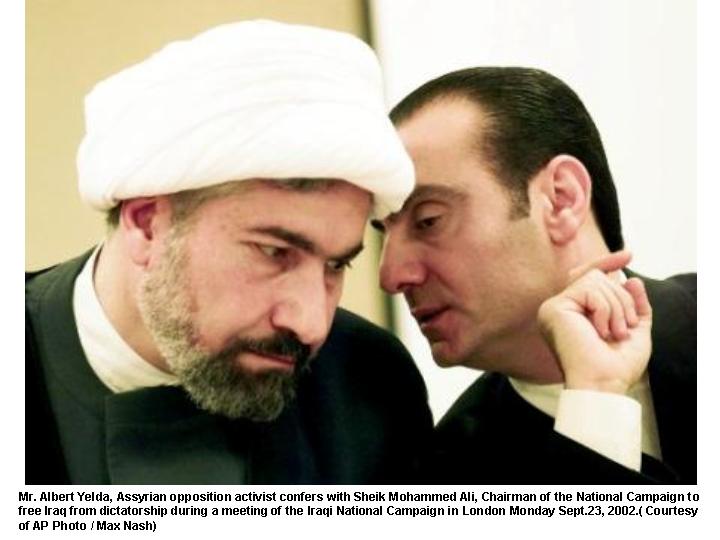
 I like to share
this with your beloved readers who are interested in watching University
football games about our eldest son Ashur. Ashur is a Sophomore Defensive
Tackle for USD (University of San Diego) Private Catholic University.
People who live in San Diego are more than welcome to join and watch
him play at their hometown. Few of his games will be in different
states such as, Indiana, Florida, Connecticut. If you are interested
I can send you USD Schedule of Games through Zinda. By the way Ashur’s
jersey is number 97.
I like to share
this with your beloved readers who are interested in watching University
football games about our eldest son Ashur. Ashur is a Sophomore Defensive
Tackle for USD (University of San Diego) Private Catholic University.
People who live in San Diego are more than welcome to join and watch
him play at their hometown. Few of his games will be in different
states such as, Indiana, Florida, Connecticut. If you are interested
I can send you USD Schedule of Games through Zinda. By the way Ashur’s
jersey is number 97. “This
book is a concise summary of the problem and in this sense a helpful
manual not only for Russian students,
“This
book is a concise summary of the problem and in this sense a helpful
manual not only for Russian students,